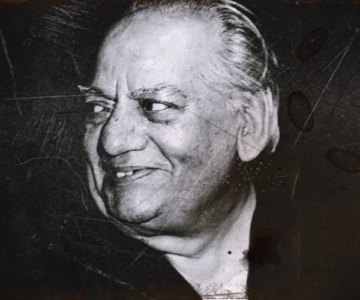
Jaipur, Faiz and Ali Sethi
Ali Sethi recently attended the Jaipur literary festival and his extraordinary performance is now accessible to those who were not there. I should thank him for sharing this video. Ali's instructions were also meticulous but I will not post them here except his concluding comment: the whole of the rest of the session is fantastic, and includes an excellent performance by Shabana Azmi as well as a very funny story told by Javed Akhtar about his first meeting with Faiz Sahib..
Click and enjoy!
Bahar Ayee (Spring Has Come)
*By Faiz Ahmed Faiz
Translated by Ayesha Kaljuvee
Spring has come
So have returned suddenly from the past
* *
All those dreams, all that beauty
That on your lips had died
* *
That had died and lived again each time
All the roses are blooming
That still smell of your memories
That are the blood of my love for you
* *
Faiz’s ‘Intesab’ – a lovely translation
A reader - Joe 31 - has rendered a great translation of Faiz's poem - "Intesab". I am posting it as a separate blog entry for all those who read and enjoy Faiz Ahmad Faiz, Pakistan's eminent poet. This poem appears as an introduction to one of his early collections of verse. This timeless poem is relevant even today as it celebrates the resilience and courage of Pakistani proletariat.
Dedicated to these times, and the sorrow of these times.
The pain of today, that is set against the plentiful garden of life.
The forest of dead leaves, that is my land.
The collection of pain that is my land.
Dedicated to the gloomy lives of clerks
Moth eaten hearts and words.
Dedicated to the postmen
Dedicated to the coachmen
Dedicated to the railway workers
Dedicated to the innocent beings in the factories.
This night bitten dawn
By Raza Rumi
The triumph of a popular movement on March 16 has marked a new beginning. The retreat of an intransigent government and the wise response by the PML-N and the lawyers averted a major crisis that could have been violent, and also a potential recipe for harming the parliamentary system in its infancy. There was a sigh of relief among the public for a long-standing issue appeared to have been resolved. This has been a monumental achievement by all standards.
However, the inherent imbalances within Pakistan's power structure and the state of its polity are yet to be addressed and the contradictions of how our power is exercised stared us as the good news rolled out through the ubiquitous TV channels and their zealous presenters. The way quintessentially political issues and turf-wars between the PPP and PML-N were battled and resolved through a stage-managed process only concealed the bitter power-realities of Pakistan.
Ahmed Nadeem Qasmi (1916-2006)
I am republishing an old article that appeared in The Friday Times, Pakistan on the great Urdu poet Ahmed Nadeem Qasmi.
Ab aik baar to qudrat javaabdeh thehre
hazaar baar ham insaan aazmaaye gaye
Now Nature must be held accountable at least once
We humans have been held answerable a thousand times
Few men evoke such awe and respect as the departed poet and writer Ahmed Nadeem Qasmi who breathed his last on July 10 2006. His mastery over poetry – he has been equally prolific in traditional ghazal and nazm – and prose – as a short story writer, journalist and literary critic – stand at the pinnacle of Urdu literature and he has contributed to the language over 50 titles.
Born in 1916 amidst the scenic Soon-Sekasar valley in district Khushab, nature influenced the evolution of Qasmi’s poetic sensibilities. Exposure to the grim realities of rural India’s inequities also played their part in his development as a writer; the underlying theme of his poetry is human dignity and his short stories – regarded as next in line to another master, Munshi Prem Chand, for their directness and simplicity – portrayed the woes of the Punjabi peasantry and their interaction with power structures. Following his matriculation from Campbellpur in 1931, around the time when he wrote his first poem, he moved to the Sadiq Egerton College in Bahawalpur and graduated in 1935.
Faiz’s Shaam
koi ujrra huwa, benoor, puraana mandir
dhooNdta hey jo kharaabi ke bahaaney kab se
chaak har baam, har ik dard ka dam-e-aakhir hey
aasmaaN koi prohit hey jo har baam taley
jism pe raakh maley, maathey pe sindoor maley
sir-niguN betha hey chup chaap naa jaaney kab sey
Iss tarha hai ke pas-e-parda koi saahir hai
jiss nay aafaaq pe phelaaya hai yuN sehar kaa daam
daaman-e-waqt sey pewast hai yuN daaman-e-shaam
ab kabhi shaam bujhey gi na andhera ho ga
ab kabhi raat dhaley gi na sawera ho ga
AasmaaN aas leeye hai ke ye jaadu tootay
chup ki zanjeer katay, waqt ka daaman chhootey
day koi sankh duhaai, koi paayal boley
koi butt jaagey, koi saaNwali ghooNgat kholey
seeking excuses to tremble
since who knows when–
their roofs are cracked,
their doors lost to ancient winds.
And the sky is a priest,
saffron marks on his forehead,
ashes smeared on his body.
He sits by the temples, worn to a shadow, not looking up.
has hypnotized Time
so this evening is a net
in which the twilight is caught.
Now darkness will never come–
and there will never be morning.
for history to tear itself from this net,
for Silence to break its chains
so that a symphony of conch shells
may wake up to the statues
and a beautiful, dark goddess,
her anklets echoing, may unveil herself.
The words of others
![]() |
|
|
Faiz Ahmed Faiz with friends: Faiz's poetry is now being used to advertise phones |
|
![]() |
|
|
Habib Jalib: anti-establishment |
|
|
|
|
|
Opposition to the military regime was marked by a liberal ethos, a value-system that stressed constitutionalism, rule of law, and the independence of judiciary, rather than identifying with the politics of redistribution or attacking Pakistan's problem uno supremo: poverty |
|
|
|
My piece published in the Friday Times last week
For decades, Pakistan's poets and writers have defied conventions and the almighty establishment. Rooted in the progressive writers' movement, the literature of resistance was a pro-people ideology that kept redistribution of power and resources at its core. The great poet Faiz Ahmad Faiz was often jailed and kept on the margins of the literary and cultural establishment and castigated as a "foreign agent" and "anti-Pakistan." Scores of other writers had to suffer torture and silencing by the state when they challenged its arbitrariness. Habib Jalib faced similar treatment and died a poor man after decades of acting as the poetic conscience of a nation.
It was the lyrical, direct poetry of Habib Jalib that stirred the street for decades, echoing the vision of the world from below. Jalib's expression was popular and immediate, and could be related to easily by the average listener. During the rule of General Ayub Khan, from 1958 until 1969, Jalib particularly represented the public conscience when he chanted his poem Dastoor (Constitution), which was about Ayub Khan's tailor-made "constitution." Later, this work was utilised in support of Fatima Jinnah's (the Quaid-e-Azam's younger sister's) campaign against the general:
Aisay dastoor ko,
Subh-e-baynoor ko,
Mein naheen manta,
Mein naheen janta
(I do not accept/I do not recognise/A constitution that resembles/A morning with no light).
In 2008, we saw the Punjab Chief Minister chanting these lines. The poetry has come full circle. While the Chief Minister's
Pakistan’s rich dissident literary tradition
Himal Magazine had published this article on the resistance poetry in Pakistan. I had uploaded it on the Pak Tea House some time back. However, I just realised that it should be published here as well..
The long spells of authoritarian rule in Pakistan have nurtured a rich dissident literary tradition. This tradition has its roots in the Progressive Writers' Movement, which originated in colonial India with major Urdu poets and writers as its vanguards. Faiz Ahmed Faiz was, of course, the best-known torchbearer of this tradition, while other luminaries included Sajjad Zaheer, M D Taseer, Rashid Jahan, Kaifi Azmi, Ismat Chughtai, Sahir Ludhianvi and Ahmed Nadeem Qasmi, to name only a few.
With the post-Independence Pakistani state continuing the old-style approach to ruling over the masses, the progressive movement too carried on its dissent long after 1947. Those who had migrated to Pakistan faced a new reality, which, in the words of Faiz, was far from the dawn for which they had hoped. "This blemished light, this dawn by night half-devoured," Faiz wrote ruefully. "surely not the dawn for which we were waiting."
Faiz, a Peaceful Revolutionary
This is in continuation of the splendid translation series undertaken by Mr. Anis Zuberi and contributed by JZ for this blog. Earlier posts can be found here here and here.
Drawing on the Persian tradition, the subject of Urdu Ghazal has always been about earthly or heavenly love. With the rise in social consciousness Urdu poets started using the form of nazm to address such issues like injustice, poverty, uneven distribution of wealth, highhandedness of the privileged, tyranny of rulers, exploitation by priests, etc. However, Faiz introduced protest and dissent as a regular subject in ghazal. He did it by keeping the ghazal's traditional format but giving the lexicon of ghazal a different meaning. This has had such a profound effect on Faiz's poetry that at times it is hard to draw a line between his ghazal and nazm. For instance, Hum ke threy ajnabi itni madaaratuN ke baad though written in ghazal form is also a topical nazm titled Dhaka se wapsi per, reflecting his deep emotions after he visited Bangladesh (former East Pakistan) in 1974.
He also discovered that whispering is more powerful then screaming and that became his hallmark. Unlike Iqbal, Josh or many others who wrote poetry of protest like us khet ke her khoushae gandum ko jalado or kakhe-umaraa ke dar-o-dewar hila do, Faiz does not confront injustice with hostility and anger. His protest is not direct, loud, thunderous, or deafening. He faces up to his tormentor by his moral strength, power of endurance and persistence. He believes in a soft and gradual revolution. He challenges the conscience of all human beings by showing his resolve and defiance when he says, aaj bazaar meiN pa-ba-julaN chalo or jo bache haiN sang samet lo. Even in moments of extreme anguish he avoids confrontation and invokes heavenly justice when he says lazim he ke hum bhee dekheN ge.
He captivates his audience by mixing traditional love with protest; lout jati hei udher ko bhi nazar kiya kije. It is amazing how Faiz has changed the traditional meaning of idioms used in ghazal for centuries. For example, love (ishq) is synonymous with struggle for justice (tohmat-e-ishq poshida kafi nahiN); his lover (aashiq, Qais, majnouN, Farhad) is a victim of oppression who is offering sacrifices while waging a struggle for justice; His rivals (raqib and adoo) are exploiters (Agar urooj pe hei ta'lae raqib to kiya).
Keeping the above background, I will attempt to translate and explain the meaning of the ghazal.
Woh buton ne dalay hain waswasay ke dilon se khauf-e-Khuda gaya
Woh parri hain roz qayamatain, kekhayal-e-roz-e-jaza gaya
(So much) cynicism (waswasa also means confusion; uncertainty) is created by the idols that fear of God has vanished from hearts.
(Because People) have gone through Armageddon daily the thought of the Day of Judgment is gone.
Here ButoN is not a metaphor for beloved, earthly gods or goddesses, but a symbol of brute authority. The word khauf in the second line also reinforces that meaning. The meaning of butuN in the above line is same as in the following couplet:
Faiz’s Aaj bazaar mein pa-bajo-lan chalo … translated & explained
Another translation of Faiz rendered by a Toronto based poet - Anis Zuberi. This is a timeless poem or nazm, aaj bazaar main pa ba jolan chalo has been translated and explained below. I am also posting a video that shows Faiz reciting the poem followed by a beautiful rendition by Nayyara Noor.
Du’aa (Prayer) on the Independence Day
This moving poem by Faiz was written forty years ago and still sounds so fresh and relevant...
Du'aa (Prayer) -- A nazm for Pakistan's Independence Day, 1967
Come, let us join our hands in prayer.
We, who can not remember the exact ritual
We, who, except the passion and fire of Love,
do not recall any god, remember no idol.
Let us beseech, that may the Divine Sketcher
mix a sweet future in the present’s poison
For those who can’t bear the burden of time,
the rolling of days on their souls, may He lighten
Those, whose eyes don’t have in their fate, the rosy cheek of dawn
may He set for them some flame alight.
For those, whose steps know no path
may He show their eyes some way in the night.
May those whose faith is following falsehood and pomp
have the courage to deny, the boldness to discover.
May those whose heads wait for the oppressors sword
have the ability to push off the hand of the executioner.
This secret of Love, which has put the soul on fire,
may we express it today and the burning be gone.
This word of Truth that pricks in the core of the heart,
may we say it today and the itching be gone.
(Faiz translated by Agha Shahid Ali)
Here's the Urdu version -
aayeh hath uthein hum bhi
hum jinhein rusm-e du'aa yaad nahin
hum jinhein soz-e muhabat ke siwa
koi buth, koi khuda yaad nahinaayeh urz guzarein keh nigar-e hustee
zehar-e imroz mein shirenya furda bhar de
wo jinhein taab-e garaan bary-a iyaam nahin
un ki pulkoon peh shaub-e roz ko hulka ker dejin ki aankhoon ko roz-e subh ka yaara bhi nahin
un ki raatoon mein koi shuma munawar ker de
jin ke kadumoon ko kisi reh ka sahara bhi nahin
un nazroon peh koi raah ujagar ker dejin ka deeN pariw-e kizb-o riya hai un ko
himet-e kufr mile, jurat-e tehqiq mile
jin ke sir muntazar-e tegh-e jafa hein un ko
dust-e qatil ko jatuk deenay ki taufiq mileishq ka sir-e nihaaN jaan tapaaN hai jis se
aaj iqrar karein aur tapish mit jaa'e
hurf-e haq dil mein khatakta hai jo kante ki turhaaN
aaj izhar karein aur khalish mit jaa'e
Another favourite of mine is Ustad Daman's immortal poem in Punjabi about the sorrows of partition that we often forget while celebrating this day. Millions had to leave their homes, were killed or hurt - and this bloodline still continues to haunt us...