Posts Tagged Fahmida RIaz

Karachi Literary Festival: Spring in the land of suicide bombers and charlatans

10 April 2010

Who says Pakistani literature was a relic of the past? If anything, Pakistani authors have a global audience today, and our writers are now the greatest harbingers of Pakistan’s complexity and nuance in a way that the embedded media can scarcely fathom.

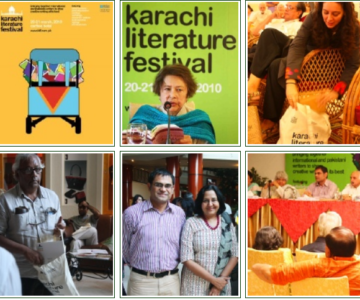
The first literary festival took off in our cosmopolitan melting pot, Karachi, in March. The Oxford University Press’ dynamic head Ameena Saiyid, and the British Council, together organised this event. Asif Farrukhi, the premier litterateur of the metropolis was central to the festival. Farrukhi’s comprehensive command of Urdu and English literary currents, and the stature which he has earned with his hard work, ensured that we were all set for a fabulous gala.

Earlier, the festival faced the usual hurdles: the Indians were issued visas rather late in the day and my friend Sadia Dehlvi was denied a visa at the last minute, despite earnest efforts by the organisers. The iron curtain was rigidly in place. But the other regional and international delegates arrived as planned. The last minute finalisation of the schedule meant that due notice could not be given to many participants. However, the OUP team, especially Raheela Baqai, were adept at getting things done. Saiyid herself used Facebook to advertise the event. She’s obviously keeping up with technology and its changing frontiers.

We arrived just in time for the launch ceremony that was held at the British Consulate. It was quite a journey from the Carlton Hotel to old-world Clifton – a mini-bus that dazzled with literary icons of our time: Iftikhar Arif, Intezar Hussain, Masood Ash’ar and Shamsur Rehman Farooqi from the world of Urdu. The front seats were occupied by the petite and resplendent Bapsi Sidhwa, the contemplative Zulfiqar Ghose and the younger British Pakistani writer Sarfaraz Manzoor, whose book ‘Greetings From Bury Park’ has created waves across the English reading (more…)

More on Fahmida Riaz

30 March 2010

Thanks to Isa Daudpota  who sent me the text and the translated poems after he had heard Kamila Shamsie talk about her..

Fahmida Raiz, who graduated from Sindh University and married in 1965, has published several volumes of poetry. During the Martial Law regime she was editor and publisher of the magazine, Awaaz. In all, fourteen court cases of sedition were filed against the magazine, one of which (under section 114A) carried a death penalty. She escaped to India whilst on bail, with her husband and tow children, where she lived for seven years. She worked as Poet-in-Residence at Jamia Millia, an Indian university, during this period.

She has translated Erich Fromme’s Fear of Freedom and Sheikh Ayaz’s poetry, from Sindhi into Urdu. Since the restoration of democracy she has returned to live in Pakistan and served as Director General of Pakistan’s National Book Council in Islamabad when Bhutto’s Pakistan People’s Party was in power. (more…)

Nahaj ul Balagha – Looking back to Get Ahead

4 July 2008

Raza Rumi

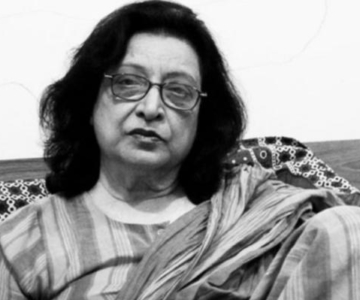
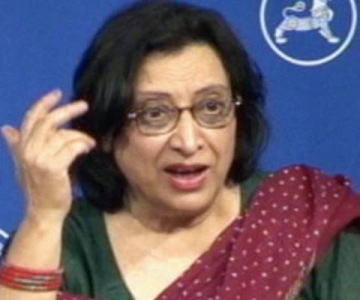
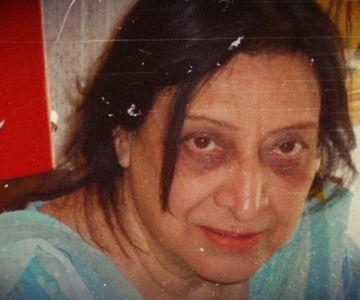
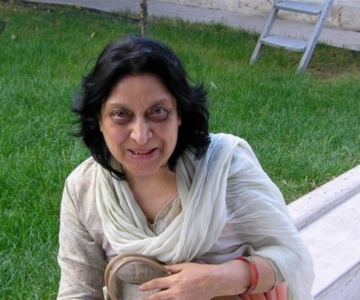
Fahmida Riaz is Pakistan’s premier female poet. She became a sensation in the early 1970s when her bold, feminist poetry created a stir in the convention ridden world of Urdu poetry. Riaz was expressive, sometimes explicit, and politically charged. She created a completely new genre in Urdu poetry with a post-modern sensibility. Later, she remained prominent with her defiance of General Zia’s martial law, her exile to India and the continuous evolution of her fiction and poetry.

Since the late 1990s, Fahmida Riaz has discovered Jalaluddin Rumi, the 12th century Turkish poet and jurist, and now an international celebrity. Her recent publication – Yeh Khana-e aab-o-gil – is a unique translation of Rumi’s ghazals in the same rhyme and meter. Since her navigation of the Rumi universe, she has explored another dimension of her individual and cultural consciousness, where the influence of Islamic scholars and Sufis is paramount.

Last winter, she read a letter by Hazrat Ali bin Abi Talib (AS), the fourth Caliph and son-in-law of the Prophet Mohammed (PBUH), while browsing a translation of Nahaj ul Balagha (a collection of sermons, letters and sayings of the Caliph). Later, in an email, she related to her friends across the globe how angry she felt for not knowing about this letter all her life, and how the real jewels of Muslim history were concealed “generation after generation.” (more…)

Hazrat Ali’s letter on governance and citizenship

7 December 2007

The common stories about Islam or Muslims have to do with the chopping of arms and killing of infidels. We are told that Muslims had a great empire, after many conquests and subjugation of the ‘infidels’. And what have we learned in the textbooks: Ali (AS) was a brave general with a legendary sword? Have we heard this:

Do not close your eyes from glaring malpractice of officers, miscarriage of justice and misuse of rights, because you will be held responsible for the wrong thus done to others. In the near future, your wrong practices and maladministration will be exposed, and you will be held responsible and punished for the wrong done to the helpless and oppressed people.

Fahmida Riaz is Pakistan’s premier female poet. She became a sensation in the early 1970s when her bold, feminist poetry created a stir in the convention ridden world of Urdu poetry. Riaz was expressive, sometimes explicit, and politically charged. She created a completely new genre in Urdu poetry with a post-modern sensibility. Later, she remained prominent with her defiance of General Zia’s martial law, her exile to India and the continuous evolution of her fiction and poetry.

Since the late 1990s, Fahmida Riaz has discovered Jalaluddin Rumi, the 12th century Turkish poet and jurist, and now an international celebrity. Her recent publication “ Yeh Khana-e aab-o-gil” is a unique translation of Rumi’s ghazals in the same rhyme and meter. Since her navigation of the Rumi universe, she has explored another dimension of her individual and cultural consciousness, where the influence of Islamic scholars and Sufis is paramount.

Last winter, she read a letter by Hazrat Ali bin Abi Talib (AS), the fourth Caliph and son-in-law of the Prophet Mohammed (PBUH), while browsing a translation of Nahaj ul Balagha (a collection of sermons, letters and sayings of the Caliph). Later, in an email, she related to her friends across the globe how angry she felt for not knowing about this letter all her life, and how the real jewels of Muslim history were concealed generation after generation.

At the time she was preparing for a Conference at Heidelberg, Germany. Lo and behold, she made a dramatic speech about Ali’s (AS) letter at the international moot. Thereafter she showed the text of the letter to Dr Patricia Sharpe, a US-based writer who was impressed by it and immediately paraphrased and uploaded it to on her website under the title Good Governance Early Muslim Style.

Ali (AS) had written a comprehensive letter  articulating principles of public policy for the guidance of the newly appointed Governor to Egypt, Maalik al Ashtar. In this fascinating directive, Ali (AS) advises the new governor that his administration will succeed only if he governs with concern for justice, equity, probity and the prosperity of all. There is a timeless applicability of this famous letter. Selected passages from the text are reproduced below:

Religious tolerance: Amongst your subjects there are two kinds of people: those who have the same religion as you [and] are brothers to you, and those who have religions other than yours, [who] are human beings like you. Men of either category suffer from the same weaknesses and disabilities that human beings are inclined to; they commit sins, indulge in vices either intentionally or foolishly and unintentionally without realising the enormity of their deeds. Let your mercy and compassion come to their rescue and help in the same way and to the same extent that you expect Allah to show mercy and forgiveness to you . (more…)