Posts Tagged education

Towards a decentralised Pakistan

20 July 2011

Without civil service reform, devolution of policy setting will be unachievable and the current reform may just not achieve its intended purposes

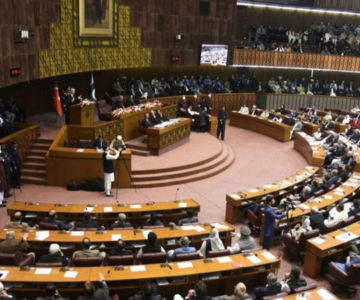
On July 1, 2011, the third phase of redistribution of federal powers and functions was completed whereby 7 federal ministries now stand devolved. These include Ministries of Health, Food and Agriculture, Labour and Manpower, Environment, Women Development, Sports and Minorities affairs. Earlier, ten ministries were devolved to the provinces with the abolition of concurrent list under the 18th Amendment.

Implementing the 18th Amendment: The process has been fraught with political bickering between the Centre and the Provinces and resistance by powerful groups, which are beneficiaries of a centralised Pakistan. However, these political and administrative contests have not undermined the process of devolution. A major factor in negotiating this transition has been the role of Mian Raza Rabbani who heads the Implementation Commission for the 18th Amendment to the Constitution.

Most significantly, the political parties have shown their willingness to work together in achieving the intended results of provincial autonomy related clauses. Having said that, the real test of the elected civilian governments has just begun. Large scale restructuring of the federal government and transfer of new functions to the provinces implies that there is much more needed than executive notifications and political rhetoric.

Beyond executive notifications: Four challenges are of urgent importance. First, to ensure that devolution process is completed and not truncated or manipulated to suit the ends of the political parties. At the same time the regulatory capacity of the state, already weakened over decades, must not be diluted during the transition. Secondly, the corresponding institutional capacities are also devolved to the provinces and where missing, the Centre should advise and facilitate institutional strengthening. Thirdly, a civil service reform is required to achieve the responsive and citizen-oriented governance — the larger goal of the 18th Amendment. Finally, decentralisation of provincial powers is also needed and the local government system should be reintroduced. Unpacking and addressing these four imperatives is now an urgent responsibility, which the federal and provincial governments cannot absolve themselves of. (more…)

Pakistan: A transitional polity

19 May 2011

By Raza Rumi

Pakistan’s existentialist crisis is no longer a strictly Pakistani issue. Its potential repercussions have emerged as a cornerstone of global debates on regional stability and international concerns on terrorism and nuclear proliferation. The clichés on Pakistan’s disintegration and meltdown have also been done to death in the international media and policy brigades across the world. Perhaps, what the world has not yet fully comprehended is that Pakistan is essentially a transitional country where the old order is crumbling, giving way to a newer society that is grappling with geostrategic compulsions, domestic violence and a post-colonial state which refuses to realign its structures and priorities to a ‘new’ Pakistan.

To begin with, never in Pakistan’s history have so many women been active in the public spheres: from higher education to the workforce and from subaltern resistance movements to national politics. The two leading public sector universities i.e. the Karachi and Punjab Universities respectively, cater to a majority of female students. It is no coincidence that women parliamentarians are far more active in the national assembly and senate and not even shy of resisting patriarchy and clergy in their public roles. Increasingly, urban Pakistan is shedding its traditional conservatism by creating space for women’s inclusion in the media, and other segments of the services sector (also the largest contributing chunk of the GDP). (more…)

Our textbooks and the lies they teach

1 May 2011

By Raza Rumi

Due to the 18th Amendment, a momentous shift in Pakistan’s governance arrangements is taking place through a politically mediated and largely consensual manner. The federal government is being trimmed and 10 ministries have already been devolved to the provinces. A key development pertains to the devolution of education — lock, stock and barrel — to the provinces. Most notably, the odious era of setting poisonous, centralised curricula in the name of a ‘martial’ nationalism is finally over. Whether the past practices of turning Pakistan into a jihad project will end is uncertain, unless the provinces take the initiative and reverse the regrettable trajectory of the past.

Pakistani textbooks have preached falsehoods, hatred and bigotry. They have constructed most non-Muslims, especially Hindus, as evil and primordial enemies, glorified military dictatorships and omitted references to our great betrayal of the Bengali brothers and sisters who were the founders and owners of the Pakistan movement. It is time to correct these wrongs. (more…)

‘Reforming’ the education system

30 April 2011

By Raza Rumi

Pakistani students sit inside and on top of a rickshaw heading to their schools in Muzaffargarh in Punjab province, Pakistan, Tuesday, Nov. 2, 2010. AP Photo

The recent debates on education have also highlighted how the education sector is not receiving its due compared to say defence, infrastructure and other expenditures made by the government. However, the discussion has yet to move to the most important area i.e. quality of schools and what sort of learning are they providing?

The task of reforming the education system is huge, complex and some would say next to impossible. However, the 18th Amendment to the Constitution has opened the doors to avenues for change. (more…)

Devolution of powers: the challenges ahead

24 April 2011

The impediments to full provincial autonomy under the 18th Amendment need to be tackled despite the odds

By Raza Rumi

Perhaps the best thing about contemporary Pakistan is the way its governance arrangements are being restructured to undo the bitter, brutal legacy of centralisation. Had we undertaken such reform decades ago, Pakistan would have been a far better place. The 18th Amendment reflects a board political consensus on how Pakistan can actually evolve into a real federal state as opposed to the notional federalism of the past where provincial autonomy had become a residue of central patronage and not guaranteed by the Constitution.

Nevertheless, the devolution of powers in 2011 faces two major dilemmas. First, the provinces are currently operating as centralised bureaucratic apparatuses with little or no powers and accountabilities at the local levels. Second, and perhaps far more important, the provinces have to build their technical and political capacities to handle the new powers and functions, which are now flowing at an unprecedented speed. These two challenges are the real test of civilian governments and it remains to be seen if they can handle it lest another messiah or messiah-proxies enter the arena and reverse this process. Knowing Pakistan’s history, anything is possible. This is a country plagued by lack of political stability and policy continuity. We shall examine the pitfalls and challenges that lie ahead in this transitional process.

Progress so far: During the first two phases of the devolution, 10 of the 48 ministries at the federal level were to be devolved. The Committee set June 30th 2011 as the deadline for this process. Taking up these recommendations, the federal cabinet devolved ministries for special initiatives, Zakat and Ushr, population welfare, youth affairs, and local government and rural development to the provinces in December 2010. The provinces also inherited office buildings, equipment, development funds and projects for fiscal year 2010-11. All international matters of these ministries were transferred to the Economic Affairs Division (EAD) and some planning-related matters to the Planning and Development Division. However, overall planning of ministries that are being transferred or will be transferred in February 2011 will be the responsibility of provincial governments.

On April 5th, 2011 the second phase of the devolution process commenced, with the devolution of the ministries for education, social welfare, and special education, tourism, livestock and dairy, rural development and culture. According to reports, the Commission for Implementation of the 18th Amendment has also approved a plan for the transfer of three federal ministries, including sports, women development and environment, to the provinces in the third phase.

Unclear federal arrangements: While the centre has abolished ten ministries so far, there is a deadlock over the staff and resources. Provinces complain that they cannot pay the wage bill of surplus staff and centre has retained all the existing federal public servants, as any move to right size will be fraught with political dangers. Similarly, after June 2011, who will pay the staff? If the federal government continues to foot the salaries bill then it will not be able to rationalise its size and the temptation of recentralisation will remain. Secondly, the federal government’s move to shift attached bodies and autonomous organisations to Cabinet Division and such other dysfunctional ministries is even worse. There needs to be a more thorough assessment of post-devolution architecture of the central authority. It appears, with due respects to a great reformer, Raza Rabbani and his colleagues, patchy, ad-hoc and devoid of long term thinking. (more…)

Devolution in Pakistan: Unpacking the HEC debate

12 April 2011

An amended, rationalised HEC needs to stay in place

By Raza Rumi

The 18th Amendment approved by the Parliament in 2010 signified a new era in Pakistan’s troubled federalism. Given our turbulent constitutional history, the new governance arrangements approved by all parties and federating units settled for a leaner centre and addressed long-standing demands of provincial autonomy. But the implementation of this amendment has been slower than expected, largely for reasons of capacity both at the federal and provincial levels. Despite the constraints, the Implementation Commission has delivered fairly well. Thus far, ten ministries have been devolved. Five ministries — local government, special initiatives, zakat & ushr, population welfare and youth affairs — were devolved in late December 2010. The recent batch of the federal ministries includes: ministries of education, social welfare and special education, Tourism, livestock and dairy and culture.

Media rants:

In recent days, a new controversy on the devolution of the Higher Education Commission (HEC) has plagued the implementation process with respect to the 18th Amendment. Television channels have aired the views of technical experts as well as the usual suspects who rant on every talk show on almost every subject under the sun, be it defence, culture, or cricket. The move towards the devolution of the HEC’s powers and functions to provinces has been construed as another move by the semi-literate and ‘corrupt’ politicians to thwart the degree validation process, which has been part of our pseudo political discourse. Such an argument is pretty lame, as the rule to have a degree to be eligible for an election has been done away with. The Musharraf scheme of a grand HEC, BA-holding legislators and ‘controlled democracy’ obviously failed in 2008 when the electorate rejected his party and sent representatives who sent him home. (more…)

Myths, fables and lies: The murder of history in Pakistan

20 November 2010

KK Aziz’s seminal study, ‘The Murder of History’ is essential to understand what went wrong in Pakistan. The most worrying sign of an insecure and fissured polity is when it reinvents, twists and lies about its history especially relating to its genesis and progress. K K Aziz was not an Indian nationalist, nor a screaming ideologue who wanted Pakistan to fritter away. In fact his early work The Making of Pakistanremains an essential reading on how Pakistan came into being. He believed in Pakistan despite his emotional links to the separated eastern part of the Punjab. However, at the zenith of his career he could not conceal his deep anguish and disappointment with the way ‘History’ in his beloved country had turned into sham-narratives comprising fables, myths and outright deceit.

Three brutal realities by the end of Zia era were clear: Pakistan’s military-bureaucracy complex had reinvented an ideological state based on a sectarian worldview; History was an instrument of propagating this ideology; and the jihad factories were flourishing. Jinnah’s Pakistan had been irreversibly shattered and perhaps destroyed. For K K Aziz’s generation this was nothing short of a great betrayal.

Published in the early 1990s, ‘The Murder of History’ for the first time documented a meticulous analysis of the history books taught in Pakistani schools and colleges. The book revolves around the main argument that History and Pakistan Studies curricula was nothing more political propaganda aimed at indoctrinating young minds through half-truths and blatant falsehoods. (more…)

New Education Policy

1 December 2009

A policy matter published in the iWrite Magazine

Raza Rumi responds to the new education policy for Pakistan

Yet another educational policy has been announced for Pakistan and its hapless citizens. We should not cast aspersions on the motives of an elected government, for we have been bitten by endless rounds of authoritarian rule which have not only destroyed the institutions of civilian governance, but have also demolished the integrity of our curriculum and mode of instruction. Decade after decade, dictators chose to glorify martial rule and later legitimized the abuse of jihad and violence. Even those who have studied at elite, expensive schools have somehow been doctored by the same curse of malicious textbooks. The surreal curricula have glorified looters and plunderers like Mahmud Ghaznavi only because they happened to be Muslims by a sheer coincidence of birth. Not to mention the Hindus, with whom we have coexisted for nearly a thousand years; they have been painted as treacherous, villainous and vile creatures ready to destroy the Muslims.

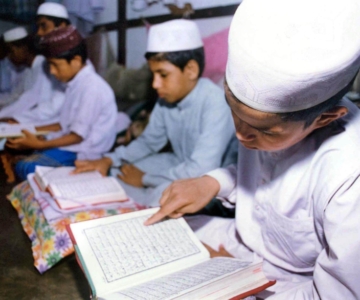
One would have expected that a legitimately elected government, representing the aspirations and pluralism of Pakistan’s small provinces would take a strong stance on the revision of pernicious curricula. Alas, this is now a distant, buried dream for all. The policy is silent on that. This is a government that is waging wars on terrorism rather successfully and with clarity of purpose, but the educational policy makes little mention of the madrassa reform which is now an imperative for the very survival of Pakistan as a viable state. Thousands of madrassas scattered all over the place, funded by external powers preach hatred, bigotry and a reversion to the Dark Ages. Who will reform these madrassas if the national education policy does not even bother to lay out a strategy and provide resources? The new policy promises that by 2015, the budgetary allocation for education would increase to seven percent of the GDP from the current 2.1 percent of the GDP. This is surely promising but how can a policy not envision the need or the strategy to mobilize such resources? Have we not heard such sanguine proclamations in the past? (more…)

Issues in Madrassa Education in India

28 September 2008

Yoginder Sikand’s new book Issues in Madrasa Education in India published by Hope India, Gurgaon is a promising publication. Here is a review by Nasir Khan:

A number of books have been recently published on the madrasas of India, and, in addition to this, madrasas have become a subject of considerable debate in the mass media. This latest addition to the writings on Indian madrasas makes a valuable contribution to our understanding of the subject.

The issue of madrasa reform is much debated today, and several of the articles in this volume examine the question from various angles. The opening article of the volume, titled ‘A Day in Deoband’, based on the author’s visit to the Dar ul-Ulum madrasa in Deoband, India’s largest madrasa, suggests that even many traditionalist ulema, wrongly berated as being wholly opposed to change, actually do support madrasa reforms to some extent, although the way in which they imagine the project of reform substantially differs from that advocated by many outside the madrasa system. This emerges even more clearly in the following article, titled ‘The State and Madrasa Reform: An Indian Deobandi Perspective’. The point is reiterated in subsequent articles, such as one on a Deobandi madrasa in Kashmir which is engaged in providing new forms of technical education in addition to traditional religious instruction, another on traditionalist madrasas in Kerala that have launched innovative experiments to combine religious and secular education, and yet another, on the educational model of the founder of the Jamaat-e Islami, Syed Abul Ala Maududi. A piece on the growing number of women’s madrasas in India makes the argument that promoting women’s rights from within a broader Islamic paradigm is also part of the project of madrasa reforms as even several traditionalist ulema see it. The author argues that this might have important consequences
in the future for the nature of religious authority as well as gender-relations among the Indian Muslims. (more…)