Jahane Rumi In search of the unsearchable: O, my soul! where would you find your house?

29Jan/101

Culture, conservation in Toronto – ideas and plans

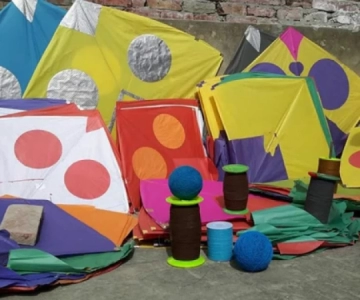
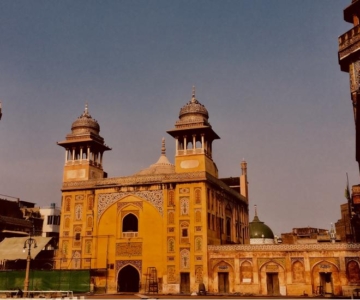
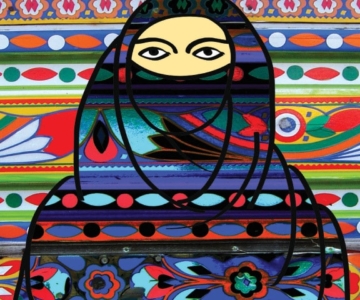
My dear [cyber-]friend Shaheen Sultan has sent this interesting email. Those who are interested in helping her with the cultural and conservation efforts can either contact me or leave a comment here. In particular, truck art and other ideas for this haven in Toronto (Raza)
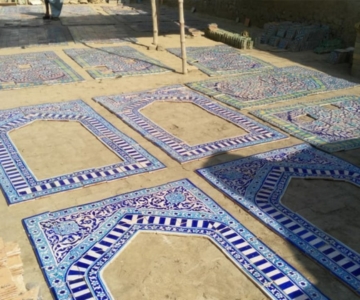
My friends  and I are in the midst of compiling a future project for Art and Culture restoration and conservation -- an initiative very dear to my heart, as I have always believed in conserving cultural heritage so the generations to come shall benefit from global cultures where they are becoming endangered with exploitation and falling prey to decadence due to the age of modernity. No, I do not scorn "modernity", but, I do not endorse the opinion that world culture becomes extinct with the arrival of technology and IGeneration.
15Nov/090

Coffee, tea and revolution

Before his death in July 2009, KK Aziz had accomplished one mission that he had set for himself, i.e. to write about the Lahore Coffee House, the glorious nursery of ideas. Luckily, despite his failing health, Aziz finished a draft that was meant to be a shining part of his autobiographical kaleidoscope. “The Coffee House of Lahore: A Memoir, 1942-57” was published in 2008 and Aziz, in the opening chapters, tells us about the genesis of his passion to document this memorable phase of our contemporary history.

Whenever an intellectual, cultural and literary history of Lahore (or the Punjab and Pakistan) is written, the diverse circles which met and discoursed in the Coffee House will have to be described in detail and the ever-widening waves of their influence recorded. As nothing has been written so far on the subject and I don’t see anything in the offing, I give below a list of the important persons who I can recall.

Quite diligently, Aziz sets forth to list two hundred and six names that would include a wide array of thinkers, scholars, artists, writers and even some CSPs who obviously changed their life course despite the influence of their Coffee House days. For those who want to know about Lahore and its not-so-old diversity, KK Aziz’s memoir is a must-read. It is

25Sep/090

The romance of Raja Rasalu

Book: The Romance of Raja Rasalu and Other Tales
Story telling has been a primordial urge, never quite expressed in its fullest measure, but always lingering and floating like life. There was a sub-continent before the colonial interaction that brought in its wake an aesthetic hardened by the industrial revolution and its uniformity of life and space. This was a world rich with myriad identities, of whispers and tales all interlaced in a peculiarly complex kaleidoscope. Since the 19th century that particular aspect of folk story telling and transfer of generational accounts gave way to what is now known as education and knowledge - instruments and reflections of power and a linear world view set elsewhere but adapted awkwardly to the local context.
This is why Simorgh Women’s Resource and Publication Centre in Lahore, under the leadership of Neelum Hussain, have undertaken the challenging task of reclaiming the rich heritage that lies in our folklore especially that of the Punjab. “The Romance of Raja Rasalu and Other Tales” is a stunning compilation of the romance of Punjab’s legendary hero, Raja Rasalu and, while it draws heavily on the colonial storytellers, the book twists the narrative in a manner that brings us closer to the origins of our cultural sensibilities. The tales are sheer magic. The romance, the intrigue, the bravery and the integrated nature of human existence where it finds communication even with birds and trees comes to a full life throughout the narrative.
It is one thing to produce an admirable compendium but it is another matter to ensure that the purpose and spirit of the tales are adequately reflected in the illustrations. This particular touch of originality is provided by the eminent artist Laila Rehman whose breathtakingly attractive illustrations add a new layer of meaning and sensibility to the folk stories. It is, therefore, as has been rightly stated in the introduction, a book for pleasure: a pleasure that moves beyond the immediate and the momentary and merges into the real or imagined pleasure of living. Laila’s paintings and sketches are evocative enough to generate a parallel story within the larger narrative. It is as if the reader is traversing into several worlds. One minute
15Feb/097

Data Ganj Baksh: Lahore’s oldest guide

Perhaps the greatest of the experiences at Data Darbar is to find oneself connected to a stream of humanity, shoulder to shoulder, with a shared sense of spirituality that cuts across ethnicity, sect, ritual and even religion at times. Despite the mayhem, the serenity of the place is soothing

Raza Rumi
Last week, accompanying a visitor from the Mecca of Sufis, Delhi, I reconnected with the Data Darbar or the royal pavilion of the great saint of Lahore, Ali bin Usman Al Hajveri. This shrine is the oldest and perhaps the most vibrant cultural marker of the past one millennium in Lahore. The title of Ganj Bakhsh was bestowed by the saint of the saints Khwaja Moin ud din Chishti of Ajmere, whose ascendancy in the Chishtia Sufi order is recognised by all and sundry. Pilgrimage to Ajmere by itself is a matter of spiritual attainment for the majority of Muslims in the subcontinent. It is not difficult to imagine then what the stature of Lahore’s Data Darbar is in this esoteric yet real and lived Islam in South Asia. While Khwaja Moin ud din Chishti honoured the Lahori saint with the title “bestower of treasure,” ordinary folk on Lahore’s streets were more direct by naming the saint as Data, the one who facilitates the fulfilment of aspirations.

Living nearly 11 centuries ago, Syed Ali bin Usman Al Hajveri was not a Lahori but a resident of Lahore’s cultural step-cousin, Ghazni, until he arrived in India and wandered in northern India before settling in Lahore for the last 34 years of his life. This was the time when mystics from Central Asia, in their constant urge to discover new vistas of spiritual exploration, started to travel and settle in different parts of the Indian subcontinent. It remains a mystery as to why Data Ganj Bakhsh would have chosen Lahore as the final stop in his life long journey. Perhaps the secular interpretation could be that Lahore was an inevitable stop over for all the Central Asian and Turkic caravans and armies and provided the right kind of environment for a foreign mystic to amalgamate into. A little before Ganj Bakhsh’s arrival, Lahore had been resurrected from the earlier ravages of time by the Ghaznavid ruler Mahmood and his son Masood.

2Jan/097

Of saints and sinners

James Astill writing for the Economist says that the Islam of the Taliban is far removed from the popular Sufism practised by most South Asian Muslims

Declan Walsh

“NORMALLY, we cannot know God,” says Rizwan Qadeer, a neat and amiable inhabitant of Lahore, Western-dressed and American-educated, eyes shining behind his spectacles. “But our saints, they have that knowledge.”

1Dec/081

Lahore’s oldest guide

My piece published in the Friday Times

The interior of Data Darbar

The grave of the saint

Outside the shrine,

The shrine at night

Perhaps the greatest of the experiences at Data Darbar is to find oneself connected to a stream of humanity, shoulder to shoulder, with a shared sense of spirituality that cuts across ethnicity, sect, ritual and even religion at times. Despite the mayhem, the serenity of the place is soothing

"To traverse distance is child's play: henceforth pay visits by means of thought; it is not worth while to visit any person, and there is no virtue in bodily presence"

Last week, accompanying a visitor from the Mecca of Sufis, Delhi, I reconnected with the Data Darbar or the royal pavilion of the great saint of Lahore, Ali bin Usman Al Hajveri. This shrine is the oldest and perhaps the most vibrant cultural marker of the past one millennium in Lahore. The title of Ganj Bakhsh was bestowed by the saint of the saints Khwaja Moin ud din Chishti of Ajmere, whose ascendancy in the Chishtia Sufi order is recognised by all and sundry. Pilgrimage to Ajmere by itself is a matter of spiritual attainment for the majority of Muslims in the subcontinent. It is not difficult to imagine then what the stature of Lahore's Data Darbar is in this esoteric yet real and lived Islam in South Asia. While Khwaja Moin ud din Chishti honoured the Lahori saint with the title "bestower of treasure," ordinary folk on Lahore's streets were more direct by naming the saint as Data, the one who facilitates the fulfilment of aspirations.

Living nearly 11 centuries ago, Syed Ali bin Usman Al Hajveri was not a Lahori but a resident of Lahore's cultural step-cousin, Ghazni, until he arrived in India and wandered in northern India before settling in Lahore for the last 34 years of his life. This was the time when mystics from Central Asia, in their constant urge to discover new vistas of spiritual exploration, started to travel and settle in different parts of the Indian subcontinent. It remains a mystery as to why Data Ganj Bakhsh would have chosen Lahore as the final stop in his life long journey. Perhaps the secular interpretation could be that Lahore was an inevitable stop over for all the Central Asian and Turkic caravans and armies and provided the right kind of environment for a foreign mystic to amalgamate into. A little before Ganj Bakhsh's arrival, Lahore had been resurrected from the earlier ravages of time by the Ghaznavid ruler Mahmood and his son Masood.

Lahore's fame had also spread deep into the rugged, mountainous climes of Central Asia. Its old fortified city, the banks of a gushing river and the motley collection of artisans, masons, artists, poets and musicians were all too well known.

During the 34 years of his Lahore residence, Ali Hajveri became the most revered of dervishes whose inclusive and tolerant mystical path attracted the majority of its non-Muslim population. Let us not forget that the non-Muslim population was also a subject of a pernicious caste hierarchy where access to templar gods and clerical blessings was denied to a good number of the population. This was the beginning of a centuries' long process of peaceful conversions. Islam's egalitarianism and its larger message of equality before God was quite a magical idea for many, not to mention that the Sufi path did not require conversion per se. This is why Data Darbar has been a hub of inter-communal quests for spiritual attainment.

Other than that, Ali Hajveri's important contribution to the corpus of documented mystical thought is the treatise that he authored and left for posterity. Known as Kashf- al- Mahjub, or "Unveiling of the Hidden," it is a monumental document striking for its communicative tone and systematic way of discussing mysticism.

Through the dynasties that were to follow Mahmood Ghaznavi's controversial military campaigns, the primacy of Ali Hajveri's shrine continued. Its centrality to the evolution of Muslim rulers meant that the origins of Islam were paradoxically not rooted in the capture of power. Voluntary conversions at Sufi khanqahs and dergahs were a constant process. The Sultans of Delhi and the Moghuls were all enamoured by the mythical might of the saint, and while the imperial grandeur continued, the ordinary Lahoris had already renamed Lahore as "Data ki Nagri"- Data's city. Khawaja Moin ud din Chishti undertook 40 day long meditative exercises at this shrine before he moved to Ajmere to carry on the Sufi mission of spreading love, tolerance and harmony and of re-emphasising the indivisible equality of man. The Moghul prince and heir apparent Dara Shikoh, like his great-grandfather Akbar, was also a true devotee of Data Ganj Bakhsh.

The decline of the Moghul Empire did not impact the energy of the shrine. In fact, the formidable Punjabi leader, Maharaja Ranjit Singh, like his predecessors, invested in the upkeep and expansion of the shrine complex. The rulers dare not afford the wrath or displeasure

16Nov/085

Fahmida Riaz: A neglected genius

My op-ed for The NEWS

Whilst my earlier piece on the IMF programme and the tremendous discussion it has invoked deserves a rejoinder, I want to write on a completely different subject this week. I am perturbed by the fact that thousands of jobs have been recreated for those who were rightly or wrongly dismissed in the earlier dispensations; there is silence about one luminary, a towering one at that, who lost state employment twice. Fahmida Riaz's name is yet to appear amongst the reinstated ones.

Following the physical departure of the leading Urdu poets – Qasmi, Munir and Faraz – Fahmida Riaz is arguably the greatest living poet of Pakistan. Controversial though this statement might be, her originality and path-breaking poetry has yet to find an equal in the turbulent waters of the Pakistani cultural river. It is hardly surprising that Fahimda Riaz has been targeted all through her otherwise illustrious creative career by state and society alike. She was branded as unpatriotic when she had to run for her life in the Zia-ul-Haq days and live in exile. In India, she was termed as a Pakistani agent since she criticised the communal tensions that the Indian state had encouraged.

28Jul/0810

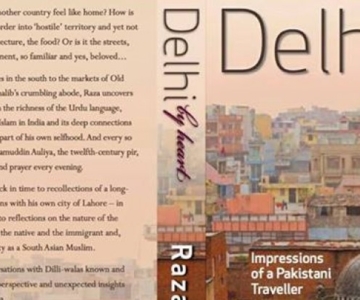
Delhi by the book

Writing about the textbook enemy, the 'other', is but a daunting task. Facing the grandiose Humayun's tomb on a chilly January morning this year, I decided to write a book on Delhi.

It was not before I had visited the ancient city that I knew what it symbolised. In Pakistan, we were influenced by the glories of Lahore, my beloved city. Reconstructed histories had kept Delhi invisible. The seat of the Sultans, Mughals and the Raj, precursor of the modern united India and originator of the Indo-Islamic civilization was a mere phantom, best ignored.
Over several visits to Delhi, I realised that invisibility was also a shared curse. A good number of Delhi wallahs I met, had no clue where they lived or crossed the streets. Erasure, blank spaces in textbooks had rendered their own city a mythical other-world existing only in erudite books, rare cultural soirees and among the fading memories of old-Delhi.
When I looked for the house where Urdu's legendary poet Mir Taqi Mir lived, no one knows it. Those living in Hauz Khas are unaware of what it was. There are thousands, perhaps more, who have never visited Nizamuddin Bastee let alone the dargah there. Tracing history through books resembles a two-dimensional vision. Lived histories add other dimensions to the inner kaleidoscope. But there are so few who can help me.

I am pained when I am taken to the tomb of India's first female ruler Razia Sultana (1236 - 1240). Only centuries later another woman Indira Gandhi was to rule the Centre. Razia's grave languishes on an abandoned, filthy cul-de-sac. Many don't care. I wonder, should I?

As I have ventured out to write, the enormity of Delhi -- the idea -- haunts me. Where do I start? The layered construction of Indian, and Muslim identities in the subcontinent emanate from the ridges and Hades of Delhi. The saints buried under

23Apr/084

Lahore Nama – A new blogspace devoted to the magical city

I have been rather casually posting news, stories and comments on Lahore's heritage and its current status on Lahore Nama. While blogging here I was always tempted to write about Lahore or post stuff by others on my beloved city. Noting that this would be rather obsessive, I have created an outlet for this obsession and a new blog is now on the block, as they say.

What differentiates Lahore Nama from other Lahore-centred blogs? Indeed, it is no way near the excellent Lahore metblog that is managed by a good team of motivated bloggers. My focus is on Lahore's past and viewing the present in relation to that.

Luckily, Darwaish in Lahore has sent me some brilliant pieces and Ahmad Rafay Alam has agreed to the use of his incisive articles on urban planning; and Mayank Austen Soofi has also been contributing stories for cross-posting. In fact Soofi was most kind to announce the birth of Lahore Nama on The Delhi Walla. I quote from that story:

More than 60 years have passed since the creation of our two nations. 60 years should be but a blip in the life of great cities like Delhi and Lahore but meantime much has changed in their characters. And character is destiny. Both cities have continued to grow in ways that makes them very different from each other. Delhi lost its Muslim refinement. Lahore lost its Hindu heritage. Today there are three cities of Delhi and three cities of Lahore: what they used to be; what they are now; what they could have been.

So Lahore Nama is on the blog-horizon and without much effort on my part it is attracting a few hundred visitors each day.

Such is the pull of Lahore....

3Feb/060

Marvels of Malaysia

Muslim societies can learn from the plurality of race and religions in Malaysia says Raza Rumi

A few days spent in Malaysia are enough to dispel many myths about Muslim intolerance that are projected and reinforced by Western media and pop culture. An economic miracle of the 1980s, branded as the Asian tiger and vision personified by the iron-man Mahathir, Malaysia is a heart-warming testament to plurality and co-existence within the Islamic framework. Malaysia's 25 million strong population – modest by Pakistani standards – is a baffling mix of Malay, Chinese, Indian, Ibans and Kadazandusuns, among others.While the Malays constitute a marginal majority (over 50 per cent) of the total population and practice Islam quite seriously, the other groups enjoy full freedom to believe and live according to their own faiths.
Kuala Lumpur's landscape is dotted with mosques, temples and churches and there seems to be little tension. Admittedly, economic progress over the last two decades underwrites much of this success; yet this cannot be attributed to economic reasons alone. Leadership has played a vital role in instilling the sense of national pride and vision among all the races and religions in Malaysia. The country gained independence a decade after Pakistan and was poorer than most developing countries, yet Mahathir's twenty-year rule transformed the former British colony and increased levels of prosperity beyond belief. Its economic development aside, Malaysia's recent cultural development carries important lessons for Muslim states and societies.
Surprisingly, little is said in the Muslim world about the Malaysian practice of Islam. Calls for levying jizya in Pakistan on non-Muslims are all too common. One only has to see how many Christian and other minority professionals have emigrated to the West to realise the loss of diversity and human capital that Pakistan has suffered. In Malaysia, the societal contributions of Christians, Buddhists and Hindus are accepted.