Jahane Rumi In search of the unsearchable: O, my soul! where would you find your house?

24Sep/091

Shamshad Begum

Dr. Visho Sharma

In keeping with the promise made by me while writing the mail on Shri Dushyant Kumar, I am here again with a piece of information on the legendary singer Shrimati Shamshad Begum. It was decades ago that the gifted crooner decided to call it a day and lead a private life away from the glitter of the film world. She has seldom been heard of as a person ever since, though her songs continue to be an important part of the Hindi film music lexicon even today. It was, however, a big (and a very pleasant one, too) surprise to find a very well documented article on the media shy artiste in the September issue of the Hindi magazine Ahaa! Zindagi.

The writer of the rare article Shri Rajeev Shrivastav met the affable singer in her Mumbai home and recorded for the posterity many hitherto unknown facets of the life of one of our most admired, and yet least covered, female playback singers. It is a matter of great satisfaction that she was conferred Padma Bhusahn. This gesture, though too late

23Apr/092

Indo-Pak ‘film wars’

—by Khaled Ahmed (Daily Times)

Filming the Line of Control: the Indo-Pak Relationship through the Cinematic Lens; Edited by Meenakshi Bharat & Nirmal Kumar;
Routledge 2008; Pp239;
Price Rs 650 Indian; Available in bookstores in Pakistan

If you have been put off by Indian films featuring Indian commandos defeating Pakistan Army and carrying away Muslim beauties helplessly in love with their derring-do from across the border, read this book to see how the Indian intellectual too has been put off by Bollywood’s anti-Pakistan blockbusters.

One hopes that not too many Indians have watched old PTV war dramas showing nubile Kashmiri Hindu girls smitten with the mujahideen-type Pakistani warriors whose honesty and sexual constraint contrast starkly with the base cunning of their ugly bodi-sporting Brahman fathers. Pakistani films too did this but one can’t recall too many of them, except one in which veteran actor Yusuf Khan meaninglessly slaughters hundreds of Hindus and covers the screen with gore.

1Oct/084

Three Pakistani film songs

Jab Koi Piyar se Bulaye ga

5Aug/083

A Wild Lover Of God – Rumi

A Wild Lover Of God

Bureau Report, "'Rumi’s a bridge between east & west'" - The Times Of India - India
The maker of the all-time classic Umrao Jaan is all set to end his over-a-decade-long hiatus from filmmaking.
2Aug/081

Three Melodies – the evergreen voice of Noor Jehan

I wish to apologise for those who may not be able to understand the lyrics - but I was most excited to find these videos on the internet.

Abhi Dhoond Rahi Thi Tumhe Yeh Nazar Hamari

[youtube:http://www.youtube.com/watch?v=wGeL9JIr6Wk]

7Jul/085

Galli mein Aaj Chand Nikla (The moon has re-appeared in my lane)

This is a great song from a brilliant, but less known film Zakhm (wound). The film dealt with the thorny issue of communalism during the Bombay riots of 1990s; and how the protagonists' concurrently bear Hindu and Muslim identities making it difficult for them to side with one particular group. In the final analysis, the film turns the whole subject around and articulates a strong yet subtle message of humanism.

Galli mein aaj chand nikla (The moon has re-appeared in my lane) has an old-world feel about it; the composition invokes the age of early Bollywood music and the lyrics are quite moving as well.

[youtube:http://www.youtube.com/watch?v=WARrIXDf_4Y]

31Mar/089

Why Jodhaa Akbar is a disappointment?

The challenge of translating a historical era into a cinematic endeavour is daunting, especially when it concerns historically contested subjects such as the fabled love between 16th century Mughal Emperor Akbar and Jodha Bai, the legendary princess from Rajputana who later ruled India as Empress and symbolised the Hindu-Muslim accord of the times. However, it is not historical accuracy, or lack thereof, which defines the rather exasperating cinematic narrative of an otherwise glorious period of the subcontinent's history. It is the facile treatment of history, its interpretative variants and its actors that makes the Bollywood film Jodhaa-Akbar a disappointment.

Akbar's reign symbolised the zenith of the Mughal Empire and also some of its unique attributes. Whether it was the secular, tolerant governance based on the Sulah-i-Kul (peace with all) policy, opening up the frontiers of theological discussion, effective administrative systems or promotion of Indo-Mughal art forms, Akbar was a pioneer in most respects.

Jodhaa-Akbar attempts to capture the essence of that particular moment: the Indianisaton of the Mughal court and most importantly, the royal household. Whether it is to do with the grafting of a temple within the Agra fort or the introduction of vegetarian meals, these were significant markers for centuries to come, enabling a tiny Muslim minority to rule the non-Muslim majority. But the film fails to handle this momentous phase of history appropriately and instead churns out a masala mix that, despite the massive budget, results in mediocre film-making.

This is not to say that the film is without merit. It is visually stunning in places and A R Rehman's music is outstanding. The two stars Ashwariya Rai and Hrithik Roshan provide glamour and unreal beauty. The settings are competently improvised and yes, the feel of the whole cinematic experience does convey the cliched Mughal aura of splendour, excess and a hybrid aesthetic. Rai and Roshan exude that enigmatic chemistry which makes them an attractive pair on screen.

But it is the treatment of the subject, characters and nuances that disappoints, especially when one remembers director/producer Ashutosh Gowariker's earthy and under-your-skin rendition in Swades . In the pursuit of commercial success, Ashutosh relies on soft plagiarism. The battle scenes remind one of the Hollywood blockbuster Troy; the inanimate army contingents resemble those in Gladiator; and the sword fighting sequences re-enact the visual tricks of Crouching Tiger, Hidden Dragon . But these are all still pardonable.

3Mar/060

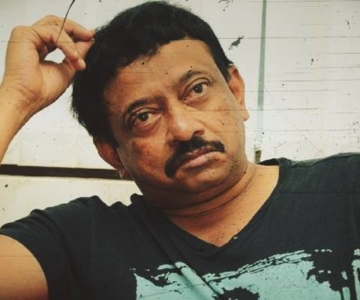
Beyond the barriers – Ram Gopal Verma

The work of Ram Gopal Varma and his associates is ushering in a new era of Bollywood cinema

If there is one individual and talent who has been instrumental in shaping the current Indian cinema, it is Ram Gopal Varma, aka RGV. The fact that I, in Pakistan, am writing about an Indian filmmaker may be thought a little odd; but whether we like it or not, cable television has institutionalised the demand for Indian films here in Pakistan. While the country's cinema houses are being turned into hideous plazas that violate practically every building code there ever was, the rise of the multiplex is not only luring but also creating a class of loyal cine-goers in our neighbouring country. And there, RGV seems to be ruling the roost. During my visit to Delhi last year, I was informed that all shows for his latest film Sarkar had been sold out weeks in advance.

Thus was I forced to turn to a pirated version procured from a snazzy DVD shop in Lahore. The owner informed me that new laws were on the cards that would soon put pirated DVDs and CDs out of business. However, on my last visit to that outlet, sales were booming as usual. Piracy is too profitable a business and is far too highly in demand to be phased out through the mere enactment of law. Indian cinema thrives and whatever we choose to make of it, Bollywood is here to stay. In any case, the history of subcontinental cinema – and for that matter, classical music – is deeply complex and subverts political and geographical borders.