Posts Tagged Bulleh Shah

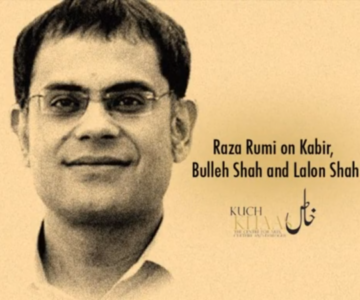
On Kabir, Bulleh Shah and Lalon Shah

22 October 2011

Not a great recording of my talk at Kuch Khaas, Islamabad.

‘Throw Away the Books’ – Bulleh Shah

19 June 2010

Rumi Foundation brings out a ‘Sufi journal’ called Hu. This year two of my essays have been published in the journal. I am posting the first one on Bulleh Shah.

***

If God was found by bathing and cleansing

He would have been found by frogs and fish

If God was found by wandering in the jungles

Stray animals would have found him

O Bulleh, the Lord can only be found

By loving hearts – true and pure…

(Translation by author)

Fifteenth century India witnessed a spiritual-cultural synthesis that was navigated by hundreds of yogis, Sufis and poets of India. Very much a people’s mobilisation, the Bhakti movement articulated a powerful vision of tolerance, amity and co-existence that is still relevant today. The powerful and soulful voices of Sufi poets of the sixteenth century therefore sing a shared tune: of love, rejection of formal identities based on caste, organized religion and class.

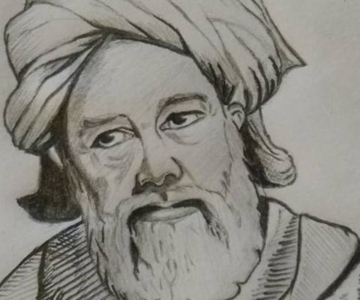
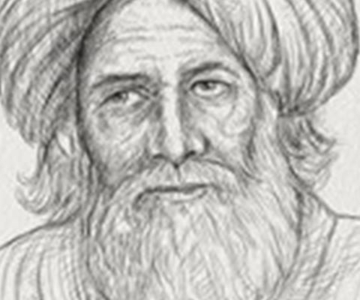
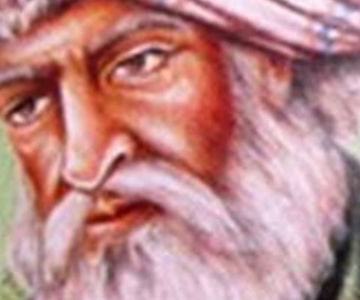
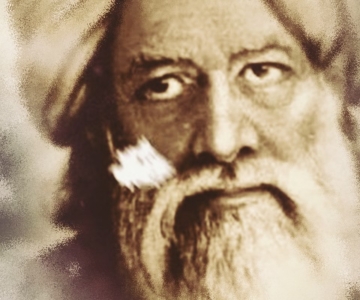
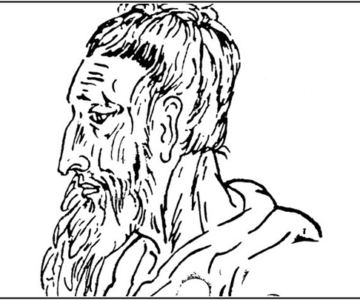
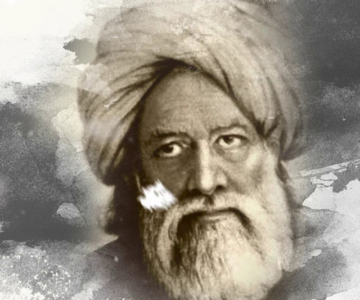
Bulleh Shah (1680-1758) of Kasur in Central Punjab is an extraordinary voice that provided a mystical message beyond caste, institutionalized religion and ideologies of power. Born in 1860 and named Abdullah Shah in a Syed family, he found a Murshid (spiritual master) in Shah Inayat who was an Arain (traditionally a non-landowning group). Bulleh’s family disowned him for trampling his caste and therefore identity in the rural context. However, Bulleh Shah, driven by Sufi ideals of equality of humans, rejected the formalized social identity framework based on hierarchies. The quest for knowledge, and the thirst for spiritual completion – what the masses perceive to be the domain of religion – was a pursuit beyond these divisive and hereditary conceptions of formal religion. When the orthodoxy declared him as an infidel, Bulleh replied: (more…)

Chal Way Bullehya Chal O’thay Chaliyay – Let’s go where everyone is blind

7 February 2010
Chal Way Bullehya Chal O’thay Chaliyay
Jithay Saaray Annay
Na Koi Saadee Zaat PichHanay
Tay Na Koi Saanu Mannay
***
O’ Bulleh Shah let’s go there
Where everyone is blind
Where no one recognizes our caste (or race, or family name)
And where no one believes in us
***
Ab to jaag Musaffir pyare
Raeen gayi latke taare
Kar le aj karni da weera
Mod na ho si aawen tera
***
Awake, dear traveller, you’ve got to move on.
Trailing its stars, the night is gone.
Do what you have to do, do it today.
You will never be back this way.
Your companions are calling.
Let us go.
***
Awake, dear traveller, you’ve got to move on.
Trailing its stars, the night is gone.
A pearl, a ruby, the touchstone and dice
With all that you thirst by the waterside.
Awake, dear traveller, you’ve got to move on.
Trailing its stars, the night is gone.
Below a modern rendition of these verses by the inimitable Meekal Hasan Band. They have been instrumental in reintroducing Sufi poetry among the youth of our country. (more…)

Baba Bulleh Shah’s gift

1 November 2008

Dr Manzur Ejaz writing for the TFT

According to myth, if perfectly sung by a master, the classical raga Malkauns can set a river on fire. And if you want a description of Malkauns personified, it would be the tall red-eyed jogi or Ustad Chote Ghulam Ali Khan. In a freshly laundered, blazing white and starched kurta-pajama, Khan Sahib was a well dressed and handsome man even in old age. Despite his appearance, Khan Sahib was at heart a jogi who had wandered and meditated in the limitless jungle of classical music his entire life.

Both Bade Ghulam Ali Khan and Chote Ghulam Ali Khan belong to this gharana. They were cousins with identical names but because one was older he was known as precisely that, Bade, and the younger as Chote. The classical singers of the Qasur gharana are sometimes called “Qasur kay qawwal bankay” (children of Qasur qawwals) because their forefathers were traditional qawwals at the shrine of Baba Bulleh Shah.

Khan Sahib worked hard to enhance Samina Hussain Syed’s skills in classical music because she had a very powerful, deep and melodious voice that constitutes the core of a classical singer. In fact, she had more potential than anyone else in the world of music at that time. Khan Sahib knew her potential and that is why he would come daily for her training; it was never just for the money.

Akhtari Bai Faizabadi, whom Khan Sahib romanced (more…)

Bulleh’s virtuous thoughts-

11 September 2008

Shahidain has sent these couplets

Main NeevaaN Mera Murshid Uccha
Main UcchiyaaN naal sang laayee

I am lowly my spiritual guide is lofty!
I have tied my fate to such lofty ones!

—————————————

Bulleh naaloN chullaah changaa
jis te ann pakaaee daa
ral faqeera majlas keetee
bhora bhora khaaee daa

A stove is better than Bulleh
because at least you can cook food on it
Saints sit together to eat
and share their food with each other.

Urs of Bulleh Shah in Kasur

26 August 2008

The annual Urs of Bulleh Shah, the Punjabi mystic poet, commenced yesterday in Kasur yesterday. Bulleh’s poetry reflected his rejection of orthodox hold of mullahs over Islam, the nexus between the clergy and the rulers and all the trappings of formal religion that created a gulf between man and his Creator. A common theme of his poetry is the pursuit of self-knowledge that is essential for the mystical union with the Beloved. Among Bulleh’s timeless verse, I love this one (more…)

Kabir, Bulleh and Lalon – Petals of a mystic lotus

21 August 2008

Also published in the Weekly Friday Times July 24 issue

The subcontinent during the 15th century witnessed the coming of age of a process that started brewing with the arrival of Central Asian Sufis, those eternal travellers who arrived in India with a message of Islam and mystic love. When Sufi thought, an off-shore spiritual undercurrent to the rise of Islam, met its local hosts, the results were terrific. There was no shortage of fundamentalists and communalists in that cultural landscape; and the gulf between alien rulers and the native subjects was a stark reality as well.

Nevertheless, a synthesis of sorts was navigated by hundreds of yogis, Sufis and poets of South Asia. Very much a people’s movement from below, the Bhakti movement articulated a powerful vision of tolerance, amity and co-existence that remains relevant today. This is many centuries before the suave, Western-educated intelligentsia coined the “people-to-people” contact campaigns. Yes, much has been lost in the tumultuous 20th century and perhaps these histories are irreversible. But a vast and complex common ground was nurtured by mystic poets of northern India, now comprising India, Pakistan and Bangladesh. (more…)

Four poems by Bulleh Shah (new translations)

20 May 2008

Who I am

I know not who I am,
I am neither a believer going to the mosque
Nor given to non-believing ways.
Neither clean nor unclean,
Neither Moses nor Pharaoh.
I know not who I am.

I am neither among sinners nor among saints,
Neither happy nor unhappy,
I belong neither to water nor to earth.
I am neither fire nor air,
I know not who I am.

Neither do I know the secret of religion,
Nor am I born of Adam and Eve.
I have given myself no name,
I belong neither to those who squat and pray,
Nor to those who have gone astray.
I know not who I am.

I was in the beginning; I’d be there in the end.
I know not any one other than the One.
Who could be wiser than Bulleh Shah
Whose Master is ever there to tend?
I know not who I am.

Come my Love, take care of me

Come my Love, take care of me,
I am in great agony.
Ever separated, my dreams are dreary,
Looking for you, my eyes are weary.
All alone I am robbed in a desert,
Waylaid by a bunch of waywards.

The Mulla and Qazi show me the way,
Their maze of dharma that is in sway.
They are the confirmed thieves of time.
They spread their net of saintly crime.

Their time-worn norms are seldom right,
With these they chain my feet so tight!
My love cares not for caste or creed.
To the ritual faith I pay no head.

My Master lives on yonder bank
While I am caught in the gale of greed.
With his boat at anchor, He stands in wait,
I must hasten I can’t be late.

Bulleh Shah must find his love,
He needn’t have the least fright.
His Love is around, yet he looks for him
Misled in the broad daylight.

Come my love take care of me,
I am in great agony.

**************

Strange are the times!

Crows swoop on hawks
Sparrows do eagles stalk
Strange are the times!

The Iraqis are despised
While the donkeys are prized
Strange are the times!

Those with coarse blankets are kings;
The erstwhile kings watch them from the ring.
Strange are the times!

Its not without reason or rhyme,
Strange are the times

Says Bulleh, kill your ego
And throw away your pride.
You need to forget yourself
To find Him by your side.

It’s all in One contained

Understand the One and forget the rest.
Shake off your ways of an apostate pest.
Leading to the grave to hell and torture,
Rid your mind of dreams of disaster.
This is how is the argument maintained,
It’s all in One contained.

What use is it bowing one’s head?
To what avail has prostrating led?
Reading Kalma you make them laugh,
Absorbing not a word while the Quran you quaff.
The truth must be here and there sustained,
It’s all in One contained.

Some retire to the jungles in vain.
Others restrict their meals to a grain.
Misled they waste away unfed
And come back home half alive, half dead.
Emaciated in the ascetic postures feigned,
it’s all in One contained,

Seek your master, say your prayers and surrender to God,

It will lead you to mystic abandon
And help you to get attuned to the Lord.
It’s all the truth that Bulleh has gained.
It’s all in One contained.

Bulleh Shah, a renowned Muslim spiritual leader of the sub continent of Indo-Pakistan, was a Punjabi Sufi poet. His spiritual master was Shah Inayat Qadiri of Lahore and because of this Bulleh was referred to as a saint or spiritual leader. Bulleh’s real name was Abdullah Shah, but he was known as Bulleh to his family and that was the name he chose to use as a poet. (more…)

Nusrat Fateh Ali Khan sings Bulleh Shah

18 March 2008

I had earlier posted a video of Abida Parveen singing Bulleh Shah. While that is an all time favourite, the global voice of Nusrat Fateh Ali Khan has also rendered Bulleh Shah with great ease and soulfulness. I am grateful to Cubano for opening the doors into this magical world of music. No words can capture the sheer beauty of this music. Videos are posted below (more…)

A few poems by Bulleh Shah

29 January 2008

Recently, I was asked to help a friend with the original text of Bulleh Shah’s Hindu na Na heen Musalmaan. I found the original Punjabi and also found two other pieces that I am posting here.

Bulleh Shah’s poetry addresses most maladies that we face in this day and age.

——————————

HiNdu na naheeN musalmaan,
Baheeye tiranjan taj abhimaan.
Sunni na naheeN ham sheeya
Sulha kuhl ka maarag leeya.
Bhookhe na naheeN ham rahje,
NaNge na naheeN ham kahje.
RoNde na naheeN ham hasde
UjaRe na naheeN ham vasde.
Paapi na sudharmi na,
Paap pun ki raah na jaanaaN.
Bulhe Shah jo hari chit laage,
Hindu turak doojan tiyaage

Neither Hindu nor Muslim,
Sacrificing pride, let us sit together.
Neither Sunni nor Shia,
Let us walk the road of peace.
We are neither hungry nor replete,
Neither naked nor covered up.
Neither weeping nor laughing,
Neither ruined nor settled,
We are not sinners or pure and virtuous,
What is sin and what is virtue, this I do not know.
Says Bulhe Shah, one who attaches his self with the lord.
Gives up both hindu and muslim.
(more…)

Enough of learning, my friend! – Bulleh Shah

20 June 2007

Enough of learning, my friend!

Enough of learning, my friend!

To it there is never an end

An alphabet should do for you,

It’s enough to help you fend.

You’ve amassed much learning around,

The Quran and its commentaries profound.

There is darkness amidst lighted ground.

Without the guide you remain unsound.

Learning makes you a Sheikh or his minion,

And thus you create problems trillion.

You exploit others who know not what,

Misleading them with wild opinion.

You meditate and you say your prayers

You go and shout at the top of the stairs.

Your cry reaching the high skies,

Its your avarice which ever belies.

The day I learnt love’s lesson,

I plunged into the river of divine passion;

An overwhelming gale, I was confounded and lost

When Shah Inayat cruised me across.

Source: here

More on Bulleh Shah here and here

Punjabi version is below (more…)

Abida Parveen sings Bulleh Shah’s teray ishq nachaya..

21 May 2007

As I recited Bulleh Shah’s poetry this evening, a friend sent a link to another video of Abida Parveen singing Bulleh’s mystic poetry in her inimitable style. Lo and behold, I also found an online translation of the verse:

Here is a translation of the verse rendered in this video:

O Physician, come back! my life is ebbing away.
Compelled by love, I dance, I dance.

This love has set up camp inside me.
It is I, who filled the cup with this poison and drank it.
Come back right away, else, I will surely die.
Compelled by love, I dance, I dance.

The sun has set, its glow remains.
Grant me a sight of you again! I would die for it!
What a mistake I made, not going with you.
Compelled by love I dance, I dance.

Mother do not bar me from this love.
Whoever turns back unloaded boats that have left?
How foolish I was, not going with the boatman.
Compelled by love I dance, I dance.

Peacocks sing in the groves of love.
My beautiful beloved is my Ka’ba, my Qibla.
He injured me, then turned away.
Compelled by love I dance, I dance.

Bullhe Shah, I sit at Inayat’s door,
He clothed me in robes of green and red.
When I stamped my heel, I found him.
Compelled by love I dance, I dance.

(and now the video).

Here is the source of translation

For another version of Punjabi and English, please click here.

sanon apna yaar rajhawan dey – Bulleh Shah

21 May 2007

With due apologies to those who cannot understand Punjabi. I will work on a translation sometime later.
mar na mulla bulariyan
sanon apna yaar rajhawan dey

kanjri banyaan meri ezat na ghatdi
meinon naach ke yaar manawan deey

loog ishaq noon mool gindey
meinnoon gaal wich mala pawan deey

Bulleh shah odi oo janey
meinon apni toord nebha lein deey