Posts Tagged British

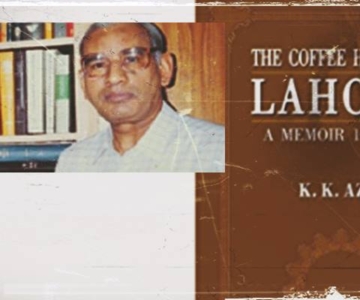
Reclaiming the legacy of ZA Bukhari

18 October 2011

By Raza Rumi

Defining ‘Pakistani’ culture has been a problematic endeavour right from the inception of the country. Pakistan has straddled between 5,000 years of its ancient past, a thousand of years of Muslim rule in the Indian subcontinent, and the secular, plural reality that exists to date. Few individuals attempted to understand this. And fewer could actually lead the arduous process of articulating and shaping a truly nuanced and composite Pakistani culture. Zulfiqar Ali Bukhari, popularly known as ZA Bukhari, was one such Renaissance man who will always be remembered for his life and works, but more importantly for filling the void, which was created due to the truncation of Indo-Muslim identity in 1947. At the time of Independence, Pakistan was beset by the greatest of its challenges, ie of coming to terms with its past and deciding about its future trajectory, conflicts which remain unresolved despite six decades of fruitless struggles. (more…)

W.H. Auden’s poem – Partition

6 May 2009

My friend IK has reminded me of W.H. Auden’s poem “Partition,” published in 1966. These moving verses  highlight the absurdity of the way the border was created sixty two years ago: 

Unbiased at least he was when he arrived on his mission,
Having never set eyes on the land he was called to partition
Between two peoples fanatically at odds,
With their different diets and incompatible gods.
“Time,” they had briefed him in London, “is short. It’s too late
For mutual reconciliation or rational debate:
The only solution now lies in separation.
The Viceroy thinks, as you will see from his letter,
That the less you are seen in his company the better,
So we’ve arranged to provide you with other accommodation.
We can give you four judges, two Moslem and two Hindu,
To consult with, but the final decision must rest with you.” (more…)

Impressions – White Mughals by William Dalrymple

8 July 2008

My bright, young friend Imaduddin (left) has written this excellent, terse review of the engaging book White Mughals.

Yesterday when he emailed me this text, I was intrigued by his views as well as envious of his ability to say a lot in so few words. I enjoyed the book for the era it evoked with such craftsmanship and tenderness. However, Imaduddin says it all:

Quick and dirty impressions of White Mughals by William Dalrymple

Beautiful prose with a significant point brought out: that the British DID integrate in India prior to their discriminatory laws against mixed race progeny of the 1780s, the policy that East India Company servants would be older when they arrived in India, the arrival of white memsahibs and the arrival of condescending, colonial attitudes. Dalrymple finds that a third of Company servant wills bequeathed property to native wives, concubines and children until the afore mentioned advents, after which wills including native family dropped to almost none.

Vivid depictions of the court life and society of perhaps India’s most cultured city, Hyderabad, are brought out in this book, as are the enlightened, seeking attitudes of early British Company servants who integrated beautifully into Mughal society, as had the Portugese into Indian society earlier – as had every other foreigner invader into India, an India which had turned rugged Mughal warriors into artsy Rennaisance men.

The love story of Khair un Nissa, cousin to an ambitious minister in the Nizam’s court, and James Kirkpatrick, the Company’s Resident in Hyderabad, is the thread that brings all these themes together, but is unnecessarily long. If I were Dalyrymple’s editor, I’d have cut this 500 page book by a fifth – there is much repitition.

If you don’t have time to read love stories and are interested in historical commentary on India, read the first 57 pages. That will be enough.

The story of an ivory chair – Murshidabad’s gift to Hastings

5 June 2008

Dr Amin Jaffer, the expert on Indian arts and furniture, currently working at Christie’s holds forth in a conversation below. The chair above is a fine work of craftsmanship and amalgamation of Eastern and Western aesthetics in the eighteenth century India. The chair was presented to the infamous Warren Hastings by the female Rani (ruler) of Murshidabad. Amazing that it survives…

we’re very lucky to have found a group of correspondence relating to Warren Hastings and the ruler of Murshidabad, the old princely capital of the state of Bengal and she was the regent, she was called Mani Begum, who was originally a dancing girl and she married the Nawab and when the Nawab died and there was a sort of power vacuum, Warren Hastings installed her as the regent and she thanks Hastings and his wife Marion by giving them, over a number of years, pieces of very, very high quality ivory furniture.
And when Hastings comes back to England, it’s his agent in Calcutta who’s transacting the shipping of the furniture and Hastings asks him repeatedly to give letters to the Begum to thank her or to tell her how fantastic the furniture looks in the house in Dalesford – Warren Hastings’ great house which he built in the Cotswolds and that’s how we really know that this piece, one of a pair, belonged to this great important commission.
(more…)

On Bhagat Singh, his vision and Jinnah’s support for his struggle

28 March 2008

A few days ago, Irfan Habib, a noted researcher and author of TO MAKE THE DEAF HEAR – Ideology and Programme of Bhagat Singh and His Comrades sent his thoughtful piece on the legendary Bhagat Singh.

Incidentally, Bhagat Singh was hanged on Pakistan’s Republic Day – March 23 though nine years prior to that – in Lahore – thereby adding another dimension to the symbolism of March 23 for Pakistanis. Bhagat Singh for his principles, struggle for just causes and valour is a shared hero.

I am quoting some of the passages from Habib’s article below. Citing a Tamil newspaper editorial of 1931, Habib writes:

One of the most articulate and strong reaction was seen in far away Tamil Weekly called Kudi Arasu, where Periyar E.V. Ramasami wrote an editorial on March 29, 1931. Besides being critical of Gandhi and the Congress for failing to save him, Periyar saw in young Bhagat Singh an ally who stood for rationalism and spoke against caste oppression. He began by writing there is no one who has not condoled the death of Mr. Bhagat Singh by hanging. There is none who has not condemned the government for hanging him.

The above lines reflect the widespread acceptance of Bhagat Singh as a national hero, much beyond the limits of Punjab, and more significantly, within this short political life. There is no reason to believe that his persona was created by scholars through their exploration and interpretation of historical records.

Habib concludes with these words- (more…)