Jahane Rumi In search of the unsearchable: O, my soul! where would you find your house?

9Sep/090

Religion of the heart

RAKSHANDA JALIL writing here
Sufism, often considered exotic and esoteric, belongs to ordinary people of faith.
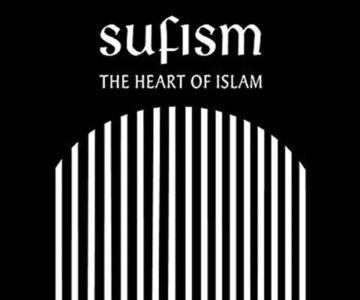
Sufism: The Heart of Islam; Sadia Dehlvi, 2009, HarperCollins, p 384
By the early thirteenth century Delhi had emerged as the beating heart of the Sufi movement that had sprung in Central Asia and swept across much of north India. Sultan Shamsuddin Iltutmish (1210-35) had set himself up as the ruler of Hindustan and e stablished his capital at Delhi. Central Asia and Iran had fallen to the Mongol hordes and a virtual exodus had begun — of scholars, holy men and wandering
mendicants. While Ajmer and Nagaur remained important centres of the Chistiya silsila, Delhi was fast gaining popularity as the axis of the Islamic east. And it was to Delhi that they came – to set up hospices, to gather the faithful around them, and to spread the word about a new kind of Islam. In the years to come, the Islam of the Sufis spread
5Aug/095

Le grand historien – (KK Aziz 1927-2009)

Zarina and KK Aziz, Lahore, 2007

KK Aziz, aged 11 years

Author with the grand historian of Pakistan, 2007

KK Aziz, aged 10 years

KK Aziz at MB high school, Batala, 1941-42

KK Aziz at Government College, Lahore, 1946

It was a humid evening in Peshawar when I found out about the demise of Pakistan’s neglected, grand historian KK Aziz. As it is, visiting Peshawar these days is quite depressing, and this news hit me for its stark, brutal reality. This was the physical death of the historian, for the scholar had already been marginalized from the mainstream of an anti-intellectual Pakistan. Only a week before, I had spoken to Zarina Aunty, his wife, and inquired about Aziz’s health. I am overwhelmed by the regret of not having met him for months, knowing full well how fragile he had been for the past few years.

It had become a routine over the years to meet the historian at his Lahore house and spend long, engaging afternoons duly arranged in advance. Aziz was an old-fashioned gentleman: proper, entertaining and hospitable. It was his wife, Zarina, who was more of a light-hearted character in their lonely house full of books and research materials.

At school, our exceptional history teacher had introduced us to KK Aziz and his writings; and the experience of reading shoddy, deceitful textbooks and Aziz’s reasoned critique was both revealing and entertaining. It was years later when my friend Faheem, with whom I explored history, introduced me to K.K. Aziz. That was a fantastic moment, for meeting Aziz was always a mixed experience: exciting, disquieting and sometimes depressing. He peeled away layers and layers of the ignorance and half-truths that have been so viciously grafted on to historiography by Pakistan’s nervous and irresponsible state.

Khursheed Kamal Aziz, commonly known as KK Aziz, was born to Barrister Abdul Aziz, in Ballambour near present-day Faisalabad on December 11, 1927. KK Aziz’s father was acclaimed as “a historian in his own right” for work on Heer Waris Shah, and in the Urdu work “Woh Hawadis Ashna” KK Aziz elucidates his family legacy and his father’s history.

True to his lineage, Aziz was to pen dozens of historical works and there is little doubt that he shall be remembered for generations of academia and independent scholarship. He was an alumnus of Government College, Lahore, where his tutors included Professor Ahmad Shah Patras Bokhari and Professor Sirajuddin. Later, Aziz became a full professor, and over the years taught courses in politics, history, Islamic Studies and Asian studies at various universities in Lahore, Toronto, Cambridge, Heidelberg and Khartoum. His research interests and capacities were emboldened by this international exposure. However, he yearned to bring back his experience and expertise to his country, but each time the co-joined twins of the Pakistani state and its ‘ideology’ were to harry him. Independence in scholarship is not a trait respected by officialdom, for it tends to promote and honour the cop-outs and the conformists.

Aziz served as an Official Historian to the federal government, Chairman of the National Commission on Historical & Cultural Research, and a Special Policy Adviser to the Prime Minister between 1973 and 1978. In these official capacities, he was characteristically important in the historical definition of Pakistan’s ‘life’ as a nation. In 1978, he was heading the National Commission of Historical and Cultural Research in Islamabad when he was forced to leave Pakistan by Zia-ul-Haq.However, this did not dissuade him from his passion and his academic pursuits.

Even before the draconian Zia era, K.K. Aziz faced various impediments from the state. For instance he related to me how the state censored certain portions of Fatima Jinnah’s monograph “My Brother”, where unsavoury remarks about Liaqat Ali Khan were kept under lock and key lest they demolished the official mythologization of Pakistan’s early leadership. Jinnah in Ziarat apparently had refused to see Liaqat Ali Khan, and only on the persuasion of his sister did Jinnah agree to see him, along with Abdur Rab Nishtar. Jinnah reportedly told his sister that the visitors, on the pretext of inquiring after his health, had come to check how soon he was going to die.

Such flagrant abuse of power and distortion of facts has led us to a point where we exist as an imagined fortress of Islam seeking glories, while in reality society and the state are struggling to survive. This is why the exit of KK Aziz is significant, for we have lost the home-grown voice of sanity which gave primacy to facts over spin-doctoring.

Aziz authored “The Pakistani Historian: Pride and Prejudice in the Writing of History” in 1993, elaborating upon the experience from his own professional career and the kind of life that a historian in this country would live through. In the same year he also wrote “The Murder of History”, a succinct rendition on history and how it is presented or obscured by official raconteurs. It was in the 90’s that he also admitted to having ghost-written “The Struggle of Pakistan”, published under the name of Ishtiaq Hussain Qureshi. In 1995 he attended the 62nd anniversary celebration for the name “Pakistan” at an event in London, where he elucidated upon the history of the word “Pakistan”, taking initiation from Rehmat Ali’s declaration “Now or Never” in January 1933. In 1997 he was elected to the coveted Aziz Ahmad Memorial Lectureship at the University of Toronto; signaling his position as a political scientist, as a historian and as an instructor/lecturer of global repute.

The works of KK Aziz testify to his penchant for detail, of verified sources of information and astute analysis. His seminal work, “The Making of Pakistan: A Study in Nationalism”, is a standard textbook and is a superior work on Pakistan’s troubled nationalist identity. His other well-regarded books include “Party Politics in Pakistan 1947-1958”, “History of the Partition of India” and “Britain and Pakistan”, among others. He also authored a diverse range of books that dealt with pre-Partition history: “Public Life in Muslim India: 1850-1947”, “Muslims under Congress Rule 1937-1939: A documentary record”, “British Imperialism in India”, and “The All India Muslim Conference 1928-1935: A documentary record”. His original works on political science and history, such as “Studies in History and Politics” and “Britain and Muslim India” are also well-known. Another well-researched document, “Rahmat Ali: A Biography” was published in 1987, and this is a magnificent tribute to an elusive historical figure who coined the term ‘Pakistan’ in the first instance.

From being an avid nationalist, KK Aziz also journeyed through a phase of disillusionment with the country that he had cherished. I recall a meeting where he was brutally frank about Professor Ishtiaq Hussain Qureshi, who had doctored historical facts to serve the new state, and created a fabricated account of Pakistan’s creation. Even though he had contributed to the writing of the book, Professor Qureshi had tinkered with the truth and set a wrong precedent for coming generations. It is no wonder that historiography in Pakistan is nearly extinct. A handful of Pakistani academics, mostly working in Western universities, such as Ayesha Jalal, are keeping the torch ablaze. But they are condemned and mocked by the guardians of official truth within the country, who cannot view Pakistan’s history beyond the right-wing narratives of anti-Muslim biases of the Hindus. Aziz in his last years was not as firm about his earlier views on the creation of Pakistan, and he did make a few revealing statements that I would rather not quote, for he should now rest in peace and not become a target for self-styled nationalist Mullahs.

1Jul/091

Book review: Challenging martial histories


Flight of the Falcon: Story of a Fighter Pilot,
by S. Sajad Haider.
Published by Vanguard Books,
45 The Mall, Lahore & Lok Virsa Building, Jinnah Supermarket, Islamabad


Nur Khan, Asghar Khan and Abbas Khattak at the launch in Islamabad


Haider signing his book
at the launch


Sajad Haider with his squadron of Pathankot fame


Sajad Haider with his sister Kausar Haider who is an
eminent educationist


Sajad Haider (extreme right) with children Zaeina, Adnan, and Zohare


“Butt, the prosecutor, had not an iota of self-esteem in his body or soul; he was the most pitiful human being I have seen crumble so quickly from such a high perch. I continued brushing my teeth as I heard him say the CAS had ordered my immediate release and a service car would be there to drive me home”


When Haider bid farewell to the PAF, he had Rs 17,000 as his total savings. No plots and other assets that we are now familiar with. He started from ground zero. But his lesson for men in uniform is: “If you serve with total dedication ... nature rewards you for your pride in the profession”

 
This is a book review that was published in The Friday Times (June 19-25 issue)

This was a hot May afternoon when I found myself at the book launch of Flight of the Falcon. I had no plans to be in Islamabad until the author informed me of the launch, an event to be remembered in the culturally stifling environs of Islamabad. I have known Air Commodore (retired) Sajad Haider for years. He is an exceptional man, able to connect across generations. The articulate and hospitable Haider can hold forth on any subject under the sun without cavil. As a young man, I had heard the delightful, adventurous and sometimes sad accounts of his stint with the Pakistan Air Force (PAF). In many ways, the rise and fall of the PAF is a mirror image of Pakistan’s institutional trajectory, depicting how good we are at making a hash of things and persecuting our heroes.

 Flight of the Falcon essentially sums up Haider’s grand story of valour, tribulations and commitment to the country. As he told me, this book “is my endeavour to fulfil my small responsibility towards my country. During the 1965 and 1971 wars with India, which I participated in as a commander leading the No 19 Squadron of the Pakistan Air Force, and as head of the fighter tactical wing respectively, I was a witness to history in the making.” During the 1965 war, Haider had collected the best fighter pilots and put them under the “warriors” training regime. The results achieved by his squadron were spectacular: an unmatchable six Sitara-e-Jurats were bestowed on the pilots, including the fighter-author. The 19th Squadron carried out the most difficult missions of the 1965 war and these have been documented by British, Indian and Pakistani experts. Whilst most accounts recall the operational episodes narrated by second-hand sources, Flight of the Falcon attempts to provide a candid account of these two controversial wars from the cockpit of a fighter air craft. Interestingly the book challenges the conventional mantra of victory trumpeted by state histories: in both the wars, there was no clear winner, and the book chronicles that honestly.

 Haider holds that after four decades, the truth about what happened must come out without any embarrassment. “We owe it to our future generations, particularly today’s young commanders and students of military history, to set the record straight,” he adds. Not surprisingly, reticence to carry out an honest analysis of the lessons of the wars against India is rooted in the effort to protect the incompetent and short-sighted leaders whose mistakes cost the lives of many gallant men, not to mention the tragic break up of Pakistan in 1971.

 Flight of the Falcon is not just a dry historical account. It is an eminently readable autobiography as well. Sometimes, the episodes appear stranger than fiction, especially when Haider’s air chief framed him in a conspiracy to overthrow the government of Zulfiqar Ali Bhutto and charged him with treason and with inciting mutiny. We also learn how the Shahinshah of Iran, Raza Pahlavi, told Zulfiqar Ali Bhutto to punish Haider for denigrating him. The sensational bits make the book impossible to put down. There is the incident where Zia ul Haq lectured the armed forces, trying to explain the reasons why he had carried out a military coup, and why the nation was not fit for democracy. The author retorted, “The pride with which I have worn this uniform and defended my country with my life has been denigrated to the point where I see contempt in the eyes of Pakistanis who had once adored the sight of this very uniform. As part of your constituency we are now the conquerors of Pakistan rather than its defenders.” Of course, Haider lost his career and Zia was reported to have said that he wanted to see Haider with a begging bowl in his hand!

The story gets more inspiring as Haider, instead of acting as a depressed careerist, does not look back, and rebuilds his life as a successful businessman. The message is clear: “never cave into coercion, nor surrender to the self-righteous.” These are words that are most relevant as we wage war against the forces of darkness in twenty-first century Pakistan.

We also read interesting anecdotes about Haider’s personal life. His father emerges as a role model, held in high respect by the Baloch Sardars; and his mother is revealed as a woman who emphasised education for all her children. From a ‘mama’s boy’, the author landed into the rough terrain of life and achieved success on merit, and through sheer dedication and hard work. The role of Air Marshal Asghar Khan in upgrading the PAF also gets illuminated through the text. But the sad events following Ayub Khan’s coup in 1958 get a detailed treatment. Indeed the author, many would say for the right reasons, is unsparing towards the 1958 coup – a “ midnight coup supported by second rate generals of the army,” to use Haider’s words. The only person to challenge Ayub was Asghar Khan. The Pakistan army since the 1960s has followed “a course of nepotism, corruption and cronyism that has been hard to rectify in all these years”, laments Haider.

Pakistan’s client status is also discussed at length when the author narrates how the Americans pushed Ayub Khan into creating a spy base at Badaber near Peshawar. Haider laments how this tradition was carried on by Ayub’s successors, especially Yahya Khan, who kept waiting for the 6th fleet in 1971, which was checkmated by the Soviets.

The false sense of importance that we have nurtured and polished as the core to our foreign policy continues unabated.

Haider tells us how Ayub feared his own shadow and constantly suffered the trepidation of coups and assassination attempts which was more of a phantom. Purges from within the ranks led to a situation where the army was starved of young captain and major level officers. In Haider’s words, the “not so obvious young Turks managed to survive.” Ayub pushed Pakistan into the 1965 war, which turned out to be a tactical debacle leading to the dismemberment of Pakistan. As we find out from Flight of the Falcon , the PAF was kept completely in the dark about the plan to annex Kashmir through guerrilla warfare, and Asghar Khan was deliberately kept out of the loop until the Indian air force rattled the rafters of Musa and Ayub’s bunkers. Tragically, the leadership thought that India would not react violently against Pakistan. The gallant men who infiltrated into Indian- held Kashmir were ill-trained. Some youths from the streets of Azad Kashmir towns were given as little as three weeks training to fight a guerrilla war of attrition. “There was no plan of exfiltration, and the secrecy of this plan met its Waterloo when two Muslim Kashmiris reported the presence of Pakistani Mujahid forces to the Indian police as well as to the local army headquarters. A tragic massacre of our valiant men followed,” says Haider. We have been bleeding due to the Kashmir conflict for decades, and brave men have shed their blood without knowing the power-games and megalomania of our leaders.

17May/090

Another Incarnation

By PANKAJ MISHRA

THE HINDUS

An Alternative History

By Wendy Doniger

Visiting India in 1921, E. M. Forster witnessed the eight-day celebration of Lord Krishna’s birthday. This first encounter with devotional ecstasy left the Bloomsbury aesthete baffled. “There is no dignity, no taste, no form,” he complained in a letter home. Recoiling from Hindu India, Forster was relieved to enter the relatively rational world of Islam. Describing the muezzin’s call at the Taj Mahal, he wrote, “I knew at all events where I stood and what I heard; it was a land that was not merely atmosphere but had definite outlines and horizons.”

20Sep/081

Hyderabad – Past And Present

The Untold Charminar -Reviewed By Asif Noorani

Way back in 1954 when I greeted a grand old lady, who had migrated to Karachi from what used to be Hyderabad Deccan, with the customary Assalam Alaikum, I was admonished for my ‘bad manners’. She reminded me that I was not her age, which was why I was supposed to say Aadab and bend my neck slightly.

That was the Hyderabadi tehzeeb (a combination of good manners and courtesies). A recently published collection of writings Hyderabad: An Untold Charminar, imaginatively compiled and intelligently edited by Syeda Imam, has much more to say on the subject. The old-worldly charm in Hyderabad co-exists with the great strides that the city has taken in becoming a high profile IT city, which is why it has been nicknamed Cyberabad.

5Sep/084

Extracts from Empires of the Indus by Alice Albinia

From the Guardian

Water is potent: it trickles through human dreams, permeates lives, dictates agriculture, religion and warfare. Ever since Homo sapiens first migrated out of Africa, the Indus has drawn thirsty conquerors to its banks. Some of the world's first cities were built here; India's earliest Sanskrit literature was written about the river; Islam's holy preachers wandered beside these waters. Pakistan is only the most recent of the Indus valley's political avatars. I remember the first time I wanted to see the Indus, as distinctly as if a match had been struck in a darkened room. I was twenty-three years old, sitting in the heat of my rooftop flat in Delhi, reading the Rig Veda, and feeling the perspiration running down my back. It was April 2000, almost a year since the war between Pakistan and India over Kargil in Kashmir had ended, and the newspapers which the delivery man threw on to my terrace every morning still portrayed neighbouring Pakistan as a rogue state, governed by military cowboys, inhabited by murderous fundamentalists: the rhetoric had the patina of hysteria. But what was the troubled nation next door really like? As I scanned the three-thousand-year-old hymns, half listening to the call to prayer, the azan, which drifted over the rooftops from the nearby mosque (to the medley of other azans, all slightly out of sync), I read of the river praised by Sanskrit priests, the Indus they called 'Unconquered Sindhu', river of rivers. Hinduism's motherland was not in India but Pakistan, its demonized neighbour.

At the time, I was studying Indian history eclectically, omnivorously and hastily – during bus journeys to work, at weekends, lying under the ceiling fan at night. Even so, it seemed that everywhere I turned, the Indus was present. Its merchants traded with Mesopotamia five thousand years ago. A Persian emperor mapped it in the sixth century BCE. The Buddha lived beside it during previous incarnations. Greek kings and Afghan sultans waded across it with their armies. The founder of Sikhism was enlightened while bathing in a tributary. And the British invaded it by gunboat, colonized it for one hundred years, and then severed it from India. The Indus was part of Indians' lives – until 1947.

28Aug/081

Opium City:The Making of Early Victorian Bombay

Courtesy Three Essays Collective, I found this book review on an important yet less known facet of South Asian History:

Opium City
The Making of Early Victorian Bombay

By Amar Farooqui

REVIEW in 'Mid-Day'

MUMBAI'S OPIUM PAST
by Mahmood Farooqui
December 23, 2005

It sometimes appears, from the nature of current historical debates, as if the British empire in India was purely an orientalising mission whose discourses generated a politics of identity but that it was little more than an ideological apparatus that hegemonised us. It is difficult therefore to connect back to the earliest nationalists who decried the drain of wealth from India, who lamented India’s deindustrialisation and the economic exploitation of our people by foreign occupiers.

It is easy, in the miasma of post-colonialisms emanating from American universities, to forget that the Empire came into being and remained in force as an economic entity, that it was instituted by traders, that there was also something called economic imperialism.

Amar Farooqui’s Opium City — The Making of Colonial Bombay is welcome because it reorients us to the fundamentals of how and why we were colonised by the East India Company. It is a new title by the Three Essays Press, a Delhi-based outfit, which has been publishing tracts in the form, as its name implies, of three essays in slim volumes by renowned and radical academics in a style and on subjects that are of general interest.

13Aug/080

recollections of Annemarie Schimmel

Rehana Hyder writing for the Friday Times

My first recollection of Annemarie Schimmel was as a teenager in Delhi in 1969, in the year of the Ghalib Centenary celebrations, when my mother sent me to her hotel room with a single long-stemmed rose and a note with “ sher o shairi, ” the usual mode of communication between the two literary ladies. I remember her as striking and sparkling, tall and blonde, always wearing something reminiscent of strawberries, sunshine and cream. She had probably even seen me as a toddler during my parents’ previous posting in India. The only person I know who has known her longer is my old friend Anadil Rashidi, whom Annemarie Schimmel blessed like the proverbial Fairy Godmother at her birth in the sacred, Sufi land of Sindh, her favourite part of Pakistan.

Thereafter, Annemarie Apa was woven into the fabric of my life, and intricately so when we lived in her country of origin, Germany, in the early 1970s. I learnt with wonder how, in Saxony as a girl, she had written and painted the Orient, East and South Asia in particular, under the encouraging eyes of her enlightened “eltern.” Her Mother, whom we all came to call “Mama,” and she resided in an old, spacious, light-filled apartment, Lennestrasse 42, overlooking a tree-lined avenue near the University in Bonn.

4Jul/0829

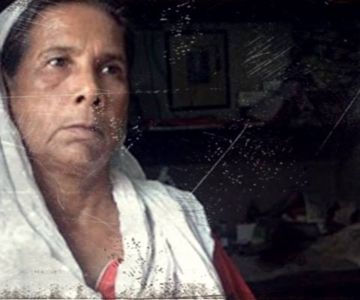
Sultana Begum – a surviving heir of Bahadur Shah Zafar

Neena Jha and Shivnath Jha have launched a nationed wide movement to protect musicians, artists, academicians and others who have brought laurels and pride to India through book - Andolan Ek Pustak Se.

Sultana Begum

In the midst of pompous celebrations over the 150th year of India’s First War of Indepedence, a fact that rankles is that the heirs of the Mughal’s last emperor Bahadur Shah Zafar, Sultana Begum, continue to languish in squalour and anonymity.
The story of middle-aged Sultana Begum brings tears to one’s eyes. She runs a tea-stall in Howrah to earn a living for her family. Bahadur Shah Zafar’s heirs are struggling to take out a bare survival. Due to the poverty, daughters in the family were deprived of higher education.
23Aug/079

The tributes continue – remembering Qurratalain Hyder

The literati in India and Pakistan are grappling with the larger question of Qurratulain Hyder's stature in Urdu, and some would say, World literature. The Daily Times, Pakistan has published an appropriately titled editorial, Quratulain Hyder, Urdu's greatest novelist. This paragraph struck me:

...her view of culture was intensely pluralistic, explaining Muslim culture too in a transmigratory technique in her big novel Aag Ka Darya. The Pakistani public paid her a back-handed compliment by making her books bestsellers in Pakistan; but most of them were pirated, meaning that someone other than her got rich selling them. She was always a chronicler, a kind of Tolstoy in Urdu that our critics have ignored. When someone asked her in Bombay to write about the Iran-Iraq war she naturally began with the Arab conquest at Qadissiya.

Outlook India had to say this:

Only a few days back, to mark the 60 years of Independence, when we asked an eminent jury to pick out 60 Great Indians in 60 years of our Republic, the name of Qurratulain Hyder was introduced prominently as Urdu's Marquez."Through her novels and short stories, this prolific writer gave Urdu fiction a brave and endlessly inventive new voice," we wrote, and quoted the London Times: "Her magnum opus, Aag Ka Darya (River of Fire), is to Urdu fiction what A Hundred Years of Solitude is to Hispanic literature

In C M Naim's piece, published in the Outlook:

What counts, for her, is the human spirit and the relationships it generates and nurtures. That is where the linearity of time seems to curve into a spiral, urging us to recognize a past that never quite disappears.....What, then, is our choice as individuals? Here it may be worthwhile to recall the characteristically modest, even self-mocking, remarks that Hyder made in 1991 in her acceptance speech at the Jnanpith Award function: "My concern for civililzational values about which I continue writing may sound naive, wooly-headed and simplistic. But then, perhaps, I am like that little bird which foolishly puts up its claws, hoping that it will stop the sky from falling."

and he concludes with this superb analysis:

...what Hyder tacitly offers us is nothing but that wise Candidean response: even in the best of all possible worlds, it is best not to neglect to tend our garden. Certainly, through the several thousand pages of her writings, she has shown herself to be an eloquent witness to that truth.

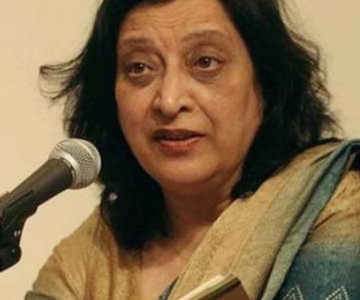
(photo left- Gauri Gill 2005) The Indian Prime Minister Manmohan Singh also expressed the sense of loss: "..In her unfortunate passing away the country especially Urdu literature has lost a towering literary figure. She will be truly missed in literary circles in the country.'

Read Jawed Naqvi's piece in the DAWN; and reactions of various writers in the daily NEWS . Rediff has published an article entitled, She was one of a Kind. Javed Akhtar, the eminent Indian lyricist has paid this grand tribute and held that she was a true genius and rightly said that he felt sorry for those people who read fiction but had not read Hyder:

"When I say that it is a great loss, it's not only to Urdu literature, not only to Indian literature, but to the word literature. I am not exaggerating at all.. the years to come, Haider's novels will reach everywhere."

"The kind of work she has done... its only because she was born in a third world country and wrote in a language that is not of the imperialistic powers, her novels have not reached everywhere. I am sure the time will come when they will reach..".

The blogosphere is also remembering Ainee Apa with great respect. Desicritics published An Enigmatic Icon, Adnan wrote a lovely piece on Ainee Apa and her books entitled A legend passes away and 3 Quarks Daily also remembered her. Urdu India has a brilliant post here and another tribute can be found here. Pakistaniat carried my post - click here to see the comments. And the best was from Delhi Walla, who went to the Jamia graveyard and took some great photos.

This will continue given the sad traditions of our literature - the literary and civilizational merits of authors and poets have often been discovered after they left this world. Having said that Ainee had established herself given her powerful voice and unique style of writing. But her real stature as Javed Akhtar says is yet to be discovered.

About the photo (top left): Gauri Gill in the Outlook writes:

Qurratulain Hyder was first photographed by Prashant Panjiar in what was a coup of sorts, everyone talked of how elusive and difficult she could be. When I met her last week to persuade her, she said, 'Tell the magazine I'm a difficult woman.' I told her that was her reputation anyway. For the first time that afternoon she cracked a grin. She seemed flattered.