Jahane Rumi In search of the unsearchable: O, my soul! where would you find your house?

5Feb/101

Rakhshanda Jalil – Panchlight and other stories

My friend Rakhshanda Jalil is singlemindedly pursuing her interests and dreams. Her latest book of translation has attracted attention from critics as well as high profile media persons such as Khushwant Singh. In his latest column he talks about RJ and her new book.

Bihar in translation
One of my lasting regrets is that when I migrated from Pakistan to India in August 1947, I did not learn to read and write Hindi. It was not entirely my fault as I got postings abroad and even lost much of the Urdu I knew. I was about to pick it up again in my years in Bombay. I envy those who are equally at ease with Hindi, Urdu and English.
One of them is Rakshanda Jalil of Jamia Millia University. She has written extensively about Delhi in English and translated Hindi novels. Though she is equally adept in Urdu, she does not write it, but uses it as her source material.
Rakshanda Jalil’s latest offering is translations of 10 short stories by Phaneshwar Nath Renu — Panchlight and other stories (Orient Black Swan). I had heard a great deal about Renu but was never able to lay my hands on any of his writing in English translation. I was aware that Renu (1921-77) was a Bihari from a tiny hamlet in Purnea district. He was deeply involved in the freedom movement and was jailed many times. His story Maraa Gayaa Gulfam was made into a highly popular feature film. Renu’s stories have the earthy fragrance of the soil of Bihar.

29Nov/094

Tilism means magic (book review)

Raza Rumi relives the enchantment of the dastans (published in The Friday Times)

Musharraf Ali Farooqi and the Urdu Project have revived a tradition that was fading in the age of instant communication, sms lingo and a dying reading culture. When I started reading the book, I could not help remember the day when my Uncle, Zaheer Ahmad Bhutta, a man of letters and book-lover handed over a set of Tilism-e-Hoshruba to me in my early childhood. I distinctly remember the summer when I devoured all the abridged versions, feeling thirsty for more. So I read them again. As a young man I dared to read the originals and could not help being pleased with myself. Tilism and its magical kingdom remains a part of me, and of many others of my generation who grew up on its diet of bravery, magic, lust and a peculiar aesthetic.

Tilism is a wonderful product of our composite Indo-Muslim culture that took centuries to evolve. This is why it defies the clergy’s diktat and religious bigotry, and its characters are a mix of all that the Indian context offered to outsiders such as Arabs and Central Asians. It is a larger than life metaphor for our past that has been lost now. Perhaps forever.

Hoshruba, Book One: The Land and the Tilism begins by telling us how Amir Hamza and his armies have chased the giant Laqa to the dominions of King Suleiman Amber-Hair on Mount Agate. While out hunting nearby, Hamza’s son, Prince Badiuz Zaman, follows a unique fawn and enters the land of Hoshruba.

29Oct/092

The Message of The Quran : By Leopold Weiss [Muhammad Asad]

‘The Message of The Qur'an’, has been acclaimed as one of the best, if
not the best, translations of the Quran into English. It is a
translation and brief commentary by ‘Leopold Weiss’ [Muhammad Asad] on
the Muslim holy book based on his own knowledge of classical Arabic
and on the authoritative classical commentaries. ,although it has been
criticised by some traditionalists for its Mutazilite leanings.
22Oct/092

Urdu short stories – ‘The Myna of Peacock Garden’

Published in The Friday Times last week:

A new collection of translated short stories reminds us how Urdu literature needs to connect with a global audience, says Raza Rumi

As I hold the recently published “The Oxford Book of short stories” in my hands, I cannot help bemoan the fact that Urdu literature has been almost invisible from the arena of global literature. Admittedly, translation is difficult; the tediousness of translation daunts many a brave heart. Having said that, there have been a handful of remarkable translators such as Khalid Hassan, Alamgir Hashmi, CM Naim, Aamer Hussain, Umer Memon and Rakhshanda Jalil, to name a few. But a wide corpus of Urdu literature lies forlorn and hidden from global readership, which alas is dominated by English language readers. For this very reason, Amina Azfar has done a remarkable job of compiling a collection of Urdu short stories. Her earlier translations have been competent and quite often lyrical. For instance, Akhtar Hussain Raipuri’s Gard-e-Rahh (the dust of the road) and Sajjad Zaheer’s Roshnai ( the Light ) are noteworthy for their tone.

The book has a nice little foreword by Aamer Hussain, who is correct in stating that Azfar’s collection provides a fine introduction to the genre of the Urdu short story. The stories selected encompass a range of various experiments undertaken by the great Urdu writers. The stark realism of Munshi Premchand is counterpoised by Khaleda Hussain’s two short stories that are allegorical and somewhat postmodern in their sensibility. Iftikhar Arif, the renowned poet-bureaucrat, in his formal introduction quotes Dr Jamil Jalibi, terming the selected short stories “in the category of the very best”.

10Jun/093

Sufi hearts in Delhi

  Published in The Friday Times (May 22 issue)

   Raza Rumi discusses a new book on Sufism by Sadia Dehlvi

Getting a visa to India is a nightmare for ordinary mortals. My application was not very politely returned last month with technical objections. It was only when a letter from Harper Collins arrived that the High Commission rather efficaciously allowed me to enter enemy territory, that too with special instructions that cantonments were out of bounds. I guess the South Asian officialdoms have yet to discover that Google Earth has permanently altered the shape of boundaries and secrecy.

29May/090

Joseph’s Box by Suhayl Saadi

I am sharing a message from Suhayl Saadi here: The website associated with my forthcoming novel, Joseph's Box has been launched. There are stories - fables, one might say - tangential to, and drawing from, the main narrative of the book as well as other information. The site will develop over time. If you pre-order the books now from the site, you will get them early. Happy reading!

About the novel: Recently bereaved Zuleikha Chashm Framareza MacBeth wades into the Clyde one morning and recovers a large box, with which she becomes obsessed. The discovery brings her together with Alex, a lute-playing clerk, and they manage to open the box – only to find six more boxes inside, each of which can be opened only by following a cryptic clue. The clues lead Zulie and Alex on a physical and emotional journey, modulated through music, across Glasgow, Argyllshire, Lincolnshire, Sicily, Lahore, and finally the frozen peaks of the ‘Roof of the World’. Meanwhile Zulie, a troubled doctor, has been sucked into the vortex of the terminally ill Archie MacPherson, an ambivalent, visionary Second World War airman and Glasgow shipyard worker. In the manner of a lord of misrule, Archie’s dying consciousness begins to shape and ultimately define Zuleikha and Alex’s quest as they progress through the seven Sufi stations of sacrifice, truth, power, obedience, life, memory and beauty. Drawing on a wide framework of cultural and spiritual reference, uniquely blending contemporary Western literature and traditional Arabo-Persian storytelling, this is an extraordinary and ambitious novel with a visceral sensuality and subtle touches of magical realism, in the vein of Okri, Murakami and Pamuk.

ISBN 9781906120443; trade pbk 216x138mm (with coloured endpapers); 688 pages.Joseph's Box will be available on publication date as an e-book via this website and the publishers' website only.

8May/090

New book: Wanted—Equality and Justice in the Muslim Family

Reviewed by: Yoginder Sikand

Muslim family laws have for long been—and continue to be—a hugely controversial subject. Critics contend that these laws seriously militate against basic human rights, especially of women. On the other hand, conservative ulema and Islamist ideologues hail these laws as the epitome of divine justice and refuse to consider any changes therein.

6May/091

Stranger to History, By Aatish Taseer

Ziauddin Sardar's review for The Independent is worth a read:

Aatish Taseer grew up in Delhi with his Indian mother, a Sikh journalist. The Muslims of Delhi, he says, saw him as one of his own. But his estranged Muslim father in Pakistan was in another country. The troubled personal relationship, he asserts, must have some deep historic and religious undercurrents. To get close to his father, he must understand what Islam means to contemporary Muslims.

3May/091

Fahmida Riaz – “Her dreams of the future”

Barricaded Islamabad enveloped by the ghosts of national gloom has one little corner of hope. The Pakistan Academy of Letters, under its dynamic and committed Chairman, Fakhar Zaman, continues to weave narratives that still inspire. Even when the bitterness of our grim present affects us all, Fakhar Zaman was forthright in his views on Pakistan, its future and most importantly, its literary tradition. The venue was the book launch of Fahmida Riaz’s novel Godavari that has been translated into English. Fahmida Riaz is better known as a poet but her unique prose is lesser known. Her short stories and novels are extraordinary pieces of literary works rendered into sheer poetry. Often it is difficult to determine the genre of her ‘prose’ works as the lines between watertight compartments blur and fade away, only to reappear as a gentle reminder to the readers that our author is experimenting in her inimitable style. 

Godavari was published last year by the Oxford University Press and Fakhar Zaman organised its launch under the aegis of PAL only to ensure that there are many indigenous, native voices in English that have yet not caved in to the pressures and inducements of Western publishing houses. Godavari is a deceptively simple story of a few characters visiting a holiday hill resort in Maharashtra a little before the communal riots that shook Bombay and India in the 1980s. But deep within its lines, sub-textual connotations and shifting moods lie tales of discrimination, communal hatred and the unfettered spirits of its universal female characters. The heartening aspect of this book launch was that there were a few dozen enthusiasts present on the occasion, and a few powerful

2May/090

Sadia Dehlvi’s book – Sufism: the Heart of Islam

Sadia Dehlvi with bookFinally Sadia Dehlvi's book, Sufism: The Heart of Islam (HarperCollins), is published and was launched last week in Delhi. India's eminent writer Khushwant Singh and historian Mushirul Hasan launched the book while Vidya Rao and Oroon Das rendered Sufi verses with music  and subtle intonations befitting the Sufi path.

The book is a labour of love and I am fortunate to have seen the book evolve over the last four years and it is finally a beautiful edition  with tributes to the great saints and their teaching. Below is an excerpt and a report on the book launch.
Tariqa – the Way of the Sufi

At many stages in life I came close to giving up on the idea of God altogether. Growing up in the seventies one inherited a mixed bag of values. Progressive writers professed agnosticism and friends jeered at the idea of hell or heaven. Churches, temples, mosques and monasteries were simply not fashionable in the

28Dec/0814

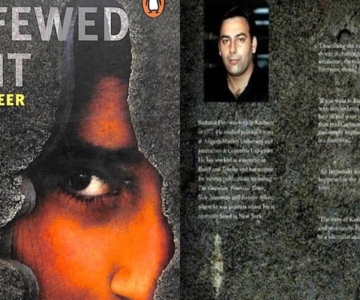
Basharat Peer’s Curfewed Night

Book Review by Sumaira Samad

Curfewed Night is the memoir of young Kashmiri journalist Basharat Peer, recounting his youth in the troubled valley during the '80s and '90s. A harrowing look at the political strife and armed conflict that has torn Kashmir apart over the last 30 years, Curfewed Night is nothing if not personal. The people, places and events Peer describes are ones he encountered and experienced first hand. They are his parents and neighbours and friends. Yet, despite this intimacy, essential to any good memoir, Peer's narrative is refreshingly honest, frank and unbiased. His is no polemic, and sentimentality, self-pity and melodrama take a back seat.

Beginning in the years before the struggle, Curfewed Night invites the reader into a beautiful, peaceful mountain paradise where the regular, slow rhythms of village life make up one's existence. Peer lives a happy, uneventful childhood, surrounded by a loving family and tight knit community. But this apparent serenity, as it turns out, is merely the glassy surface, hiding a quagmire beneath. The shadow of Kashmir's turbulent history and unresolved conflicts never quite goes

15Sep/082

Revelations of war crimes and moralizing idealism

By Charles Bogle (found here)

The Way of the World: A Story of Truth and Hope in an Age of Extremism, by Ron Suskind. New York: Harper, 2008, 398 pp.

Several months before invading Iraq, President Bush dismissed irrefutable evidence that Iraq did not possess weapons of mass destruction.

By the close of 2003, with no weapons of mass destruction found and the American public beginning to question the rationale for the war, the White House fabricated a letter that “proved” the purported links between Iraq and al Qaeda as well as Colin Powell’s claim before the United Nations that Niger had shipped uranium to Iraq.

So reports the Wall Street Journal’s former senior national affairs writer Ron Suskind in The Way of the World: A Story of Truth and Hope in an Age of Extremism.

Suskind argues that these impeachable offenses are manifestations of America’s loss of its core values and hope for a better future; and that extremism, both in the US and the Mideast had undermined the inability “to walk in the shoes of the ‘other.’”

15Sep/082

Pseudo-Messianic Movements in Contemporary Muslim South Asia

This new book by Yoginder Sikand has been published by Global Media Publications in 2008.

Messianic hopes and expectations are common to almost all religions. Jews expect the Messiah to arrive to re-establish their temple in Jerusalem; Christians pray for Jesus to return to earth in his 'Second Coming'; Hindus believe that Kalki, the tenth and last avatar of Vishnu, would appear just before the end of times; and the advent of the Imam Mahdi, who will usher in the end of the world, is a cardinal tent of the faith of Shia and many Sunni Muslims.

The messianic figure that almost all religions expect to arrive some time towards the end of the world is generally portrayed as representing the forces of good, as an agent of God and as eventually vanquishing, in a war of global and cosmic proportions, the forces of evil.

12Sep/080

The Feast Of Roses

The Feast Of Roses is a sequel to Indu Sundaresan's widely appraised novel The Twentieth Wife. As can be expected it is the story of Mehrunnisa, the powerful woman in Indian history as well as in Mughal dynasty. The novel begins where the other novel ended with the marriage of the long separated lovers Emperor Jahangir and Mehrunnisa.

Mehrunnisa's long cherished desires come to life as she enters the Mughal dynasty. Even though she is the last wife of the emperor in the harem, the union of love makes Mehrunnisa into Empress Nur Jahan. As time goes by Emperor Jahangir is given into drinks and Nur Jahan takes the reins into her hands. It was not that easy. She forms a junta with her father, brother and the heir-apparent to the throne, Shah Jahan as well with their supporters.

On the way Nur Jahan ruthlessly exploits Jahangir's love to seize ever-increasing authority and power. However, she has tom pay the price for it. A well-contrived accident in the harem terminates Mehrunnisa's pregnancy and her potential for mothering a dynasty...

Read more here

28Jul/0810

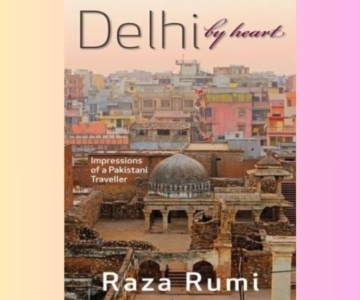
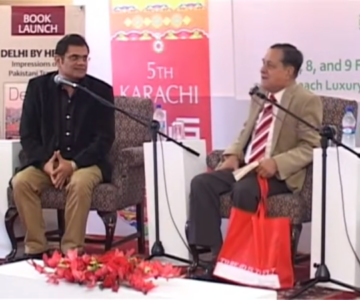
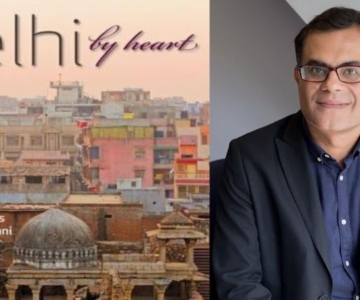
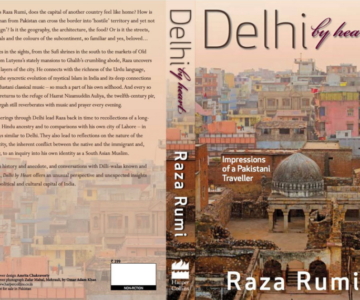
Delhi by the book

Writing about the textbook enemy, the 'other', is but a daunting task. Facing the grandiose Humayun's tomb on a chilly January morning this year, I decided to write a book on Delhi.

It was not before I had visited the ancient city that I knew what it symbolised. In Pakistan, we were influenced by the glories of Lahore, my beloved city. Reconstructed histories had kept Delhi invisible. The seat of the Sultans, Mughals and the Raj, precursor of the modern united India and originator of the Indo-Islamic civilization was a mere phantom, best ignored.
Over several visits to Delhi, I realised that invisibility was also a shared curse. A good number of Delhi wallahs I met, had no clue where they lived or crossed the streets. Erasure, blank spaces in textbooks had rendered their own city a mythical other-world existing only in erudite books, rare cultural soirees and among the fading memories of old-Delhi.
When I looked for the house where Urdu's legendary poet Mir Taqi Mir lived, no one knows it. Those living in Hauz Khas are unaware of what it was. There are thousands, perhaps more, who have never visited Nizamuddin Bastee let alone the dargah there. Tracing history through books resembles a two-dimensional vision. Lived histories add other dimensions to the inner kaleidoscope. But there are so few who can help me.

I am pained when I am taken to the tomb of India's first female ruler Razia Sultana (1236 - 1240). Only centuries later another woman Indira Gandhi was to rule the Centre. Razia's grave languishes on an abandoned, filthy cul-de-sac. Many don't care. I wonder, should I?

As I have ventured out to write, the enormity of Delhi -- the idea -- haunts me. Where do I start? The layered construction of Indian, and Muslim identities in the subcontinent emanate from the ridges and Hades of Delhi. The saints buried under

8Jul/084

Impressions – White Mughals by William Dalrymple

My bright, young friend Imaduddin (left) has written this excellent, terse review of the engaging book White Mughals.

Yesterday when he emailed me this text, I was intrigued by his views as well as envious of his ability to say a lot in so few words. I enjoyed the book for the era it evoked with such craftsmanship and tenderness. However, Imaduddin says it all:

Quick and dirty impressions of White Mughals by William Dalrymple

Beautiful prose with a significant point brought out: that the British DID integrate in India prior to their discriminatory laws against mixed race progeny of the 1780s, the policy that East India Company servants would be older when they arrived in India, the arrival of white memsahibs and the arrival of condescending, colonial attitudes. Dalrymple finds that a third of Company servant wills bequeathed property to native wives, concubines and children until the afore mentioned advents, after which wills including native family dropped to almost none.

Vivid depictions of the court life and society of perhaps India's most cultured city, Hyderabad, are brought out in this book, as are the enlightened, seeking attitudes of early British Company servants who integrated beautifully into Mughal society, as had the Portugese into Indian society earlier - as had every other foreigner invader into India, an India which had turned rugged Mughal warriors into artsy Rennaisance men.

The love story of Khair un Nissa, cousin to an ambitious minister in the Nizam's court, and James Kirkpatrick, the Company's Resident in Hyderabad, is the thread that brings all these themes together, but is unnecessarily long. If I were Dalyrymple's editor, I'd have cut this 500 page book by a fifth - there is much repitition.

If you don't have time to read love stories and are interested in historical commentary on India, read the first 57 pages. That will be enough.

2Jul/086

Guantanamo? The Worst of the Worst?

I was introduced to Mahvish Khan's daring work by Irfan. Her close work at the infamous Guantanamo Bay is remarkable for the insights and reversal of the dehumanisation that was until recently sanctioned by the state and corporate media.. An excerpt from her promising books - MY GUANTÁNAMO DIARY: The Detainees and the Stories They Told Me - is avaialble at her website. I am also posting a little introduction after the excerpt:

“Who exactly has America detained all these years at Guantanamo? The Worst of the Worst? Or the Wretched of the Earth?” From My Guantanamo Diary

It’s easy to mistreat something called No. 1154. It’s easy to shave its beard, to kick it around like an object, to spit on it, torture it, or make it cry. It’s harder to dole out such abuse when No. 1154 retains its identity: Dr. Ali Shah Mousovi, a pediatrician who fled the Taliban, worked for the United Nations encouraging Afghans to participate and vote in the new democracy. It’s harder to hate No. 1154 when you realize that he’s more like you than he is different. His wife, an economist by profession, waits month after month, year after year for the news that her husband is coming home; his two sons and young daughter grow up without him.

The numbers denied the humanity of those assigned to them:....

It’s easy to skim over the numbers. And there are hundreds like them."

Mahvish Rukhsana Khan is an American lawyer, born to immigrant Pashtun parents in Michigan. While persuing a law degree at the University of Miami, she became enraged by the illegal detainment of prisoners at Guantanamo Bay. Having grown up listening to her mother tell her “Now is not the time to be complacent,” Khan felt compelled to help any way she could. With her fluency in Pashto and a familiarity with Afghan cultures and customs that no other “habeas” lawyer with security clearance had, she was quickly taken on as an interpreter for Afghan detainees. Six months later, in January 2006, Khan was on her way to Guantanamo Bay. Her role with the detainees quickly developed. She began providing supervised legal counsel and traveled to Afghanistan to find exonerating evidence for prisoners.

8Mar/081

Fariduddin Attar’s Conference of the Birds

The legendary Sufi poet, Farid al-Din 'Attar was born in Nishapur, in northeastern Iran, in 1142. He was beheaded by the invading Mongol army in 1221. His tomb at Shadyakh is visited by many. Rumi was also inspired by Attar. The best known work of Fariduddin Attar's works is Manteq al-Tayr (Conference of the Birds)- Here is a synopsis of this work.

Led by the hoopoe, the birds of the world set forth in search of their king, Simurgh. Their quest takes them through seven valleys in the first of which a hundred difficulties assail them. They undergo many trials as they try to free themselves of what is precious to them and change their state. Once successful and filled with longing, they ask for wine to dull the effects of dogma, belief, and unbelief on their lives.

In the second valley, the birds give up reason for love and, with a thousand hearts to sacrifice, continue their quest for discovering the Simurgh.

The third valley confounds the birds, especially when they discover that their worldly knowledge has become completely useless and their understanding has become ambivalent. They cannot understand why both the mihrab and the idol lead to understanding. Devoid of their earthly measures, they lose their ability to distinguish right from wrong.

The fourth valley is introduced as the valley of detachment, i.e., detachment from desire to possess and the wish to discover. The birds begin to feel that they have become part of a universe that is detached from their physical recognizable reality. In their new world, the planets are as minute as sparks of dust and elephants are not distinguishable from ants.

It is not until they enter the fifth valley that they realize that unity and multiplicity are the same. And as they have become entities in a vacuum with no sense of eternity. More importantly, they realize that God is beyond unity, multiplicity, and eternity.

Stepping into the sixth valley, the birds become astonished at the beauty of the Beloved. Experiencing extreme sadness and dejection, they feel that they know nothing, understand nothing. They are not even aware of themselves.

Only thirty birds reach the abode of the Simurgh. But there is no Simurgh anywhere t o see. Simurgh's chamberlain keeps them waiting for Simurgh long enough for the birds to figure out that they themselves are the si (thirty) murgh (bird). The seventh valley is the valley of depravation, forgetfulness, dumbness, deafness, and death. The present and future lives of the thirty successful birds become shadows chased by the celestial Sun. And themselves, lost in the Sea of His existence, are the Simurgh.

courtesy Zen Sufi who referred me to this site