Imagined homeland
It irks me when I hear simplistic platitudes on Pakistani society, state or people. The heterogeneity of Pakistan is by itself an anthropologist’s dream, a planners’ headache and a sociologist’s challenge. Despite the sixty-one years of drumming the uniform nationalism mantra, Pakistan’s regions and their peoples refuse to toe the line sponsored by the official textbook masters. This is why one minute there is a delightful speech on being a Pakistani and the other minute caste, tribe or ethnicity raise their discrete heads and the linear formulae dissolve into thin air.
Recently I was in Karachi and discovered that the drawing room chattering there was vastly different from that of Lahore’s. The immediate urban crises of the Sindhi capital overshadow discussions that the Punjabi heartland loves to indulge in. The war mongering that has been a recent pastime on TV channels and in influential quarters of Lahore, is looked at with suspicion and, dare I say, contempt by many Karachi wallahs. It was refreshing to be reminded that, much in line with South Asian history, Pakistan is a diverse, multifarious place. That this country cannot be boxed easily and therefore appointed labels dissipate easily. (more…)
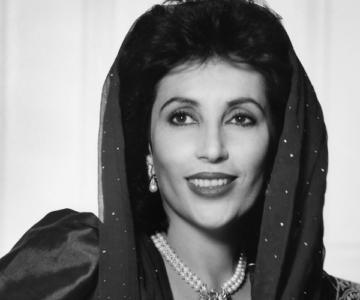
Raza Rumi retraces the bittersweet legacy of Benazir Bhutto (published in the Friday Times)
The official machinery then went to work in a super-efficient frenzy. Within hours, the murder scene had been washed away, right opposite the Liaqat Bagh in Rawalpindi where Pakistan’s first Prime Minister, Liaquat Ali Khan, was also shot dead. If anything history repeated itself with a bang – only to restate that Pakistani Prime Ministers are dispensable accessories of the power game. The misogynistic thirst for blood-letting once quenched, patriarchy dictated that the autopsy of a woman became an issue of honour, confusion and violation of the law. How telling, that the laws of the land remain subservient to the imperatives of culture and tradition.


Recent Comments