Posts Tagged Bangladesh

On Kabir, Bulleh Shah and Lalon Shah

22 October 2011

Not a great recording of my talk at Kuch Khaas, Islamabad.

That easy intimacy

15 October 2011
By Raza Rumi
A Pakistani re-discovers Bangladesh.
alt
Image: Carey L Biron

As a Pakistani, there is a part of you that reacts instantly to the word Bangladesh: guilt, remorse or, in some cases, nostalgia can suddenly take over. I am from the generation that was spared the horrors of Pakistan Army actions, of information blackouts on the massacre of Bengalis in the name of Pakistani nationalism. But what does it mean to be half a Pakistani, without East Bengal – especially when you know a bit of history and have managed to see through the falsities of the textbooks? It means nothing or it means a lot; it depends on which way you want to look at the other half, now a proud, vibrant country.

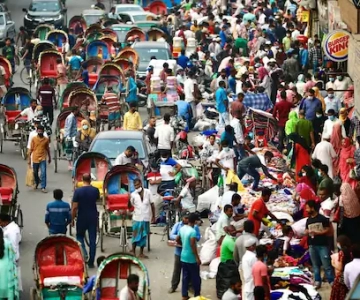
Working in international development is what took me to Bangladesh for the first time, nearly five years ago. Prior to that, I had been familiar with the country’s mythical music, rich poetry and tales of its golden sunsets and singing rivers, but had never touched its soil. Bengal’s magic is embedded in the Subcontinental imagination, and these images and literary references long shaped my view of the country. However, my romantic notions were severely jolted when I arrived in Dhaka – at first glance, an overcrowded concrete jungle typically lacking in urban planning. More of the same, I concluded: big cities, despite their buzz, can let you down.

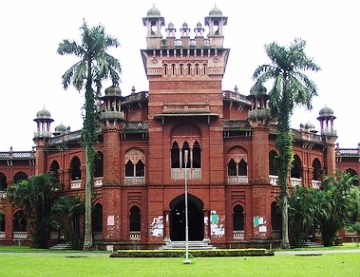
Still, my disappointment did not last, as I soon undertook to seek out the city’s various corners, its hidden spaces of beauty and comfort; above all, what I found was an engaged citizenry marching on. Discovering the University of Dhaka and its surroundings came as a much-needed connection, though older parts of Dhaka are also quite mesmerising. The gulmohar (or krishnachura) trees, almost on fire, greet a visitor on nearly every street, as does a tremendous volume of rickshaws.

Then there is the Shaheed Minar, the monument marking Bengali resistance founded on linguistic identity. The physical monument is modern, and by itself is not particularly exciting. However, its significance is truly monumental, marking as it does Bengali nationalism from 1948 to 1971 under the misrule of West Pakistan elites. Given movements for ethnic, linguistic and provincial identities ongoing in today’s Pakistan, the Shaheed Minar is a powerful reminder of how centralised rule and marginalisation of cultural identities lead to festering problems.

A colleague who took me to see these sites was most polite with me. He was fervently nationalistic but chose his words carefully – at least until I asked him to drop the formalities and just say what he wanted. Then the floodgates opened, and out came his personal memories and renditions from Bengali oral histories. I even found myself apologising, though I then laughed at myself for such a delusional gesture – my few words of apology meant nothing against the horrors of Bengali suffering. Luckily, the charms of the place and the krishnachura trees came to my rescue. And so, I brushed the dark side of our shared histories under the proverbial carpet, just the way that Pakistan has done. For many people in Pakistan, 1971 is today an invisible event, a deliberately ignored footnote in our collective memory, despite being one that should remain understood as a moment of reckoning for the entire country. After all, majority provinces seldom secede; it is usually the other way around. (more…)

Fables of Nationalism

4 November 2010

Published here: The recent hullabaloo over the Delhi Commonwealth Games has been followed with much interest in Pakistan. Many have gloated over the inability of the creaky Indian state machinery to deliver in time and address the issues of quality that became apparent with the collapse of an overhead bridge. South Asia now lives in the new information age where despite the distortions created by the mainstream media, it is difficult to hide state failures

Each story of corruption in Delhi has been greeted with a strange familiarity here. Essentially, all narratives of shining and marching India aside, the two nations remain hostage to a postcolonial state and embedded corruption. To cite Pankaj Mishra who wrote a rather scathing piece on the Games’ saga (New York Times, Oct 2, 2010):
“Two weeks ago, a huge footbridge connected to the main stadium collapsed. The federation that runs the games has called the athletes’ housing “uninhabitable.” The organizers have had to hire an army of vicious langur monkeys to keep wild animals from infesting the venues. Pictures of crumbling arenas and filthy toilets are circulating more widely than the beautiful landscapes of the government’s “Incredible India” tourism campaign.”

These issues of self-image and imagined greatness are shared woes of new nation states – India, Pakistan and Bangladesh – as they all suffer from this grandiose complex, of military and economic might over others. This is what makes such narratives so troublesome for they distort the essentials of freedom, Independence and the two Partitions of 1947 and 1971 which were all meant to lead to a poverty free and better environment for the ‘masses’. (more…)

Sub-Continent’s Berlin Wall

22 November 2009

I am posting Shivani Mohan’s article where I have been quoted with reference to the recent folklore festival held under the aegis of SAARC. Another piece on the folk performances can be accessed here.

This fortnight saw the 20th anniversary celebration of the fall of the Berlin Wall. So liberating and decisive, when a vast multitude of people chose to see sense and forget trifles that generally incense mankind, when the similarities between two peoples became more important than the differences; when cultural affinity conquered meaningless rivalry.

So it was at the recently concluded SAARC Folklore Festival. Writers, scholars and folklore artistes from eight SAARC countries — Afghanistan, India, Sri Lanka, Maldives and Bangladesh, Bhutan, Nepal, Pakistan- converged to Chandigarh for four days full of rapturous singing and dancing and ?discussing folklore. (more…)

Borderless world: Musing on South Asian folklore

16 November 2009

Jaskiran Kapoor’s report on the recent folklore festival that I attended in Chandigarh

It’s a borderless world, veins and arteries connected to one heart, one soul; scholars at the Saarc Folklore Festival seminars bring down the walls & spearhead a cellular movement

Nepal’s struggling with a change in power. Bangladesh is coming to terms with hunger and poverty while Pakistan is still grappling with the Taliban attack. If Raza Rumi finds the Vande Mataram fatwa ‘nonsense’, then Prof Abhi N Subedi is not kicked by Monisha Koirala joining Nepal’s political wing. On the other hand, writers Selina Hossain, Rakshanda Jalil and Sayman Zakaria are trying to bring in change with the power of the written word. It’s a confluence of culture, of tradition, (more…)

Rail to link Dhaka, Delhi, Lahore?

21 September 2009
This seems to be a refreshing piece of news. One hopes that this plan is implemented and not scuttled by the bureaucratic hostilities. RR
Srinand Jha, Hindustan Times: Sixty-two years after Partition, India has initiated a novel scheme to stitch together closer ties with Pakistan and Bangladesh.
The Indian Railways has proposed a South Asian regional train service linking Dhaka, New Delhi and Lahore. The proposal was first put forward at a SAARC transport ministers’ conference in Sri Lanka earlier this month.

29th SAARC Festival of Literature to debate terrorism

1 March 2009

Source: The SAARC Festival of Literature is slated to begin from 12th March in the city of Taj Mahal, Agra and will come to close in Delhi on the 17th March 2009. Foundation of SAARC Writers and Literature is organizing the Festival at a time when expectations from creative fraternity and right-minded peace activists have soared high in the aftermath of unprecedented terrorists attack on Mumbai, and sensitivities of the creative fraternity across the SAARC region, particularly in India and Pakistan, are shaken and bruised.
FOSWAL has urged people to pledge with the creative fraternity to stand together for peace and tranquility in times of terror and to celebrate the continuity of culture and creative writings of the SAARC region. The Festival will cover a wide range of themes from role of wordsmiths in times of terror to its impact on popular culture, prevailing conditions of chaos and confusion, exploring history, resolving ethnic angst, poetry recitations, and readings of short stories. (more…)

1971: the forgotten silence

20 December 2008

The NEWS: Friday, December 19, 2008

by Raza Rumi

This week marks the 37th anniversary of the tragic events of 1971 that led to the dismemberment of Pakistan and creation of Bangladesh. This time the sixteenth day of that deadly December invited little attention in the mainstream media as the new Pakistan struggles to manage the multiple crises of statehood, governance and cohesion.

Whether we like it or not, history and its bitter truths have to be confronted. When the united Punjab was being ruled by the Unionists and the Congress and the NWFP had a chief minister from the congress-Khudai Khidmatgar alliance, and almost all the custodians of South Asian puritanical Islam were opposed to Pakistan, the peasantry and the intelligentsia of East Bengal were spearheading a movement for Pakistan. There were indeed economic reasons, but there was an unchallengeable mass support for and belief in Pakistan. What happened after 1947 is well known; and within two decades or so, those who wanted Pakistan in the first place were subjected to state excesses and brutal treatment by the groups and elites that had actually little commitment to Pakistan or its idea. Nothing could be more ironical.

It is of little significance to remember the exact chronology of events or to indulge in a blame-game. The truth is that we as a state and society lost our majority province after pushing its people into a situation where independence through a War of Liberation was the only choice. India, of course, played a huge role in transacting this deal, but the West Pakistani elites had prepared the ground, sown the seeds of mistrust to a great degree. Thus the Pakistan created by its founding members was no more in 1971, further subdividing the Muslims of the subcontinent. A bitter lesson of history was in the making. If only, we were capable of paying heed to it. (more…)

History’s ghetto – (Geneva Camp, Dhaka)

9 October 2008

My recent piece for the The Friday Times – about the bitterness and destitution in a Dhaka camp for Biharis

It was almost by accident that I visited the Mohammadpur Geneva camp in Dhaka – one of the largest settlements housing thousands of stranded Biharis in Bangladesh. On my last visit to Dhaka, my guide Ronny offered the possibility of getting the best bihari kebabs in town. He told me that his house was near the place and I could meet him somewhere close.

This was an extraordinary afternoon when the receding sun was converting the sky into a field of unimaginable colours that artists can only aspire to create through their limited palettes. Dhaka, the noisy, overcrowded megapolis can be enchanting at times, especially during late springtime when the Krishnochura trees (the Flame of the Forest) bloom all over with their fiery flowers. I almost cancelled the trip thinking that a walk in the park might be a better alternative to the usual South Asian gluttony. Quite soon, I arrived at the meeting point having rationalised my proclivity for indulgence.

Little did I know that the meeting point was nowhere but at the doorstep of Dhaka’s underbelly, the easy to ignore Bihari camp. Not until I had reached there had I realised how the wounds of 1971 were festering for hundreds and thousands of men, women and children who have waited for all these years to attain identity and citizenship of Pakistan. As if it were a curse, the Pakistani state soon forgot about their existence as its ethnic politics dominated the policy commitments of Bhutto. And for the Bangladeshis these were the “traitors” who continued to wave Pakistani flags when the vast majority of East Pakistanis revolted against the excesses and the might of Pakistan army following the infamous and mischievous army action of 1971.

In a few minutes I had all but forgotten about the famous Mustaqeem kebabs and parathas and forced Ronny to take me inside the camp. Very soon I realised I did not need any Bangla-speaking guide as the ghetto was Urdu speaking, and portraits of Pakistani leaders and flags could still be spotted despite the passage of three and a half decades. Ronny knew the locals and found his younger friends, child workers and idle youth who took charge of our little tour.

Shamed by guilt and excited by the real experience, I wandered the smelly, open-drained and dark streets of the ghetto. I have frequented other slums but this one was special for it reeked of the contemporary elite politics, bloodshed and cold inhumanity that Pakistanis are shy of confronting. The living conditions would put any half-concerned South Asian to shame. The homes for most of the families comprised tiny little rooms, with all the belongings and large families concentrated in the inner space. No proper toilets and water supply – as if civilization had taken a backseat here. (more…)

Anandi Boiragi – the eclectic painter and an urban Baul

4 September 2008

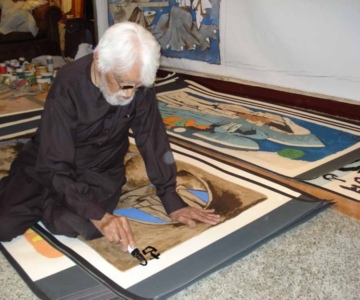
With legendary artist S.M. Sultan as his mentor, Anadi Kumar Boiragi from Jessore attended Khulna Art College in the late ’80s, before enrolling at the Oriental Department at Charukala in Dhaka to further his artistic education. (more…)

SURVEY: South Asian countries not too happy, survey finds

13 July 2008

SAJA Forum has this interesting post:

Bangladesh, India and Pakistan ranked 64th, 68th and 81st in the latest World Values Survey published by the United States National Science Foundation which surveyed people from 97 countries to discover who is happiest.

Denmark became the happiest country with a 4.24 mean score. The United States ranked 16th with a 3.55. 

Bangladesh scored 1, India scored 0.85 and Pakistan scored -0.30, a negative score which indicated “predominantly unhappy or dissatisfied publics.”

Click here to see the full list(PDF version). Watch political scientist Ronald Inglehart talk about how economic growth, democratization and social tolerance lead to happiness.

Also, I should mention how Bhutan‘s Gross National Happiness Commission, which was the subject of a WSJ article this past March, is making an attempt to gauge its citizens’ happiness and boost their morale as the country heads towards a new direction.