Posts Tagged Balochistan

Social media: Good, bad and the ugly

2 October 2011

By Raza Rumi:

Despite the threats and risks, the Internet has provided a useful platform for people-to-people contacts. It has also facilitated issue-based engagement among South Asians and is likely to generate a more realistic understanding of the bitter rivals that are India and Pakistan

The creeping foray of social media into the Pakistani society is a tale, which cannot be ignored. In a country marked by political repression and constraints on free speech, the arrival of social media is a fundamental shift that will gradually unfold in the years to come. At present, it is too early to make any definitive judgment; however, this may be a part of the transformational moment in Pakistan.

Deregulation of electronic media took place nearly a decade ago in Pakistan and is altering the power-sharing arrangements among the elites. The media barons are now influential power-brokers, with unprecedented leverage available (more…)

The debate on new provinces in Pakistan

30 August 2011

Since 1977, military or quasi-military governments have ruled Pakistan. The basic tenet of such a governance structure has been centralization and denial of multiple identities that Pakistanis have. Recent reform via the 18th Amendment has opened up a debate on new provinces. Not long ago, division of provinces was a taboo. Not anymore. This by itself is a major victory of the quasi-democratic process since 2008, howsoever flawed and contradictory it might be.

Remember this is a country where the largest federating unit – East Pakistan (Bengal) was denied its due in power and resources leading to the tragic events of 1971. From 1955-1970, ethnic, linguistic and local identities were forcibly negated under the One Unit. After the creation of Bangladesh, the federal debate focused on Punjab versus the rest of Pakistan. Even the elected Prime Minsiter, Zulfiqar Ali Bhutto ordered Army operations in Balochsitan and the North West Frontier Province to quell insurgencies and demands for local autonomy. Zia’s rule (1977-88) was a major setback to the federal project as Sindh was at the receiving end and the smaller provinces were remote-controlled from Islamabad. During the decade of democracy (1988-1999), things improved but only marginally. (more…)

Balochistan: Pushed to the wall

5 April 2011

By Raza Rumi

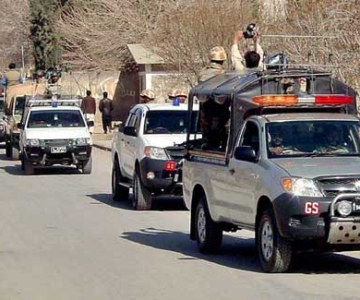
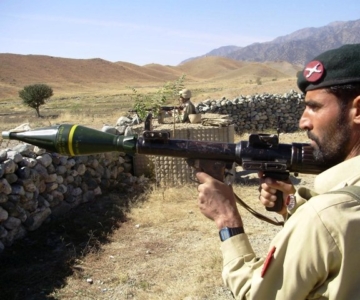
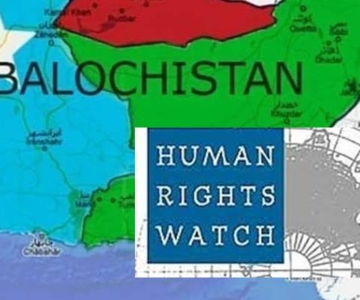
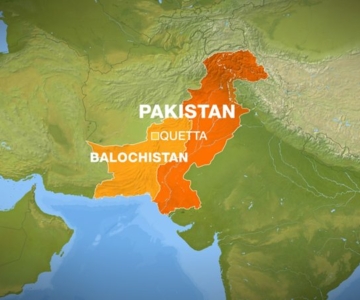
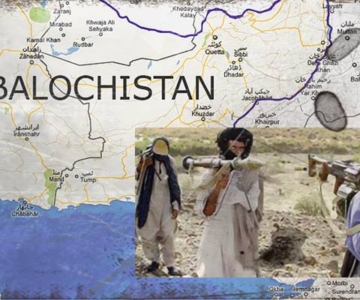
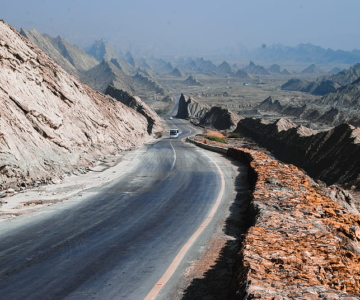
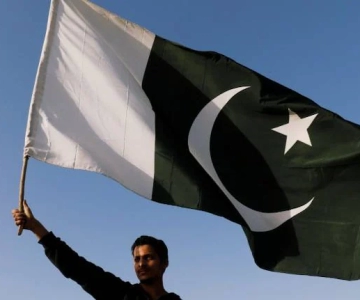
There must be something terribly wrong with the state of Pakistan that in its largest province, state schools no longer recite the national anthem and are giving up on the Pakistani flag. Tragic, that such alarming reports flashed in the national newspapers and on the internet are a subject of little debate and introspection across the country. Either that nobody really cares as to what happens to the tribals in the southwest of Pakistan, or that there is soft censorship at play. Such is the level of self-censorship on the issue of Balochistan that the ongoing insurgency finds scant mention in the otherwise, hysterical electronic media of Pakistan. True, there are brave exceptions in the public arena, but the eerie silence on Balochistan is disturbing for any Pakistani who believes in the territorial and federal integrity of Pakistan.

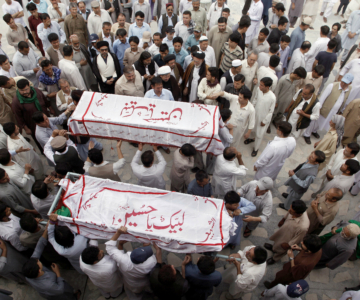
Only during the last six months, dozens of Baloch political activists have been reported dead. It is difficult to ascertain exact numbers, given the lack of credible information. But palpable violence defines the state of Balochistan. On the one hand, there are Baloch activists, leaders and professionals who are being targeted by ‘unknown’ forces and on the other hand, thousands of ‘settlers’ (mostly Punjabis) have been leaving the province, as their lives are no longer secure. A wide array of Baloch separatist groups exist in the province, whose source of funding is unknown and whose political agenda is vague, despite the overall banner of ‘independence’. (more…)

Disaster management – which way now?

17 August 2010

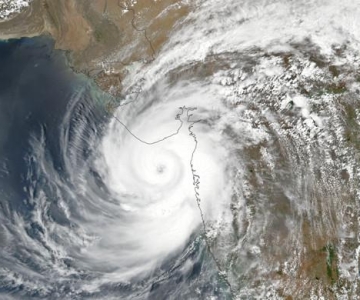
When the earthquake hit us on the morning of 8th October 2005, we said that the disaster caught us with our pants down. The mini disasters of Cyclone Yemyin in 2007, the Ziarat earthquake in 2008 and the presently unfolding mega disaster suggest that we never bothered to pull our pants up and are continuously trying to cover our nether regions with Post-It stickers. The National Disaster Management Authority (NDMA) was launched in 2007 with a lot of fanfare but a quick look at the (recently lapsed) National Disaster Management Ordinance tells us that it is another toothless tiger whose job is to ‘coordinate’ among its provincial, regional and district-level counterparts. Now, we are a very funny nation. When it comes to taking responsibility for public, we quickly don our ‘federal’ garb and declare that the centre cannot interfere in a job that is primarily provincial/local. Such commitment to federalism, alas, is never forthcoming when it comes to resource exploitation, but that is another story.

NDMA’s mandate can perhaps be classified into three categories: mainstreaming risk-reduction in development programmes, overseeing contingency planning, and coordinating response to disasters.

Before the media promotes NDMA over Zardari and fake-degree holders, as being chiefly responsible for all our woes, it would be pertinent to look at the organization’s capacities and powers. After its establishment, a retired army official was appointed as its head. It took a while before the consultants hired by the United Nations could come up with an organizational structure. But NDMA could not attract the best of professionals chiefly for the work environment. This resulted in NDMA ending up mostly, with pen-pushers. (more…)

Pakistan’s disaster could lead to a collapse

16 August 2010

As if Pakistan’s implosion from within wasn’t enough, the gods have acted to further push hapless and crumbling polity into a major crisis. Prior to August 2010, Pakistan was fighting a battle for its survival on an existentialist and ideological plane. The central features of a nation-state had withered away, save the institution of the Pakistan army. If anything, the insurgencies in Balochistan, FATA and Khyber-Pakhtunkhwa, and simmering discontent in Southern Punjab and Sindh had alarmed several Pakistanis and those in the international community who wanted Pakistan to be a stable state.

The colossal humanitarian tragedy and the imminent economic meltdown, will now shape a new Pakistan or rather, exacerbate its predicament in the months and years to come. Pakistan’s chronic political instability, structural economic constraints and a warped national security policy are all going to be affected by the unfolding drama of the national disaster, perhaps the severest, in the country’s history. Whilst the challenges have snowballed within a short duration of ten days, the response of the Pakistani state and society underline extremely dangerous trends and make us wonder about future of the country, as we have known it for the last 63 years.

Systemic shock:

Pakistan had reverted to quasi-democratic rule after a decade of dictatorship in March 2008. Since the resumption of the electoral process in February 2008, the traditionally powerful unelected institutions, had acquired both legitimacy and unprecedented powers. The power troika of the 1990s had transformed into a quartet comprising the army, judiciary, the media and the civilian government which was represented by a ‘discredited’ president who has been a constant punching bag for the unelected institutions of the state. (more…)

Floods’ management: Perfect script for a black comedy

13 August 2010

As I write these lines, millions are stranded and vulnerable to disease in the wake of perhaps the greatest natural disaster of recent times. Communities in Khyber-Pakhtunkhwa are stranded, Sindh is facing the wrath of gods and parts of Muzaffargarh and Kot Addu have been washed away. Citizens across the country are perturbed and doing whatever they can. But the power centres including the free media are busy in point-scoring and blowing their little trumpets as if the devastation was a playground for political mileage.

They say that individual and collective characters are exposed in times of crisis. Indeed the Pakistan ruling classes have exposed themselves for their historical myopia and lack of vision. Political parties are fighting over optics, media perceptions and wasting their energies. TV channels and wise anchors on the other hand are competing who got there first to show the mammoth destruction and who fired more salvos at Asif Zardari. Adding insult to injury, the media remained busy for hours as to the alleged shoe-throwing incident at the president as if that was the topmost priority of this country. (more…)

Pakistan’s democracy remains fragile

30 April 2010

My piece which was published by The News, Pakistan under a different title

If the parliament and judiciary want to continue exercising their newfound powers, they have no option but to act strictly within the framework of the Pakistani Constitution

Pakistan is a surreal country. Only here we have long, protracted struggles for democracy and only here we are almost always ready to scuttle democracy. Perhaps Iskander Mirza was not all too wrong while making the assessment that democracy does not suit the genius of our people. An added qualification is that it does not suit the genius of the elites, in particular the unelected institutions of the state.

There is now a clear and present danger that the judicial review of the 18th Amendment will lead to a potential clash of the key organs of the state: the legislature and the judiciary. Pundits have also predicted that if such a situation arises, then a logjam will benefit the third force — Pakistan’s well organized formal institution, which is readily available to undertake crisis management. Perhaps such fears are slightly exaggerated and misplaced. But the reality is that Pakistani history teaches us some interesting though unsavoury lessons.

Curse of history

The Constitution of 1956 was drafted, almost after a decade of the new country’s formation, as the elites were not interested in changing the colonial structure of the state and its institutions. After much negotiation and a bit of arm-twisting, parity between (more…)

The question of Pakistan’s provincialism

5 July 2009

My piece that appeared in the ‘political economy’ section of The NEWS on Sunday.

The elites drunk on the status quo have expressed two major reactions to the proposal of creating another province within the mighty Punjab. First that this is akin to opening a Pandora’s box when we are at war against terrorism. Second, that this is a planted controversy whereby the ruling PPP wants to harm the house of Raiwind; or a conspiracy by those who want to destabilise Pakistan’s political system.

Both these arguments are spurious for nothing is more important for Pakistan than to make the federation work. The argument that the British drawn provincial boundaries are sacrosanct is as nonsensical as the reality of the Durand Line or for that matter the line of control itself. If anything, South Asia has experienced territorial and demographic shifts through the centuries. When resisted, the sweep of history has blown away the resistant elements and when carefully manoeuvred such shifts have resulted in commonsensical political and administrative solutions. (more…)

This is a long war

18 June 2009

Published in The NEWS
By Raza Rumi

This is a critical moment in our history perhaps unmatched for its severity and its brutal reality. The experiential nightmare that our country is passing through is perhaps unparalleled for the enemy is neither foreign nor fully identifiable. At the same time, never has there been a clear backing of a military campaign against domestic agents of subversion and anarchy. Forget the doctored samples of opinion polls, often conducted by foreign agencies. That by itself should make us ashamed for our proclivity to accept what others have to analyse and determine for us. Even ignore the fringe voices of dissent led by those who neither have credibility or sagacity to comprehend the existential crisis faced by Pakistan. The army has shown vision and displayed courage in tackling a menace that alas is a home-grown cancer due to our short-sighted strategies in pursuit of phantom depths. The battle to be won is now the country itself.

The political consensus of sorts that has accompanied the military action against the Taliban is also remarkable. Notwithstanding the spin doctors posing as analyst-anchors on the idiot box, the political class has recognised that its survival is embedded in the battle against extremism that predicates itself on elimination of sane, moderate and secular politics itself. This was the Swat model – blow the polity to bits and create a vacuum for a takeover. An age-old recipe employed by the hordes from Central Asia that invaded Muslim Delhi again and again during Sultanate and Mughal periods of our common histories which refuse to be partitioned. (more…)