Posts Tagged Asif Zardari

Pakistani reform: the task ahead

15 April 2010

My piece published in The News

Pakistan has crossed a major milestone last week by achieving a historic consensus on the 18th Amendment with 105 clauses, additions and deletions to the Constitution. The distortions inserted by the military rule have been done away with. Political elites this time, however, have gone a step further and improved the state of provincial autonomy. Perhaps this is where a civilian negotiation and democratic politics of compromise has been most effective. Who would have thought a few years ago that this was achievable? There were many skeptics who thought that the amendments might not be approved. However, the ‘corrupt’ and ‘incompetent’ politicians have proved everyone wrong.

Leaving aside the discourse of corruption, the NRO, and a vociferous media campaign against the President, the achievements in the last one-year by all political parties have been tremendous. The Awami National Party, after its initial truce with the militants, has stayed the course and resisted Talibanisation by giving full support to the army operations against the militants. The PPP and PML-N, despite their rhetoric and political point-scoring, have worked together on the national finance commission award (NFC) and now on the implementation of the Charter of Democracy (CoD) that has become the basis for the amendments to become a reality. (more…)

The Zardari conundrum

6 September 2008

by Raza Rumi ( published in the NEWS)

By all statistical estimates and anecdotal evidence, Pakistan’s middleclass has grown during the last decade. The visible manifestation of this historically significant trend was the spontaneous outrage at the dismissal of the chief justice in 2007 and the robust movement that followed. However, the other side of this sociological transformation has been the capture of the “opinion” in Pakistan by the overdriven urban middleclass segment now backed and voiced through a powerful and not always responsible electronic media.

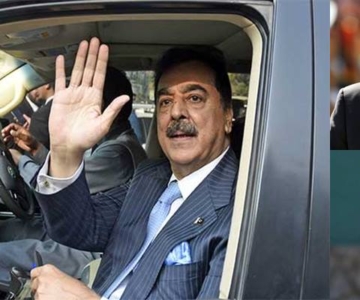
Amid the torrential attacks and doomsday predictions on Asif Zardari’s candidature for presidency, a few reasoned voices have attempted to remind the country that fortification of a fractured democratic process requires civilian ascendancy. No, say our wise ones. They are enraged at the corruption tales, and media and real trials. There is a deafening silence over the fact that without a single conviction an accused has spent 11-and-a-half years in jails and suffered solitary imprisonment, torture and pressure that could have easily broken a common back. Admittedly, our president-to-be is hardly an angel. But this is not about morality or middleclass affront or even a thousand stories of international media that have suddenly become so credible. Not long ago, the vanguard of middleclass morality were telling us how biased the international media is about Musharraf and how twisted its reporting was on the US-led war on terror. All of a sudden Zardari tales have become legit, true and worrying. (more…)

Pakistan’s ruling coalition must not splinter

5 July 2008

My op-ed piece that was published in the NEWS, Pakistan 

On these erudite pages, and elsewhere, there has been much ado about the fact that now the ruling coalition should split in response to the great betrayals perpetrated by Asif Ali Zardari. In classic machismo laden bravado, the honorific narratives have been urging Nawaz Sharif and his party to take the bold step and stick to their “principled” stand. What is interesting about these exhortations is the brazen rendering of political discourse in black or white terms.

Many a former ambassador, the recent cohort to jump into the fray of political activism, has found a great post-retirement vocation. Once the plush tenures are over and all that could be extracted from the holy state cow, now is the time to speak the truth and condemn military dictatorships. Convenient and most opportune! This low-risk strategy is paying its dividends: a great whitewashing of all that they were a party to, and all that they let happen in front of their red-taped offices. The ex-servicemen whose record is even more dismal are even more vociferous in their advocacy for a democratic Pakistan.

Therefore, the confused citizens with a shred of historical sense are simply bewildered. Gen Chishti, the key player in toppling Zulfikar Ali Bhutto’s government and unleashing of eleven years of mediaeval darkness, talking about resistance to army rule. Surely, the realisation took three decades of lasting damages and fissures within the body politic. Another retired Army chief, Gen Beg, is also at the forefront. His vitriole cannot hide the years when he actively sabotaged the democratic process, admitted before the Supreme Court that he had “advised” a bench not to restore Junejo’s government; and disbursed astronomical sums of money to undermine civilian government raised through another shady character heading a dubious financial institution. (more…)