Posts Tagged al Qaeda

Myth and reality of extremism

29 August 2011

Pakistan needs to undertake research on militancy for effective policymaking

By Raza Rumi:

A recent attempt to understand militancy, “Poverty and Support for Militant Politics: Evidence from Pakistan” (Graeme Blair, C. Christine Fair, Neil Malhotra, Jacob N. Shapiro, 2011), provides us fresh insights into the phenomenon or myth of popular support for militant extremism in Pakistan. Using a sample of urban and rural population and employing inventive techniques, this research is an important document if only Pakistan’s policymakers would ever pay attention to the little evidence that is generated with respect to militancy. It is a sad state of affairs that our national policy institutes and ‘think-tanks’ are yet to undertake such studies even when the state and its agencies have been brutally attacked and over 35,000 Pakistanis have died due to terrorism during the last decade. By no means does this survey provide a definitive account of what is happening in the country. However, in the absence of any other study, its findings are most useful to debate how extremism is taking root in the society.

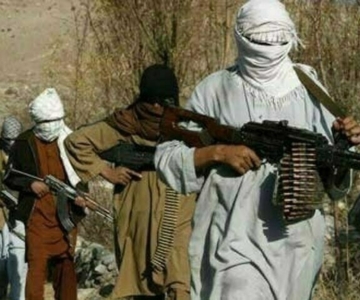
The survey measured public attitudes towards four important militant groups: Al-Qaeda, the Afghan Taliban, Kashmiri groups (Lashkar-e-Tayyaba, Jaish-e-Muhammad among others) and sectarian groups such as Lashkar-e-Jhangvi and Sipah-e-Sahaba. Contrary to conventional wisdom, the study concludes that the survey participants “were generally negatively inclined toward all four militant organizations” and reinforced what many analysts have said often: “Pakistanis do not have a taste for militants”. However, participants differentiated between the groups. They were more inclined to believe that Kashmiri groups provided public goods like health services, etc., and were much more likely to say that they were fighting for a good cause. Secondly, Pakistanis living in violent parts of the country, e.g. Khyber-Pakhtunkhwa (KPK), strongly disliked these groups probably because they pay a higher price for their actions. (more…)

Osama Bin Laden is dead: what next for Pakistan?

3 May 2011

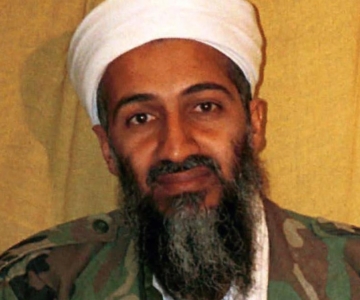
The dramatic events of May 2, enacted in Pakistan’s small, sleepy town of Abbottabad have surely shaken the world. The global icon of al Qaeda — Osama bin Laden — has been ‘eliminated’ through a well-executed, covert operation. This was a major victory for charismatic US president Barack Obama especially given his dwindling popularity, and will help him survive in office, perhaps, for another term. It isunlikely that this development will lead to the end of global terrorism. While his death may have symbolic value, Osama was not in any case in charge of al Qaeda operations and hence the impact may not be much.

The most significant aspect of this game-changing event, perhaps, is the cutting of all ties between al Qaeda and sections of our security establishment. While Pakistan’s assistance in executing the operation against bin Laden’s hideout is being downplayed for political reasons, it should be obvious that all this couldn’t have happened without its active help. For all its front line status, the Pakistani state has not yet permitted the Americans to operate in the ‘settled’ areas, the way unmanned drones work in Fata. The recent hullabaloo over the strained Pakistan-America relationship has once again proved to be exaggerated: Stories were spun for domestic political consumption in both countries. (more…)

The barbarians have attacked another shrine – no respite for Karachi

7 October 2010

Karachi’s famous shrine of Abdullah Shah Ghazi was attacked a while ago. Over 60 people are injured and 12 are dead. After Lahore’s Data Darbar attacks, this is a trend that is gaining an ugly momentum. We condemn this act and mourn the deaths of innocent people who were visiting to perhaps allay their stress and seek some peace from the place. Shrines are not just religious – these are public spaces and also cultural markers. What a shame that terrorists are trying to destroy our culture and turning us into a bunch of afraid people living in a fractured and violent society.

Thursdays are special for shrine-goers. And this is what suits the terrorists’ agenda. This is not the first time that such a heinous tragedy has occurred. We are living amid barbarians who have no tolerance for people with inclusive and plural Sufi thought. Karachi has suffered such an attack for the first time. Reports of the city having turned into a hub of Al-Qaeda and faith-based militants are all too well known. A new phase of terror may have bgun for the city that has already been suffering ethnic, sectarian and other forms of violence. This does not augur well for the port city, its centrality to our economy, trade and prospects.

The majority of Pakistani (and South Asian) Muslims follow the Barelvi school of thought which has historically been inclusive, and with few exceptions non-violent. In pre-1947 subcontinent such a local variant could easily co-exist with other religions and faiths.The tradition continued until the rise of petrodollars enabled many Sunni-ideological states to invest heavy money into the propagation of a particular brand of Islam that is exclusive and in many ways anti-minorities and anti-women. Hence the unprecedented growth of madrassas in Pakistan during the 1980s (which coincided with the Afghan jihad project). (more…)

Ardent messiah lovers and regime change in Pakistan

1 October 2010

A natural disaster, largely unavoidable, has provided a glorious opportunity to all those who have been hankering to reverse Pakistan’s fragile transition from an authoritarian to quasi-democratic rule. There is hardly a new script for the much-touted change and its proponents are using the same old tricks out of their worn out hats to prepare for a rollback of the democratic process. Therefore, the intense rumour-mongering, which has gripped Pakistani psyche over the last fortnight, is a tried and tested success formula: create the perception of change and then turn it into reality.

Even though Pakistan’s military remains unwilling to intervene, regime-change seems to be the flavour of the month. Ironically, this time large sections of the electronic media are hyperactive participants in the process, which is most likely going to push the country towards another man-made disaster. It is appalling to note that TV talk shows are focusing on extra-constitutional remedies. For instance, a Mr-Know-It-All anchor, whose acrobatics are well-known, posed a question to his (utterly uninspiring) guests to discuss the merits and demerits of the Bangladesh model and the so-called ‘General Kakar formula’. While the responses of the guests were entirely predictable, the most shocking response came from none other than former minister and Senator Iqbal Haider who has been a dyed-in-wool democrat. He confidently and at times vociferously advocated the “General Kakar formula” which essentially relates to the intervention by the army chief in a situation where a political deadlock emerges. One had always sympathised with this reputed lawyer’s position on the problems with the way his former political party – the PPP – was led and managed but to hear pleas for an extra-constitutional intervention was shocking to say the least. (more…)

Pakistan needs immediate assistance

14 August 2010

I just wrote this on Pak Tea House:

PTH is starting a series of posts devoted to the Pakistan’s current crisis effects of which will be long term in nature. While millions of Pakistanis are in dire need of emergency help, our country’s political and economic instability will have ramifications for the region and the world.

This is why it is extremely important to understand how several parts of Pakistan have lost decades of development and a state with weak capacities needs billions of dollars in the short term to start a major programme of rehabilitation. If Pakistani state is unable to intervene, the Taliban and other Al-Qaeda militants (and their allies in South Punjab) will find a golden opportunity to annihilate the Pakistani state, discredit constitutional governance and capture political space.

Pakistanis cannot be silent victims and therefore we will speak. Pakistan has to be rescued and the international community cannot absolve itself of the responsibility towards its frontline state.

Read the rest of the story here

Wikileaks and our fantasies

29 July 2010

My new oped for Express-Tribune

The Wikileaks’ damning half-truths pertain to the anti-war movement within the US. This has caused embarrassment to the US war architects and stirred the military industrial complex and its cousin, the corporate and embedded media. Similarly, what has been said about the role of Pakistan and its globally famed Inter Services Agency (ISI) is not something that is really a revelation and is more or less an open secret. Three important questions need to be considered before Wikileaks can be taken seriously.

Do field reports from individual sources, especially disgruntled, anti-Pakistan Afghan nationals constitute ‘evidence’? No. Is there sufficient evidence to substantiate the startling sensational pieces of information? Perhaps not. Is the Pakistan-ISI role central in the Taliban insurgency within Afghanistan? No clear answers can be determined due to the complexity of the Taliban resistance and the involvement of multiple players. (more…)

Salaam Pakhtunkhwa

25 August 2009

Haligoli, (2001), a miniature by Saira Wasim – collection of
Robert Roder

Peshawar, a city destroyed
by terrorism

IDPs returning to their homes

Wherever I went to eat, there was a meat-fest in waiting. There comes a time in life when you want to give up meat forever and that moment arrived on a dark, load-shedded night in Peshawar

My piece published in The Friday Times (August 21 issue)—–
My recent weeks have been consumed by travels to the capital and to the grim frontiers of Paktunkhwa. As part of an unwieldy team undertaking a survey of the wretched internally displaced persons returning to their homes, I was in and out of Peshawar several times. Other than encountering the depressing stories of a people trapped by their history and geopolitics one had to struggle for a vegetarian meal in good old Peshawar. Wherever I went to eat, there was a meat-fest in waiting. There comes a time in life when you want to give up meat forever and that moment arrived on a dark, load-shedded night in a cloistered guest-house reeking of cigarette-smoke and untreated sewage. Thank God for my friend Ahsan, who like a good comrade humoured me and regurgitated the lessons of being patient and calm. I must not complain too much for I’m not an ungrateful wretch. There are many in the subcontinent who cannot even afford a basic meal, let alone pleasures of the flesh. But there has to be a limit to the carnivorous instinct that we are so given to in the Land of the Pure, Purists and Puritans.

As if a non-vegetarian diet was not enough, the scare of being smoked out by the Al-Qaeda goons was even more disturbing, dare I say, indigestible. A happy-go-lucky and overly-healthy host, as he drove us into the by-lanes of the old Peshawar that must have been beautiful once, gregariously referred to all the sites where bombs had erupted were a little disturbing. Not that I am scared of dangerous places, for I have braved a post-war Kosovo with a fair measure of bravado. But the hysterical “outsiders” ranting about how insecure we were in Peshawar was a little dampening for a Lahori soul. We do live in interesting times, made even more interesting by naïve security experts and people fed on Western media reporting on Pakistan being a truly dangerous pit-hole of the world. Sometimes the propaganda war does conquer your senses, I must confess.

So we visited the camps where thousands had been packed like sardines and where women recounted stories of bereavement and heavy-duty terror-mongering by the good Taliban as we are told that there is a clear distinction between the good and the bad Taliban. Now if the good Taliban, referred to as “patriots” not long ago, are such barbarians, I shudder to think what the bad Taliban might be like. The children at these camps were suffering even more. The heat could be unbearable and drinking water was not always available. And (more…)

Revelations of war crimes and moralizing idealism

15 September 2008

By Charles Bogle (found here)

The Way of the World: A Story of Truth and Hope in an Age of Extremism, by Ron Suskind. New York: Harper, 2008, 398 pp.

Several months before invading Iraq, President Bush dismissed irrefutable evidence that Iraq did not possess weapons of mass destruction.

By the close of 2003, with no weapons of mass destruction found and the American public beginning to question the rationale for the war, the White House fabricated a letter that “proved” the purported links between Iraq and al Qaeda as well as Colin Powell’s claim before the United Nations that Niger had shipped uranium to Iraq.

So reports the Wall Street Journal’s former senior national affairs writer Ron Suskind in The Way of the World: A Story of Truth and Hope in an Age of Extremism.

Suskind argues that these impeachable offenses are manifestations of America’s loss of its core values and hope for a better future; and that extremism, both in the US and the Mideast had undermined the inability “to walk in the shoes of the ‘other.’” (more…)