Posts Tagged aid

Rescuing the Pakistani state

26 August 2010

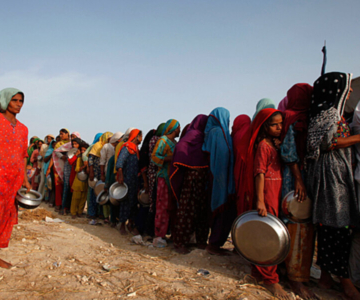
Three weeks after the floods have broken Pakistan’s back, the international community is yet to show its resolve in helping a drowning country. The reasons for such a slow response are erroneously being understood in the context of the Pakistani government or the current crop of civilians in power. However, this is a narrow twist to the reality. The real angst and distrust being displayed by the world is at the Pakistani ‘state’. The situation is also reflective of the duplicity of international opinion makers and power-centres in labelling Pakistan as a country with an ‘image problem’.

One is sick of reading nauseating reports on how the post-earthquake assistance was ‘diverted’ or squandered. The truth is that in 2005 a military dictator was ruling Pakistan and the entire world was doing business with him. At that moment, the issues of democracy, transparency and human rights all took a backseat and strategic imperatives prevailed.

Pakistani, and by extension the global media, are regurgitating tiresome cliches about corruption without talking about reforming state institutions. For instance, not a single commentator has said that we have a new accounting system in the form of the Project to Improve Financial Reporting and Auditing (Pifra) in place. But it has not been put into place effectively at the provincial and district levels. This is the way we will ensure transparency and good tracking of money received and spent. (more…)

Generous and timely: US Response to Pakistan’s Disaster

23 August 2010

Ironic that the United States has been perhaps the most pro-active and generous country in helping us with flood relief. Pakistanis, especially those were stranded for days are grateful for such a timely help. Contrary to the propaganda unleashed by several vested interests about how great friends China and the Muslim countries are, the US has proved to be our friend when we needed it the most. Yet, there will be many among the skeptics who would term this as ‘strategic’ given the state of things in dear homeland and in its neighbourhood. It is time that we acknowledge what needs to be acknowledged with no ifs and buts. Here is a fact sheet sent to Pak Tea House through reliable sources on the assistance so far. About time the self-styled US haters (rather entrenched in the country) take notice of this. US may have its own interests in stabilizing Pakistan, their response has been (and remains) substantive.

To date, the United States is providing approximately $150 million to support relief efforts in Pakistan, including funding for the operations of the Pakistan National Disaster Management Authority, the UN’s (more…)

Sanity at last: Pakistan accepts flood aid money from rival India

21 August 2010

This is a sensible thing to do. Finally sanity has prevailed. We hope that Pakistan’s neighbours – India, China and Iran help us out in these trying times. Not just cash but with much needed doctors and paramedics to control the outbreak of disease. Millions of people have no stake in power games that the two countries like to play.

Pakistan has accepted an offer of $5 million of flood aid from neighbor and longtime rival India, in a move that could spark a political backlash at home.

In an interview with Indian news channel NDTV, Pakistani Foreign Minister Shah Mehmood Qureshi described the offer of aid, made last week, as a “very welcome initiative” which the government of Pakistan has agreed to accept, after taking some time to decide. Full story below:

Pakistan accepts flood aid money from rival India – CSMonitor.com.

Whatever happened to Kerry-Lugar?

24 May 2010

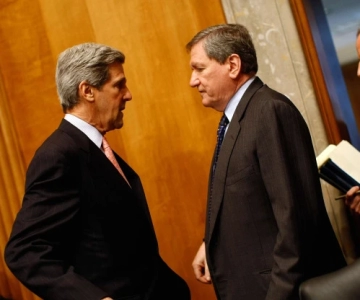
Pakistan’s dire fiscal situation has resulted in the reduction of development spending by 40 per cent. This does not bode well for the citizens who have been tormented by an energy crisis, persistent food inflation and rampant unemployment. In these circumstances, the development assistance under the Kerry-Lugar Bill (KLB) is much needed. Pakistan’s civilian government braved a media onslaught and the ire of the security establishment for tacitly supporting the US legislation. Other than the rhetoric around the ‘conditions’ drafted in Washington, there was an unstated agreement that the development assistance was welcome.

Months have elapsed and Pakistanis have yet to witness the roll out of the KLB. Global recession and political uncertainty at home underlie the tough days for Pakistanis especially the poor. It was expected that given the urgency of the situation, USAID was going to kickstart the delivery of its interventions. Well, the progress so far has been disappointing.

First, there seems to be no public sign of a consensus within the US bureaucratic machine how the aid under KLB will be delivered. Unconfirmed media reports suggest that the political versus the bureaucratic channels are not on the same page. The ‘political’ administration is ostensibly managing USAID systems and processes. There may be strategic reasons for that but the net result is that things are delayed. Not long ago, Pakistani government’s procedures were thought to be a problem but the trajectory of US bureaucracy only proves that public sector ailments are common. (more…)

US assistance needs an alternative paradigm

3 August 2009

An oped published by The NEWS

The gods are smiling at Pakistan’s development industry once again. Such a moment was experienced almost a decade ago when Pakistan’s strategic location made it into a hub of post-9/11 investments to secure the world peace. However, this time the United States of America has undertaken a historic step of aiding the civilian government and addressing the structural imbalances such as poverty, unemployment and lack of opportunity that quite rightly fuel militancy and promote factories of suicide bombers. Some would think this is naive in view of the imperial occupation of Afghanistan and the rather schizophrenic and counterproductive policies of the US elsewhere in the Muslim world.

This is not an invalid position taken by the rejectionists of US assistance. But this is an equally naive postulate for it is far more important to invest in civilian governance than hi-tech arms and domestic war machine. Haven’t we reaped the disastrous (more…)