US assistance needs an alternative paradigm
An oped published by The NEWS
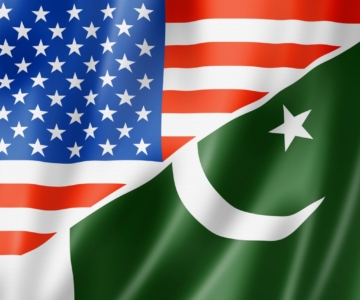
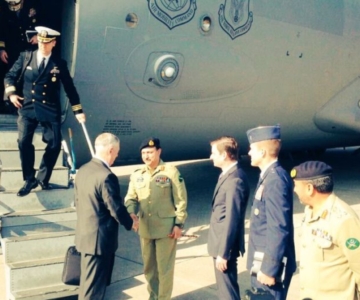
The gods are smiling at Pakistan's development industry once again. Such a moment was experienced almost a decade ago when Pakistan's strategic location made it into a hub of post-9/11 investments to secure the world peace. However, this time the United States of America has undertaken a historic step of aiding the civilian government and addressing the structural imbalances such as poverty, unemployment and lack of opportunity that quite rightly fuel militancy and promote factories of suicide bombers. Some would think this is naive in view of the imperial occupation of Afghanistan and the rather schizophrenic and counterproductive policies of the US elsewhere in the Muslim world.
This is not an invalid position taken by the rejectionists of US assistance. But this is an equally naive postulate for it is far more important to invest in civilian governance than hi-tech arms and domestic war machine. Haven't we reaped the disastrous
Literature in the time of terror
My piece that appeared in The Friday Times (May 29-4 June, 2009 issue). I have argued that the silence of Pakistani writers on terrorism and extremism is finally breaking
![]() |
|
|
‘Fallen Indus’, a painting by the author |
|
![]() |
|
|
‘Ignorance Is Bliss’, a miniature by Saira Wasim |
|
Since the invasion of Afghanistan by the United States and the global hysteria about 'terror' and 'terrorism', Pakistan has faced the greatest of existential challenges after its dismemberment in 1971. As a frontline ally of the US in the war on terror, Pakistani society and polity have been engulfed by growing militancy and acts of violence. Whilst there is no single definition of 'terrorism', the mainstream media and policymakers – in the service of imperial rhetoric aimed to justify and perpetuate the occupations of Afghanistan and Iraq – have established terrorism as the major threat to domestic and regional peace in South Asia. Acts of premeditated and organised violence in India, Pakistan and Bangladesh have thus assumed a central place in discourse on regional cooperation or its converse: the rivalries between the constructed nation states and their irresponsible power-elites.
In this milieu, South Asian citizens have been the victims of violence, uncertainty and acrimony that have only led to the exacerbation of poverty, inequality, ascendancy of militarism and the war-mantra. All of this is taking place when globalization is relentlessly seeping into domestic economies, cultures and social systems. Where does this leave the writers and poets of the
Brewing storms
Raza Rumi laments the tragedies of our times, and says that the state cannot be absolved of its responsibility to protect citizens against terrorism (The Friday Times)
Lahore has finally been encircled by the layers and tremors of violence. If the events of March 2009 were not enough, there is now a concerted effort to create panic in the city. In the past few weeks, girls’ schools have been threatened that they would face the music for educating girls and promoting co-education. How can children and their middle-class urban parents survive these gruelling times? (pic left:Pir Baba’s shrine is now closed to visitors )
Contemporary Pakistani literature in the ‘age of terror’
I am posting the synopsis of my paper entitled Silhouetted Silences - contemporary Pakistani literature in the ‘age of terror’, that I presented at the SAARC writers' festival held in Agra, India (March 13-17, 2009). The full paper needs to be edited and referenced so that will posted a little later.
Round my neck,
from time to time, there was the hallucination
of a noose, and now and then, the weight
of chains binding my feet.
Then one fine day
love came to drag me, bound and manacled,
into the same cavalcade as the others (Faiz)
Since the invasion of Afghanistan by the United States and the global hysteria about ‘terror’ and ‘terrorism’, Pakistan has faced the greatest of existential challenges after its dismemberment in 1971. As a frontline ally of the US in the war on terror, Pakistani society and polity have been engulfed by growing militancy and acts of violence commonly branded as terrorism. Whilst there is no single definition of ‘terrorism’, the mainstream media and policymakers – in the service of imperial rhetoric aimed to justify and perpetuate the occupations of Afghanistan and Iraq – have established terrorism as the major threat to domestic and regional peace in South Asia. Acts of premeditated and organised violence in India, Pakistan and Bangladesh have thus assumed a central place in discourse on regional cooperation or its converse: the rivalries between the constructed nation states and their irresponsible power-elites.
In this milieu, the South Asian citizens have been the victims of violence, uncertainty and acrimonies that have only led to exacerbation of poverty, inequality, ascendancy of militarism and war-mantra. All of this is taking place when globalization is relentlessly seeping into domestic economies, cultures and social systems. Where does this leave the writers and poets of the region who grapple with the complex, confusing and fast changing social and political realities? Whilst the community of South Asian writers – traditionally the forbearers of intellectual and political movements – is beleaguered by corporate media industry, it has struggled to respond to challenges that events have created.
9 Is Not 11

I am completely under the spell of this fabulous piece of writing, brutally honest and eminently sensible.
essay: terror in mumbai
![]()
9 Is Not 11
![]()
(And November isn't September)
![]()
ARUNDHATI ROY
We 've forfeited the rights to our own tragedies. As the carnage in Mumbai raged on, day after horrible day, our 24-hour news channels informed us that we were watching "India's 9/11". And like actors in a Bollywood rip-off of an old Hollywood film, we're expected to play our parts and say our lines, even though we know it's all been said and done before.
As tension in the region builds, US Senator John McCain has warned Pakistan that if it didn't act fast to arrest the 'Bad Guys' he had personal information that India would launch air strikes on 'terrorist camps' in Pakistan and that Washington could do nothing because Mumbai was India's 9/11.
But November isn't September, 2008 isn't 2001, Pakistan isn't Afghanistan and India isn't America. So perhaps we should reclaim our tragedy and pick through the debris with our own brains and our own broken hearts so that we can arrive at our own conclusions.
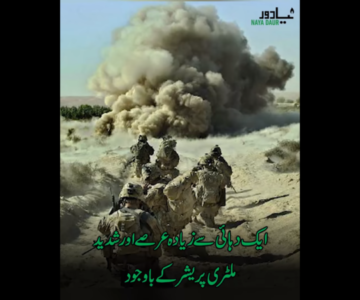
NATO Genocide in Afghanistan?
I hold no brief for the Taliban. They have enraged the world and brought much shame to Muslims and dare I say the great religion Islam as well. In fact, I detest their version of Islamic codes that they want to impose on the world through coercion.
However, the NATO battle against Taliban is not only barbaric in equal intesnity but it also dehumanizes them.
Mr Ali Khan of Washburn University School of Law sent his piece that is eloquent, and extremely well argued. Ali Khan says that in the name of the "war of terror," NATO forces are "committing genocide in Afghanistan by systematically hunting down and destroying" the Taliban, in violation of the terms of the Convention on the Prevention and Punishment of the Crime of Genocide... ![]()
These sentences are chilling:
Politicians, the armed forces, the media, and even the general public associate in the West the Taliban with irrational fanatics, intolerant fundamentalists, brutal assassins, beheaders of women, bearded extremists, and terrorists. This luminescent negativity paves the way for aggression, military operations, and genocide. Promoting the predatory doctrine of collective self-defense, killing the Taliban is celebrated as a legal virtue.."
THe West should remember that this will not solve the issue of terrorism or militancy - whatever one may want to name it - in fact such wars cause more pain, create more martyrs and legends and motivate people to resist - theyhave nothing to lose in the first place. And, the history of Afghanistan spells out some clear lessons for the current imperial powers.
Read his full article below.
World’s first oil paintings found in Afghan caves
Bamiyan is no ordinary location. This was the place where the giant Buddhas that stood for centuries with their message of peace were destroyed by the Taliban. And, now this startling revelation. There is tragedy laced with irony here.
Forget Renaissance Europe. The world's first oil paintings go back nearly 14 centuries to murals in Afghanistan's Bamiyan caves, a Japanese researcher says.
Buddhist images painted in the central Afghan region, dated to around 650 AD, are the earliest examples of oil used in art history, says Yoko Taniguchi, an expert at Japan's National Research Institute for Cultural Properties.
Feryal Ali Gauhar – femme fatale
Conversations with novelist, filmmaker, feline aficionado, and femme fatale, Feryal Ali Gauhar, as she prepares to launch her second novel
Who doesn't know Feryal Ali Gauhar? A novel at the top of The New York Times international bestseller list, years of television appearances and a highly publicised marriage to Jamal Shah that became fodder for countless gab sessions, have caricatured and made famous her persona. Had I not known her personally, I too may have fallen for the half-imagined tales littering the drawing rooms of socialites in this land of the pure. But I have had the pleasure of Feryal's acquaintance for years, and not a moment of our friendship has resembled the images painted by petty gossip and lazy misinformation.
Feryal is a celebrated actor, filmmaker, journalist, activist, development worker and above all, a renowned novelist. Our recent meeting in her Zaman Park, Lahore residence took place after a long interlude. That afternoon, with the winter sun at our backs, we sat in her garden and talked with abandon while several of her cats and pet dogs meandered in and out of the plant-life; silent witnesses to our conversation and its occasional unfettered laughter.
Feryal is the youngest child of dynamic, accomplished parents. Her late mother, Khadija Gauhar, was a leading intellectual in Lahore who came to the city from South Africa after marrying her father, Sayyid was a military man from the NWFP who later retired from the army and took to farming. Her elder sister, Madiha Gauhar, is a talented theatre personality who founded theAjoka theatre group and has managed it for over two decades. Feryal was initially associated with Ajoka as its first female actor. The sisters also have an older brother, Aamir, an industrial engineer who operates a business in alternative energy products.
As a young woman Feryal attended the Lahore American School. Her experiences there included a reaction to the school’s requirement that all students, regardless of nationality, pledge allegiance to the United States. In response to this practice, the eight year old Feryal insisted that the Pakistani national anthem be played for the entire school as well. Later, Feryal was the first Pakistani and first female to head the school’s Student’s Council. She was an honour role student and captain of several sports teams. Several scions of leading feudal families at Aitchison College at that time remember Feryal leading her team into the school grounds to play soccer. What they especially remember is the soccer team uniform which revealed a rather shapely pair of legs. “Some have never forgotten that sight,” she chuckles.
The Pakistani state policy of nurturing jihad factories over the decades is staring back at its architects, supporters and sponsors. Zafar Hilaly, a close aide of the late Benazir Bhutto, recently divulged in his memoirs that BB had confessed how the support to the Taliban was perhaps her most regrettable mistake. She could recognise it was more of a function of being out of the power ambit for nearly a decade. The compulsions of exercising power and playing it by the rules set by the national security obsessed state are perhaps germane to Pakistan's creation as an insecure postcolonial state that was neither prepared not committed to reverse the colonial modes of governance.