Archive for the ‘World Literature’
Published
May 12th, 2008
Category
Poetry, Love, Rumi, Arts & Culture, All My Posts, Sufi poetry, World Literature, Sufism |
3 Comments »
Dear soul, Love alone cuts arguments short,
for it alone comes to the rescue when you cry for help against
disputes.
Eloquence is dumbfounded by Love: it dares not wrangle;
for the lover fears that, if he answers back,
the pearl of inner experience might fall out of his mouth.
Rumi - translation by Camille and Kabir Helminski
“Rumi: Jewels of Remembrance”
Threshold Books, 1996
Published
May 9th, 2008
Category
Politics, Poetry, India, All My Posts, South Asian Literature, World Literature, Poverty |
1 Comment »
by K G Sankarapillai
‘Dalit’ means broken, oppressed, untouchable, downtrodden, and exploited. They come from the poor communities which under the Indian caste system used to be known as ‘untouchables’. They constitute nearly 16% of the Indian population.
The caste system, with a history of more than 3000 years in India, is a shameful system of social segregation, which works on the principle of purity and impurity. Purity is rich and white or whitish, impurity is poor and dark. Hidden powers of wealth can be easily traced in every feudal Brahmanical concept of the ideal. Material milieu of purity and beauty and prominence and command and comforts is also wealth. Economic division is reflected in the social classifications. But it should not be registered that caste is racial or economic. Dr. Ambedkar says that the caste system came into being long after the different races of India had commingled in blood and culture. To hold that distinctions of caste are really distinctions of race and to treat different castes as though they were so many different races is a gross perversion of the historical facts. Ambedkar asks: What affinity is there between the Untouchable of Bengal and the Untouchable of Madras? The Brahman of Punjab is racially the same stock as the Chamar of the Punjab and the Brahman of Madras is the same race as the Pariah of Madras. The caste system does not demarcate racial division. (Annihilation of caste – in writings and speeches vol.1 .p.49 Dr .B.R. Ambedkar) (more…)
Published
April 25th, 2008
Category
Politics, Poetry, Peace, human rights, India, Arts & Culture, All My Posts, World Writers, South Asian Literature, World Literature |
4 Comments »
A Poem by K.G. Sankarapillai
Dear Che
Dear Che,
you came to our university campus
in mid sixties
with a comrade and a modernist friend
with visuals of jungles past and present
with a vision of a new battle for justice.
Like a fresh wind of October
you joined us
moved us
renewed us
and smoothened our entry into history
with love, dreams and plans.
You told us about the sleeping rebel powers
of mountains and forests of the new minds;
quite often you talked of the day when
‘the Andes would become
the Sierra Maestra of America.’
Our modernist friend said:
you are the red star over the world
tarnished by America;
you are the future of the world
crippled by America;
you are the Jesus of the modern age
crucified by America.
Although you remained evergreen in us
showed us the exit to the oceans
from the lyrical ponds of our
post Independent Indian youth;
the exit to the storm from the water lily breeze
of our weeping romantic poems;
dear doctor, you redefined us
living with us
living for us
living in us
passing the confidence of torrents into our deserts
weaving sunlit paths into our prodigal nights.
You brought world into our words
and future into our past.
You opened blast-furnaces for our ore. (more…)
Published
April 24th, 2008
Category
Poetry, Peace, War, Arts & Culture, All My Posts, World Writers, South Asian Literature, World Literature |
1 Comment »
Herat Hami
A poem by Wimalaratne Kumaragame (a translation)
Herat Hami who lived in Aliya Watunu Wawe*1
Even someone like me was more important than him
Though Harat Hami cut dead bodies*2
He was twenty, thirty times more decent than me
In the hospital of Aliya Watunu Wawe
He spent his time removing night soil
Though he lived happily with a monthly salary
Whenever I saw him I was moved with sadness
A hard, wiry body, handsome and thin
Not much of age, fresh and young
No wife as yet
I was perplexed by the job he did
Making someone like me sad
Each day he carried my excrement
If someone dies suddenly
Doctor comes
He cut the dead bodies in front of us
None from the farmer, worker or elite caste
Ever did such a job
No known disease of mind he had
He did no harm to any dwellers of the forest
He spread a docile smile
Every word of his spread ahimsa
Every evening he drank burning water
His heart overflowed with kindness
His sister was stabbed
Recalling her my eyes get wet
He did not cry the day his sister died
When she had a fever he wailed with tears in his eyes
When his younger sister died he went with a doctor
Her dead body was cut by Herat Hami
Though the villagers blamed him in harsh words for this
He did not care much about the world’s violent flesh
As he was not born in a rich mansion
He went to the temple at every Poya
He was a member of the newly built stupa
Even more than that he respected Iyyenayaka*3
Translation by Basil Fernando (more…)
Published
April 15th, 2008
Category
Islam, History, Random musings, Rumi, Arts & Culture, All My Posts, World Writers, World Literature, Sufism, Knowledge |
4 Comments »
Last year, I came across a Charles Homer Haskins lecture that Dr Annemarie Schimmel delivered in 1993. Aside from the amazing events and milestones of her life, what struck me was her immersion in an infinite ‘learning’ cycle. I am reproducing some lines from the lecture and a dazzling poem of hers below. Dr Schimmel left this world in 2003 for another voyage. As an extra-ordinary scholar (over 150 publications to her credit), a Rumi disciple and an odd Sufi herself, the world is not the same place without her.

However, her erudite and passionate writings will continue to warm our hearts. Sang-i-Meel Publishers (http://www.sang-e-meel.com/) in Pakistan have done a huge favour by re-printing selected titles for the Pakistani audience. (more…)
Published
April 4th, 2008
Category
Poetry, Arts & Culture, All My Posts, Sufi poetry, World Literature, Sufism |
2 Comments »
by Amir Khusrau
Bashguft gulha dar chaman, aye gulsitan e man bia
Sarv istada muntazar sarv e ravan e man bia
Flowers are blooming everywhere, O flower of mine come to me
Conifers await you night and day, my graceful pine come to me
Az girya e man her taraf pur lala o gul shud zamin
Waqtey ba gulgasht aey sanam der gulsitan e man bia
Thanks to my overflowing tears, tulips and roses are fresh and young
Strolling along the garden walk, my lily divine come to me
Haif ast didan bay rukhat der bostan akhir gahey
aey gul, nihan az baghban, der bostan e man bia
Without you darling, gardens all are in the grip of doom and gloom
So shining brightly in the dark, o my sunshine come to me
Her turra e to afatey, her nargis e to fitnaey
Garcheh bala e aalami, az behr e jan e man bia
Your braids are trying to chain me dear, your eyes are out to charm
So if you want to captivate, my valentine come to me
Talkhey keh goei neest an az talkhi e hijrat fazoon
Ba inhama talkhi e khud, shakkarfishan e man bia
You may be tart and pungent but your abscence is much worse
So bearing all your pungency, my vintage wine come to me
Dani keh hastam der jahan, man khusrav e shirin zaban
Gar naie az behr e dilam, behr e zaban e man bia
Without you I, your Khusro, am tongue-tied and confused
To give me wit and fluency, O soul of mine come to me
translation by Khalid Hameed Shaida, MD
Published
April 4th, 2008
Category
Poetry, All My Posts, World Writers, World Literature |
3 Comments »
“I want to be surrounded by you.
I want to be enclosed.
I want to be enveloped.
I don’t have the words for it.
But do you’ understand?”
From “The Anatomy of Desire”
by John L’Heureux
Published
April 1st, 2008
Category
Poetry, World Literature |
4 Comments »
by Vernon Scannell
I’m very old and breathless, tired and lame,
and soon I’ll be no more to anyone
than the slowly fading trochee of my name
and shadow of my presence: I’ll be gone.
Already I begin to miss the thing
I’ll leave behind, like this calm evening sun
which seems to smile at how the blackbird sings.
There’s something valedictory in the way
my books gaze down on me from where they stand
in disciplined disorder and display
the same goodwill that well-wishers on land
convey to troops who sail away to where
great danger waits. These books will miss the hand
that turned the pages with devoted care.
And there are also places that I miss:
those Paris streets and bars I can’t forget,
the scent of caporal and wine and piss;
the pubs in Soho where the poets met;
the Yorkshire moors and Dorset’s pebbly coast,
black Leeds, where I was taught love’s alphabet,
and this small house that I shall miss the most.
I’ve lived here for so long it seems to be
a part of what I am, yet I’m aware
that when I’ve gone it won’t remember me
and I, of course, will neither know nor care
since, like the stone of which the house is made,
I’ll feel no more than it does light and air.
Then why so sad? And just a bit afraid?
From Last Post by (late) Vernon Scannell , published by Shoestring Press
Copyright Guardian News and Media Limited (published on Saturday November 24 2007 in The Guardian)
Published
March 30th, 2008
Category
Poetry, All My Posts, World Writers, South Asian Literature, Sufi poetry, World Literature, Sufism |
14 Comments »
“Main NeevaaN Mera Murshid Uccha…
Main UcchiyaaN naal sang laayee”
I am lowly my spiritual guide is lofty!
I have tied my fate to such lofty ones!
“Bulleh naaloN chullaah changaa
jis te ann pakaaee daa
ral faqeera majlas keetee
bhora bhora khaaee daa”
A stove is better than Bulleh
because at least you can cook food on it
Saints sit together to eat
and share their food with each other
“Bulleh Pi sharaab tey kha kabab,
par baal haddaan di ag,
Chooree kartay bhan ghar rab da,
ais thuggan de thug noo thug.”
O Bulleha, Drench yourself in wine and feast
ignite the fires flaming out of the bones.
stealing, break into the house of God
and swindle the cheat of cheats.
“Mulla tay mashaalchi dohaan ikko chit
Loukan karday chananan, aap anhairae vich”
Mullah and the torch-bearer, both from the same flock
Guiding others; themselves in the dark
Published
March 8th, 2008
Category
books, All My Posts, World Writers, World Literature, Sufism |
No Comments »
The legendary Sufi poet, Farid al-Din ‘Attar was born in Nishapur, in northeastern Iran, in 1142. He was beheaded by the invading Mongol army in 1221. His tomb at Shadyakh is visited by many. Rumi was also inspired by Attar. The best known work of Fariduddin Attar’s works is Manteq al-Tayr (Conference of the Birds)- Here is a synopsis of this work.
Led by the hoopoe, the birds of the world set forth in search of their king, Simurgh. Their quest takes them through seven valleys in the first of which a hundred difficulties assail them. They undergo many trials as they try to free themselves of what is precious to them and change their state. Once successful and filled with longing, they ask for wine to dull the effects of dogma, belief, and unbelief on their lives.
In the second valley, the birds give up reason for love and, with a thousand hearts to sacrifice, continue their quest for discovering the Simurgh.
The third valley confounds the birds, especially when they discover that their worldly knowledge has become completely useless and their understanding has become ambivalent. They cannot understand why both the mihrab and the idol lead to understanding. Devoid of their earthly measures, they lose their ability to distinguish right from wrong.
The fourth valley is introduced as the valley of detachment, i.e., detachment from desire to possess and the wish to discover. The birds begin to feel that they have become part of a universe that is detached from their physical recognizable reality. In their new world, the planets are as minute as sparks of dust and elephants are not distinguishable from ants.
It is not until they enter the fifth valley that they realize that unity and multiplicity are the same. And as they have become entities in a vacuum with no sense of eternity. More importantly, they realize that God is beyond unity, multiplicity, and eternity.
Stepping into the sixth valley, the birds become astonished at the beauty of the Beloved. Experiencing extreme sadness and dejection, they feel that they know nothing, understand nothing. They are not even aware of themselves.
Only thirty birds reach the abode of the Simurgh. But there is no Simurgh anywhere t o see. Simurgh’s chamberlain keeps them waiting for Simurgh long enough for the birds to figure out that they themselves are the si (thirty) murgh (bird). The seventh valley is the valley of depravation, forgetfulness, dumbness, deafness, and death. The present and future lives of the thirty successful birds become shadows chased by the celestial Sun. And themselves, lost in the Sea of His existence, are the Simurgh.
courtesy Zen Sufi who referred me to this site
Published
January 29th, 2008
Category
books, Arts & Culture, All My Posts, On Pakistan, South Asian Literature, World Literature, Published in The Friday Times |
5 Comments »
Decades of imperialism have left Afghanistan and its people devastated. But the fall of the Taliban, and the much touted “liberation” of Afghanistan, has produced a new spate of novels, films and other artistic media dealing with the “Afghan victim.”
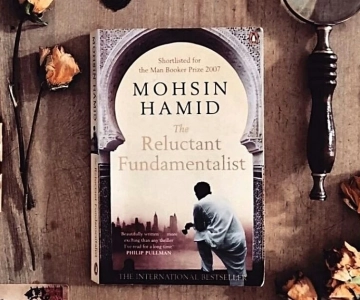
And when I say “Afghan victim,” I mean a nauseating overdose of burqa-oppression, Taliban brutality and other “Oriental” tragedies. Not only are these subjects sexy – they tie into the global imperatives of terror and Islamism – but they also artfully exonerate the “aggressor,” whether it is the Soviets, US imperialism or NATO. As such, the bulk of this new subgenre of fiction addresses the Western, English-speaking world; writing about reluctant and not-so-reluctant fundamentalists sells “Over There.” Meanwhile, literature is turning into a grand extravaganza of marketing, prizes, commoditization and short-lived shelf lives.
Feryal Ali Gauhar’s second novel, No Space for Further Burials, attempts to break free of many of these stereotypes. A trained economist, filmmaker and former UN Goodwill Ambassador, Gauhar opts to publish her book in India , not a Western outlet. More importantly, No Space inverts the oft-hackneyed themes of displacement, war, America and the suffering Afghans, ultimately treating these grim motifs by focusing on the sanity – and insanity – implicit within personal narrative. (more…)
Published
January 29th, 2008
Category
Poetry, Punjab, All My Posts, Sufi poetry, World Literature, Sufism |
13 Comments »
Recently, I was asked to help a friend with the original text of Bulleh Shah’s Hindu na Na heen Musalmaan. I found the original Punjabi and also found two other pieces that I am posting here.
Bulleh Shah’s poetry addresses most maladies that we face in this day and age.
——————————
HiNdu na naheeN musalmaan,
Baheeye tiranjan taj abhimaan.
Sunni na naheeN ham sheeya
Sulha kuhl ka maarag leeya.
Bhookhe na naheeN ham rahje,
NaNge na naheeN ham kahje.
RoNde na naheeN ham hasde
UjaRe na naheeN ham vasde.
Paapi na sudharmi na,
Paap pun ki raah na jaanaaN.
Bulhe Shah jo hari chit laage,
Hindu turak doojan tiyaage
Neither Hindu nor Muslim,
Sacrificing pride, let us sit together.
Neither Sunni nor Shia,
Let us walk the road of peace.
We are neither hungry nor replete,
Neither naked nor covered up.
Neither weeping nor laughing,
Neither ruined nor settled,
We are not sinners or pure and virtuous,
What is sin and what is virtue, this I do not know.
Says Bulhe Shah, one who attaches his self with the lord.
Gives up both hindu and muslim. (more…)
Published
January 26th, 2008
Category
books, India, Arts & Culture, All My Posts, World Writers, South Asian Literature, World Literature |
4 Comments »
Cross-posted from drunkonink blog. Soniah Kamal’s thoughtful write-up is worth sharing here:
Saba Bhaumik’s opinion piece in Outlook India once again attempts to explain why Indians may not be madly in love with Arundhati Roy while the West supposedly is but Bhaumik doesn’t say anything that hasn’t already been said a million times: Indian males are envious coz Roy is smart, the women are confused by her outspokeness and, while Roy’s hair styles challenge beauty norms, her sense of style sets dressing trends. (more…)
Published
January 24th, 2008
Category
History, Arts & Culture, All My Posts, World Literature, Mughal, World Artists, India-Pakistan History, Central Asia |
3 Comments »
Babar, the founder of Mughal dynasty in India was an unusual character of his times. A poet, writer and a free soul, he was so modern and some would say post-modern in an era otherwise categorised as medieval. I was delighted to find this piece authored by Ashfaque Naqvi.
An interesting book has landed at my table. As the title, Zaheeruddin Muhammad Babar, is about the person who laid the foundations of the Mughal Empire in the sub-continent. Written by the eminent Indian educationist, Qamar Rais, it gives a different picture of the man from what we gather about him from his self-written, Tozak-i-Babri…..
As Prof Qamar Rais says in the foreword, he had for long been studying the works of Ali Sher Nawai and such other classical poets of Uzbekistan but realized during his stay in that country that those people revered Babar more for being an intellectual and a lyrical poet. In fact, even during the Soviet era, he saw Babar’s pictures hung in most homes showing him holding a book and sunk in deep thought. As a consequence, he directed his studies in that field.
… even today, Babar is held in esteem and considered a hero both in Afghanistan and Uzbekistan. He even quotes Pandit Nehru as having said that the greatness of Babar lay not in capturing India but in capturing the hearts of Indians. (more…)
Published
January 16th, 2008
Category
Rumi, All My Posts, World Writers, Sufi poetry, World Literature, Sufism |
No Comments »
Rest your cheek, for a moment,
on this drunken cheek.
Let me forget the war and cruelty inside myself.
I hold these silver coins in my hand;
give me Your wine of golden light. (more…)
Published
January 9th, 2008
Category
Rumi, Arts & Culture, All My Posts, World Writers, Sufi poetry, World Literature, Sufism |
2 Comments »
The flames that dance with love -
O Beloved, be like that to me.
The burning heat within the fire -
O Beloved, be like that to me. (more…)
Published
December 28th, 2007
Category
Poetry, Rumi, Arts & Culture, All My Posts, World Writers, Sufi poetry, World Literature, Sufism, Turkey |
11 Comments »
when i die
when my coffin
is being taken out
you must never think
i am missing this world
don’t shed any tears
don’t lament or
feel sorry (more…)