terrorism

Myth and reality of extremism

29 August 2011

Pakistan needs to undertake research on militancy for effective policymaking

By Raza Rumi:

A recent attempt to understand militancy, “Poverty and Support for Militant Politics: Evidence from Pakistan” (Graeme Blair, C. Christine Fair, Neil Malhotra, Jacob N. Shapiro, 2011), provides us fresh insights into the phenomenon or myth of popular support for militant extremism in Pakistan. Using a sample of urban and rural population and employing inventive techniques, this research is an important document if only Pakistan’s policymakers would ever pay attention to the little evidence that is generated with respect to militancy. It is a sad state of affairs that our national policy institutes and ‘think-tanks’ are yet to undertake such studies even when the state and its agencies have been brutally attacked and over 35,000 Pakistanis have died due to terrorism during the last decade. By no means does this survey provide a definitive account of what is happening in the country. However, in the absence of any other study, its findings are most useful to debate how extremism is taking root in the society.

The survey measured public attitudes towards four important militant groups: Al-Qaeda, the Afghan Taliban, Kashmiri groups (Lashkar-e-Tayyaba, Jaish-e-Muhammad among others) and sectarian groups such as Lashkar-e-Jhangvi and Sipah-e-Sahaba. Contrary to conventional wisdom, the study concludes that the survey participants “were generally negatively inclined toward all four militant organizations” and reinforced what many analysts have said often: “Pakistanis do not have a taste for militants”. However, participants differentiated between the groups. They were more inclined to believe that Kashmiri groups provided public goods like health services, etc., and were much more likely to say that they were fighting for a good cause. Secondly, Pakistanis living in violent parts of the country, e.g. Khyber-Pakhtunkhwa (KPK), strongly disliked these groups probably because they pay a higher price for their actions. (more…)

Fascists strike again in Pakistan: Minorities Minister killed

2 March 2011
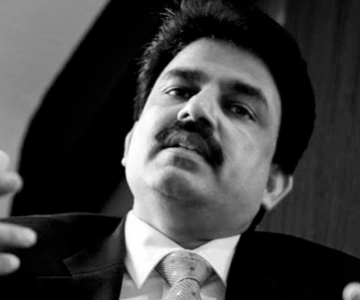
Shahbaz Bhatti (5 February 2010)
Sometimes it feels we are living in stone age where no dissent and no call for a tolerant society is possible. Murder, violence, mayhem are the order of the day. Today, we mourn the death of Shahbaz Bhatti who had been repeatedly threatened, but not intimidated.
It is time for Pakistan’s political parties to take stock of this situation and get their own ideological house in order before they are wiped out as well. Pakistani state organs have been appeasing the Right and Islamofasicsts for too long. It is time to stand up. If they think they can be safe then they ARE WRONG.
PTH condemns this murder and recalls that Pakistan was not created for this violence and bigotry that is now our halmark and has made us a joke in the international community.
Taseer’s murderers have to be booked, Benazir Bhutto’s murderers have to be brought to book and Bhatti’s murder should not go to waste.
Wake up Pakistan and our appeal to Pakistanis: stand up for your rights for living in a secure, tolerant society.
Here is a newsreport from BBC – sad and I hate to post it but then such are the times we live in:

Pakistan’s Minorities Minister, Shahbaz Bhatti, has died after two gunmen opened fire on his car in the capital, Islamabad, hospital officials say. (more…)

Last chance for Pakistan

9 January 2011

Taseer’s brutal murder has exposed every faultline of contemporary Pakistan

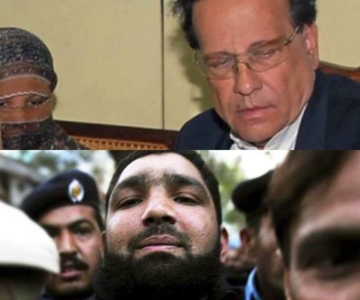
The brutal assassination of Governor Punjab, Salmaan Taseer by a staff member of Punjab’s supposedly, professional ‘elite force’, has virtually exposed every fault line of contemporary Pakistan. That a constitutional figurehead of a province with no executive authority or legislative power could be murdered simply for dissenting with the extremist worldview, is shocking to say the least. However, the tragedy has compounded further, much like the dark denouement of a Greek tragedy. The well-organized, ruthless and all-powerful extremist forces have jumped into the fray, and challenged the actuality of a cold-blooded murder. Clerics of all shades and varieties have tried to condone this act of barbarity and reactionary lawyers have promised to defend ‘Ghazi’ Mumtaz Qadri – a self-confessed killer – free of cost. Above all, public opinion has never been shamelessly manipulated in Pakistan as it is being done today by sections of electronic media who have gone out of their way to dilute the immensity of this event, and short of condoning it, have attempted to justify the motives of the criminal Qadri and his followers (which alas, are in the millions across Jinnah’s Pakistan).

Identity Mess

Much has been said about Pakistan’s warped identity, and it is a cliché to say that it is a tottering society in search of an identity. It should be clear to all and sundry now that large numbers of its residents, thanks to state-led indoctrination and a poisonous educational system, have espoused the right-wing interpretation of Pakistan as a theocratic state and that too, of a particular variant of Sunni Islam. This dangerously imagined polity excludes a large number of Muslims who belong to different schools of thought within the plural and complex range of Islamic faith. The minorities in Pakistan have suffered throughout their history, and their invisibility and insecurity is now a given fact of life.

Taseer struggled to raise voice from his public office and challenged the hegemony of Islamicist discourse, which makes this imploding ‘fortress of Islam’ as a repository of a faith-based nuclear bomb, thousands of armed militants ready to die in Jihad and irrationality driving all forms of decision-making – from foreign policy and economy, to municipal issues (such as the regulation of loud speakers in neighborhoods). In effect, Jinnah’s Pakistan is long dead and Zia’s Pakistan lives on in its full glory. (more…)

Afghanistan: Where’s the exit strategy?

23 December 2010

The Afghan imbroglio has now come to haunt the region and perhaps the globe as well. Thirty years of destruction and violence have left a stateless and vandalized polity where the great powers of our age are scrambling for bits and pieces of territorial and political control. Alongside this, the regional players with great delusions of grandeur about their strategic interests and military might i.e. India, Pakistan and Iran are also picking up battles attempting to reinvent history or reaffirm their jingoistic sense of nationhood.

There is no question that the US invasion and subsequent battles in Afghanistan were unjust and destructive. More so, the operations of a mammoth war machine have become deeply unpopular within the US and other countries, which comprise the North Atlantic Treaty Organization (NATO). The arms industry has been the key beneficiary of this war game that does not appear to be ending anytime soon.

Prior to the Lisbon summit held in November 2010, much was made about the withdrawal of NATO troops from July 2011 onwards. It appears that the US policy is in shambles with competing centers of power and influence, yet to agree on a common way forward. More importantly, the radicalization of the Pashtun majority in Afghanistan and its dangerous identification with a resistance (some say liberation) movement is even more worrying. The Left has mistaken the rise of the Taliban as an anti-imperial cause, while the Islamists use this historical development as another sign of the move towards a global Caliphate. The Islamophobic Right-wing across western capitals is scared and even more belligerent than before. Meanwhile, the doyens of Al Qaeda sit in their bunkers somewhere along the Pak-Afghan border and smile at how efficaciously their agenda is being carried out by all the concerned parties. (more…)

Our ‘brotherly’ friends

11 December 2010

Thanks to sensational reporting on WikiLeaks, the relationship of Pakistan with Saudi Arabia has been spotlighted. We have known of ideological links between radical Islamic groups and their Saudi patrons for a long time. However, this has never been debated due to the status the Saudi monarchy enjoys in Pakistan. Criticising it constitutes sacrilege and the moment one even begins to raise a question, the proponents of the ‘warm’ and ‘time-tested brotherly ties’ construe this as an attack on Islam. Let’s be clear: The House of Saud is a temporal, political entity and is not representative of spiritual Islam.

(more…)

Strategic grandeur

15 November 2010

As if Pakistan’s domestic woes were not troubling, the unravelling of the US strategy and its implications are eluding even the best of strategists. Mind you, Pakistan is a place every third person is a ‘strategy’ expert and the term ‘strategic’, thanks to the militarisation of the Pakistani mind, is an ever-popular reference. The ideological domination of Pakistan’s discourse is a palpable reality. This is why, across the political spectrum one finds a sense of victory over the failure of US strategy in Afghanistan. This failure is interpreted as the validation of Pakistan’s ‘genuine’ and ‘legitimate’ interest in Afghanistan.

What has worried me most in recent weeks is the capitulation of the liberal-secular chatterati to this pop-discourse of military war games. One is not surprised when former generals and the hawkish hordes of former Foreign Office mandarins express their jubilation. But when supposedly rational and progressive experts pontificate about how ‘we’ have made ‘them’ fail, it is simply shocking. (more…)

On counterterrorism and human rights

5 November 2010

From an interview that I conducted:

There is, of course, a nationalist discourse, as shrill as it is bogus, centered on US-bashing and lionizing dubious characters such as Afia Siddiqui. The US and Pakistani role in the strange tale of Ms. Siddiqui is murky but she herself has suspiciously failed to provide a credible account and evidently her family’s narrative is full of untruths. Siddiqui’s media deification is mind-boggling in the face of a country-wide security and human rights crisis.

The media needs to shed its ambiguity about the Taliban and other Al-Qaeda proxies and to acknowledge that they represent a real threat to the basic rights of citizens and to the state itself. It needs to engage in an honest debate on the necessity to combat and overcome these actors in a rights-respecting manner. This requires holding both the Taliban and the army accountable for their abuses which stand verified and documented. Sadly, this is not happening.

Read the full interview here or in this week’s The Friday Times

The barbarians have attacked another shrine – no respite for Karachi

7 October 2010

Karachi’s famous shrine of Abdullah Shah Ghazi was attacked a while ago. Over 60 people are injured and 12 are dead. After Lahore’s Data Darbar attacks, this is a trend that is gaining an ugly momentum. We condemn this act and mourn the deaths of innocent people who were visiting to perhaps allay their stress and seek some peace from the place. Shrines are not just religious – these are public spaces and also cultural markers. What a shame that terrorists are trying to destroy our culture and turning us into a bunch of afraid people living in a fractured and violent society.

Thursdays are special for shrine-goers. And this is what suits the terrorists’ agenda. This is not the first time that such a heinous tragedy has occurred. We are living amid barbarians who have no tolerance for people with inclusive and plural Sufi thought. Karachi has suffered such an attack for the first time. Reports of the city having turned into a hub of Al-Qaeda and faith-based militants are all too well known. A new phase of terror may have bgun for the city that has already been suffering ethnic, sectarian and other forms of violence. This does not augur well for the port city, its centrality to our economy, trade and prospects.

The majority of Pakistani (and South Asian) Muslims follow the Barelvi school of thought which has historically been inclusive, and with few exceptions non-violent. In pre-1947 subcontinent such a local variant could easily co-exist with other religions and faiths.The tradition continued until the rise of petrodollars enabled many Sunni-ideological states to invest heavy money into the propagation of a particular brand of Islam that is exclusive and in many ways anti-minorities and anti-women. Hence the unprecedented growth of madrassas in Pakistan during the 1980s (which coincided with the Afghan jihad project). (more…)

Wikileaks and our fantasies

29 July 2010

My new oped for Express-Tribune

The Wikileaks’ damning half-truths pertain to the anti-war movement within the US. This has caused embarrassment to the US war architects and stirred the military industrial complex and its cousin, the corporate and embedded media. Similarly, what has been said about the role of Pakistan and its globally famed Inter Services Agency (ISI) is not something that is really a revelation and is more or less an open secret. Three important questions need to be considered before Wikileaks can be taken seriously.

Do field reports from individual sources, especially disgruntled, anti-Pakistan Afghan nationals constitute ‘evidence’? No. Is there sufficient evidence to substantiate the startling sensational pieces of information? Perhaps not. Is the Pakistan-ISI role central in the Taliban insurgency within Afghanistan? No clear answers can be determined due to the complexity of the Taliban resistance and the involvement of multiple players. (more…)

Why data darbar was attacked

26 July 2010

Here’s a video from wichaar. Apologies to those who cannot understand Urdu

http://www.wichaar.com/videos/dr-manzoor-ejaz/why-data-darbar-was-attacked-video_cf85bf053.html

No alternative to peace with India

14 July 2010

My op-ed today for Express-Tribune

Once again, the fragile peace process between India and Pakistan has commenced. It is too early to say whether it will lead to an amicable settlement of seemingly intractable issues. What is clear is that the peoples of the two countries want peace, security and progress. The elites, which agreed on the messy Partition and raised nation-states and huge militaries, have surely flourished at the expense of people. A causal look at India’s poverty and Pakistan’s social indicators proves this point.

As a confidence building measure, a group of Pakistani journalists visited Delhi, Mumbai and Bangalore to meet their counterparts, think tanks and selected top-level officials. This was a timely and fruitful visit and reminded us that there is a formidable peace constituency in India. After the Indian home minister it is the turn of the Indian foreign minister to visit Islamabad from today for a three-day tour. Regardless of the outcome, sensible neighbours must continue to talk. (more…)

Suicide bombers kill dozens at Pakistan shrine

3 July 2010

Declan Walsh in Islamabad reporting for the Guardian

At least 42 killed and 175 injured in blasts at Sufi shrine in Lahore where thousands had gathered to pray

Suicide bombers devastated one of Pakistan’s most famous Sufi shrines last night, marking another vicious strike by violent extremists against the moderate form of Islam practised by most Pakistanis.

At least 42 people were killed and 175 injured when two bombers ripped through the Data Ganj Baksh shrine in central Lahore where thousands of people had gathered to pray, dance and listen to devotional music. The toll is expected to rise. (more…)

Lahore’s shrine bombed – outrageous, barbaric and unacceptable

2 July 2010

Raza Rumi

As if the recent acts of violence and an atmosphere of fear was not enough, the butchers have attacked Lahore’s oldest and grandest shrine – also known as Data Saheb. Thursday night is the time when thousands visit this shrine to pray and offer their respects to Hazrat Usman Hajwery, a Sufi who has been known as the protector of the city and the generous guide who is believed to have blessed countless generations.

This is a barbaric attack and should serve as a wake up call. Data Saheb’s shrine is not just another crowded place – it represents a millenia of tolerant Sufi Islam which is directly under attack by the puritans.Last year, there were threats and the government had closed the place for a day or two. This time the worst of nightmares has come true.

How long will we be mere spectators and see our great city blown to bits – culturally and physically. This is time for hard, concrete action and a major crackdown on all terrorist outfits that are operating in the country especially the Punjab wit impunity.

How long shall we remain in a state of denial – as if there is no problem within Pakistan and all acts of terror are perpeterated by the Indians, Jews and the Americans. (more…)

Institutions, accountability and the UN Report

12 June 2010

The UN Report is a historic document for it brings forth a set of findings and actions that should become the cornerstone for democratic mobilisation in Pakistani politics

The UN fact finding report on Benazir Bhutto’s murder is a scathing indictment of the Pakistani state and its dysfunctional institutions. However, sections of the media have seized it as a glorious opportunity to target the PPP itself by squarely apportioning the blame on Rahman Malik and Babar Awan – the two characters who are now punching-bags of the right wing. Not that Malik or Awan are spotless revolutionaries, but they are no different from the other political actors. After all, Pakistani politics is a nefarious web of patronage, sycophancy and shady deals, often involving the state and its agencies. The reason for targetting these two individuals is simple: they are close associates of President Zardari who, according to the Punjabi urban legends, is the alleged killer of Mohatarma.

Now that the UN report has exonerated Zardari of the crime, a few TV anchors and several writers in the vernacular press are hell-bent on proving that the real reason for Bhutto’s murder was the whisking away of a backup vehicle. Such a narrative ignores the gritty and ugly realities of our polity. The reason is quite clear: public discourse must be shaped in a manner that minimizes the embedded, historical role of the praetorian state, intolerant and suspicious as it is of alternative sources of power. In this case, it would be the popular legitimacy which Benazir Bhutto enjoys even in the grave.

The ‘establishment’

The UN report has attempted at a loose definition of what constitutes the Pakistani establishment, and places its intelligence agencies at the core of such a power-centre. In recent days, this has been derided by the usual suspects. First, the Urdu columnists whose careers have been shaped and enriched by invisible hands. Second, the TV anchors whose shows have lost all credibility. And lastly, the audience they cater to: the conservative mindset which cannot forgive the Bhuttos for being pro-poor, Sindhi and secular. (more…)

Bleak prospects

4 June 2010

My op-ed published in Express-Tribune today

It is evident that the Pakistani state faces a crisis of legitimacy and survival. Twelve years ago, on May 28, the Pakistani state displayed its nuclear prowess to the world especially to the ‘infidels’. After a decade, statehood and its compromised effectiveness stand exposed. True that the victims of the Lahore attacks were an underclass or at best residents with partial citizenship, i.e. the Ahmadis. But the inability of state agencies to fight splintered terror networks is worrisome.

The federal government had warned the provincial authorities of the impending attacks. The usual slovenliness and chaotic governance of the Pakistani variety treated it as just another communiqué. The police arrived late; and terrorists had implemented the plans rather adroitly making a mockery of Pakistan across the globe. Imagine a terrorist was nabbed through civic action, not the torture-friendly police. And guess where an injured miscreant was taken? No surprises here. A brutal murderer backed by large terror networks was admitted to Lahore’s busy public hospital where security was minimal given the level of threat. (more…)

Next Page »