Jahane Rumi

August 15, 2007

60 “Best” Books from India

To celebrate the Indian Independence day, Hindustan Times has published a rather interesting list of 60 best books from India. From the list, my favourites are:

Aag Ka Dariya:Qurratulain Hyder’s generation was divided by Partition. But she refused to make an irrevocable choice and instead found home in both India and Pakistan. In this magnum opus spanning centuries, she narrates the tragedy of being forced into such a choice.

Train to Pakistan: in a far cry from his usual lighthearted and witty style, Khushwant Singh somberly etches out the agony of a village brutally torn apart at independence.

Rasidi Ticket:this autobiography of the popular Punjabi poetess Amrita Pritam created controversy when it came out, which was predictable given her unconventional life lived very much in the public eye.

English August:Upamanyu Chatterjee’s fresh and quirky take on the dilemmas of a young civil servant who finds himself ill at ease in small town India.

God of Small Things:mix a fractured family from southern India and a gifted author. Result: a Booker-winning gem from Arundhati Roy.

Golden Gate:690 wonderful sonnets describing the life, love and times of San Francisco’s young professionals by Vikram Seth.

Tamas:this powerful Bhisham Sahni novel captured the country’s imagination when Govind Nihalini turned it into an equally forceful telefilm. Sahni drew upon his experiences as a relief worker during Partition to write this anti-communalist saga.

Terhi Lakeer:Ismat Chugtai’s magnum opus centres on the rebellious affirmation of female desire: “A woman’s heart has so many chambers, a mother’s love residing in one, love for her husband in another, for her beloved in a third. Then Shaman tried to peep into her own heart.”

July 8, 2007

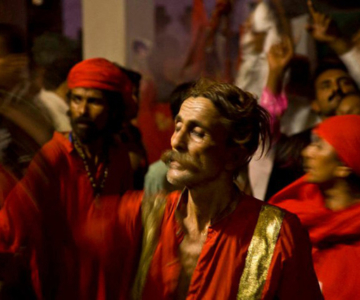
Sufi Zikr - inspiration for a painting

This is a painting that I revisited and converted its earlier abstract form into a calligraphic experiment. Now the challenge was that in addition to the lack of training in oil painting…

View entry >>

July 6, 2007

A Little poem

Filed under: All My Posts, Love, Personal, Poetry, Urdu, Urdu Literature — RR @ 12:44 pm

Read poem here >>

July 5, 2007

Waves of anger and fear…

 W.H. Auden’s “September 1, 1939,” is on my mind..

June 26, 2007

No Tolerance for Richistans - Obscene Wealth is not victimless!

Filed under: All My Posts, Arts & Culture, Globalization, Personal, Politics — RR @ 1:32 pm

Writing in the Guardian, Madeline Bunting laments the growing inequities in Britain. Her powerful critique is not jut applicable to the British society…

Full entry here >>

June 24, 2007

Another accidental painting

This weekend was remarkable: visions and confusions found their way on a plain canvas and before long I was in a strange dialogue with the canvas - here is the result of this dialogue: Full entry here >>

June 21, 2007

Shaming Literature - ‘Sir’ Salman Rushdie

The current controversy on Rushdie’s knighthood has several dimensions. Amid the knee-jerk reactions alluding to the grand-conspiracy-against-Islam, it brings out various layers and levels of literature’s role and position in societies and now in the globalized world.

I was once a fan of Rushdie and avidly devoured his books with great admiration. From Grimus to The Moor’s Last Sigh, I marveled at his playfulness with the english language and its idiom which undoubtedly he has enriched. The collection of essays titled Imaginary Homelands was a combination of disparate but original writings. Somewhere during this process came the ridiculous Satanic Verses which other than its blasphemous content and brazen disrespect for a vast majority of Muslims was a bad piece of writing!

The decline of Rushdie as a writer, finally, was confirmed by the trashy “Ground Beneath Her Feet“. Thereafter, one read strange, ignorant pieces of his non-fiction in the Western mainstream media that needed his stature to find a rationale for the imperial projects in Afghanistan and Iraq.

Shalimar the Clown, his recent novel was even worse as it proved to be bereft of subtlety and re-invoked all the crappy, soul-destroying images and cliches of our times. In a non-serious piece, published in the Friday Times (Pakistan) in December 2005, I wrote:

Salman Rushdie’s new novel, Shalimar the Clown, is enough to add to one’s misery. I finished browsing it; what else can you do with such stuff posing as quality fiction? As if the name of the central character “Shalimar” was not enough to offend a native reader such as I, the heroine “India Ophuls” changing her name to “Kashmira” was the ultimate illustration of cheap exoticism and a hackneyed dive into passé magical realism. Alas, Rushdie has started believing in his own mantra and the twisting of historical narrative. It simply does not work now. He is more of a bard for the ascendancy of the global tide against Islamism and perhaps he should stick to that. Better if he were to provide some intellectual depth to Fox News, or even better, if he started writing scripts for his young wife’s tele-plays. Shalimar successfully completes the trilogy of Rushdie’s worst novels, the other two being The Ground Beneath Her Feet and Fury . Aijaz Ahmad, a US-based academic, argued a long time ago that Rushdie and Naipul were avatars of ‘oriental’ consciousness. Small wonder that they are reviewed, exalted and globally hyped.

Much to my delight, a friend – an aspiring critic – sent me the review by Theo Tait of the London Review of Books: Noting what Rushdie’s style produces in the novel, Tait writes that it “ .. . is a cross between a piece of magic realism which displays all the worst vices of the style, and the contemporary international thriller. It is passionate, well-informed and sometimes interesting; but also hackneyed, simplistic and often very, very silly…”

Today, I read this brilliant article published in the Guardian written by a noted academic, Priyamvada Gopal that essentially is a lament of all that Rushdie and his new writings stand for:

Sir Salman, on the other hand, is partly the creation of the fatwa that played its role in strengthening the self-fulfilling “clash of civilisations” that both Bush and Osama bin Laden find so handy. Driven underground and into despair by zealotry, Rushdie finally emerged blinking into New York sunshine shortly before the towers came tumbling down. Those formidable literary powers would now be deployed not against, but in the service of, an American regime that had declared its own fundamentalist monopoly on the meanings of “freedom” and “liberation”. The Sir Salman recognised for his services to literature is certainly no neocon but is iconic of a more pernicious trend: liberal literati who have assented to the notion that humane values, tolerance and freedom are fundamentally western ideas that have to be defended as such.

Vociferously supporting the invasions of Afghanistan and Iraq on “humane” grounds, condemning criticism of the war on terror as “petulant anti-Americanism” and above all, aligning tyranny and violence solely with Islam, Rushdie has abdicated his own understanding of the novelist’s task as “giving the lie to official facts”. Now he recalls his own creation Baal, the talented poet who becomes a giggling hack coralled into attacking his ruler’s enemies. Denuded of texture and complexity, it is no accident that this fiction since the early 90s has disappeared into a critical wasteland. The mutation of this relevant and stentorian writer into a pallid chorister is a tragic allegory of our benighted times, of the kind he once narrated so vividly.

In any case, Ali Eteraz is right when he states that what’s there is a colonial siege of the minds in this whole issue. 

 And, please also see a sensible editorial by the Pakistani newspaper DAWN here.

This dubious honour is yet another endeavour to reward the constructed clash of civilizations. The fact that Rushdie has accepted it, further confirms his degeneration as another script writer of this “theory”. Meanwhile, the protests in Iran and Pakistan only reinforce this vicious cycle of neo-orientalism .

Shameful indeed.

June 15, 2007

I finally moved here - “You lack a foot to travel?”

Filed under: All My Posts, Personal, Poetry, Random musings, Rumi, Sufi poetry — RR @ 6:48 pm

Moving from the wordpress blog is proving to be more excruciating than I had thought. In addition, being technically challenged does not help either. Nevertheless, I have moved with my bags, posts and dreams. The site is still under construction and polishing it will take time. Let’s hope I can keep up with the techncial demands and the urge to post more.

Full entry here >>

June 11, 2007

Hope - A poem by Ayesha Salman

I had earlier posted a few poems by Ayesha Salman. She has sent me her new poem which, true to her style, is original and inventive with the diction.

Read poem here >>

June 9, 2007

Story of a Painting - Mehrgarh, Indus and Ghalib

Mehrgarh excavations continue despite all odds; and there is much more hidden under the rugged, topograhic layers of Baluchistan. Saw this figurine (on the right) and found it most fascinating. JB, my friend who introduced me to this new discovery suggested that I should use it in a painting (noting my new interest in the medium).

Full entry here >>

June 3, 2007

New paintings inspired by the golden Bengal

Having spent some weeks in Bangladesh, I ventured to closely observe the folk motifs in Bengali art. I had always admired the simplicity and the colours of these powerful lines. With my new-found passion, I am daring to use bits of this style.

Full entry here >>


June 2, 2007

A little more recogniton..

Filed under: All My Posts, Blog Babble, Personal, Random musings — Raza Rumi @ 10:43 am

Jahane Rumi has been noted as a ”thinking” blog by WhirledView which itself is a blog of immense substance and range. Read it here >>

May 28, 2007

Murree Ghosts - my recent painting

I have been busy with discovering the pleasure of painting - playing with colours and mixing visions and inspirations with linseed oil. The results are alas not that great. However, it is the process of being focused on and immersed in the canvas, that I find most elevating. Full entry here >>

May 26, 2007

Insider’s Indonesia

Lush green vistas and the eclectic Javanese culture, the breathtaking Bali coastline and the curiously composite Islamic identity of the country made up my vague visions of Indonesia. With all these jumbled up figments of consciousness, I was given a bit of a reality check when on my first trip there an airport immigration officer asked me to leave the queue of semi-tanned Westerners and move to another room. The reason for taking me there was completely unknown.

As I waited for the local immigration honcho to arrive, I could not help but notice a letter from the Interior Ministry pasted on the wall directing airport authorities that nationals of illustrious countries such as Afghanistan, Sudan, Somalia, and Pakistan need security clearance before the issuance of visas.

Good Lord, what a rude shock it was to my cultivated notions of Islamic brotherhood and all those lovey-dovey tales in school textbooks about Pakistani and Indonesian friendship. The official explained in a roundabout way my potential security threat. Momentarily terrified, I thought about the implications for my work; more significantly I was irked that this was happening to me at the Jakarta airport, not JFK or Heathrow. I resisted emotion and an inner fight for patience ensued. Within minutes I was out of the airport in a Blue Bird Taxi. Reminders of Islamic fraternity, my calm critique of the stereotyping that occurs at the hands of Western media bloodhounds, and indeed the work-status cards, worked. (more…)

May 23, 2007

The Reluctant Fundamentalist - Book Review

Mohsin Hamid’s second novel is out. It has made to several bestsellers’ lists and invokes a theme central to our times. I am posting a well written review by Mahi here that in spite of its subjectivity expresses the viewpoint of an intelligent and informed reader. This review was written exclusively for Jahane Rumi and therefore I am grateful to Mahi for this special gesture. Hope he continues to contribute here!

Book Review By Mahipal Reddy* 

The title, with a play on the word Fundamentalist, is the high point of this book. The protagonist, Changez, earns a living in New York assessing fundamentals of companies, which he is increasingly reluctant to do, compelled by a growing affinity for his homeland Pakistan and under-attack neighbor, Afghanistan, in the aftermath of 9/11. The reluctance eventually prompts a return to Pakistan, where
Changez recounts his adult life to an American visitor.

The style of narration - a monologue - is a clever choice and one with the potential for a novel, satisfying reader experience. But the portrayal of the American man through quick references within the monologue exposes the limitations of this format. Additionally, the man is made visible only though stereo-typical cultural differences and tourist apprehensions, which lends a tone of condescension to the narrative. It may have been intentional, but seemed unnecessary.

The book suffers from an underlying lack of depth. The seminal phases of the story - Changez’s acceptance of American undergraduate life and the American dream, the slipping away of his never-truly-started love life with an American girl, his rapid disenchantment with America and its foreign policy excursions and his choice to move away from that life to Pakistan - take place without triggering a reflective commentary or insight from the author. In other words, the book remains a superficial story, even while the reader is expecting something more fundamental all the while. Is that the reader’s fault? Perhaps not.

Having approached the book with excited expectations, partly due to the title and partly the author’s background, I was disappointed. The title promised an insightful dance on the difficult subject of fundamentalism, with a certain gravitas, but it faltered to achieve this goal. In fact, one felt that the author did not attempt to delve further into the intent of the book’s catchy title. There are many specific instances of disappointment in addition to the overall reaction of one, but the one that qualifies for mention is the ending. Throughout the book, the author builds a theme of some impending finale/disaster, which never materializes. Clearly the author conveyed something in his mind, but it leaves the reader lost and wondering if the author pulled a prank.

To me this actually captures the essence of the book - promising much but delivering a insipid tale.

Language-wise, the book is obviously written in competent English, but one cannot say more. It is not a book you read to enjoy the medium, the skill of expression.

* Mahi set sail in India and is adrift in the US. He has traveled a little, lamented that he isn’t from Japan but hopes to get back to India in the near future. He likes to read but reads little. Enlightenment he waits for, convinced God can move faster than him.

May 20, 2007

Tiburon - a poem by Fatima Hasan

Filed under: All My Posts, On Pakistan, Personal, Poetry, South Asian Literature — Raza Rumi @ 5:46 pm

The budding poet Fatima Hasan visited San Francisco and was inspired by a place called Tiburon. The impact of its natural beauty was so immense that she ended up composing the captioned poem. Read the poem here.

May 11, 2007

Why I love Pakistan?

Filed under: All My Posts, Blog Babble, Journalism, On Pakistan, Personal, heritage — Raza Rumi @ 3:10 pm

I was asked to write about the top five reasons for loving Pakistan. I’d like to share this piece with the readers.

 Why I love Pakistan? Top 5 reasons

The Civilization

Pakistan is not a recent figment but a continuation of 5000 years of history: quite sheepishly, I admit, that I am an adherent of the view held by many historians that the Indus valley and the Indus man were always somewhat distinct from their brethren across the Indus. I do not wish to venture into this debate but I am proud as an inheritor of Harappa, Mohenjo-Daro and Mehrgarh (not strictly in this order) and this makes me feel rooted and connected to my soil as well as ancient human civilizations and cultures.

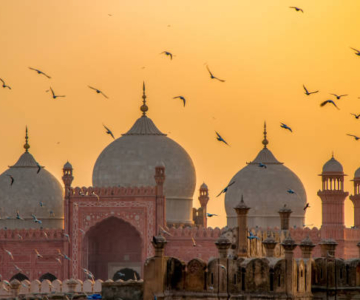
It also makes me happy that no matter how much the present-day media hysteria about Pakistan (and “natives” in general) diminishes my country and region, nothing can take away this heritage and high points of my ancestral culture. Pakistan is not just Indus civilization – it is a hybrid cultural ethos: the Greek, Gandhara, the central Asian, Persian, Aryan and the Islamic influences merge into this river and define my soul – how can I not be proud of this?

The People

I simply love the Pakistani people – they are resilient, diverse and most entrepreneurial. They have survived calamities, famines, upheavals, injustices and exploitation and yet, by and large, retain a sense of humour. I am not naïve to say that they are totally free of the various bondages of history but they display remarkable entrepreneurial and creative potential. Most of them are “real” and rooted and yet not averse to modernity.

There is an urban revolution taking place in parts of Punjab and Sindh and the drivers are neither the state nor external donors but the people themselves. The private sector has even contributed to build an airport. There is an ugly side as well: the absence or predatory activities of the state (e.g. Karachi) has also provided a breeding ground for mafias but this is not a unique Pakistani phenomenon. From LA to Jakarata, such groups operate within the folds of urbanization.

I am proud of my people who have proved themselves in all spheres and countries – whether it is Professor Abdus Salam, the Nobel Laureate or Shazia Sikander, the miniaturist of international fame or Mukhtaran Mai who has proved her mettle in giving a tough time to forces of oppression.

The Spirituality

There is an inordinate focus on Pakistani madrassahs, the pro-Taliban groups and the violent jihadis. How representative are these groups? Only Pakistanis know that such groups are marginal to the mainstream attachment to and practice of religion. The rural folk are still steeped in Sufi worldview and many versions of Islam exist within the same neighborhood. Of course there is manipulated curse of sectarian violence but that mercifully is not embedded despite the attempts of big external players and the octopus-like state agencies.

Ordinary Pakistanis, such as me, value their Islamic beliefs, are God fearing and follow what is essentially a continuation of the centuries old traditions of spirituality that survives in the folk idiom, in the kaafis of Bulleh Shah, and in the verses of Bhitai and Rahman Baba. Our proverbs, day-to-day beliefs are all mixed and laced with history, oral tradition, Sufi lore and of course Islamic simplicity. It is another matter that there are individuals who want to hijack this thread and impose their nonsense on us – but we as a people have resisted that and shall continue to do so. After all we inherited the confluence of ancient religions and practices.

Pakistan is where Buddha taught and Taxila shined, and where Nanak preached and the great saints – Usman Hajweri, Fariduddin Ganj Shakar, Bhitai and Sarmast - brought people into the fold of Islam. Despite the revisionist, constructed history by extremists in India, the sword had little to do with Islam’s rise in this region.

The Natural Beauty

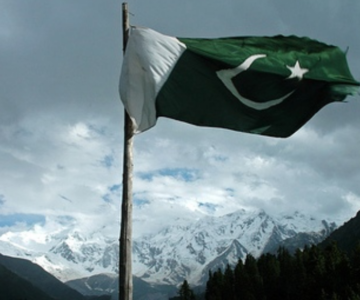
Well the spirituality of my homeland is not just restricted to the intangible belief systems. It also reflects in the splendors of Mother Nature. From the pristine peaks in the north to the mangroves of the Indus delta, Pakistan blends climates, geographies, terrains in its melting pot. Within hours of leaving an arid zone, one enters into a fertile delta. And again a few more hours put you right in front of otherworldly mountains. The deserts of Cholistan radiate the moonlight and the surreal wildernesses of Balochistan are nothing but metaphors of spiritual beauty.

Where else can I experience the aroma of wet earth when the baked earth cracks up to embrace every droplet and where else can one find a Jamun tree with a Koel calling the gods? An everlasting impression on my being shall remain the majestic sunrise at the Fairy Meadows amid the Karakorams and the melting gold of Nanga Parbat peak. I love this country’s rivers, streams and the fields where farmers testify their existence with each stroke, each touch of earth. I cherish trees that are not just trees but signify Buddha’s seat or the ones in graveyards nourishing the seasonal blossoms.

The Cuisine

Yes, I love the aromas and myriad scents of Thai cooking, the subtlety of the French and Lebanese or the Turkish dishes but nothing compares to the Pakistani cuisine. Forget the high sounding stuff; ghar ka khana (homemade food) no matter which strata are you from is difficult to find elsewhere?.

Whether it is a simple Tandoor ki Roti with Achaar or Palak (in the Punjab) or the intricate Biryani with ingredients and spices of all hues, the food is out of this world. In my house, we were used to at least ten different rice dishes (steamed white rice/saada/green peas/vegetable/channa/choliya/potato Pilau), three types of Biryanis (Sindhi, Hyderabadi, Dilli or just our cook’s hybridized Punjabi version), and my grandmother’s recipe of Lambi Khichdee. The list continues.

In the Northern areas, there are Chinese-Pakistani concoctions, in the North West Frontier there is meat in its most tender and purest form. In Balochistan there is Sajji, meat grilled in earthenware at low heat until all the juices have transformed the steaks into a magic delight. And, the fruits and the sweets – the mangoes that come in dozens of varieties and colours, melons of different sizes, the pomegranates and the wild berries that still grow despite the pollution everywhere!

How could I not love this eclectic cuisine?

And Finally…

…the sum-total of all five: I love Pakistan as this is my identity – immutable and irreversible. Simple.

The genesis of this post:

I am averse to the ratings and rankings that characterize the junk-journalism of our times. Much like the embedded style of reporting such a view remains partial and often ignorant of the nuances and layers of subtext that are almost unachievable in the pop-view of the world.

Readers might question this apparent paradox as on the one hand I am participating in this top-five series and on the other I am also being critical. Well, well this is kosher from a South Asian perspective as we remain a mythical-modern bundle of contradictions.

The real reason for me to ‘submit’ my top 5 is the inquiring spirit of Mayank Austen Soofi whom I don’t know and have never met. But I am quite empathetic to his efforts at understanding Pakistan. At least he ventures into the ‘other’ territory and unlike the mainstream media and writers, does not view Pakistan as a threatening collage of burqa clad women, terrorism and gun toting radicals…

« Older PostsNewer Posts »

Powered by WordPress