Jahane Rumi In search of the unsearchable: O, my soul! where would you find your house?

7Mar/100

Pak Nobel laureate’s Ahmedi status hurdle for documentary

I was quoted in this story - a slight spin but an important point nevertheless..
Wednesday, March 03, Islamabad: Two young Pakistanis are battling all odds to make the first-ever documentary on the country's only Nobel laureate Abdus Salam though the going has not been easy so far because he was an Ahmedi.
2Mar/102

Support the documentary on Dr Abdus Salam

I had the pleasure of meeting these young men - Zakir and Omar - who are devoted to the life Dr Salam and have been working against all odds. Theirs is a small but historic project and they need our support. I am posting an email by the producers that updates us about this project. Please pass the word around and contribute to this important project.

Thank you for your support over the past few years. Thanks to contributions we received in 2009, we began filming in Pakistan early this year. To view a few behind the scenes photos please visit our press page at www.abdussalamdocufilm.com/press.php

We are still far away from our target of 500,000 USD, an amount needed to support on-location filming in various countries, the purchase of archival footage, and research, production, marketing and distribution. As a tribute to Salam, we hope to use any proceeds from the final docufilm to advance science education in developing countries.

25Feb/103

Pakistan: democratic governance is the only way forward

(Also published by The News) Given the average shelf life of any civilian government, it is almost miraculous that the incumbent government has survived and there are signs that its removal is not immediate. The longevity of civilian order has less to do with the inherent strengths of its style of governance or delivery of public goods that it had promised in its manifesto. The survival of this government is an outcome of the lack of options for the establishment as well as its international allies, notably the Western powers. Leaving the conspiracy theories and the excessive over-reliance of the analysts on the American factor, we can safely argue that the military establishment of Pakistan and its intelligence agencies has found themselves in a unique situation since the assumption of the presidency by Asif Ali Zardari.

The truth is that Pakistan People’s Party, an anathema to the civil-military bureaucracy, has assumed the most important and powerful offices that a civilian government can aspire for. Two years ago, when the Prime Minister Yousaf Raza Gillani was

23Feb/100

Farida Khanum Singing Raga Kamod – Manna for the Soul

I am cross-posting my dear friend Fawad's excellent post from here. The links here are worth visiting and the music is fabulous for those who have the ear for extraordinary melodies from Indo-Pakistan. Raza

The internet is a remarkable treasure trove and I continue to marvel at the doors of culture, information and connectivity that it has opened. My recent discovery is a wonderful collection of Hindustani Classical music on the file sharing site esnips. I have been spending hours listening to pieces I love and discovering unknown treasures of the sub-continent's greatest vocalists.

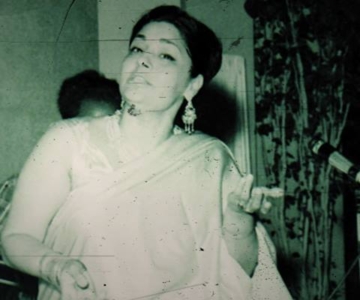
Here's my selection of the day; Farida Khanum singing Raga Kamod. This is unfortunately the kind of performance by the the sister of Mukhtar Begum and a disciple of Ustad Ashiq Ali Khan (son of the founder of the Patiala Gharana Ustad Fateh Ali Khan, one half of the legendary duo Aliya Fattu) that Pakistani audiences have witnessed only rarely. In a country with almost no appetite for classical music she shifted her focus to lighter forms of singing decades ago.

22Feb/100

A picture that sums up a long story

Pakistan Taliban commander Hakimullah Mehsud is seen with his arm around Taliban chief Baitullah Mehsud during a news conference in South Waziristan (read more here courtesy this site)

19Feb/102

Rickshaw and truck poetry from Pakistan

My old friend Raza Bokhari sent me these golden lines used by our rickshaw & truck drivers to express their angst, emotion and sense of humour in a hostile environment. Before I post them, a little on the image on the right (borrowed from paklinks.com).
The rickshaw on the right has street poetry on love, trust, doubt, prayer and jealousy. There is a sale/discount incentive on the left. As a mark of respect, the Ustads (mentors who must have coached the driver or helped him procure the rickshaw are also mentioned on the bottom left and bottom right).
18Feb/10Off

Tau kiya yeh tay haye… (Gulbahar Bano singing)

A piece of Urdu poetry that has remained with me through seasons, years and all the vicissitudes...
This is an extraordinary ghazal (rhymed poem in Urdu composed in classical style). The poet is perhaps Saleem Kausar whose expression is subtle yet brutal. There is a sense of finality in the lyrics - a denouement that is being challenged and hence a dynamic is created that allows the tragedy of two people parting their ways to turn into a moment of absolute beauty. The sadness of the verse is augmented by Gulbahar Bano's unique voice that brings out the depth of meaning in the lines.

I can only translate the first couplet:
Tau kiya ye tay haye ke ab umr bhar nahee milna
Tau phir ye umr bhi kiyon, tum se gar nahee milna

Is it now agreed that we shall not meet for life
But what good would be living if I will not be with you

As I rendered this literal translation, I wanted to curse myself for being so inadequate with words.. Those who can understand Urdu or Hindi would know what exactly I am complaining about. I dedicate this to someone special who remains as close as time itself. In fact, I am grateful to this muse who sent it the other day bringing back the smell of summer heat, the shades of white and all the flowers that bloomed and were tucked into thick books.

Here is the ghazal

another version found on youtube:

18Feb/100

Killing Shias is not jihad – stop this carnage in Pakistan

This is an old article – When the state kills – authored by Pakistan’s eminent intellectual Khaled Ahmed. It remains relevant for what is happening today – the carnage in Karachi and targetted killing of the Shia minority is a cause for concern for  Pakistanis who want the country to become a plural, tolerant and progressive society for all its citizens irrespective of their faith, caste or creed.
Many of us - who identify themselves as neither Sunni nor Shia (only Muslims) - strongly condemn the Karachi incidents and will continue to raise voice against extremism and sectarianism.
14Feb/105

Jaipur, Faiz and Ali Sethi

Ali Sethi recently attended the Jaipur literary festival and his extraordinary performance is now accessible to those who were not there. I should thank him for sharing this video. Ali's instructions were also meticulous but I will not post them here except his concluding comment: the whole of the rest of the session is fantastic, and includes an excellent performance by Shabana Azmi as well as a very funny story told by Javed Akhtar about his first meeting with Faiz Sahib..

Click and enjoy!

Jaipur Literature Festival 2010

12Feb/101

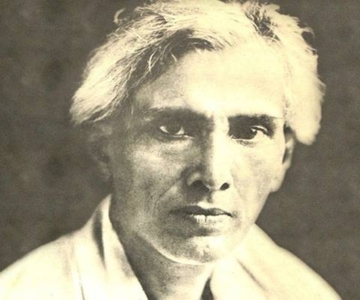
The Speech of Mr. Sris Chandra Chattopadhya (Opposition to Objectives Resolution, Constitutent Assembly of Pak, 12 March 1949)

This is a historic speech and a document that posterity will re-examine. Seldom has one piece of legislation caused so much trepidation. Thanks to my firebrand friend Usman Qazi, I got to read this speech that I had heard about from many people. Here is the  text of the address of  Sris Chandra Chattopadhya (Opposition to Objectives Resolution, Constitutent Assembly of Pak, 12 March 1949).

Mr. Sris Chandra Chattopadhya (East Bengal : General) : Mr. President, I thought, after my colleague, Mr. Bhupendra Kumar Datta, had spoken on the two amendments on behalf of the Congress Party, I would not take any part in this discussion. He appealed, he reasoned and made the Congress position fully clear, but after I heard some of the speakers from the majority party, viz, Muslim League Party, the manner in which they had interpreted the Resolution, it became incumbent on me to take part in this discussion.
I have heard Dr. Malik and appreciate his standpoint. He says that "we got Pakistan for establishing a Muslim State, and the Muslims suffered for it and therefore it was not desireable that anybody should speak against it". I quite agree with him. He said; "If we establish a Muslim State and even if we become reactionaries, who are you to say anything against it?" That is a standpoint which I understand, but here there is some difficulty. We also, on this side, fought for the independence of the country. We worked for the independence of the entire country. When our erstwhile masters, Britishers, were practically in the mood of going away, the country was divided – one part became Pakistan and the other remained India. If in the Pakistan State there would have been only Muslims, the question would have been different. But there are some non-muslims also in Pakistan. When they wanted a division there was no talk of an exchange of population. If there was an exchange of population, there would have been an end of the matter, and Dr. Malik could establish his Pakistan in his own way and frame constitution accordingly. It is also true that the part of Pakistan in which Dr. Malik lives is denuded of non-Muslims. That is clear.
Dr. Omar Hayat Malik: On a point of order, Sir, I never said that. He has understood me quite wrongly.
Mr. Omar Hayat Malik: I never said that Pakistan was denuded of non-Muslims. My friend on the opposite has misunderstood me.

9Feb/103

Muslimness – shifting boundaries

Muslimness is an elusive state of being. There are watertight strictures of the theological identity defined by men, interpreted as the Sharia, on the one hand; and the broad political and cultural sense of the self, on the other. Identity, in any case, is a messy affair: shifty, shifting and eventually, imagined. While 9/11 placed Muslims at the centre stage of global politics, the broth had already been simmering in the cauldrons of biased academe and pop reality mirrored through the blood-thirsty lens of corporate media.

So what is it to be a Muslim? An inflexible bag of rituals? Or a cultural sense of belonging or a deeper dogma ingrained in young minds? I have never considered myself anything but a believer, a ‘practicing Muslim’. This has never been at variance with my secular and inclusive pretensions, despite the fact that the clergy in my country considers secularism akin to atheism, a sort of mirror image of the Pakistani political foundation. The clerics translate secular as la-deen , at best irreligious, and at worst, godless.

Ironical that this business of religious identity is articulated in a land that was the crucible of the secular Indus Valley civilization, non-militant Buddhism and a peculiar version of South Asian Islam that spread via the Sufi khanqahs and was a sort of amalgam of the Central Asian with the ancient South Asian. Even more ironical is the reality, neglected and veiled, that lived Islam is located around dargahs , tribal codes and customs which are irreligious in their own way. But who cares? Referred to as the world’s most dangerous country, Pakistan, according to the pundits of global opinion, is a haven for Islamic terrorists. Collateral damage, therefore, is kosher and a necessity to undo the unstated part of the ‘axis of evil’.

Labels and more labels. On the global shelves such products sell well and work in favour of a war machine hungry for energy resources, territory and blood.

8Feb/104

How instability is garnered

My latest analysis published by The News

We continue to bemoan the failure of democratic norms to take root in our governance culture. True, that the repeated extra-constitutional interventions and direct or indirect military rule have rendered democratic governance as a distant and seemingly unattainable goal. In addition, the emergence of non-state actors, sometimes more powerful than the state itself has also led to formidable and multiple centres of power. In such a milieu, achieving the sustainability of democratic process is a Herculean task. Whilst the intentions of our unelected state institutions and their overt and covert non-state partners are clear, the behaviour of the political elites is confounding.

Not unlike the past, the divisiveness of Pakistan’s political elites has entered into a decisive phase. Fissures are apparent in the post-2008 political accord that led to the unanimous election of the Prime Minister, Yousaf Raza Gilani. The first cleavage, now a recurrent pattern, has emerged in Sindh where the coalition partners — the Pakistan People’s Party (PPP) and the Muttahida Qaumi Movement (MQM) — are pitted against each other for political control of urban Sindh. The latest skirmish is rooted in the evolving arrangements for the local governments and who will end up controlling the third tier of government. However, there is an ethnic dimension to it as well. Karachi remains besieged by sectarian, provincial, and linguistic ghosts that apparently are alive and kicking.

The second disruption in the political compact that led to a transition towards representative rule is unfolding in the shape of a brewing discord between the ruling PPP and the opposition Pakistan Muslim League (Nawaz). The PML-N rules the Punjab and thereby has a stake in the system and power matrix but it is also striving to maintain its ‘opposition’ status. This is why a dual strategy is evident where a few firebrand leaders of PML-N take a hard line against the federal government and the President Asif Ali Zardari. The party does not want to rock the system it says but also considers ‘options’ that lead to a mid-term election or even the premature exit of the President from the office in the wake of Supreme Court rulings on the National Reconciliation Ordinance.

29Jan/100

Farewell Haqqani Saheb – forgive your peers and colleagues

A personal favourite, Irshad Ahmad Haqqani is dead. This is a huge loss to Urdu journalism as he was the last of sane voices in the vernacular industry. I often disagreed with his centre-right views but his tone was measured and he remained a staunch supporter of democracy. May God bless his soul.

I stumbled on this post at Cafe Piyala that also talks about Haqqani but the best part of it was what Haqqani's peers and junior collegaues had to say about him. I think some of the comments were so shameful that I could not even laugh with an easy conscience. I am quoting the last part of that post here that also is quite a treat:

Whatever they might say about him, he did invent the modern Urdu column, which is half analytical drivel, half dinner menus. Only during the last week, for example, Jang columnist Haroon-ur-Rashid (according to his column) demanded and got desi murghi from the Azad Kashmir prime minister, and Hamid Mir (according to his column) discovered new insights into judicial activism over a Kashmiri dish. I forget the name of the dish but according to Jang / Geo’s brightest star, it is made of mooli and shaljam and served with rice. The host was the Lahore High Court Chief Justice Khwaja Sharif.

27Jan/101

No priests needed – search of a Pakistani identity

Raza Rumi  wonders why we remain in search of a Pakistani identity

Half-truths are what we love to indulge in. One of the countless crimes committed by President Asif Ali Zardari is that he wears a Sindhi cap instead of a Jinnah cap. That by preferring a Sindhi topi and thundering at the occasion of late Benazir Bhutto’s death anniversary, he undermined his Pakistani identity, is truly mystifying. After all, what is a Pakistani identity and why is the Jinnah cap being elevated to the level of an article of national faith?

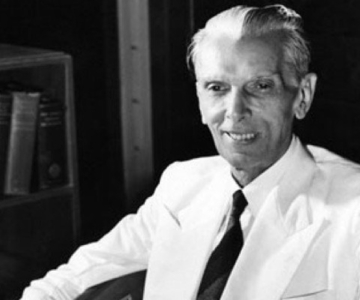
If anything, Mr Jinnah’s patronage of Muslim identity mark was an afterthought. His usual attire was a well-tailored pucca-sahib-like suit. It was only in the nineteen forties and that too close to India’s independence that Mr Jinnah started donning the Muslim nobility’s attire.

So what is this fuss all about? Constructing Pakistan’s ideology based on theological interpretation of a universal religion like Islam has been a carefully executed project of the Pakistani establishment and its shadows in the non-state domains. Such cliques have grown bigger, mushroomed and are now essential to our lived reality. Therefore lambasting of Zardari on not sporting a Jinnah cap finds public resonance and broad acceptability within the populous Punjab province where the Urdu press flourishes and finds readers and writers aplenty.

25Jan/100

Should we bid farewell to democracy in Pakistan?

Published in The NEWS

It is still not too late that PML-N and PPP and the regional parties sit together and agree on the way forward says Raza Rumi

Many decades ago, our Governor General-President Iskander Mirza had rather contemptuously stated that democracy does not suit the genius of Pakistani people. Immediately after these words of wisdom were uttered, direct military rule not only exiled Mirza but also became a norm rather than aberration. For the last six decades or so we have not been able to overcome this political reality. The unelected institutions of the state are not willing to give up the power they inherited from the might of the colonial state. At best, they are willing to share power to a degree that they deem fit.

It is now clear that within a few months Pakistan is due for another political upheaval. Barely twoyears after an election took place, the political elites are back in business: bickering, wrangling and oblivious to their historical role in strengthening the fragile democratic process. The unelected institutions have traditionally been contemptuous of democracy and their conduct in the last two years has not been surprising. The losers at the hand of the military rule – the PML-N and the PPP ought to have learnt their lesson: no matter how adverse the political climate was, the political forces had to stay united for a common cause.

However, the brief interlude of political cooperation led to mistrust and misgivings among the political players. First the restoration of judges and a partisan interpretation to the issue of independence of the judiciary created a rift between the two parties. Second, the imposition of ill-advised Governor’s rule led to widening of the gulf. This was followed by the long march that led to the restoration of the deposed judges. In the process, the co-chairperson of the PPP was termed as a leader who did not keep his promises and time and again betrayed the trust of Mian Nawaz Sharif painted by a prejudiced media as an innocent victim.

23Jan/103

Saadat Hasan Manto- Writer of Stark Realities

(Courtesy Iftikhar Chaudri) Saadat Hassan Manto (May 11, 1912 – January 18, 1955) was a Pakistani Urdu short story writer, most known for his Urdu short stories , 'Bu' (Odour), 'Khol Do' (Open It), 'Thanda Gosht' (Cold Meat), and his magnum opus, Toba Tek Singh'. Unfortunately having spent life on both sides of the border he was portrayed as an Indian writer in Pakistan and in India he was portrayed as a Pakistani writer. But truely he was a writer of the subcontinent above distinctions of coutry or religion.
He was also a film and radio scriptwriter, and journalist. In his short life, he published twenty-two collections of short stories, one novel, five collections of radio plays, three collections of essays, two collections of personal sketches.

22Jan/104

Folklore sans frontiers

There is no alternative to peaceful coexistence within South Asia, says Raza Rumi

As we crossed the blood lined Waagah, after three hours of soul-destroying bureaucratic tangles and multiple forms filled in by the guardians of our borders, nothing changed. It was an eerie reminder of how the two Punjabs are but one. The roads were dusty and rural life remains as time-warped as ever. The street vendors were selling dirty, unhygienic food items wrapped in a thick cover of flies; and the money changers and CD-sellers attacked you with a frenzy that one is used to back home.

I was part of a delegation from Pakistan that was driving to Chandigarh to attend the SAARC folklore festival organized by Punjab’s legendary writer Ajeet Caur. This was a motley crew: ten Punjabis of various stripes, and five Sindhis who have travelled all the way from Bhit Shah to Lahore. We were greeted with garlands and the usual Punjabi warmth by our hosts at the border. This was my first trip to India via land or, as they say on visa forms, “on foot”. One could not escape the strange sensation of striding across a “hostile” frontier.

21Jan/100

URS TODAY-Hazrat Baha-ud-din Zakariya (RA) Multan

Iftikhar Chaudri's excellent note on the great saint:
Hazrat Baha-ud-din Zakariya(RA) was a Sufi of Suhrawardiyya order (tariqa). His full name was Al-Sheikh Al-Kabir Sheikh-ul-Islam Baha-ud-Din Abu Muhammad Zakaria Al-Qureshi Al-Asadi Al Hashmi. Sheikh Baha-ud-Din Zakariya known as Bahawal Haq was born at Kot Kehror, a town of Layyah District near Multan, Punjab, Pakistan, around 1170.

His grand father Hazrat Shah Kamaluddin Ali Shah Qureshi al Hashmi arrived Multan from Makkah en route to Khwarizm where he stayed for a short while.In Tariqat he was the disciple of Renowned Sufi Master Shaikh Shahab al-Din Suhrawardi who awarded him Khilafat only after 17 days of stay at his Khanqaah in Baghdaad.

4Jan/101

Madam Nur Jahan

(Published in The Friday Times) - The twentieth century trajectory of Pakistani music and stardom are epitomised in the life and works of Madame Nur Jehan (1929 - 2000) also known as Malika-e-Tarranum. Had there been no partition of boundaries, musicians and composers in 1947, she would have been a subcontinental diva. A common Punjabi aphorism, loosely translated, states that there never was and never will be anyone like Nur Jehan. With her incredible talent, fiercely independent persona, flamboyance and ingrained humility, she surpasses even the best of global icons. The complexity of her life and times have yet to be appreciated: breaking with convention, she defined a new set of rules in the patriarchal entertainment industry, manipulating it where possible to ensure that she would not become the archetypal exploited South Asian singer. Her wit and lust for life remained till the end, and with the exception of not having died in her beloved Lahore, she died with no regrets.

When nine years ago, the Queen of Melody breathed her last breath in a Karachi hospital, the circumstances of her death were considered peculiar by Believers. Even in death she achieved what ritualistic Muslims seek all their lives – to die on the holiest day of the year. The twenty-seventh night of the holy month of fasting is widely believed as a night when all prayers are answered and the gates of forgiveness are let open. This is reportedly the reason that her Karachi-based daughters hastened her burial. (Other less spiritual accounts explain it as a consequence of conflict among her children by different husbands, and the struggle to control family assets).

4Jan/100

To undo the vicious past

It's about time a civilian Pakistan functions as a peaceful country with fair share of resources put into people's welfare by Raza Rumi (published in the News on Sunday)

That Pakistan's endemic political instability is a function of its inherent power imbalances is well known. The continued spells of authoritarian rule have also retarded the growth of political parties and other necessary institutions essential for democratic governance. We are a country trapped in our history, our self-fulfilling conspiracies and intrigues that are also rooted in the various phases of colonial era. Our geo-political situation, celebrated by a rentier state, has not helped us either. From the 1950s we have been in close partnership with global powers that are viewed as the ultimate saviours of a dysfunctional polity.

In 1971, we lost half the country. While the seeds of discord in East Pakistan had been laid by West Pakistan's ruling elites, our vengeful neighbour took full advantage and supported the Bangladeshi liberation movement. By all accounts, this was an avoidable tragedy had the national security-obsessed state dominated by West Pakistani vested interests could have seen the writing on the wall and fixed the issues of federalism that still haunt us.

27Dec/092

Remembering Benazir Bhutto

I am reposting my piece that was written a year ago. It seems that not much has changed in these twelve months

It was only yesterday that we were mourning for the loss of an icon of our times. The much loved, and passionately hated Benazir Bhutto whose tragic murder in broad daylight was the greatest metaphor of what Pakistan has turned into: a jungle of history, ethnicity and extremism. Little wonder that Bhutto’s worst enemies cried and lamented the loss of a federal politician whose life and times were as unique as her name. The populist slogan – charon soobon ki zanjeer (the chain of the four provinces, literally) could not have been truer than the most tested of axioms. As if her death were not enough, the state response was even more brutal. Why did she participate in public rallies? On that fateful day of December 27, 2007, why did she invite death by sticking her neck out – literally and metaphorically? This was tragedy compounded by invective and betrayal. After all, had she not received a tacit understanding from the then military President, General Pervez Musharraf?
The official machinery then went to work in a super-efficient frenzy. Within hours, the murder scene had been washed away, right opposite the Liaqat Bagh in Rawalpindi where Pakistan’s first Prime Minister, Liaquat Ali Khan, was also shot dead. If anything history repeated itself with a bang – only to restate that Pakistani Prime Ministers are dispensable accessories of the power game. The misogynistic thirst for blood-letting once quenched, patriarchy dictated that the autopsy of a woman became an issue of honour, confusion and violation of the law. How telling, that the laws of the land remain subservient to the imperatives of culture and tradition.

Full piece here

17Dec/091

The tender tea house

I was quite pleased to read this piece. Aside from fact that it talks about me, the constant rememberance of Pak Tea House is a welcome sign. The memory is not fading, not yet..

From Partition onward, Nasir Khan writes, a dusty cafe was the centre of Lahore’s literary life.

Pak Tea House sits on Mall Road in Old Anarkali, nestled between tyre suppliers and motorcycle workshops. Before Partition it was the India Tea House, but 1947 and a quick paint job changed that. No one knows why it became – along with several similar shops on the same street – a favourite haunt of so many intellectuals. Maybe it was the cheap but good milky tea, or the extra-sweet biscuits. Perhaps it was the literary sensibility of the first post-Partition owners, two brothers from India. It might have been the radio on the counter that was constantly tuned to Lahore’s call-in request programme. And, for scores of struggling writers and poets, the availability of food on credit certainly had something to do with it.

16Dec/090

What is the threat? What is the way out?

By Raza Rumi (The News on Sunday)

Not unlike good old Nero, who carried on with his self-involved pursuits while Rome burnt, our enlightened brigade from the Urdu and the English medium worlds have been quite busy with their hobbyhorses. With thousands of homes churning out a suicide bomber per minute, the national discourse or the flimsy excuse for it, has been truly remarkable. First came the minus one formula, backed by the 'be-ghairat' Kerry Lugar bill and now the centre of universe has shifted to the National Reconciliation Ordinance (NRO).

If one were to follow the trails of verbosity and poisonous write-ups in the print and electronic media, the storyline is as simple as follows: one fine day, late Benazir Bhutto and her 'corrupt' husband sitting thousands of miles away from Pakistan issued the NRO to 'protect' their wealth. As if these political leaders in exile and wilderness had the legislative and executive authority to issue an Ordinance.

1Dec/095

New Education Policy

A policy matter published in the iWrite Magazine

Raza Rumi responds to the new education policy for Pakistan

Yet another educational policy has been announced for Pakistan and its hapless citizens. We should not cast aspersions on the motives of an elected government, for we have been bitten by endless rounds of authoritarian rule which have not only destroyed the institutions of civilian governance, but have also demolished the integrity of our curriculum and mode of instruction. Decade after decade, dictators chose to glorify martial rule and later legitimized the abuse of jihad and violence. Even those who have studied at elite, expensive schools have somehow been doctored by the same curse of malicious textbooks. The surreal curricula have glorified looters and plunderers like Mahmud Ghaznavi only because they happened to be Muslims by a sheer coincidence of birth. Not to mention the Hindus, with whom we have coexisted for nearly a thousand years; they have been painted as treacherous, villainous and vile creatures ready to destroy the Muslims.

One would have expected that a legitimately elected government, representing the aspirations and pluralism of Pakistan's small provinces would take a strong stance on the revision of pernicious curricula. Alas, this is now a distant, buried dream for all. The policy is silent on that. This is a government that is waging wars on terrorism rather successfully and with clarity of purpose, but the educational policy makes little mention of the madrassa reform which is now an imperative for the very survival of Pakistan as a viable state. Thousands of madrassas scattered all over the place, funded by external powers preach hatred, bigotry and a reversion to the Dark Ages. Who will reform these madrassas if the national education policy does not even bother to lay out a strategy and provide resources? The new policy promises that by 2015, the budgetary allocation for education would increase to seven percent of the GDP from the current 2.1 percent of the GDP. This is surely promising but how can a policy not envision the need or the strategy to mobilize such resources? Have we not heard such sanguine proclamations in the past?

27Nov/0914

Maulana Azad’s interview given to Shorish Kashmiri, 1946

I was intrigued by this interview of Maulana Abul Kalam Azad given to the famous journalist Shorish Kashmiri for a Lahore based Urdu magazine, Chattan, in April 1946. This interesting document has been discovered and translated by a former Indian minister Arif Mohammad Khan. Covert Magazine and newageIslam website have recently published it. The contents of this interview are difficult to agree with. Azad is speaking from a nationalist angle, anti-Pakistan movement platform.

However, the narrative has some interesting observations and predictions for Pakistan that cannot be rubbished simply because Azad was a Congressite. This interview was conducted over a period of two weeks (parallel to the proceedings of the Cabinet Mission) and has not been documented in any book except that of Kashmiri’s book on Abul Kalam Azad, which has been out of print for decades. Its discovery is a welcome step towards better historiography on both sides of the border.

Q: The Hindu Muslim dispute has become so acute that it has foreclosed any possibility of reconciliation. Don’t you think that in this situation the birth of Pakistan has become inevitable?

21Nov/090

SOUTH ASIA: The Ties that Bind: Artists, Writers Forge Peace

By Irfan Ahmed

CHANDIGARH, India, Nov 18 (IPS) - Imagine writers, scholars and folk performers from eight South Asian countries coming together to share their common heritage and culture while promoting peace and harmony at the same time.

That is precisely what 200 members of the South Asian Association for Regional Cooperation (SAARC) did early this month, prompted by a collective aspiration to pursue their common objectives.

The move—which took place in this city—was deemed highly significant in a situation where the political leaderships of these states had been unsuccessful in making any major breakthroughs towards peace.

1Oct/084

Three Pakistani film songs

Jab Koi Piyar se Bulaye ga

10May/070

Why I love Pakistan? Top 5 reasons

The Civilization

Pakistan is not a recent figment but a continuation of 5000 years of history: quite sheepishly, I admit, that I am an adherent of the view held by many historians that the Indus valley and the Indus man were always somewhat distinct from their brethren across the Indus. I do not wish to venture into this debate but I am proud as an inheritor of Harappa, Mohenjo-Daro and Mehrgarh (not strictly in this order) and this makes me feel rooted and connected to my soil as well as ancient human civilizations and cultures.

It also makes me happy that no matter how much the present-day media hysteria about Pakistan (and “natives” in general) diminishes my country and region, nothing can take away this heritage and high points of my ancestral culture. Pakistan is not just Indus civilization it is a hybrid cultural ethos: the Greek, Gandhara, the central Asian, Persian, Aryan and the Islamic influences merge into this river and define my soul how can I not be proud of this?

12Feb/0711

We Are All Dr Faustus – Parveen Shakir

Last month, in the freezing climes of Islamabad, we talked about Parveen Shakir, Pakistan's popular poet who died at a young age.

One of Parveen's poems invokes the legend and metaphor of Dr Faustus:

'The name 'Faust' has become deeply rooted in European mythology as the name of a man who sold his soul to the devil in return for eartly power and riches. The Faust legend has been embellished and retold in many formats ...'

Source here

I found this skillful translation of her poem - We Are All Dr Faustus - by another noteworthy poet Alamgir Hashmi on this site.

We Are All Dr Faustus

In a way we are all
Dr Faustus.
One from his craze
and another helpless from blackmail
barters away his soul.
One mortgages his eyes
to trade in dreams
and another offers
his mind as collateral.
All that one may need sense
is the currency of the day.
So a survey of life's Wall Street says
that among those with the buying power these days
self-respect is very popular.

The Urdu version was found with the translation

This is an appropriate commentary on what constitutes self-respect and the all-pervasiveness of Wall Street culture in our contemporary existence.

5Sep/060

Qasmi, literary feuds and national neglect

While responding to the comments on my ATP post on Ahmed Nadeem Qasmi , I rambled a little on the literary feuds among the Urdu stalwarts. However, this post has two parts: first, a little more on the literary cross currents; and second our collective treatment of literary and cultural giants.

As Adil Najam pointed out in his comment, Qasmi was criticized by those on the left as being right wing. Interestingly, the conservatives also criticized him for his outspoken views on the abuse of religion and Zia's dictatorship.

But Qasmi remained a humanist till his last and never allowed ideology to taint his creativity. This aspect of his long literary career has been astutely analyzed by Sarwat Ali has rightly titled him Un-Progressively Progressive in his obituary published in the News on Sunday, and he aptly describes the Qasmi predicament:

When Pakistan was created the question of the identity of the new nation became the trickiest one to handle, especially in its cultural context. Muhammad Hasan Askari took the issue by the horns and called for a specific entity known as Pakistani literature. Of course, this prescriptive drive was not received well in the camp of the artists and writers. On the other extreme were those who did not see the need of manufacturing a specific identity but liked to see it grow and evolve with an evolving sensibility. This was taken as denial by the more hardline writers, and a war of words ensued which pushed the central issue into the background and brought forth the battle lines on ideological and political affiliations of the writers.