Jahane Rumi

In search of the unsearchable: “…O, my soul! where would you find your house?”

Archive for the ‘media’


Published September 7th, 2007

On the “death of Pakistani culture”

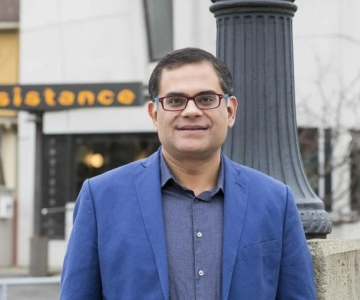
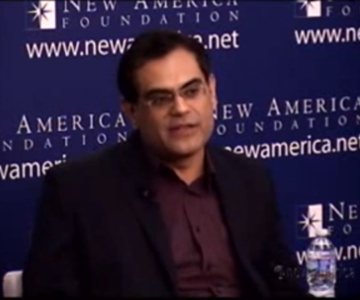
Khaled Ahmed is the endangered variety of writers. A true man of letters proficient in world languages, histories and cultures, he is a journalist who does not refrain from confronting the truth. There are very few individuals like him who advance the traditions of seeking knowledge and pontificating in a classical sense. I have been an admirer of his writings since my teens when I would read the Frontier Post (yes it was a thoughtful publication and a refreshing alternative to semi-controlled media in Zia days).

In his recent article published in the The Friday Times (that he also edits), he argues that “because of the death of Pakistani culture, normalisation with India has become more crucial than most of us realise”.

After 60 years Pakistan is helplessly witnessing the destruction of its culture by elements arising from within its society. The mission of purifying society to make it a fit vehicle for Islam has passed from the state. This process has been incremental, but after Talibanisation, the culture-destroying process has accelerated. The state seems to be getting cold feet over something it did earnestly since 1947 in the name of its ‘purifying’ ideology. Now worried about its global image, it is face to face with religious anarchy and wants society to become ‘tolerant’ and ‘moderate’, which is the function of culture. 

Read the full article here.

The concluding paragraph is pretty grim -

Before 1947, Muslims offended with the fahashi (obscenity) of Saadat Hasan Manto took him repeatedly to court, only to hear the Muslim judges under British Raj say that what Manto wrote was high culture, not obscenity. After 1947, every time he was dragged before the court for obscenity, he was convicted! The judge in Karachi gave him tea in the evening and told him he was the country’s greatest short story writer, but convicted him for obscenity in the morning. Now the state wants to stop killing culture, but it is too late.

Published September 2nd, 2007

Lal Shahbaz Qalandar of Sehwan

 Lal Shahbaz Qalandar’s shrine is full of devotees these days. His Urs is a major cultural event in Sindh. The Qalandar has followers across the Central and West Asia and his shrine and festivities around the Urs are an important part of Sindh’s spiritual and cultural landscape. The Qalandar was also a part of the wider Chishtia movement in the subcontinet in the twelfth and thirteenth centuries.

His shrine even today is an inclusive space for all religions, classes and castes.

This report paints an interesting picture:

In the colourful crowd, Sunnis rub shoulders with Shias and Muslims eat and drink with Hindus, using same plates and glasses. The Sufi culture of the Subcontinent, which breaks the barriers of cast, colour and creed, is witnessed in its most magnificent and harmonious way during the celebrations.

Neither the power of crowns and kings nor the might of armies equals the force of a Qalandar.”

Source

Update: Sadly, I just read that there were deaths today due to sheer mismanagement and negligence at the shrine. What a pity! May God bless the souls of those who died in such unfortunate (and uncalled for) circumstances.

Published September 1st, 2007

Long live Malaysia

 Malaysia has entered the fifty first year of its existence. This has been a half-century of determination, progress and keeping a fine balance between the diverse communities, races and cultures in the country. But Malaysia achieved successes against all odds.

True that it confronts issues of ethnic and religious tension and the side effects of controlled politics. However, prosperity assures that most of the citizens find a stake in national unity and the country’s future!

I am a little allergic to the magnified tales of tensions in the country especially by a media that we know is neither fair nor benign. Which country of the world is free of internal schisms and struggles? Fifty years is too early to assess that. Or is it the case that this rapid success without reliance on the Western prescriptions and defying the post-colonial clientelism is at play. Inverse racism of sorts. Hope I am wrong…

Or is it that there is a Muslim majority which by definition (in the global propaganda) raises alarm bells? Maybe the images of women with scarves participating in the economic and political life of the country upsets all the stereotypes about women’s “subjugation” by Islam. Many things irk the masters of stereotyping and branding agents of a new imperialism.

It is also a country that welcomes its tourists and makes sure that they enjoy their stay, Islamism notwithstanding. It also challenges the highlights of a recently independent ‘developing’ country: poverty, low levels of education, crumbling infrastructure, crime and dependence?

Unfortunately it is true that tensions in the society and calls for an “Islamic” society dilute its attempts to maintain ethnic harmony and channelise national resources to sustain gains already made. But like many Malaysians, I share the optimism and wish the country and its people the best.

Happy Independence Day - I love Malaysia (truly Asia!).

Postscript:  My optimism on Malaysia in an older piece.

Published August 31st, 2007

Finally some filmi cooperation..

Interesting developments in Pakistani cinema: first the release and accolades that a newly released Khuda Ke Liye (In the name of God) received and now the screening of a Mahesh Bhatt film in Pakistan defying conventional wisdom and using innovative ways of selling it to officialdom. Himal magazine has published a report entitled Filmi cooperation. Here is an excerpt:

The release on 13 July of Indian director Mahesh Bhatt’s film Awarapan (roughly translated as ‘Wanderlust’) in 22 cities in Pakistan was no ordinary event. There had been little hope that the Censor Board of Pakistan would issue a certificate to the film’s co-producer, Sohail Khan, to allow the film’s public screening. Even once that certificate was obtained, religious fundamentalist forces and associations of local film directors and producers issued multiple warnings against Awarapan’s Pakistan release.

Shahzada Irfan Ahmad says that the issue is more of economy rather than ideology.

Read the full entry here.

I had seen the movie a month ago. Awarapan as a film has its weaknesses - the plot in part is stereotypical, there is unnecessary violence, the “secular” cliche of Hindu boy falling for a Muslim girl is re-invoked; and it is a wee bit long. But it deals with the issue of human trafficking, portrays Islam and Muslims in a sensitive manner (unlike the hysteria on terror and terror-plots) and develops the protagonist’s character rather well. Our hero Imran Hashmi was better known for his intimate encounters on the cinema than his acting skills. He is a protege of the Bhatts and this time they have made an actor out of him.

Not a bad effort, on balance!

Published August 30th, 2007

“Expanding the Potential of Experiencing Life”

The death of Qurratulain Hyder has generated a spate of comment, obituaries and tributes. Each day I receive several emails, find new posts and articles on the internet and of course sweet little discoveries.

SG has again discovered and promptly forwarded me this interview with BBC Urdu- a nearly half an hour audio-clip. I had posted the link to another interview that was recorded in the early 1990s. This one was recorded nearly a decade later. One can hear Hyder’s  weak voice after the stroke she suffered. Hyder also laments that she has difficulty in writing and now she dictates to students. She adds that it is not a pleasurable process as the  ‘relationship with pen and paper’ is lost.

In this interview, we hear of her childhood, her short stay in the Andaman Islands, the imprints of British imperialism, the pre-partition culture of tolerance and how things changed in India and Pakistan.

Ainee’s love for travel and exploring new places and meeting people also comes out clearly from this interview. We can assume that she received much inspiration by travelling. We hear all about her books as the interviewer discusses her works in some detail.

However, the interviewer is careful not to praise her too much as she was known to get irritated by an over-dose of compliments. But he does mention that by writing Kare Jahan Daraaz Hai  Ainee had established a new trend of a creative and realistic autobiography as opposed to exaggerated sense of the self that many writers display in Urdu literature.

After years, I picked up the 2001 edition of Kare Jahan and started reading it again last night. As the literary critic C. M. Naim said, this book expands the “potential of experiencing life. What more can a reader ask of his author?”

Kare Jahan is a family chronicle, an autobiography, a creative journal and a novel at the same time! Navigating through its interconnected stories, social commentary and ambiance, the reader, slowly, becomes a part of the narrative; and starts viewing the world in a different perspective. I have yet to read another book that so effortlessly blends disparate genre of writing with such abandon.

Ainee’s interview in this audio clip should not be missed.

Postscript. Also read this moving tribute by Azra Raza at 3 quarksdaily:

Aini Apa’s memory was extraordinary and flawless, her intelligence was dazzling, her knowledge of Urdu, Hindi, and English literature, archeology, dance, classical music, (her last book is a biography of Ustad Baray Ghulam Ali Khan), painting, etymology and history was astonishing. I never heard her utter a platitude in all the times I have spent with her, and she was equally brilliant in both Urdu and English. Aini Apa was a fantastic mimic and could adopt a series of perfectly authentic regional accents. She thoroughly enjoyed a good joke, especially if it involved her.

And, this beautiful letter written by her nephew, Saif Hyder Hasan that talks of the personal loss faced by Ainee Apa’s family:

That was you. Absolutely uncomplicated, childlike, not at all worldly wise, generous, self-effacing and full of the ability to laugh at yourself. You couldn’t tolerate fools. And you couldn’t tolerate charlatans.

Lastly, Sheela Reddy at the Outlook again:

Fame also played cupid—for a bit. K.A. Abbas, journalist, author, film producer, began to correspond with the London-based novelist. Love happened, and a tryst. But it was a disaster. Abbas, the story goes, turned up in a bright blue suit. Qurratulain, always particular about appearances, took an instant dislike to the suit, and the man. “I can’t marry a man who doesn’t know how to dress,” was her now legendary response.

Azra Raza rightly said: “Aini Apa, Zindabaad!”

Published August 25th, 2007

Qurratulain Hyder talking to BBC on the first South Asian novel

SG has sent me this old audio recording of Qurratulain Hyder when she visited London in the 1990s [?] and was interviewed by the BBC.

This is a great interview, with Ainee Apa at her best: quick witted, sharp and entertaining. During the interview she makes fun of the light weight journalism and then remarks on how a writer or an artist gets stuck by an image. She talks of an image from the Iraq war - a 15 second long clip - where a woman is questioning as to why is she a victim of a war.

About getting the highest national awards, she is a little reticent to say much, perhaps finding it ’boring’ in her usual style. In fact she is even a little mocking but then corrects herself immediately.

Another great feature of this recording is that she reads a portion of her (then) latest novel Chandni Begum. (This is one of her later novels and brings forth the evolution of post-colonial India, the confidence of the new generations and the replacement of the old order with the new complex Indian reality. This is also a curious novel, where the protaganist -Chandni - dies at an early stage of the plot and life moves on…Only Ainee could have handled such a story and narrative).

In her reading, Ainee impersonates the characters - street performers or nautankee wallahs- and the passage invokes an entire mood, sociology and politics of how the performing troupe[s] function and finds their stars. There is reference to an artiste who in her greed has renounced her art and has moved to Dubai as an ayah (a domestic helper or a nanny).

The ultimate historical value of this audio-clip is the background to her translation of a 1790 novel authored by a junior official of the East India Company called Hasan Shah.

This novel entitled Nashtar and written in a mix of Hindi and Persian was discovered by Ainee from the Aligarh library. She translated it as “The Dancing Girl” (there is a version called The Nautch Girl as well) and published it in the late 1990s.

The novel, claims Ainee, is the first (South Asian) novel in a modern sense The author was a contemporary of Jane Austen. Ainee also mentions the book’s contemporary style of writing, fascinating characterisation and the historical value with respect to the narration of the English Officers’ lifestyle and their immersion in local culture and manners. This changed, as Ainee reminds in this clip, during the reign of Lord Cornwallis when the English officials were asked to develop and maintain a distance from the natives.

(Hasan Shah’s novel was translated in 1890, prior to the publication of Umrao Jan, and therefore Ainee strongly maintaned this to be the first novel. Later some critics disagreed but Ainee held to her point of view based on irrefutable evidence she had painstakingly gathered.)

Listening to this voice in its full force was a pleasure. What a little gem - and I cannot thank my friend more for sending this link.

Picture credit

Postscript: Today, Pakistan’s Geo TV also ran a programme on Ainee in its popular talk show ‘50 minutes’. Tributes were paid and senior writers (including Abdullah Husain who was accused by Ainee of plagirising her in his novel Udaas Naslain! - the gentleman was quite incoherent) held forth on her ’stature’. Some of the discussion was good though a few comments were pretty prosaic (Ainee Apa would not have liked that stuff). But then she must be smiling at Abdullah Hussain declaring on national television that she was the greatest of Urdu novelists!

Published August 24th, 2007

On Half truths - Guest Post by Ali Eteraz

Today, Jahane Rumi is publishing a guest post by Ali Eteraz who is well known in the blogopshere. Eteraz is a gifted, fiery writer based in the US. He maintains a blog Eteraz, writes for the Huffington Post  as well as for the Guardian’s blog. Ali also manages a web portal called Plural Politics. The views expressed below are solely those of the author.

Why is NYT’s India Editorial About Pakistan?

On August 15, 2007, presumably to mark India’s 60th birthday, the NYT published an op-ed by Ramachandra Guha, entitled “India’s Internal Partition.” At the outset it appeared to be a promising examination of Hindu-Muslim relations, in India. Guha started by discussing1990:

Bharatiya Janata leader Lal Krishna Advani journeyed for five weeks between Somnath and Ayodhya, making fiery speeches at towns and villages en route, denouncing the Indian government for “appeasing” the Muslims. In many places Mr. Advani visited, attacks on Muslims followed.In New Delhi, where I then lived, Mr. Advani’s march represented a grave threat to the inclusive, plural, secular and democratic idea of India.

Yet moving on from that passage the reader is not treated to any meaningful discussion about India’s “internal” matters whatsoever. In fact, as soon as the discussion about Indian-Muslims begins, Guha starts to discuss…Pakistan. It is depressing that 60 years on, a prominent Indian intellectual still has not managed to learn the simple fact that Indian Muslims are Indian and Pakistani Muslims are Pakistani (and not Indian). However, what makes Guha’s gaffe even more disappointing is that his views of Muslims, Indian and Pakistan both, are downright racist.

Though he is quick to invoke his friendship with Pakistani Tariq Banuri who was the first Muslim Guha ever became “close” with (even having dreams about Banuri during the Ayodha crisis), it would appear that the friendship did not leave any discernible positive residue.

When discussing Muslims in India, Guha simply states the oft-invoked trope that Muslims don’t do anything but films, saying “but in law, medicine, business and the upper echelons of public service, Hindus dominated.” An objective editorial about India’s “internal” partition might have inquired why Muslims in India do not make it to the “upper-echelons” of Indian society. But why would Mr. Guha waste time with trivialities, when, on the 60th anniversary of India, there is plenty of Pakistan bashing to be had. It comes soon enough.
The first episode discusses his Delhi’s landlords “all refugees from the Pakistani part of Punjab.” (emphasis added). Guha describes these individuals in excruciatingly materialist terms, making them appear greedy and crass, apparently they “hoarded diamonds and maintained Swiss bank accounts.” Then, to follow it up, he adds this wonderful nugget:
 
They also cheated their tenants. In six years in Delhi, my wife and I had four landlords, all refugees from the Pakistani part of Punjab. All four hooked their appliances to our electricity meter, and all kept our deposits when we left.
My question is very simple. If Guha’s article is evaluating India’s internal health, and he wishes to complain about Delhi’s landlords, why is there a need to invoke “the Pakistani part of Punjab.” After all, before 1947, there wasn’t even such a thing as a Pakistani Punjab to speak about! If these people are refugees who didn’t make it into Pakistan, then they aren’t really Pakistani to start with, are they? They are Indian, aren’t they? Yet that is the sinister racism of Guha’s piece. Veiled under his concern for India, he is lashing out against a) against Muslims, and b) rendering them all in some way connected to Pakistan.
This piece of subtle-racism continues in the next section when he discusses a visit to Badshahi Masjid:
Then I went across to the majestic Badshahi Mosque, built by the Mughal emperor Aurangzeb. It was Friday evening, and a large crowd of worshipers was coming out after the weekly prayers. Walking against the flow, I had to jostle my way through.
As I bumped into one worshiper, I was seized by panic. In one pocket of my kurta lay my wallet; in the other, an exquisite little statue of the Hindu god Ganesh, dancing. I am not a believer, but this was my mascot, a gift from my sister, carried whenever I was separated from my wife and little children. What if it now fell out and was seized upon by the crowd? How would that turn out — an infidel discovered in a Muslim shrine, an Indian visitor illegally in Lahore?
See the use of the terms “infidel” and “panic” and “seized upon by the crowd” (as if all Muslims crowd act as one), and the use of the term “shrine” to describe a mosque? Reality is that Guha is unwilling to accept that when he was in Pakistan, no one cared that he was a Hindu, or had a dancing god in his pocket, or that he was from the upper-echelons of Indian society. In India, by virtue of being Hindu, he’d at least have been able to feel better than Indian-Muslims. In Pakistan, deprived of recognition, and in desperate need for it, he resorted to a simpleton’s victimization-complex.
After all this racism, it is no surprise that he ends by predicting war between India and Pakistan.
Despite their shared culture, cuisine and love for the game of cricket, India and Pakistan have already fought four wars. And judging by the number of troops on their borders and the missiles and nuclear weapons to back them, they seem prepared to fight a fifth.
There is no mention of the peace-initiatives via Musharraf and cricket-diplomacy over the last seven years (during which time Indian visitors were celebrated by Karachites and Lahoris), or that for the first time in ages there hasn’t been any saber-rattling between India and Pakistan. Guha’s anti-Muslim attitude, in which all Muslims, even Indians, really are Pakistanis, leads to enmity between Hindu and Muslim. If anything, this editorial, entitled “India’s Internal Partition” reveals more about why Pakistan was necessary, and a good idea, than casting any positive impression of India.

Published August 20th, 2007

Healing the wounds of Partition ..

I read this interesting, albeit a little contentious, piece by  Ravinder Kaur  that examined the impact of partition on settling the communal question. The article states:

The sixtieth anniversary of the independence of Pakistan and India on 14-15 August 2007 has prompted official celebration in both countries, as well as an ocean of commemorative coverage in the world’s media. The terrible violence that accompanied the birthpangs of the two states from the ashes of empire is an inevitable theme in much commentary. What is being less addressed amid the profusion of human stories - and what this article considers - is whether the problems of communal division in the sub-continent were or are best addressed by the partition of territory.

The recent weeks have seen a splurge of such discussions in the media (including the new media) that attempt to re-examine and explore the partition of India. In particular, the sufferings of millions who crossed the line have yet again come to light.

Another reflective piece that I discovered is “pain of partition“ that recounted the sufferings of migrants on both the sides of the divide.

And today, Vidya Rao - a celebrated classical singer from India sent this petition that seeks to heal the wounds that still hurt our collective lives:

Apology Petition

Dear Victims of the Partition-related Violence in South Asia:

The mass murder, rape, pillage and suffering that accompanied the partition of British India in 1947, have left deep scars on the psyche of the people of India, Pakistan and Bangladesh, the former East Pakistan.

Tens of thousands were murdered, raped, and maimed, and millions were displaced in an immense human tragedy, that continues to poison our discourse, and feed mutual suspicions and hatreds.

Therefore, we, the members of the Association for Communal Harmony in Asia (ACHA), and others, who have signed below, believe that the time has come for all of us jointly to condemn, without distinction, the insane orgy of violence and intimidation that accompanied the great human divide of 1947.

On the 60th anniversary of the Independence of India and Pakistan, we recall that dark chapter in our history so as to ensure that these tragedies will not be forgotten, or repeated.

We hope that coming generations will learn from this man-made calamity, and turn away from divisions based on religion, ethnicity, language, national origin, caste, or creed.

Taking lessons from history, we undertake to shun the political use of religion and communalism.

We regret that our forebears, the colonial British administration, and the successor governments did not prevent the tragedy. They also failed to punish the perpetrators, and apologize to you and your families.

In the spirit of harmony and goodwill among the people of South Asia, and to help build a new South Asian present and future, we grieve for and with you. We offer our deepest sympathies and most solemn regrets to you and your families.

We are sorry!

This petition can be accessed here and those interested may like to sign it. I know the prevalent cynicism about such online petitions, but long journeys begin with small steps.

We have a barricaded road ahead - let’s aim to tread this difficult path.


Published August 13th, 2007

‘Gandhi, My Father’ - humanising heroes

It is an interesting coincidence that the new Bollywood film, Gandhi - My Father has been released days before the subcontinent celebrates sixty years of independence. This well made film revisits Gandhi’s personal life and his troubled relationship with his son Harilal who died the same year as his father.

I saw the film yesterday and it was deeply tragic and moving at the same time. The conflict between parenting and leading a nation was delicately handled by the director, Feroze Abbas Khan. Gandhi could transform India and was a Bapu for the world but Harilal suffered in this larger scheme of fate, history and politics.

Akshaye Khanna has proven his mettle with the right director and a larger than life role - he portrays the various moods and phases of his tragic life with an amazing ease. He is truly gifted. Darshan who plays the Mahatama is also excellent and the two wives are also the sensitive characters, who while secondary to this major relationship bring much depths to the drama.

Bollywood has finally broken several barriers; and it is refreshing to see that our neighbours are recognizing that their leaders were after all humans. And this humanity adds to their stature.

Hope we also learn from this trend and stop treating our founding fathers as deities. Amazing that Gandhi and Jinnah both had to compromise their personal lives over national interests. Jinnah’s daughter did not move to Pakistan; and their relationship also became most tragic once the Quaid was close to realising the dream of Pakistan.

Interestingly, the movie reiterates Gandhi’sfamous quote where he confessed that there were two people whom he could not convince - his ‘Muslim friend’, Mohammad Ali Jinnah and his own son Harilal.

The film has its weak moments - it becomes slow paced at times and loses focus as the demands of commercial cinema make the script meander. Another irritating issue is the constant effort of the film-makers to maintain Gandhi’s stature as Mahatama. The constraints can be appreciated given Gandhi’s legendary status in India. There are times when Gandhi does appear to be a bit insensitive to his son. However, his adherence to the national cause and keeping his personal and family interests subordinate to those of India and her people is highlighted throughout the narrative.

The backdrop is the Indian struggle for Independence and this by itself makes a great viewing. Of course, the historical narrative is straight from the Indian nationalist discourse and views the demands of Muslims from that perspective. This is understandable given the subject but it does irk one a little. Why can’t a more nuanced understanding emerge? After all, Mr Jinnah had agreed on a united India during the talks on Cabinet Mission. It is a sad fact of history that the Congress rejected the Cabinet Mission Plan and not the Muslim League. The film sounds a little simplistic when the narrator states that a pained Gandhi accepted partition to avoid further bloodshed! That may be true as well. History is not that linear as claimed but then this was not the theme of the film.

Overall, it is a touching film that should not be missed by those interested in quality cinema and history.

Published July 7th, 2007

How Art made the World

Full entry here >>

Published June 21st, 2007

Shaming Literature - ‘Sir’ Salman Rushdie

The current controversy on Rushdie’s knighthood has several dimensions. Amid the knee-jerk reactions alluding to the grand-conspiracy-against-Islam, it brings out various layers and levels of literature’s role and position in societies and now in the globalized world.

I was once a fan of Rushdie and avidly devoured his books with great admiration. From Grimus to The Moor’s Last Sigh, I marveled at his playfulness with the english language and its idiom which undoubtedly he has enriched. The collection of essays titled Imaginary Homelands was a combination of disparate but original writings. Somewhere during this process came the ridiculous Satanic Verses which other than its blasphemous content and brazen disrespect for a vast majority of Muslims was a bad piece of writing!

The decline of Rushdie as a writer, finally, was confirmed by the trashy “Ground Beneath Her Feet“. Thereafter, one read strange, ignorant pieces of his non-fiction in the Western mainstream media that needed his stature to find a rationale for the imperial projects in Afghanistan and Iraq.

Shalimar the Clown, his recent novel was even worse as it proved to be bereft of subtlety and re-invoked all the crappy, soul-destroying images and cliches of our times. In a non-serious piece, published in the Friday Times (Pakistan) in December 2005, I wrote:

Salman Rushdie’s new novel, Shalimar the Clown, is enough to add to one’s misery. I finished browsing it; what else can you do with such stuff posing as quality fiction? As if the name of the central character “Shalimar” was not enough to offend a native reader such as I, the heroine “India Ophuls” changing her name to “Kashmira” was the ultimate illustration of cheap exoticism and a hackneyed dive into passé magical realism. Alas, Rushdie has started believing in his own mantra and the twisting of historical narrative. It simply does not work now. He is more of a bard for the ascendancy of the global tide against Islamism and perhaps he should stick to that. Better if he were to provide some intellectual depth to Fox News, or even better, if he started writing scripts for his young wife’s tele-plays. Shalimar successfully completes the trilogy of Rushdie’s worst novels, the other two being The Ground Beneath Her Feet and Fury . Aijaz Ahmad, a US-based academic, argued a long time ago that Rushdie and Naipul were avatars of ‘oriental’ consciousness. Small wonder that they are reviewed, exalted and globally hyped.

Much to my delight, a friend – an aspiring critic – sent me the review by Theo Tait of the London Review of Books: Noting what Rushdie’s style produces in the novel, Tait writes that it “ .. . is a cross between a piece of magic realism which displays all the worst vices of the style, and the contemporary international thriller. It is passionate, well-informed and sometimes interesting; but also hackneyed, simplistic and often very, very silly…”

Today, I read this brilliant article published in the Guardian written by a noted academic, Priyamvada Gopal that essentially is a lament of all that Rushdie and his new writings stand for:

Sir Salman, on the other hand, is partly the creation of the fatwa that played its role in strengthening the self-fulfilling “clash of civilisations” that both Bush and Osama bin Laden find so handy. Driven underground and into despair by zealotry, Rushdie finally emerged blinking into New York sunshine shortly before the towers came tumbling down. Those formidable literary powers would now be deployed not against, but in the service of, an American regime that had declared its own fundamentalist monopoly on the meanings of “freedom” and “liberation”. The Sir Salman recognised for his services to literature is certainly no neocon but is iconic of a more pernicious trend: liberal literati who have assented to the notion that humane values, tolerance and freedom are fundamentally western ideas that have to be defended as such.

Vociferously supporting the invasions of Afghanistan and Iraq on “humane” grounds, condemning criticism of the war on terror as “petulant anti-Americanism” and above all, aligning tyranny and violence solely with Islam, Rushdie has abdicated his own understanding of the novelist’s task as “giving the lie to official facts”. Now he recalls his own creation Baal, the talented poet who becomes a giggling hack coralled into attacking his ruler’s enemies. Denuded of texture and complexity, it is no accident that this fiction since the early 90s has disappeared into a critical wasteland. The mutation of this relevant and stentorian writer into a pallid chorister is a tragic allegory of our benighted times, of the kind he once narrated so vividly.

In any case, Ali Eteraz is right when he states that what’s there is a colonial siege of the minds in this whole issue. 

 And, please also see a sensible editorial by the Pakistani newspaper DAWN here.

This dubious honour is yet another endeavour to reward the constructed clash of civilizations. The fact that Rushdie has accepted it, further confirms his degeneration as another script writer of this “theory”. Meanwhile, the protests in Iran and Pakistan only reinforce this vicious cycle of neo-orientalism .

Shameful indeed.

Published June 17th, 2007

Pakistani media - an alternative view

Themrise Khan sent me her provocative piece on Pakistani electronic media. It is a contested standpoint and will not be appreciated by all. But it earnestly attempts to revisit the role of media in a dispassionate manner avoiding the cliched media freedom versus censorship debates.

Full entry here >>