The media imposes certain stories on us, and the one about Tibet goes like this. The People’s Republic of China, which, back in 1949, illegally occupied Tibet, has for decades engaged in the brutal and systematic destruction not only of the Tibetan religion, but of the Tibetans themselves. Recently, the Tibetans’ protests against Chinese occupation were again crushed by military force. Since China is hosting the 2008 Olympics, it is the duty of all of us who love democracy and freedom to put pressure on China to give back to the Tibetans what it stole from them. A country with such a dismal human rights record cannot be allowed to use the noble Olympic spectacle to whitewash its image. What will our governments do? Will they, as usual, cede to economic pragmatism, or will they summon the strength to put ethical and political values above short-term economic interests?
There are complications in this story of ‘good guys versus bad guys’. It is not the case that Tibet was an independent country until 1949, when it was suddenly occupied by China. The history of relations between Tibet and China is a long and complex one, in which China has often played the role of a protective overlord: the anti-Communist Kuomintang also insisted on Chinese sovereignty over Tibet. Before 1949, Tibet was no Shangri-la, but an extremely harsh feudal society, poor (life expectancy was barely over 30), corrupt and fractured by civil wars (the most recent one, between two monastic factions, took place in 1948, when the Red Army was already knocking at the door). Fearing social unrest and disintegration, the ruling elite prohibited industrial development, so that metal, for example, had to be imported from India. (more…)
On April 20, the New York Times published a lengthy article by investigative reporter David Barstow detailing the US Defense Department’s extensive and ongoing program of manipulating news coverage of the Iraq war. The article provides a glimpse into the intimate connections between the government, military and mass media and the means by which they have attempted to package and sell a neo-colonial war to the US population.
Barstow writes that the record indicates a “symbiotic relationship where the usual dividing lines between government and journalism have been obliterated.” Essentially, the US mass media has allowed itself to become little more than a propaganda instrument of American militarism.
According to the April 20 piece, more than 75 retired officers have been coached by government and military officials to ‘spin’ the news about Iraq—or simply lie—on countless network and cable channel news programs and talk shows over the course of the past five years or more. Fox News has led the way in presenting these individuals to the public, but NBC, CNN, CBS and ABC have followed suit. (more…)
On the flourishing ‘column’ industry despite the slow growth of readership’
What is so peculiar about the Pakistani media opinion factories churning out problems and solutions products day after day? Frankly, they are self perpetuating oligarchies and boring at best. The slightly discerning mortals who browse the daily newspapers in English and vernacular languages or bother to engage with the electronic media discussions are struck by certain repetitive trends. Let me map them out before rambling any further. On a note of caution, there is no intention of making generalisations here. Exceptions, they say, prove the rule!
The curse of self-importance
Nowhere else would you find brazen references to the importance of a writers’ opinion particularly among the Urdu language newspaper columnists. Despite the slow growth of readership, the ‘kalam-navees’ industry is flourishing. A few years ago, a new Urdu newspaper with a hefty advertising budget, ensured that a few big names in the column industry were under its wings. (more…)
IT is a truism that media freedom in Pakistan today has been earned after a long struggle which will perhaps continue in the years to come.
Deepening of democratic traditions and their permeation in society are sine qua non for a free media. Whilst there can be no two opinions on the independence of the media, the need for greater responsibility and professionalism has to be articulated in no uncertain terms. Such is the confusion and chaos triggered by an overgrown executive that the issue of responsibility has been sidelined by the overwhelming noises for media freedom especially since the tinkering with the text and application of Pakistan Electronic Media Regulatory Authority (PEMRA) Ordinance.
We are now getting used to a television culture that imitates the life of Pakistani tharras, chai-khanas and drawing-rooms where politics is discussed ad nauseum. Rare exceptions include issue oriented talk-shows but they appear bland unless their all knowing hosts inject some political spice into them. Expertise is taken for granted; new-age generalists judge every subject under the sun and occasionally take themselves a bit too seriously. Yes, the commercial imperative of the media dictates programming patterns. But there has to be a method to this disorderliness.
Three quotes from this story covering the Project for Excellence in Journalism’s annual State of the News Media report struck me:
It was believed at one point that the Net would democratize the media, offering many new voices, stories and perspectives. Yet the news agenda actually seems to be narrowing, with many Web sites primarily packaging news that is produced elsewhere…., Two stories - the war in Iraq and the 2008 presidential election campaign - represented more than a quarter of the stories in newspapers, on television and online last year, the project found. (more…)
It was in the dargah compound of Ajmer when our phones started buzzing with friends and relatives wanting to share grief on the loss of a woman who was both loved and hated but never ignored. This was the typical winter dusk and we were returning from a soulful traditional dua-i-roshnayee (pre-sunset prayer) where candles are lit in remembrance of the much revered Khawaja. Amidst frantic phone calls from grieving friends, the shock was cushioned in the mystical atmosphere as one reaffirmed that God’s will was above everything. But the aching sense of loss for Pakistan haunted us despite the calming effect of Ajmer. (more…)
The suggestion of violent disputes between a 16-year-old girl in Mississauga and her father over her desire to show her hair and live a “normal” lifestyle raises questions about tensions between parents and children in the Muslim community…But members of the community – particularly young Muslim women – say the tension can exist both ways.
…research into the readership of her publication shows that the decision to wear the hijab – the traditional Muslim headscarf – is almost always a choice the girl makes on her own.
Complex, sordid and tragic. And, I wonder what would the head honcho of Al-Huda (these days based in Canada) has to say on the sad story of a girl who died at 16? What is this obsession with the Hijab when you live in a non-Islamic country. There is no consensus on this within Islamic jurisprudence. As my friend Asma (who sent this story) said: ”Is this more important than hayya - the inner modesty; and the ability to discern the right from the wrong?”
Taslima Nasrin is now a “sensation” of another kind in India. She has attracted the attention of those segments of Indian media that love to sell anything that brings Islam and Muslims related controversies into the public domain. (more…)
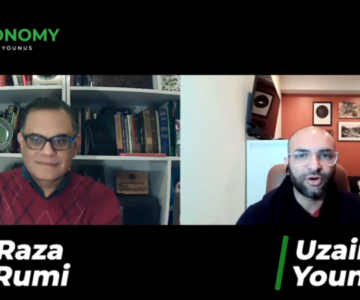
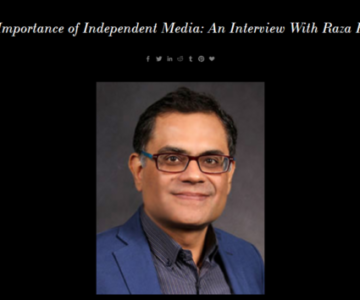
Raza Rumi was interviewed at the Pak Spectator blog. My interview is nothing but rambling galore; but I did relish answering the various questions. I am not sure why I was asked about my preferred travel destination[s], but I did enjoy the day-dreaming:
That top most travel destination would have to be Turkey. I am fascinated by the confluence of civilizations and cultures that is embedded in contemporary Turkish reality. You move from one town with Greek remains and enter into an area where Roman splendours or ruins await you and then you hear the sound of azaan and it just becomes an incredible journey into history and world cultures. And of course, Konyawhere Rumi lived is also in Turkey.
My second choice would be Indonesia: another country with beautiful rainforests, mountains, beaches and rich history. I love Java Island and have written a little bit about it as well.
I suppose the third choice is the African continent. There is immense, raw beauty there that brings once closer to the primordial connection with Nature. I want to go there again and again. I haven’t been to Western and Southern parts and am eager to go as soon as I have some savings for this purpose.
Yesterday, All Things Pakistan published a little protest against the uncalled for treatment of the much maligned Naeem Bokhari. A few excerpts here..
we read the news that Bokhari was manhandled by his ‘black-coated’ fraternity when he re-appeared in the Courts after a long break. Naeem Bokhari broke the silence and wrote in The News on what exactly transpired on that fateful day when the Rawalpindi lawyers’ “fury” resulted in his humiliation and ruthless thrashing.
Bokhari painted a harrowing picture of his treatment. He alleges that he was “forcibly pushed out of the courtroom and hit on the head again and again.” At the end of this mob frenzy, Bokhari and his associate were severely beaten. Symbolically Bokhari’s coat was snatched and his shirt was torn. Humiliating as it is, the whole incident is reminiscent of tribal notions of justice.
While the misgivings against the perceived collaborators of the executive may be justified, such abusive treatment is not. It is plainly out of the ambit of the laws and code of conduct under which the legal profession is regulated. In fact, such incidents can taint the heroic image that the lawyers’ bodies have earned through their relentless, spectacular struggle.
And..
Would it be too much to ask that the Supreme Court should take suo moto notice of this incident and reaffirm that it is the ultimate guardian of constitutional rights and that it will not let its law-officers, especially in their name, behave the way an unaccountable executive governs.
Are we going to see this article splattered all over the front pages of major American newspapers? I highly doubt it. That happens only if the woman was from an Arab/Muslim country, highlighting the oppression “all” Muslim women face.
The headlines from the UK paper, The Guardian, reads: Six arrested after black woman is held captive and tortured. The Guardian included the word “black” in the article heading, whereas the San Francisco Chronicle did not even bother to state the race of the woman. Welcome to fair and accurate journalism, American style.