Post-Islamism debates
Ali Eteraz on post-Islamism: (more…)
My young friend, Salman Chishty, from Ajmer (India) wrote this piece for the HTÂ on the eve of Rumi’s birth anniversary. (more…)
It’s a habit of yours to walk slowly.
You hold a grudge for years.
With such heaviness, how can you be modest?
With such attachments, do you expect to arrive anywhere?
Be wide as the air to learn a secret.
Right now you’re equal portions clay
and water, thick mud.
Abraham learned how the sun and moon and the stars all set.
He said, No longer will I try to assign partners for God.
You are so weak. Give up to grace.
The ocean takes care of each wave
till it gets to shore.
You need more help than you know.
You’re trying to live your life in open scaffolding.
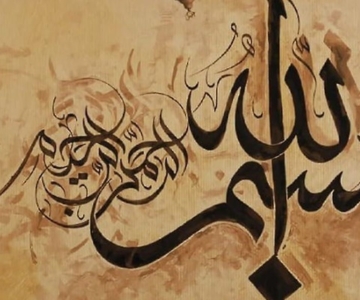
Say Bismillah, In the name God,
As the priest does with knife when he offers an animal.
Bismillah your old self
to find your real name.
From “The Essential Rumi”published by Castle Books.
Ramadan came, but Bairam^ is with us.
The lock came, but the key is with us.
Mouth is closed. Eyes are opened.
That brilliance that the eyes see is with us.
We have cleaned soul and heart with fasting.
The dirt which has been with us is cleansed now.
Some stress comes from fasting,
But the invisible treasure of heart is with us.
Ramadan came to the heart’s temple;
The one who created heart is with us.
Since Salahuddin* is among this crowd,
Mansur and Beyazid* are with us.
^ Eid in TurkishÂ
*Salahuddin: Rumi’s closest spiritual companion and disciple following the final disappearance of Shams-e Tabriz, whom he put in charge of the spiritual training of his disciples.
*Mansur and Beyazid: two famous Sufis of the past, Mansur al-Hallaj and Beyazid Bestami.
– Ghazal No. 370 from the Divan-e Shams-e Tabrizi Translated by Nevit Ergin
(from the Turkish translation of the original
Persian by Golpinarli)
“Mevlana Jelaleddin Rumi: Divan-i Kebir,”
Volume 18, 2002.
 ![]()
Agar Gaiti Sarasar Bad Girad,
Chiragh-e-Chishtiyan Hargiz Namirad
If the entire universe is devastated by the storm
the lamp of Chishtiyan shall not cease to illuminate
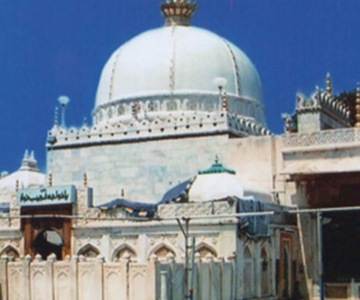
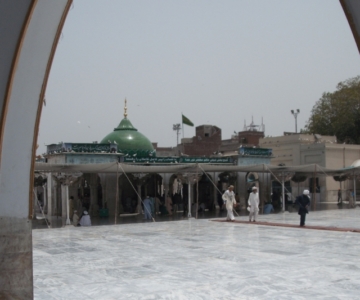
Just as Eid announcement was made in this part of the world, the sad news of bomb blasts in India were splashed all over TV channels. In particular, the blast in Ajmer Shareef - opposite the dargah - was shocking. Despicable and pusillanimous!
How could the enemies of peace target a shrine that is above the Muslim/Hindu and other formal identities. Ajmer is the fulcrum of a Sufi practice and represents the broad spiritual, syncretistic consensus in South Asia.
The reaction of authorities was quite predictable as if an automated, pre-recorded message was ready with the officials:
Union Home Ministry sources in Delhi said it was a terror strike in which militants had used a low-intensity improvised explosive device.
They said the terror outfits, including Pakistan-based Lashkar-e-Taiba, were against Sufi Islam and they could be prime suspects behind the blast which came barely 10 days ahead of the meeting of Indo-Pakistan anti-terror mechanism here on October 22…
However, the latter has some validity as we have a track record whereby the extremist elements always resist any progress towards the much needed peace - Let us not be daunted by this cowardice.
But this is so so sad. Though in the words of the devotees:
Ilahi ta-abd-astana-i-yar-rahe
Yeh-asra-hai-gharibon-ka-barqarar rahe
Oh God, may this Shrine of the beloved exist till the last day
may this refuge of the poor remain forever!
Today, ATP published this post of mine that attempts to look at some of the uncomfortable aspects of the way Holy month is practised by the believers. I have to state here that SA’s blog inspired me to write this, even though I am not half as qualified to comment on such issues.
“O you who believe, fasting is decreed for you, as it was decreed for those before you, that you may attain salvation.â€Al Quran- [2:183]
“….in all fairness we need to be a little truthful particularly in the month when we need to take a closer look at our conduct. Each year, Ramzan generates much of the usual piety and loud proclamations about how the Satan is chained in this month and the doors of repentance are let open upon the believers. We have grown up internalizing these views and therefore a majority of Muslim population across the globe fasts and prays for Divine mercy.
Essentially this month is a time of cleansing one’s soul as well as the body. However, every Ramzan witnesses some distasteful activities by the believers that come hand in hand with the rituals of the holy month.
First, the consumerism: forget about the cleansing of the system – there is an overemphasis on food when it should be the last item on our priorities. There are Iftaars galore and rich fatty foods are added to the diet like never before. A lavish Iftaar (across the board) is followed by a sumptuous dinner. There are Iftar packages everywhere from small stalls to five star hotels. And, the whole purpose of the exercise is somewhat undermined by the food-fest[s] indulged in by all and sundry.
A few words on the despicable behaviour of the profiteers and hoarders nowadays defined as the ultimate magic bullet – the market. This year the prices of basic staple diet – atta reached the skies when a sack of wheat flour was sold at Rs 320-340 much higher than the “fixed†prices. Not content with this, there was an average increase of 10-11 per cent in all the food items. Now if this is the official statistic, then the actual figure is bound to be higher. I have no estimate but judging by stories in the media it was much much higher.
Imagine the poor of Pakistan who constitute 24-34 per cent of the total figure (depends on the measure and source one adopts). They have had a tough time this Ramzan. And, then all this piety and repentance? The Federal Bureau of Statistics has reported an increase of 12.61% increase was seen in the “ratio of dearness for the low income group†during this time in comparison to the last year.
I can even imagine that those benefiting from the hikes would give massive amounts of charity, offer all the prayers (perhaps more through the nawaafil) and think that they would wash away their crimes and misdemeanours. Indeed the ultimate arbiter and decision maker of their deeds is the Almighty but one cannot help notice the irony of this situation.
The spirit of Ramzan also stresses the redistributive aspect of Islamic practices. The giving of Zakat at the end of the month is also mandatory for Muslims. In the past a hash was made of the Zakat system put into place by the Zia regime where all these funds were diverted and used for political and ‘strategic’ gains. This trend has been somehwhat arrested but pilferage continues. And, I will not say more on the new status symbol of the elites – an Umra towards the end of the holy month – where hundreds and thousands of rupees are spent while a majority of poor put up the posters of Kaaba on their cracking walls.
Road rage is also another trend during the month and many a people think that fasting has to do with starvation – our speech and thoughts need to fast as well. Do they? Rumi rightly said:
Wash your hands and your mouth, neither eat nor speak; seek that speech and that morsel which has come to the silent ones.
There is much too much emphasis on the ritual and the spirit of our great religion is the real casualty of the way we practice religion in the land of the pure. About time someone explained the words Taqwa and Tazkia-e Nafs in their entirety. I end with these words.
There is more to be said here but may God forgive me for this rant. Perhaps I am also a victim of that impatience that I am supposed to contain.
Thanks to Zainub, I came across this article on the Superluminal blog that traces the links between coffee and Sufis rather well. Coffee or Qehva was used by the Sufis to stay up for dhikr (Divine remembrance) sessions. The picture on the right also courtesy Superluminal depicts an Ottoman coffee house. Here is an excerpt:Â
Most modern coffee-drinkers are probably unaware of coffee’s heritage in the Sufi orders of Southern Arabia. Members of the Shadhiliyya order are said to have spread coffee-drinking throughout the Islamic world sometime between the 13th and 15th centuries CE. A Shadhiliyya shaikh was introduced to coffee-drinking in Ethiopia, where the native highland bush, its fruit and the beverage made from it were known as bun.It is possible, though uncertain, that this Sufi was Abu’l Hasan ‘Ali ibn Umar, who resided for a time at the court of Sadaddin II, a sultan of Southern Ethiopia.‘Ali ibn Umar subsequently returned to the Yemen with the knowledge that the berries were not only edible, but promoted wakefulness. To this day the shaikh is regarded as the patron saint of coffee-growers, coffee-house proprietors and coffee-drinkers, and in Algeria coffee is sometimes called shadhiliyye in his honor.
The piece also narrates the story of coffee’s secularization over the centuries; however, it tells us how qehva continued to be a favourite among the Sufis.
Despite coffee’s eventual secularization, the fondness for it in Sufi circles and the motives for its use were not lost. Helveti dervishes were among those who enthusiastically drank coffee to promote the stamina needed for extended dhikr ceremonies and retreats.
Contributed by Sadia Dehlvi
As children we aimed our eyes at the horizon trying to spot the small sliver and once the Ramzan moon was sighted we went around the house greeting all the elders with “Ramzan Mubarak’. The house would soon be filled with Pheniyan , khajla, dates and other Ramzan specific delicacies for sehri (pre dawn meal) and iftaar. The radio was locked in the cupboard and the television was veiled with a cloth only to be unveiled on Eid. Going to the movies was simply out of question, a childhood rule I still obey. When we were too young to fast, the elders said we could observe ek daad ka roza†(one jaw fast) so we eat carefully through the day from one side of the mouth. When one of the children reached the age of ten or eleven, the first fast was observed with festivities. There was a rozakushai ceremony and friends and family were invited for iftaar, a tradition is still observed in most Muslim families.We were a God fearing family and almost everyone in the family fasted in Ramzan. Those who did not fast pretended to and eat behind closed doors. The dining table in our house was pushed to one side of the room and we kept the traditional floor seating for the special month. Minutes before sunset which is iftar time, every member of the family would sit with their heads covered and hands folded in prayer. We were told that this was the time God would answer our prayers.
The Islamic months also called Lunar months are based on the sighting of the moon. The Islamic calendar known as the Hijri began when Mohammed (pbuh) did hijrat(migrated) to Medina from Mecca. Ramzan is the ninth Hijri month , the month when the miracle of the Quran was revealed by God through Gabriel.
Islam is built upon five pillars: that you worship none else but Allah and accepting Prophet Mohammad as the seal of prophethood, establishing regular prayers, giving of zakat( charity), performing the pilgrimage to Mecca and fasting in the month of Ramzan. Fasting is a Quranic order “O ye who believe! Fasting is prescribed to you as it was prescribed to those before you, that ye may (learn) self-restraint.â€(2:183).
It is known that Prophet Mohammad was the most generous of people, and in Ramzan he was even more generous. His companions described him as a wind that bears gifts. The Prophet said that the best charity in Ramzan is setting things right between people who are in conflict and those who harbour hatred for each other. Another tradition quotes the prophet saying that fasting is half of patience. He also said that patience was half of imaan. (faith). The Messenger of God swore that the breath of a fasting person was more pleasing to God than the fragrance of Musk.
Harbouring suspicion, rancour or negative opinions about others is specially noxious in Ramzan. The same goes for all forms of cheating, vanity and irrational anger. Islamic scholars have said that in order to get the most from Ramzan, one should not engage in excessive speech and be vigilant with the tongue. The sacred month is a time to examine shortcomings and build resolves to rectify them. Another objective of fasting is a way of experiencing hunger and developing compassion for the less fortunate.
 We grew up being taught that fasting was a believers shield which protects from the gameplan of Satan. It is a time when the gates of paradise are open, the devils locked up and the doors of hell closed. Ramzan is marked with iftaar dinners and some lighter moments. I am reminded about an anecdote about Ghalib, the poet. It was the month of Ramzan and Ghalib was sitting alone in a room sipping his wine. One of his students arrived and seeing him in a state of intoxication commented that he thought Satan was chained in Ramzan. Ghalib known for his wit remarked, “Indeed he is. It is this room he is locked inâ€.
Through the ages, Muslim scholars have written of the bounties of Ramzan and how good deeds are multiplied over and over again in the eyes of God. Love of the world is what is weaned in Ramzan by voulantary deprivations of food, drink and sexual intimacy. It is a month for the remembrance of God and gaining position and status with Him. Each year Ramzan comes and passes before our eyes until it again upon us. The first days of fasting seem long and stretched but after that the days dash by. Ramzan presents an exceptional  opportunity for purifying oneself and shedding the maladies of the heart, to increase ones faith through the power of abstinence and patience.
This piece was published yesterday by the Hindustan Times
At its peak, it lit the Dark Ages with science and philosophy, poetry, art, and architecture. It was the period remembered as a golden age for European Jews. Breakthroughs in medicine, the introduction of the number zero, the lost philosophy of Aristotle, even the prototype for the guitar all came to Europe through Islamic Spain.
However, his conclusion has the right heart though not the best of analyses:
At its best, the history of Islamic Spain is a model for interfaith cooperation that inspires those who seek an easier relationship among the three Abrahamic faiths. At its worst, it’s a warning of what can occur when political and religious leaders divide the world. It reminds us what really happens when civilizations clash.

I am free, my mind is free,
I can be imprisoned nowhere.
Today Bulleh Shah’s Urs (death anniversary) celebrations have commenced in Qasoor, Pakistan. Bulleh Shah was an iconoclastic Sufi poet from the Punjab who rejected convention, orthodox religion and conventions. His message of peace and individuality continues. In all respects he was ahead of his times. This time delegates from India will also attend the ceremonies and his timeless verse shall be sung.
Centuries before we knew existentialist thought, this was uttered by a small town Sufi poet:
I know not who I am
I am neither a believer going to the mosque
Nor given to non-believing ways
Neither clean, nor unclean
Neither Moses not Pharaoh
I know not who I am
I am neither among sinners nor among saints
Neither happy, nor unhappy
I belong neither to water not to earth
I am neither fire, not air
I know not who I am
(Translation by K S Duggal)
Another poem berates the classes and hierarchies that divide people:
Let us go O Bullah
let us go then you and I
to the kingdom of the blind;
where none debates our caste or creed
none respect us thus.
This transient world
is neither thine nor mine;
all is finite
why then this quarrel
this contest
for all is ephemeral there in.
Mullah and the torch bearer
are both alike,
professing to light the path for others
themselves dwell in darkness.
(from ‘Kalaam Bulleh Shah’ printed by Pakistan International Printers, Lahore )
On the futility of ritual and uttering that Reality is about unity of all existence - Ik Nukte vich Gal Mukdi Eh (Its all in One contained):
Understand the one and forget the rest.
Shake off your ways of an apostate pest
Leading to the grave to hell and to torture.
Rid your mind of dreams of disaster.
This is how is the argument maintained.
It’s all in One contained.
What use is it bowing one’s head?
To what avail has prostrating led?
Reading kalam you make them laugh.
Absorbing not a word while the Quran you quaff.
The truth must be here and there sustained.
It’s all in One contained.
Some retire to the jungles in vain.
Others restrict their meals to a grain.
Misled they waste away unfed .
And come back home
Emaciated in the ascetic postures feigned.
It’s all in One contained.
Seek you master, say your prayers and surrender to God
It will lead you to mystic abandon
And help you to get attuned to the Lord.
It’s the truth that Bulleh has gained.
It’s all in One contained.
(Translation by K S Duggal)
What an inspiring corpus of verse Bulleh Shah has left for us.
Wish I was in Qasoor, too.
Please do watch Abida Parveen singing here and here.
Jahane Rumi Links: On the rejection of meaningless formal learning here and on freedom of the mind here; and on love sickness here.
I am grateful to Ahmer for sending me the link to “The Art of Integration Exhibition: Islam in Britain’s Green and Pleasant Lands“.
The photograph on the left titled A Beautiful Veil is a creation of Zarah Hussain, Geometrist who has a lovely explanation for this: ‘I have always been fascinated by Islamic patterns, the interlocking geometry with its flowing shapes, stars and rosettes. They captured my eyes, heart and mind. The contemplation of these ’spider webs of God’ mold my soul and briefly enable me to escape the preoccupations of everyday life.’
Ghufran has an interesting post on Islamic architecture here.
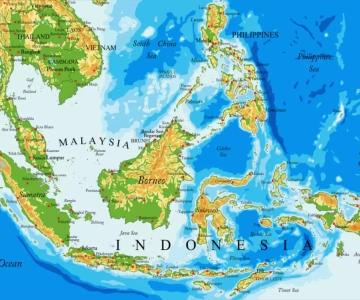
Lush green vistas and the eclectic Javanese culture, the breathtaking Bali coastline and
the curiously composite Islamic identity of the country made up my vague visions of Indonesia. With all these jumbled up figments of consciousness, I was given a bit of a reality check when on my first trip there an airport immigration officer asked me to leave the queue of semi-tanned Westerners and move to another room. The reason for taking me there was completely unknown.
As I waited for the local immigration honcho to arrive, I could not help but notice a letter from the Interior Ministry pasted on the wall directing airport authorities that nationals of illustrious countries such as Afghanistan, Sudan, Somalia, and Pakistan need security clearance before the issuance of visas.
Good Lord, what a rude shock it was to my cultivated
notions of Islamic brotherhood and all those lovey-dovey tales in school textbooks about Pakistani and Indonesian friendship. The official explained in a roundabout way my potential security threat. Momentarily terrified, I thought about the implications for my work; more significantly I was irked that this was happening to me at the Jakarta airport, not JFK or Heathrow. I resisted emotion and an inner fight for patience ensued. Within minutes I was out of the airport in a Blue Bird Taxi. Reminders of Islamic fraternity, my calm critique of the stereotyping that occurs at the hands of Western media bloodhounds, and indeed the work-status cards, worked. (more…)
Mohsin Hamid’s second novel is out. It has made to several bestsellers’ lists and invokes a theme central to our times. I am posting a well written review by Mahi here that in spite of its subjectivity expresses the viewpoint of an intelligent and informed reader. This review was written exclusively for Jahane Rumi and therefore I am grateful to Mahi for this special gesture. Hope he continues to contribute here!
Book Review By Mahipal Reddy*Â
The title, with a play on the word Fundamentalist, is the high point of this book. The protagonist, Changez, earns a living in New York assessing fundamentals of companies, which he is increasingly reluctant to do, compelled by a growing affinity for his homeland Pakistan and under-attack neighbor, Afghanistan, in the aftermath of 9/11. The reluctance eventually prompts a return to Pakistan, where
Changez recounts his adult life to an American visitor.
The style of narration - a monologue - is a clever choice and one with the potential for a novel, satisfying reader experience. But the portrayal of the American man through quick references within the monologue exposes the limitations of this format. Additionally, the man is made visible only though stereo-typical cultural differences and tourist apprehensions, which lends a tone of condescension to the narrative. It may have been intentional, but seemed unnecessary.
The book suffers from an underlying lack of depth. The seminal phases of the story -Â Changez’s acceptance of American undergraduate life and the American dream, the slipping away of his never-truly-started love life with an American girl, his rapid disenchantment with America and its foreign policy excursions and his choice to move away from that life to Pakistan - take place without triggering a reflective commentary or insight from the author. In other words, the book remains a superficial story, even while the reader is expecting something more fundamental all the while. Is that the reader’s fault? Perhaps not.
Having approached the book with excited expectations, partly due to the title and partly the author’s background, I was disappointed. The title promised an insightful dance on the difficult subject of fundamentalism, with a certain gravitas, but it faltered to achieve this goal. In fact, one felt that the author did not attempt to delve further into the intent of the book’s catchy title. There are many specific instances of disappointment in addition to the overall reaction of one, but the one that qualifies for mention is the ending. Throughout the book, the author builds a theme of some impending finale/disaster, which never materializes. Clearly the author conveyed something in his mind, but it leaves the reader lost and wondering if the author pulled a prank.
To me this actually captures the essence of the book - promising much but delivering a insipid tale.
Language-wise, the book is obviously written in competent English, but one cannot say more. It is not a book you read to enjoy the medium, the skill of expression.
* Mahi set sail in India and is adrift in the US. He has traveled a little, lamented that he isn’t from Japan but hopes to get back to India in the near future. He likes to read but reads little. Enlightenment he waits for, convinced God can move faster than him.
“In a charming personal narrative, Nomani navigates through a crisis of faith brought upon by the murder of close friend Daniel Pearl by Islamic militants…”
Pakistan celeberates Allama Iqbal’s death anniversary on April 21 with the usual lip-service. The key messages of Iqbal seem to have been lost in the maze of officialdom.
Kashful Mahjub is one of the early treatises on Sufism and has shown light to many Sufis world-wide. Full entry here >>
Powered by WordPress