Jahane Rumi

In search of the unsearchable: “…O, my soul! where would you find your house?”

Archive for the ‘India’


Published January 26th, 2008

Loving or Hating Arundhati Roy?

Cross-posted from drunkonink blog. Soniah Kamal’s thoughtful write-up is worth sharing here:

Saba Bhaumik’s opinion piece in Outlook India once again attempts to explain why Indians may not be madly in love with Arundhati Roy while the West supposedly is but Bhaumik doesn’t say anything that hasn’t already been said a million times: Indian males are envious coz Roy is smart, the women are confused by her outspokeness and, while Roy’s hair styles challenge beauty norms, her sense of style sets dressing trends. (more…)

Published January 26th, 2008

The Indic civilisation

Ishtiaq Ahmed writing here

Today’s article coincides with India’s declaration as a republic in 1950. The civilisational roots of modern India are always worth discussing, because despite all the odds against it — the caste system, poverty and hunger, illiteracy and other such debilitating factors — it became a democracy and has remained so.

Civilisation denotes a complex society with distinct cultural and ideational features that takes shape in the long, historical process through the division of labour and a concomitant social hierarchy. Therefore, civilisations cannot be understood only in contemporaneous terms; historical antecedents and legacy weigh heavily in forming the present. On the other hand, civilisations are also dynamic and change, adjust and transform, while retaining links with the past. (more…)

Published January 24th, 2008

Oh, Lucknow!

By Intizar Husain

ONE fine morning under the programme of Sahitya Academy I found myself in Lucknow, and wondered if it was the Lucknow I had earnestly desired to get a glimpse of. When after partition Attiya Husain wrote her novel depicting the Lucknow of good old days, she chose to present it under the title Sunlight on the broken column. Now the broken column is very much there, but sunlight has long faded away. The novel had been dubbed as decadence by the maulvis, reformists and the progressives alike, and as a flourishing of fine arts and culture by the liberals. Prof Anis Ashfaq, who was kind enough to host me and sensing my keenness to have a glimpse of that sunshine, led me to Imambara Asifiya. What a splendid structure. One was left wondering at high, spacious roof with no columns to support it. The upper story has a bhoolbhulliyan, a maze. It provides added attraction to visitors. (more…)

Published January 20th, 2008

Watch this Video: Tamanna & her friends tell it like it is

Please watch this evocative video that Going to School - a media organization based in New Delhi - has put together for the girls from Gole Kuan, an urban slum on the periphery of an industrial suburb in New Delhi.

This video attempts to address a question posed by the DAVOS economic forum -
“What one thing do you think that countries, companies or individuals must do to make the world a better place in 2008?” (more…)

Published January 15th, 2008

Journeying into mysticism (noted as one the best articles of 2007)

Indian Muslims Blog is now two years old. The IM team have compiled the best articles published at the blog in 2007. Shameless as it sounds, one of my guest articles - Journeying into Mysticism is included in the category. As the editor Mohib, said the “colorful downloadable pdf file is worth reading for the diversity of views and opinions. IM blog team has been most kind to allow me to occasionally contribute to the space. In the process I have learnt a lot about the country and its Muslim population. But most importantly, I have found a few good friends from Lucknow, Kakori, Bhopal, and Bihar among other places. wah wah, kiya kehnay blogosphere ke…

To blow my own little trumpet in this seamless and infinite blogosphere, here is my piece for those readers who may not have read it earlier. (more…)

Published January 10th, 2008

Dholaks drowning gunfire

by Shreekant Gupta

During a recent visit to Delhi I mentioned to my aunt that I planned to visit Rawalpindi next week for a wedding. Her expression changed to one of worried concern. “But beta is it safe to go there?” she asked. I assured her that if there was one country in the world where I could blend and not feel out of place and where I was welcomed with open arms it was Pakistan. Having been there on four previous occasions once with a group of students from the Delhi School of Economics traversing the country for two weeks, I had ample experience of the legendary Pakistani hospitality and warmth to assuage her fears. But her comment set me thinking. Why is Pakistan attracting such bad press these days? It is often dubbed as the most dangerous place in the world. Certainly there are parts of the country that are seriously troubled and occasionally the violence spills over into the major cities. (more…)

Published January 8th, 2008

Meeting Sidhu Saheb in Delhi

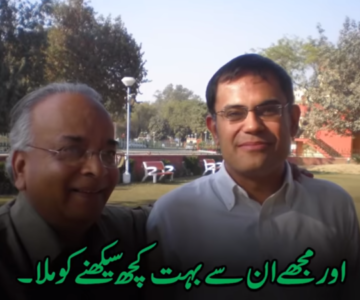
Before I could write about meeting a fellow blogger in Delhi, Sidhu posted this account of our meeting. It was amazing to meet a friend in the blogosphere in person. Sidhu is a mild-mannered and intelligent person; and travelled a long distance to meet me in South Delhi where I was staying. There is much that we share: a common heritage, a language that removed all the social barriers and of course blogging. I am cross-posting Sidhuji’s piece below: (more…)

Published December 26th, 2007

Akbar’s ‘enlightenment’ mind

Thanks to Khaled Ahmed, we get to hear about new books on a variety of subjects. He has reviewed a new bookHindu Myth, Hindu History: Religion, Art, and Politics authored by the eminent Indologist, Heinrich von Stietencron.

Akbar’s eclecticism brought about a pluralist ambiance that history associates with his governance. He got Todar Mal from Gujarat to set up the revenue system of the kingdom. It was like England and the rest of the world taking Adam Smith from Scotland and making him the father of modern economics. It is Todar Mal that we owe variation in taxation on the basis of fluctuations in rainfall and nature of the soil which he achieved through resurvey of the land in India. 

Akbar’s rule was a patch of effulgence in a general darkness on earth. Poets and artists gravitated to it; faiths rejected in other lands escaped to India to find tolerance. Today, Akbar is irrelevant to what is happening in the Islamic world (more…)

Published December 23rd, 2007

M F Hussain’s exhibition raises hackles of Bajrang Dal

The India International Centre, where Hussain’s ‘Mughal India’ painting series are on dispaly, suspended the exhibition for Saturday after it received the threats from Bajrang Dal, sources said.

The IIC had received the Bajran Dal threat which said it has to face ‘serious consequences’ if the capital’s high-profile cultural organisation continued to exhibit the works of the controversial artist, they said.

More here

Published December 11th, 2007

West Bengal in turmoil - end of an era?

The gruesome Nandigram murders, the death of Rizwanul who married an upper caste Muslim girl and Taslima Nasreen’s expulsion from West Bengal are all three interlinked events. Had it happened anywhere else, it might have been easy to understand. That it happened in West Bengal ruled by an ostensible progressive party with an ‘ideology’ of sorts was most depressing. Is it the case that finally we are witnessing the end of the secular, progressive politics of West Bengal that we all had envied for so long..

A young Muslim computer graphics teacher, Rizwanur Rahman, was found dead in highly suspicious circumstances on September 21, one month after marrying his sweetheart Priyanka Todi. It quickly emerged that the police, including senior police officials, had harassed and threatened Rahman at the urging of Todi’s father, Arun Kumar Todi, a rich and well-connected Hindu industrialist, who was bent on breaking up the marriage.

The couple was repeatedly summoned to appear before the police after they started living together in Rahman’s modest dwelling and Rahman was repeatedly threatened with arrest if Priyanka did not “voluntarily” return to her parents for a week. Twelve days after Prikanya went back to her parent’s house, Rizwanur’s body was found beside a railway track.

This shocking episode caused widespread demands for an independent enquiry, but for weeks the Left Front government failed to take any serious action against the police involved in the Rahman case and lent credence to police claims that Rizwanur had committed suicide. On October 11 Chief Minister Bhattacharjee ruled out both a CBI (Central Bureau of Investigation) probe into Rahman’s death and the removal of three senior police officers, including Kolkata Police Commissioner Prasun Mukherjee, who were allegedly involved in the harassment campaign against Rahman.

The government indifference to police corruption and the blatant class and communal character of Arun Kumar Todi’s opposition to his daughter’s marriage caused a public outcry. “This incident has inflamed the people,” explained sociologist Bula Bhadra, “because they have realized that if the police can meddle in a marriage between two consenting adults, our very civil liberty is at risk—and at risk from those who are supposed to uphold it.”

Read more here on the related issues and the sad decline of an era.

Published December 4th, 2007

The Other Half - divided hearts meet in Kashmir

Thanks to Beena Sarwar’s updates, I read this moving account, THE OTHER HALF in ‘Srinagar diary’ by Kalpana Sharma.

… the Indo-Pak peace process, the people to people exchanges, the opening up of meeting points along the Line of Control have
raised some hope that permanent peace is possible. Apart from the larger questions, what concerns the ordinary person is finding ways to increase communication between divided families and communities straddling the LoC. This was the question that engaged a group of almost 50 women from both sides of the State of Jammu and Kashmir.

Fourteen women from the Pakistan side of Kashmir crossed the Wagah border in mid-November, travelled by road to Jammu and then flew in to Srinagar to meet their counterparts on this side of the border.

This was the first time such a meeting was held between women from the two sides.The result was unusual and memorable. For the women from the Pakistan side, it was a deeply emotional moment. Many of them came with preconceptions. They had heard of the sufferings of people on this side of the border. They were upset at seeing the soldiers on the street. They were even more perturbed that they could not call their families and inform them of their safe arrival.

Published November 26th, 2007

Taslima Nasrin - the “outcast”..

Taslima Nasrin is now a “sensation” of another kind in India. She has attracted the attention of those segments of Indian media that love to sell anything that brings Islam and Muslims related controversies into the public domain. (more…)

Published November 22nd, 2007

Dalrymple on gods and monsters

In an era when most British officials were interested only in exploiting India, a few remarkable men celebrated Hindu art and culture. William Dalrymple explores the rich legacy of their collections and commissions. See more.

Published November 18th, 2007

Singing of youth and beauty, life and death

by Vidya Rao

 I was fortunate to be one of the women invited to the first meeting of the Grandmothers’ University at Bija Vidyapeeth early this year. (more…)

Published October 11th, 2007

Violence: targeting the lamp of Chishtiyan


Agar Gaiti Sarasar Bad Girad,
Chiragh-e-Chishtiyan Hargiz Namirad

If the entire universe is devastated by the storm
the lamp of Chishtiyan shall not cease to illuminate

Just as Eid announcement was made in this part of the world, the sad news of bomb blasts in India were splashed all over TV channels. In particular, the blast in Ajmer Shareef - opposite the dargah - was shocking. Despicable and pusillanimous!

How could the enemies of peace target a shrine that is above the Muslim/Hindu and other formal identities. Ajmer is the fulcrum of a Sufi practice and represents the broad spiritual, syncretistic consensus in South Asia.

The reaction of authorities was quite predictable as if an automated, pre-recorded message was ready with the officials:

Union Home Ministry sources in Delhi said it was a terror strike in which militants had used a low-intensity improvised explosive device.

They said the terror outfits, including Pakistan-based Lashkar-e-Taiba, were against Sufi Islam and they could be prime suspects behind the blast which came barely 10 days ahead of the meeting of Indo-Pakistan anti-terror mechanism here on October 22…

However, the latter has some validity as we have a track record whereby the extremist elements always resist any progress towards the much needed peace - Let us not be daunted by this cowardice.

But this is so so sad. Though in the words of the devotees:

Ilahi ta-abd-astana-i-yar-rahe
Yeh-asra-hai-gharibon-ka-barqarar rahe

Oh God, may this Shrine of the beloved exist till the last day
may this refuge of the poor remain forever!

Published September 24th, 2007

Qurratulain Hyder -End of an Era

End of an era: Ainee Apa 1927 - 2007

Why do we all find ourselves present in this particular context, in this particular place? How have these pictures assembled here in this jigsaw puzzle? Soon, something will happen, pieces will scatter and become part of a newer pattern? This time will pass? (From My Temples, Too)

The death of Qurratulain Hyder marks the end of an era of the finest writing in Urdu. Hyder, also known as Ainee Apa, dominated the world of Urdu literature for over six decades. She started writing as a child and published her first novel, Meray Bhi Sanam Khanay (later trans-created as My Temples, Too), when she was 22 years old. The novel set a new trend in Urdu literature: a voice of modernity, yet one rooted in the traditions of the Indo-Muslim ethos as it struggled to narrate the tragic tale of the birth of two new nations. Even her worst critics, the doyens of the Progressive Writer’s Movement, acknowledged her innate gift for writing. Within three years, her second novel was published and she had unwittingly kick-started the revival of the Urdu novel from the point where Munshi Prem Chand had left it in the early twentieth century.

Her genius found a panoramic range of expression in Aag Ka Darya, which for its canvas, historical consciousness and characterisation, surpasses most novels written in any language. This novel deals with the plight of the human condition in the Indo-Pakistani setting from the fourth century BC to the 1950s. Starting with a translation of a TS Eliot poem, it traces multiple eras, with characters disappearing and reappearing in different guises, pitted against the broad strokes of history and time.

It was an epoch-making event in Urdu literature, but ran into trouble in Pakistan, as the novel highlighted the thousand year old composite Indo-Muslim culture of pre-Partition India, something which was not in line with the official version of history being constructed in Pakistan. Ideologically driven right-wing critics considered it a threat to their nationalism. (more…)

Published September 22nd, 2007

Ramzan - A month of Piety

Contributed by Sadia Dehlvi

As children we aimed our eyes at the horizon trying to spot the small sliver and once the Ramzan moon was sighted we went around the house greeting all the elders with “Ramzan Mubarak’. The house would soon be filled with Pheniyan , khajla, dates and other Ramzan specific delicacies for sehri (pre dawn meal) and iftaar. The radio was locked in the cupboard and the television was veiled with a cloth only to be  unveiled on Eid. Going to the movies was simply out of question, a childhood rule I still obey.

When we were too young to fast, the elders said we could observe ek daad ka roza” (one jaw fast) so we eat carefully through the day from one side of the mouth. When one of the children reached the age of ten or eleven, the first fast  was observed with festivities. There was a rozakushai ceremony and friends and family were invited for iftaar, a tradition is still observed in most Muslim families.

We were a God fearing family and almost everyone in the family fasted in Ramzan. Those who did not fast pretended to and eat behind closed doors. The dining table in our house was pushed to one side of the room and we kept the traditional floor seating for the special month. Minutes before sunset which is iftar time, every member of the family would sit with their heads covered and hands folded in prayer. We were told that this was the time God would answer our prayers.

The Islamic months also called Lunar months are based on the sighting of the moon. The Islamic calendar known as the Hijri began when Mohammed (pbuh) did hijrat(migrated) to Medina from Mecca. Ramzan is the ninth Hijri month , the month when the miracle of the Quran was revealed by God through Gabriel.

Islam is built upon five pillars: that you worship none else but Allah and accepting Prophet Mohammad as the seal of prophethood, establishing regular prayers, giving of zakat( charity), performing the pilgrimage to Mecca and fasting in the month of Ramzan. Fasting is a Quranic order “O ye who believe! Fasting is prescribed to you as it was prescribed to those before you, that ye may (learn) self-restraint.”(2:183).

It is known that Prophet Mohammad was the most generous of people, and in Ramzan he was even more generous. His companions described him as a wind that bears gifts. The Prophet said that the best charity in Ramzan is setting things right between people who are in conflict and those who harbour hatred for each other. Another tradition quotes the prophet saying that fasting is half of patience. He also said that patience was half of imaan. (faith). The Messenger of God swore that the breath of a fasting person was more pleasing to God than the fragrance of Musk.

Harbouring suspicion, rancour or negative opinions about others is specially noxious in Ramzan. The same goes for all forms of cheating, vanity and irrational anger. Islamic scholars have said that in order to get the most from Ramzan, one should not engage in excessive speech and be vigilant with the tongue. The sacred month is a time to examine shortcomings and build resolves to rectify them. Another objective of fasting is a way of experiencing hunger and developing compassion for the less fortunate.

 We grew up being taught that fasting was a believers shield which protects from the gameplan of Satan. It is a time when the gates of paradise are open, the devils locked up and the doors of hell closed. Ramzan is marked with iftaar dinners and some lighter moments. I am reminded about an anecdote about Ghalib, the poet. It was the month of Ramzan and Ghalib was sitting alone in a room sipping his wine. One of his students arrived and seeing him in  a state of intoxication commented that he thought Satan was chained in Ramzan. Ghalib known for his wit remarked, “Indeed he is. It is this room he is locked  in”.

Through the ages, Muslim scholars have written of the bounties of Ramzan and how good deeds are multiplied over and over again in the eyes of God. Love of the world is what is weaned in Ramzan by voulantary deprivations of food, drink and sexual intimacy. It is a month for the remembrance of God and gaining  position and status with Him. Each year Ramzan comes and passes before our eyes until it again upon us. The first days of fasting seem long and stretched but after that the days dash by. Ramzan presents an exceptional   opportunity for purifying oneself and shedding the maladies of the heart, to increase ones faith through the power of abstinence and patience.

This piece was published yesterday by the Hindustan Times