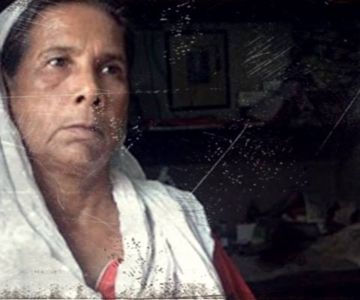
Taslima Nasrin is now a “sensation” of another kind in India. She has attracted the attention of those segments of Indian media that love to sell anything that brings Islam and Muslims related controversies into the public domain. (more…)
November 28, 2007
November 26, 2007
November 22, 2007
Dalrymple on gods and monsters
In an era when most British officials were interested only in exploiting India, a few remarkable men celebrated Hindu art and culture. William Dalrymple explores the rich legacy of their collections and commissions. See more.
November 10, 2007
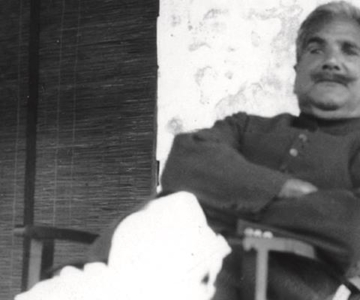
The almost forgotten radical message of Iqbal
Yesterday was the Iqbal day- year after year it has become just another empty ritual. High sounding speeches and statements, visits to Iqbal’s tomb in the spectacular Hazoori Baagh and negligible focus on his message and vision. (more…)
October 30, 2007
Ecstasy and Order - Salman Chishty on Rumi
My young friend, Salman Chishty, from Ajmer (India) wrote this piece for the HTÂ on the eve of Rumi’s birth anniversary. (more…)
October 5, 2007
“Saving the past from obliteration”
Murtaza Razvi writes in the daily DAWN:
NOTHING is safe any longer from the malevolence of those who continue to bring death and destruction in the name of God in this increasingly Islamic republic; not even a harmless rock-carved image of the Buddha dating back to the second century BC and which no one worshipped.
The giant Buddha at Jahanabad near Mingora in Swat finally lost its face, parts of the shoulders and the feet in a second assault last Friday by Islamist militants. The historical relic had survived two earlier attacks. But this time round, in spite of the law enforcement agencies having been warned of the danger the militants posed to the rock carving, the latter planned and carried out the blast unchecked.
Read more here
October 1, 2007
Save the Buddha Statues in Swat, Pakistan
It is disturbing that there is no writ of the government in Swat - otherwise a stunningly beautiful valley. Considering that the army is engaged in a battle with the militants in these areas, the Buddhist relics would be least of government’s priorities.
Yet, they are not unimportant. In fact, it is imperative that the government should protect them as a symbol of our rich past and to send a message to the lunatics who pretend that the cause of [their] Islam would be served. Nonsense - in this day and age and in an overwhelmingly Muslim majority area. What threat they pose and whose ‘eemaan’ is endangered?
It is painful to see how a bunch of extremists are pushing us towards that.
A dynamic and enlightened friend suggests that we should write here, here and UNESCO to register our protest. Notwithstanding the limited chances of any action or corrective measures, at least we would have made the effort!
Please also see my earlier plea[s]:
Death of Pakistani Culture, Our endangered heritage, Saving heritage, Architectural neglect Â
September 28, 2007
I bow before the image of my Love
No Muslim I
But an idolater
I bow before the image of my Love
And worship her
No Brahman I
My sacred thread
I cast away, for round my neck I wear
Her plaited hair instead
Princess Zebunnisa - (Divan-e-Makhfi)
From my published article
Note: the translation is not mine
September 22, 2007
It is the death of history…
Fisk on the long term impact of Iraq tragedy:Â
2,000-year-old Sumerian cities torn apart and plundered by robbers. The very walls of the mighty Ur of the Chaldees cracking under the strain of massive troop movements, the privatisation of looting as landlords buy up the remaining sites of ancient Mesopotamia to strip them of their artefacts and wealth. The near total destruction of Iraq’s historic past – the very cradle of human civilisation – has emerged as one of the most shameful symbols of our disastrous occupation.
Evidence amassed by archaeologists shows that even those Iraqis who trained as archaeological workers in Saddam Hussein’s regime are now using their knowledge to join the looters in digging through the ancient cities, destroying thousands of priceless jars, bottles and other artefacts in their search for gold and other treasures
Read the full article here
September 20, 2007
Journeying into Mysticism
Indian Muslims blog has posted my travel piece on Delhi.
“…, I tell my workmate of the 22 khawajas buried under Delhi’s soil and the very central role this place has performed in the growth of Sufism in South Asia. My colleague is a little nonplussed as I hold forth, declaring that Delhi is a grand Muslim resource centre. By now, I have made an early morning dash to the Lodhi gardens and walked around the Humayun’s enchanting tomb. My fascination with the saints has not ended and on Thursday I find myself at the dargah of Khawaja Qutbuddin Bakhtiyar Kaki. Aibak was a mureed (disciple) of the saint Khawaja, after whom he named the Qutub Minar. Quite appropriately, the dargah is next to Qutub Minar in the quintessentially medieval Mehrouli area. Bahadur Shah Zafar also built a new residential palace here.”
Read the full article here
August 23, 2007
The plight of Bahadur Shah Zafar’s descendants
I had earlier posted on the sad state of the heart wrenching denouement to the dazzling Mughal Empire thanks to Indscribe who related the sad story of middle-aged Sultana Begum, who runs a tea-stall in Howrah to earn a living for her family. The great grand-children of last Mughal Emperor Bahadur Shah Zafar, are in misery.
Today I received this email:
It is pleasure to know that you have noticed the misery of Sultana Begum, the great grand daughter in law of Bahadurshah Zafar. She is getting only Rs.400/- as political pension from the govt. of India and runs a roadside scrap shop in Shibpur area’s 103/12/C,Foreshore Road of Howrah town of West Bengal in India for her survival. General people occasionally come for her financial help, but that is not sufficient. At least we should provide her a suitable place to live in with dignity. I hope, international community will come forward to rescue her from poverty. She may be contacted on phone number 033 2641-1043. Thank you.
I am not sure about the authenticity of this message. If it is true then it deserves the attention of my Indian friends in the blogopshere.
We just witnessed the sad demise of Urdu’s greatest writer Qurratulain Hyder who died in relative anonymity. She was alone in the hospital for a month. Indeed everyone is now writing about her and the contributions that she made.
I am not a royalist or a monarchist. But the poor Mughals since 1857 have seen the worst treatment at the hands of colonial [and now ostensibly the postcolonial] state. It is time that this be rectified.
Instead of state patronage, perhaps a private philanthropist could sponsor a small decent enterprise for these unfortunate inheritors.
William Darlymple , based on primary sources has recently published a fascinating book called “The Last Mughal”.” It took a foreign researcher to discover documents that were eating dust in our archives. What a pity!
Do we have any respect or understanding of our heritage?
The tributes continue - remembering Qurratalain Hyder
The literati in India and Pakistan are grappling with the larger question of Qurratulain Hyder’s stature in Urdu, and some would say, World literature.  The Daily Times, Pakistan has published an appropriately titled editorial, Quratulain Hyder, Urdu’s greatest novelist. This paragraph struck me:
…her view of culture was intensely pluralistic, explaining Muslim culture too in a “transmigratory†technique in her big novel Aag Ka Darya. The Pakistani public paid her a back-handed compliment by making her books bestsellers in Pakistan; but most of them were pirated, meaning that someone other than her got rich selling them. She was always a chronicler, a kind of Tolstoy in Urdu that our critics have ignored. When someone asked her in Bombay to write about the Iran-Iraq war she naturally began with the Arab conquest at Qadissiya.
Outlook India had to say this:
Only a few days back, to mark the 60 years of Independence, when we asked an eminent jury to pick out 60 Great Indians in 60 years of our Republic, the name of Qurratulain Hyder was introduced prominently as Urdu’s Marquez.”Through her novels and short stories, this prolific writer gave Urdu fiction a brave and endlessly inventive new voice,” we wrote, and quoted the London Times: “Her magnum opus, Aag Ka Darya (River of Fire), is to Urdu fiction what A Hundred Years of Solitude is to Hispanic literatureÂ
In C M Naim’s piece, published in the Outlook:
What counts, for her, is the human spirit and the relationships it generates and nurtures. That is where the linearity of time seems to curve into a spiral, urging us to recognize a past that never quite disappears…..What, then, is our choice as individuals? Here it may be worthwhile to recall the characteristically modest, even self-mocking, remarks that Hyder made in 1991 in her acceptance speech at the Jnanpith Award function: “My concern for civililzational values about which I continue writing may sound naive, wooly-headed and simplistic. But then, perhaps, I am like that little bird which foolishly puts up its claws, hoping that it will stop the sky from falling.“
and he concludes with this superb analysis:
…what Hyder tacitly offers us is nothing but that wise Candidean response: even in the best of all possible worlds, it is best not to neglect to tend our garden. Certainly, through the several thousand pages of her writings, she has shown herself to be an eloquent witness to that truth.
(photo left- Gauri Gill 2005)Â Â The Indian Prime Minister Manmohan Singh also expressed the sense of loss: “..In her unfortunate passing away the country especially Urdu literature has lost a towering literary figure. She will be truly missed in literary circles in the country.’
Read Jawed Naqvi’s piece in the DAWN; and reactions of various writers in the daily NEWS . Rediff has published an article entitled, She was one of a Kind. Javed Akhtar, the eminent Indian lyricist has paid this grand tribute and held that she was a true genius and rightly said that he felt sorry for those people who read fiction but had not read Hyder:
“When I say that it is a great loss, it’s not only to Urdu literature, not only to Indian literature, but to the word literature. I am not exaggerating at all.. the years to come, Haider’s novels will reach everywhere.”
“The kind of work she has done… its only because she was born in a third world country and wrote in a language that is not of the imperialistic powers, her novels have not reached everywhere. I am sure the time will come when they will reach..”.Â
The blogosphere is also remembering Ainee Apa with great respect. Desicritics published An Enigmatic Icon, Adnan wrote a lovely piece on Ainee Apa and her books entitled A legend passes away and 3 Quarks Daily also remembered her. Urdu India has a brilliant post here and another tribute can be found here. Pakistaniat carried my post - click here to see the comments. And the best was from Delhi Walla, who went to the Jamia graveyard and took some great photos.
This will continue given the sad traditions of our literature - the literary and civilizational merits of authors and poets have often been discovered after they left this world. Having said that Ainee had established herself given her powerful voice and unique style of writing. But her real stature as Javed Akhtar says is yet to be discovered.
About the photo (top left): Gauri Gill in the Outlook writes:Â
Qurratulain Hyder was first photographed by Prashant Panjiar in what was a coup of sorts, everyone talked of how elusive and difficult she could be. When I met her last week to persuade her, she said, ‘Tell the magazine I’m a difficult woman.’ I told her that was her reputation anyway. For the first time that afternoon she cracked a grin. She seemed flattered.
August 20, 2007
Healing the wounds of Partition ..
I read this interesting, albeit a little contentious, piece by Ravinder Kaur  that examined the impact of partition on settling the communal question. The article states:
The sixtieth anniversary of the independence of Pakistan and India on 14-15 August 2007 has prompted official celebration in both countries, as well as an ocean of commemorative coverage in the world’s media. The terrible violence that accompanied the birthpangs of the two states from the ashes of empire is an inevitable theme in much commentary. What is being less addressed amid the profusion of human stories - and what this article considers - is whether the problems of communal division in the sub-continent were or are best addressed by the partition of territory.
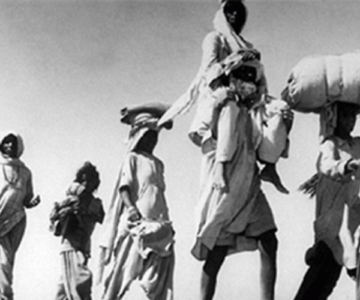
The recent weeks have seen a splurge of such discussions in the media (including the new media) that attempt to re-examine and explore the partition of India. In particular, the sufferings of millions who crossed the line have yet again come to light.
Another reflective piece that I discovered is “pain of partition“ that recounted the sufferings of migrants on both the sides of the divide.
And today, Vidya Rao - a celebrated classical singer from India sent this petition that seeks to heal the wounds that still hurt our collective lives:
Apology Petition
Dear Victims of the Partition-related Violence in South Asia:
The mass murder, rape, pillage and suffering that accompanied the partition of British India in 1947, have left deep scars on the psyche of the people of India, Pakistan and Bangladesh, the former East Pakistan.
Tens of thousands were murdered, raped, and maimed, and millions were displaced in an immense human tragedy, that continues to poison our discourse, and feed mutual suspicions and hatreds.
Therefore, we, the members of the Association for Communal Harmony in Asia (ACHA), and others, who have signed below, believe that the time has come for all of us jointly to condemn, without distinction, the insane orgy of violence and intimidation that accompanied the great human divide of 1947.
On the 60th anniversary of the Independence of India and Pakistan, we recall that dark chapter in our history so as to ensure that these tragedies will not be forgotten, or repeated.
We hope that coming generations will learn from this man-made calamity, and turn away from divisions based on religion, ethnicity, language, national origin, caste, or creed.
Taking lessons from history, we undertake to shun the political use of religion and communalism.
We regret that our forebears, the colonial British administration, and the successor governments did not prevent the tragedy. They also failed to punish the perpetrators, and apologize to you and your families.
In the spirit of harmony and goodwill among the people of South Asia, and to help build a new South Asian present and future, we grieve for and with you. We offer our deepest sympathies and most solemn regrets to you and your families.
We are sorry!
This petition can be accessed here and those interested may like to sign it. I know the prevalent cynicism about such online petitions, but long journeys begin with small steps.
We have a barricaded road ahead - let’s aim to tread this difficult path.
Â
August 16, 2007
Becoming Pakistani
A fine piece of writing at Opendemocracy:Â
As a small child, Maruf Khwaja’s life was transformed by the carving of his mother country into two nations, India and Pakistan. He recalls a time of terror, and a journey to survival.
Read the full entry here
August 13, 2007
‘Gandhi, My Father’ - humanising heroes
It is an interesting coincidence that the new Bollywood film, Gandhi - My Father has been released days before the subcontinent celebrates sixty years of independence. This well made film revisits Gandhi’s personal life and his troubled relationship with his son Harilal who died the same year as his father.
I saw the film yesterday and it was deeply tragic and moving at the same time. The conflict between parenting and leading a nation was delicately handled by the director, Feroze Abbas Khan. Gandhi could transform India and was a Bapu for the world but Harilal suffered in this larger scheme of fate, history and politics.
Akshaye Khanna has proven his mettle with the right director and a larger than life role - he portrays the various moods and phases of his tragic life with an amazing ease. He is truly gifted. Darshan who plays the Mahatama is also excellent and the two wives are also the sensitive characters, who while secondary to this major relationship bring much depths to the drama.
Bollywood has finally broken several barriers; and it is refreshing to see that our neighbours are recognizing that their leaders were after all humans. And this humanity adds to their stature.
Hope we also learn from this trend and stop treating our founding fathers as deities. Amazing that Gandhi and Jinnah both had to compromise their personal lives over national interests. Jinnah’s daughter did not move to Pakistan; and their relationship also became most tragic once the Quaid was close to realising the dream of Pakistan.
Interestingly, the movie reiterates Gandhi’sfamous quote where he confessed that there were two people whom he could not convince - his ‘Muslim friend’, Mohammad Ali Jinnah and his own son Harilal.
The film has its weak moments - it becomes slow paced at times and loses focus as the demands of commercial cinema make the script meander. Another irritating issue is the constant effort of the film-makers to maintain Gandhi’s stature as Mahatama. The constraints can be appreciated given Gandhi’s legendary status in India. There are times when Gandhi does appear to be a bit insensitive to his son. However, his adherence to the national cause and keeping his personal and family interests subordinate to those of India and her people is highlighted throughout the narrative.
The backdrop is the Indian struggle for Independence and this by itself makes a great viewing. Of course, the historical narrative is straight from the Indian nationalist discourse and views the demands of Muslims from that perspective. This is understandable given the subject but it does irk one a little. Why can’t a more nuanced understanding emerge? After all, Mr Jinnah had agreed on a united India during the talks on Cabinet Mission. It is a sad fact of history that the Congress rejected the Cabinet Mission Plan and not the Muslim League. The film sounds a little simplistic when the narrator states that a pained Gandhi accepted partition to avoid further bloodshed! That may be true as well. History is not that linear as claimed but then this was not the theme of the film.
Overall, it is a touching film that should not be missed by those interested in quality cinema and history.
Breaking the taboo - ancient manuscripts come to light
Shahzada Irfan has written this piece on the discovery of a hidden treasure at the Punjab University. Ancient Sanskrit manuscripts have finally come under researchers’ scrutiny. As we come closer to 60 years of partition and independence, this is a welcome development. Irfan writes:
A rich treasure of knowledge — an invaluable collection of 9,075 Sanskrit manuscripts on various branches and disciplines of Sanskrit literature — is lying unexplored in Punjab University (PU) library in Lahore since partition. Though they have been preserved properly for decades, hardly any effort was made in the past to study the contents of these manuscripts in detail. Insiders say this indifference was because that the state was least interested in seeking expertise of Sanskrit scholars in
India and sharing even an iota of knowledge with them..
Full article here
July 13, 2007
Mother Goddess - Indus Valley
“Archeological evidence from related cultures suggests that Indus Valley mythology was centered in the idea of female power and Goddess cults…”
Only a few days back, to mark the 60 years of Independence, when we asked an eminent jury to pick out 60 Great Indians in 60 years of our Republic, the name of Qurratulain Hyder was introduced prominently as Urdu’s Marquez.”Through her novels and short stories, this prolific writer gave Urdu fiction a brave and endlessly inventive new voice,” we wrote, and quoted the London Times: “Her magnum opus, Aag Ka Darya (River of Fire), is to Urdu fiction what A Hundred Years of Solitude is to Hispanic literature