Monthly Archives: November 2008

The native returns

21 November 2008

Unaffected by the prophets of doom, a Lahori decides the city is the place to be

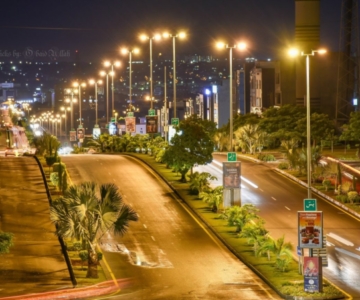
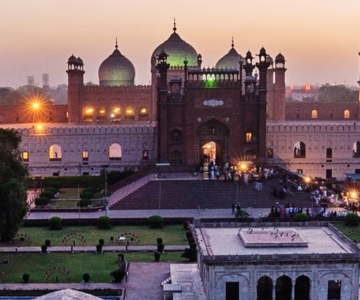
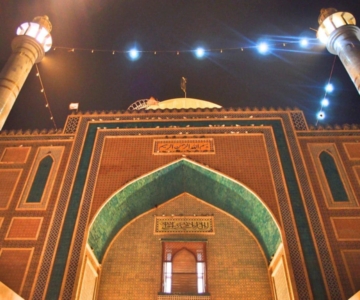
Twenty years ago, I left Lahore. Excited by prospects of quality higher education and the adolescent yearning for freedom, this was a moment that only with age I have understood. A flash that alters the life-path even when one is not aware of it. As I grew up and visited Lahore from a multitude of cities and continents, Lahore’s provincialism and inward-looking ethos irked me. However, the splendour of its lived history and multi-layered present fascinated me endlessly. A false sense of fatalism whispered that my exile was going to cover a life-span.

The last few years were spent abroad: so dejected I was that not living in Lahore would mean living just anywhere. When I decided this summer to return to Pakistan, I was astounded by the reactions from all and sundry. I was told that I am ‘mad’ to have chosen to return to a burning, imploding and crashing Pakistan. Such is the power of global corporate media that even the discerning and schooled Pakistanis have started to believe in the failed state mantra scripted outside Pakistan.

My own parents, temporary residents of Islamabad, scared by the blasts advised me against it. Others from the more indulgent school of thought were aghast with my decision to return to a country where power outages, crumbling urban infrastructure and pollution define urban living. Of all the nightmares cited was that who knows if the country would survive? Such cynicism and unmasked pessimism about Pakistan is always disturbing, yet familiar. My question is when was the country not about to unravel since 1947?

Such has been the level of insecurity propagated by the state and of late its international partners or the ubiquitously infamous band of its ‘friends’? After all, if this was such a grave situation then I might as well be with the loved and the familiar instead of living a life of an unrequited exile? (more…)

On Damadam Mast Qalandar

20 November 2008
Renuka Narayanan writing for the Hindustan Times
So many wake-up calls

The unrelenting terror trail across India recalls young Pakistani author Raza Rumi’s wistful remark that Hindu-Muslim amity seems like “a fairy tale from Never-Never land”. But surely India can wake up and recall how she managed things? Here’s an old story about one of modern India’s favourite songs, Damadam Mast Qalandar. Runa Laila of Bangladesh, Reshma of Pakistan and the Wadali Brothers of India have all sung it. The song came back this month with Ruby, Reshma’s daughter, who was in Delhi to sing at a Deepavali party held in a Muslim gentleman’s house.

The fact is that Jhuley Lal and Lal Shahbaz Qalandar are the patron saints of both Hindus and Muslims. Jhuley Lal (or Udero Lal/Amar Lal/Lal Sain) is said (more…)

Fahmida Riaz: A neglected genius

16 November 2008

My op-ed for The NEWS

Whilst my earlier piece on the IMF programme and the tremendous discussion it has invoked deserves a rejoinder, I want to write on a completely different subject this week. I am perturbed by the fact that thousands of jobs have been recreated for those who were rightly or wrongly dismissed in the earlier dispensations; there is silence about one luminary, a towering one at that, who lost state employment twice. Fahmida Riaz’s name is yet to appear amongst the reinstated ones.

Following the physical departure of the leading Urdu poets – Qasmi, Munir and Faraz – Fahmida Riaz is arguably the greatest living poet of Pakistan. Controversial though this statement might be, her originality and path-breaking poetry has yet to find an equal in the turbulent waters of the Pakistani cultural river. It is hardly surprising that Fahimda Riaz has been targeted all through her otherwise illustrious creative career by state and society alike. She was branded as unpatriotic when she had to run for her life in the Zia-ul-Haq days and live in exile. In India, she was termed as a Pakistani agent since she criticised the communal tensions that the Indian state had encouraged. (more…)

When compassion fills my heart

15 November 2008

I am happy
when I am sad
I am together
when fallen apart
like earth
when I am silent
I have thunder
hidden inside

– Translation by Nader Khalili
“Rumi, Dancing the Flame”
Cal-Earth Press, 2001

~~~~~~~~~~~~~~~~~~~~~~~ (more…)

questions from a worker who reads

14 November 2008

questions from a worker who reads

Bertolt Brecht

who built thebes of the seven gates?
in the books you will find the names of kings.
did the kinds haul up the lumps of rock?
and babylon, many times demolished
who raised it up so many times? in what houses
of gold-glittering lima did the builders live?
where, the evening that the wall of china was finished
did the masons go? great rome

is full of triumphal arches. who erected them? over whom
did the caesars triumph? had byzantium, much praised in song
only palaces for its inhabitants? even in fabled atlantis
the night the ocean engulfed it
the drowning still bawled for their slaves.

the young alexander conquered india.
was he alone?
caesar beat the gauls.

did he not have even a cook with him?
philips of spain wept when his armada
went down. was he the only one to weep?
frederick the second won the seven years’ war. who
else won it?

every page a victory.
who cooked the feast for the victors?
every ten years a great man.
who paid the bill?

so many reports.
so many questions.

(The illustration is a painting entitled ‘Man Reading’ by John Sargent) (more…)

Let the cynics froth and fume

13 November 2008

My piece published in The Friday Times

This is the magic of Lahore and its deep-rooted cultural mores. No other city can boast of such individuals, movements and trends. Hopefully, the music will live on. The interest of younger generations and their experiments with various forms of music hold great promise

Last week the breezy environs of the majestic Lawrence Gardens once again swayed to the tunes of Hindustani classical music. A week long music festival organised by the All Pakistan Music Conference attracted musicians, vocalists and enthusiasts from all parts the country, as well as from the imagined “enemy” India. How could it not be the case when musical traditions emerged out of a cultural synthesis of 700 years or more?

The leading light of APMC was Hayat Ahmad Khan, whose sad demise in 2005 was interpreted as an end to the glorious tradition of subcontinental streams of music in Pakistan. However, 83 years of hard work and philanthropic contributions was not in vain. He left behind a powerful institution and a network of committed individuals and aesthetes who have kept the torch ablaze. Not a small feat in the troubled waters of a Pakistani cultural landscape constantly under attack by nation-state ideology and extremism that consider music to be too “Indian” or, even worse, un-Islamic.

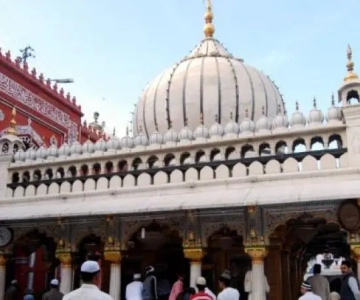
This is the greatest irony of our existence: the Muslims in India contributed to what is known today as Indian classical music and innovations such as the sitar and the tabla. The Qawwal bache trained at the shrine of Nizamuddin Auliya in Delhi under the tutelage of Amir Khusrau became the founders of what was to later evolve as the sophisticated Khayal style of music. In dire times of the Sultanate and Mughal periods, these musicians had to take refuge in the princely states, and this is how the various gharanas, or schools of music, originated. This loose network of musicians organised along the lines of kinship or teacher-pupil bonds, sustained by court patronage and eclectic and secular in appeal, led to some fine moments. Tansen at Akbar’s court, Mohammad Shah Rangeela’s patronage and later the Kingdom of Oudh defined the high-points of this fused and seamless culture beyond religion, communal and sectarian divides.

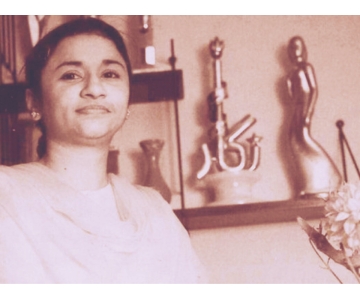
To keep this tradition alive in post-independence Pakistan was a Herculean task. Pakistan was a moth-eaten and truncated country in the words of its founder Mohammad Ali Jinnah. The psychological trauma and barbarity of the Partition had jolted everyone and the traditional patronage of the state was missing. It was under these circumstances that on September 15 1959, music-inspired citizens met at the famous Coffee House of Lahore and launched a voluntary organization called The All Pakistan Music Conference. Eminent personas such as Roshan Ara Begum were among the illustrious list of its founders.

It should be noted that this was also the age when the maestro Ustad Bade Ghulam Ali Khan migrated to India and Roshan Ara Begum was almost about to give up the passion of her life. Thus (more…)

My soul has come on my lips

12 November 2008

Amir Khusrau’s Khabaram Raeeda translated by Annemarie Schimmel

Tonight there came a news that you, oh beloved, would come –
Be my head sacrificed to the road along which you will come riding!
All the gazelles of the desert have put their heads on their hands
In the hope that one day you will come to hunt them….
The attraction of love won’t leave you unmoved;
Should you not come to my funeral,
you’ll definitely come to my grave.
My soul has come on my lips (e.g. I am on the point of expiring);
Come so that I may remain alive -
After I am no longer – for what purpose will you come?

(trans. A. Schimmel)

sent by JZ via email

More on the debate on IMF

10 November 2008

I had posted my piece on the forthcoming (?) IMF programme and expressed fears as a citizen. The op-ed that was published in the NEWS has evoked a hard-hitting response by a former IMF staffer. I am happy that a debate has ensued – this is why his scathing attack on my argument is more than welcome. Any noise is better than the silence of complacency. Raza Rumi (ed.)
by Dr Meekal Aziz Ahmed

Raza Rumi wrote a nice article entitled “Debating the aid plan,” in your newspaper of Nov 1. I agree with a lot of what he says. Things in our land are pretty grim these days. But just as Mr Rumi’s article was engaging me, there came the usual blast against everyone’s favourite whipping boy and scapegoat, the IMF.

Let me recall a timeless phrase so that Mr Rumi knows “where I am coming from,” as they say, and then move on to the substance of his critique. ‘The fault, dear Brutus, is not in our stars, but in ourselves, that we are underlings.” Mr Rumi, who must have read his Shakespeare, surely is familiar with these words. How well that quote describes our hapless country which seems to be going nowhere, while we insist it is everyone else’s fault? (more…)

The words of others

7 November 2008

Faiz Ahmed Faiz with friends: Faiz’s poetry is now being used to advertise phones

Habib Jalib: anti-establishment

Opposition to the military regime was marked by a liberal ethos, a value-system that stressed constitutionalism, rule of law, and the independence of judiciary, rather than identifying with the politics of redistribution or attacking Pakistan’s problem uno supremo: poverty

My piece published in the Friday Times last week

For decades, Pakistan’s poets and writers have defied conventions and the almighty establishment. Rooted in the progressive writers’ movement, the literature of resistance was a pro-people ideology that kept redistribution of power and resources at its core. The great poet Faiz Ahmad Faiz was often jailed and kept on the margins of the literary and cultural establishment and castigated as a “foreign agent” and “anti-Pakistan.” Scores of other writers had to suffer torture and silencing by the state when they challenged its arbitrariness. Habib Jalib faced similar treatment and died a poor man after decades of acting as the poetic conscience of a nation.

It was the lyrical, direct poetry of Habib Jalib that stirred the street for decades, echoing the vision of the world from below. Jalib’s expression was popular and immediate, and could be related to easily by the average listener. During the rule of General Ayub Khan, from 1958 until 1969, Jalib particularly represented the public conscience when he chanted his poem Dastoor (Constitution), which was about Ayub Khan’s tailor-made “constitution.” Later, this work was utilised in support of Fatima Jinnah’s (the Quaid-e-Azam’s younger sister’s) campaign against the general:

Aisay dastoor ko,

Subh-e-baynoor ko,

Mein naheen manta,

Mein naheen janta

(I do not accept/I do not recognise/A constitution that resembles/A morning with no light).

In 2008, we saw the Punjab Chief Minister chanting these lines. The poetry has come full circle. While the Chief Minister’s (more…)

What is this?

6 November 2008

One day Rumi was sitting in his personal library with a group of his
students gathered around him for his lecture. Suddenly, Shems
entered uninvited. He pointed to the books that were stacked in a
corner and asked Rumi, “What are these?”
Rumi, who judged Shems from his appearance to be a beggar,
answered, “You would not understand.” He had not even finsihed his
sentence when flames of fire started to rise from the books in the
corner. Frightened, Rumi cried out, “What is this?”
Shems replied calmly, “Nor would you understand this,” So
saying, he left the room.

***** (more…)

In City of Tolerance…

3 November 2008

I was quoted in this NYT article on Lahore

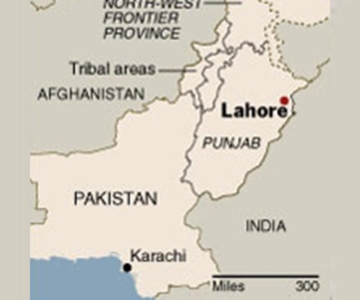
Still, Raza Rumi, a writer and blogger who takes great pride in his city, insisted that “Islamic extremism has had very little appeal here.” The cultural life of Lahore goes on, as it has for centuries.

He said that a recent stage play, “Hotel Moenjodaro,” whose theme was against religious fundamentalism, drew a packed audience. “It was very encouraging,” Mr. Rumi said.

Nonetheless, he said, the Hall Road incident and the juice store blasts were alarming. “If the traders, the merchant class, which forms the bulk of the middle class of Lahore, becomes Talibanized, then the whole complexion of the city will change,” he said. “That’s a fear amongst the secular intelligentsia and elite of Lahore.”

Full story here

I am only the house of your beloved

2 November 2008

Rumi again…

“I am only the house of your beloved,
not the beloved herself:
true love is for the treasure,
not for the coffer that contains it.”
The real beloved is that one who is unique,
who is your beginning and your end.
When you find that one,
you’ll no longer expect anything else:
that one is both the manifest and the mystery.
That one is the lord of the states of feeling,
dependent on none:
month and year are slaves to that moon.
When He bids the “state,”
it does His bidding;
when that one wills, bodies become spirit. (more…)

Pakistan: IMF Programme needs to be debated

1 November 2008

Debating the aid plan

Raza Rumi’s op-ed published in the NEWS (Pakistan)

The not-so-inevitable is about to happen. After weeks of groping in the darkness of global financial mess, the Pakistani government is negotiating with the International Monetary Fund. Admittedly, Pakistan’s options are limited, given its intractable dependence on oil imports for survival. The civilian government moving from one crisis to another has elevated indecision to a policy status. This does not imply that we start echoing the unwise cacophony of impatience with an elected and far more legitimate government than the eight-year-long authoritarian regime. But then who cares: if recent history is a guide, PPP governments come with a brand or at least get branded as incompetent comprising coteries of cronies, as if the rest of the country is a fair, rule-based haven.

The plain truth is that the power-wielders of Pakistan have been following a set of disastrous policies for decades that have now put the survival of the state, or as we knew it, in question. From the great hunts for strategic depth and Jihad, and from nurturing domestic oligarchies and pampering a delinquent industrial sector at the expense of land tillers and equitable irrigation, we are now paying the price for policy making by the elites for the sustenance of the elites. (more…)

Baba Bulleh Shah’s gift

1 November 2008

Dr Manzur Ejaz writing for the TFT

According to myth, if perfectly sung by a master, the classical raga Malkauns can set a river on fire. And if you want a description of Malkauns personified, it would be the tall red-eyed jogi or Ustad Chote Ghulam Ali Khan. In a freshly laundered, blazing white and starched kurta-pajama, Khan Sahib was a well dressed and handsome man even in old age. Despite his appearance, Khan Sahib was at heart a jogi who had wandered and meditated in the limitless jungle of classical music his entire life.

Both Bade Ghulam Ali Khan and Chote Ghulam Ali Khan belong to this gharana. They were cousins with identical names but because one was older he was known as precisely that, Bade, and the younger as Chote. The classical singers of the Qasur gharana are sometimes called “Qasur kay qawwal bankay” (children of Qasur qawwals) because their forefathers were traditional qawwals at the shrine of Baba Bulleh Shah.

Khan Sahib worked hard to enhance Samina Hussain Syed’s skills in classical music because she had a very powerful, deep and melodious voice that constitutes the core of a classical singer. In fact, she had more potential than anyone else in the world of music at that time. Khan Sahib knew her potential and that is why he would come daily for her training; it was never just for the money.

Akhtari Bai Faizabadi, whom Khan Sahib romanced (more…)