Monthly Archives: October 2008

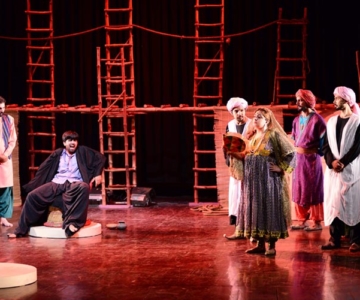
Ajoka Theatre and the Caucasian Chalk Circle

31 October 2008

My piece published in The Friday Times (October 24 issue)

Who is entitled to keep the child – one who is a better, nurturing mother, or the one who may be the natural mother but could not care for the child? The larger question then haunts the audience: who is entitled to ownership – the one who has the deed or the one who tills the land?

Ajoka Theatre has revived a production that was first staged twenty three years ago. A deft adaptation of Bertolt Brecht’s The Caucasian Chalk Circle, its vernacular version, Chaak Chakkar, is a timeless comment on the viciousness of Pakistan’s exploitative culture of power politics. Perhaps the duo, Shahid Nadeem the playwright, and Madeeha Gauhar the director, would have tried to capture bits of social reality in the mid 1980s when General Zia was still the Lord Master of Pakistan. Why did Ajoka choose to stage this after a gap of two decades?

As Madeeha Gauhar explained: “In 2008 one marvels at how Brecht had foreseen the chaos, the anarchy, the shameless switching of loyalties of recent years, especially since the return of the popular leadership exile.” The seat of total power, “symbolized as Lal Mahal, is uncannily similar to Lal Masjid and Lal Haveli of our times,” she added. (more…)

Raza Rumi on NQR Radio

30 October 2008

I was interviewed a few weeks ago by DCMediaGirl and co-host Nail ‘em Up by NoQuarter Radio . Got a chance to rant on several issues here. The recording is available here.

Slightly narcisstic of me post it here – but then you can choose to ignore..

Amir Khusro’s lasting tryst with love

29 October 2008

PRANAV KHULLAR writing here
At the heart of the Sufi mystical experience lies the Zikr or remembrance of God.

In its musical expression through the Qawwali , it has become synonymous with the name of Amir Khusro, whose musical idiom facilitated a unique synthesis of the Persian and Hindu-Braja cultures. His prodigious literary and musical experimentation is a unique effort at creating a universal Sufi language of Love and he forged a new mystical Sufi consciousness. This could have been a forerunner of the Nirguna Bhakti movement.

Khusro’s compositions are rooted in the theme of separation from the Beloved, a metaphor for the God within. His verses bring out the intense Sufi longing to merge into this state of mind. His Qawwali music touches that inner space in every listener, transporting him to a different dimension beyond the outer world of duality. (more…)

powerless is the prayer…

26 October 2008
A friend sent me these verses; luckily he translated the first verse of the ghazal
Is na’ay daur ki na’i charagari tou deykhi-ye
Bay asari dua kay sath, dard dawa kay saath hai
(Behold the beneficience of this age modern
powerless is the prayer, painful its medication)
Jo miri riyazat-i-neem shab ko Saleem subh na mil saki
Tou is kay ma’nay tou ye hu’ay yahan khuda koi aur hai

Ode to Benaras – Ghalib’s grand vision

22 October 2008

A Brahmin resident of Benaras

Ghalib

Benaras: “forever spring”

It is incredible that a Muslim poet who prided himself on his Turkic ancestry and invoked the “warrior” past in his day-to-day conversation (through his letters) could compare the divine light at Mount Sinai to the lamps at Benaras

The cancer of communalism and bigotry in South Asia continues to haunt us. These days, the Muslims are once again a subject of intense, though not always fair, scrutiny in India: their loyalties are being questioned and many are potential terrorists if not already abettors of violence. The post 9/11 world has contributed to the demonising of the Muslim identity and history to surreal heights.

The recent bomb blasts in Delhi have placed the communal discourse on the front pages. The invaders and violent Muslims have done it again. A friend called me from Delhi and narrated the profiling that takes place at marketplaces and how the gulf between different communities is widening.

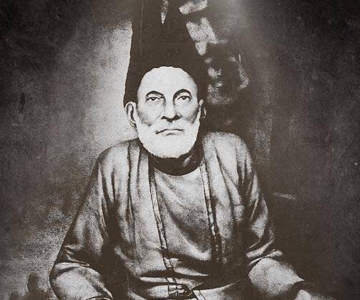
There was a time, not in the ancient past, when in Delhi the greatest of Urdu poets Mirza Ghalib (1796-1869) lived in an age when Hindus and Muslims shared common saints, dargahs and even popular gods and goddesses. Written accounts of this age – the mid to late 19th century – relate how intimate co-exitence of “Mussalmans” and “Hindoos” had led to a relative amalgamation of customs among the common people. And poets like Ghalib could see the commonalities of spiritual streams:

I n the Kaaba I will play the shankh (conch shell)

In the temple I have draped the ahraam (Muslim robe)

The verse above delineates the Sufi concept of fana (or dissolution of the self in divine reality) and the unity articulated by the ancient Indian texts such as the Vedanta. Sufis were to elaborate this as the wahdat-al-wajood (Unity of Being) philosophy. (more…)

Confronting militancy

20 October 2008

The unedited version of my op-ed published in the NEWS today:

It is time that the vocabulary introduced by the global imperial projects is changed in Pakistan. The infamous and rotten coinage – war on terror – needs to be trashed. It was constructed by an imbecile global leader, whose vision defies basic standards of human intelligence. And, in our case the frontline-state status is a passé title as well. The war has now entered the Pakistani consciousness, has consumed thousands and continues to destabilize the country to a point where its citizenry is insecure and bereft of hope. We have to now protect Pakistanis and Pakistan first. All else is secondary.

The gravity of the situation is however not shared by many. The rugged militants are artfully backed by the ‘urban Taliban’, a term that has emanated from Sindhi intelligentsia. There are political parties and their leaders who downplay the threat to Pakistan, and few journalists and TV anchors brazenly eulogise the Taliban bravery and, believe it or not, ‘sound’ governance. Even some on the residual Left term this extremism as an anti-imperial struggle. We are being reminded that the destruction of private property and daylight murders of innocent civilians are nothing but a ‘reaction’ to our policies and Western diktat. Ironically, a key religious party now train-marching across the country on a was ruling two of the war zoned provinces for nothing less than five years tacitly supporting Army operations as well as legitimizing a military ruler through a constitutional amendment. (more…)

The pampered Islamabadites

17 October 2008
My piece published by Himal Southasian

Mahboob Ali

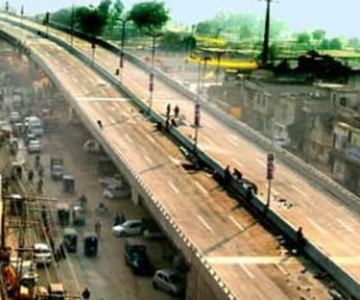
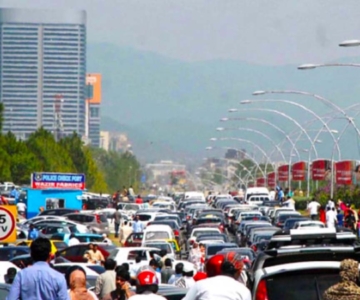
Islamabad is a very peculiar urban space. Though no longer a town, it is still struggling to become a city. Arguably, it is the most ‘inhabitable’ place in Pakistan, and ranks far ahead of several other capitals in Asia and Southasia, nearly all of which are plagued by pollution, traffic jams, crime cartels and civil strife. Islamabad, despite the disturbances and security threats that became endemic during 2007, remains largely aloof from this pattern – at least for now.

Located in the foothills of the Margallas, and boasting green spaces and forests intertwined among the folds of the city, Islamabad appears almost surreal against the densely populated rest of Pakistan. Built during the early 1960s by Pakistan’s developmentalist dictator, General Ayub Khan, Islamabad was seen as an antidote to politicised Karachi – which, in any case, was a bit too far from the Punjab and the NWFP, the popular bases for Pakistan’s powerful military. Laid out as a model city with the help of Greek architects, this city of the exclusive was formally born in 1965. Nearby Rawalpindi was already the seat of the army’s headquarters, and its proximity to the new capital was certainly intentional.

The new city’s layout was divided into sectors, numbered streets and broad avenues that are called ramna, using the Bengali term. The civil bureaucracy of federal united Pakistan moved here, and thus the sleepy town suddenly emerged as a new urban settlement in line with the earlier planned emergence of Chandigarh. In Islamabad, roads would empty out after sunset, and the national capital would be oddly deserted on all public holidays. After all, for decades none of the residents actually belonged to this city. (more…)

Poverty and Inequality – the brewing storm

15 October 2008

By Raza Rumi

(My op-ed first published here)

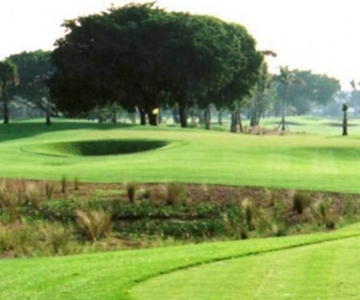
As I sipped the tenderly brewed coffee facing the lush green golf course of a relatively new Lahore Country Club, the new reality of Pakistan became a little clearer. The sprawling premises of the club were a preserve of the Railways Department until the inefficient Pakistan Railways could not manage it and doled it to the new, oligarchic big business of Pakistan. Much ado was made when the land owned by the Railways was privatised and questionable deals were transacted in that moderately unenlightened era. Nothing came out of the public questioning and today a lavish country club, far removed from its downmarket environs, has sprung out for the affluent and the upwardly-mobile classes of Lahore and Punjab.

The classic barriers to entry created by the cliques that lord over Pakistan’s elite clubs is being undone. Pay a handsome fee now (way over a million rupees) and you are a member to this new “club” built on the ashes of the Raj steelframe, albeit, reminding one of the nasty remarks of Churchill on how the brown, rapacious Rajas would appropriate the space created by the wise and just colonists. As my host elaborated on the entry procedures to Lahore’s richy-rich club, I could not help but remember the compensation to a suicide bomber that has also increased over the years and now hovers between one to two million rupees. A grossly-overlooked fact is that the grinding poverty in the pockets of Pakistan, seemingly unaffected by the consumerist prosperity, is the key to our current turmoil and violence. (more…)

Squeeze Holidays

14 October 2008

Do you wish to squeeze in some time to relax on the beach for example at the beautiful chains of Sharm El Sheikh Hotels?

Visit Squeeze Holidays – they are specialists in popular beach destinations in Spain, Canaries, Balearic Islands, Greece, Portugal, Turkey, Egypt, Tunisia and many more.

Squeeze Holidays is a trading name of Web Adventure Holidays Ltd and a branch of the Freedom Travel Group. The team behind Squeeze Holidays has  worked in all aspects of the travel industry from tour operations to the provision of enabling technologies to mass market distribution platforms for many of the household names within the industry.

For instance if you want to stay at Benidorm Hotels ,Squeeze Holidays will help you. (more…)

History’s ghetto – (Geneva Camp, Dhaka)

9 October 2008

My recent piece for the The Friday Times – about the bitterness and destitution in a Dhaka camp for Biharis

It was almost by accident that I visited the Mohammadpur Geneva camp in Dhaka – one of the largest settlements housing thousands of stranded Biharis in Bangladesh. On my last visit to Dhaka, my guide Ronny offered the possibility of getting the best bihari kebabs in town. He told me that his house was near the place and I could meet him somewhere close.

This was an extraordinary afternoon when the receding sun was converting the sky into a field of unimaginable colours that artists can only aspire to create through their limited palettes. Dhaka, the noisy, overcrowded megapolis can be enchanting at times, especially during late springtime when the Krishnochura trees (the Flame of the Forest) bloom all over with their fiery flowers. I almost cancelled the trip thinking that a walk in the park might be a better alternative to the usual South Asian gluttony. Quite soon, I arrived at the meeting point having rationalised my proclivity for indulgence.

Little did I know that the meeting point was nowhere but at the doorstep of Dhaka’s underbelly, the easy to ignore Bihari camp. Not until I had reached there had I realised how the wounds of 1971 were festering for hundreds and thousands of men, women and children who have waited for all these years to attain identity and citizenship of Pakistan. As if it were a curse, the Pakistani state soon forgot about their existence as its ethnic politics dominated the policy commitments of Bhutto. And for the Bangladeshis these were the “traitors” who continued to wave Pakistani flags when the vast majority of East Pakistanis revolted against the excesses and the might of Pakistan army following the infamous and mischievous army action of 1971.

In a few minutes I had all but forgotten about the famous Mustaqeem kebabs and parathas and forced Ronny to take me inside the camp. Very soon I realised I did not need any Bangla-speaking guide as the ghetto was Urdu speaking, and portraits of Pakistani leaders and flags could still be spotted despite the passage of three and a half decades. Ronny knew the locals and found his younger friends, child workers and idle youth who took charge of our little tour.

Shamed by guilt and excited by the real experience, I wandered the smelly, open-drained and dark streets of the ghetto. I have frequented other slums but this one was special for it reeked of the contemporary elite politics, bloodshed and cold inhumanity that Pakistanis are shy of confronting. The living conditions would put any half-concerned South Asian to shame. The homes for most of the families comprised tiny little rooms, with all the belongings and large families concentrated in the inner space. No proper toilets and water supply – as if civilization had taken a backseat here. (more…)

Lahore blasts fail to terrorise Lahoris

8 October 2008

Posted by Raza Rumi

Having lived two days in Lahore as a ‘resident’, the three low intensity blasts are a rude reminder that there is a war all over the country..It does not matter whose war it is; what matters is that it is real and not a fantasy and that it continues to harm ordinary, unarmed citizens who perhaps have no hand in formulating policies in Pakistan.

The fodder of terrorism – home grown and external – are innocent victims, children and more often than not, the poor..

What can be done, is the issue. And, the answers to this ostensibly simple question are in short supply. (more…)

Living Lohawarana – a Lahori rambling

7 October 2008

My piece for Himal Magazine’s October issue


There was a Lahore that I grew up in, and then there is the Lahore that I live in now. Recovering from an exile status for two decades, I find myself today turning into something of a clichéd grump, hanging desperately on to the past. Yet I resist that. Writing about Lahore is a sensation that lies beyond the folklore – Jine Lahore nai wakhaya o janmia nai (The one who has not seen Lahore has never lived). It has to do with an inexplicable bonding and oneness with the past, and yet a contradictory and not-so-glorious interface with the present.

Lahore is now the second largest city in Pakistan, with a population that has crossed the 10 million mark. It is turning into a monstropolis. Had it not been for Lahore’s intimacy with Pakistan’s power base – the Punjab-dominated national establishment – this would be just another massive, unmanageable city, regurgitating all the urban clichés of the Global South. But Lahore retains a definite soul; it is comfortable with modernity and globalisation, and continues to provide inspiration for visitors and residents alike.

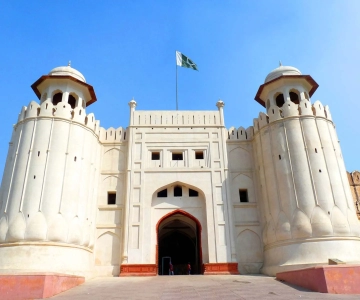
Over the last millennium, Lahore has been the traditional capital of Punjab in its various permutations. A cultural centre of North India extending from Peshawar to New Delhi, it has historically been open to visitors, invaders and Sufi saints alike. Several accounts tell how Lahore emerged as a town between the 6th and 16th centuries BC. According to commonly accepted myth, Lahore’s ancient provenance, Lohawarana, was founded by the two sons of Lord Ram some 4000 years ago. One of these sons, Loh (or Luv), gave his name to this timeless city. A deserted temple in Lahore Fort is ostensibly a tribute to Loh, located near the Alamgiri gate, next to the fort’s old jails. Under the regime of Zia ul-Haq, Loh’s divine space was closed and used as a dungeon in which to punish political activists. (more…)

Rannikot II

4 October 2008

Salman Rashid muses on the ancient site of Rannikot in Sindh and prefers that it is”enigmatic, inscrutable, inviting”

One thing is certain about Rannikot: it is ancient. The most tangible proof of its great age is the remains of the bridge at Sann Gate. A bridge is necessary on a flowing river, but this part of Sindh is arid, its rivers flowing only during the largely unpredictable rains. This has been the case for most of its recorded history, but there was a time when Sindh had a much wetter climate and when all its mountain streams flowed. As an aside, Moen jo Daro and other prehistoric sites were all built of kiln-baked bricks, that is, there was sufficient timber to fire those kilns to bake virtually hundreds of millions of bricks. And timber comes from forests which thrive in a wet climate.

This comparatively wetter climate persisted until about the beginning of our era. Then the Ranni River was a perennial stream turning into a goodly torrent with the coming of the seasonal rains. That is when the bridge at Sann Gate was first built to connect the battlements on either bank of the river. Even earlier, however, there would have been a fortress in this area, perhaps near present day Mohan Gate, to oversee the passing of trading caravans between Bhambor and Kandahar along the ancient route that lies just outside the western walls of Rannikot. And it was this ancient fortification that was enlarged several fold to create the Rannikot of today. (more…)

In this game of chess

2 October 2008

I was first seduced by love
then put in a fire of agonies
as i won the mastery
of the beloved
the beloved dropped me
and was gone

–Translation by Nader Khalili
Rumi, Dancing the Flame
Cal-Earth Press, 2001

~~~~~~~~~~~~~~~~~~~~

First, he tempted me
with infinite caresses.
He burnt me in the end
with pain and sorrow.
In this game of chess
I had to lose myself
in order to win Him.

– Translation by Azima Melita Kolin
and Maryam Mafi
Rumi: Whispers of the Beloved
HarperCollins Publishers Ltd, 1999

Three Pakistani film songs

1 October 2008

Jab Koi Piyar se Bulaye ga

(more…)