Monthly Archives: September 2008

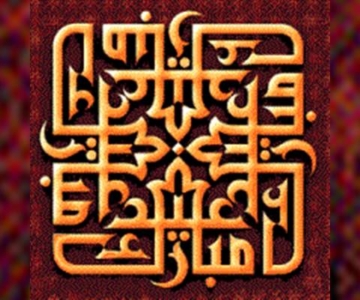
What do you think will happen? Eid Mubarak

30 September 2008

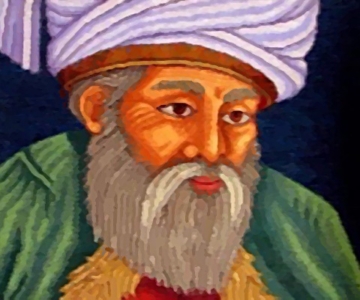
Eid Mubarak to all the readers. Here is a poem by Rumi

if you can’t go to sleep
my dear soul
for tonight
what do you think will happen

if you pass your night
and merge it with dawn
for the sake of heart
what do you think will happen (more…)

Abida Parveen sings Faraz’s poem

30 September 2008

Found this enchanting piece of music here:

In his latest double CD “Paigham-e-Muhabbat” composer Muzaffar Ali, who has brought so much pleasure to our lives in the last two decades, included ‘O des aane wale bata’. This nazm by Ahmed Faraz and Akhtar Sheerani is beautifully sung by Abida Parveen.

For those of us who migrated during Partition from India to Pakistan or vice versa and have memories of the old homeland. Also many who have lived overseas, away from our birthplace for several years, and yet have a deep felt love and nostalgia for what was left behind, it strikes a cord.

In memory of Ahmed Faraz who was one of the greatest contemporary Urdu poets… (more…)

Issues in Madrassa Education in India

28 September 2008

Yoginder Sikand’s new book Issues in Madrasa Education in India published by Hope India, Gurgaon is a promising publication. Here is a review by Nasir Khan:

A number of books have been recently published on the madrasas of India, and, in addition to this, madrasas have become a subject of considerable debate in the mass media. This latest addition to the writings on Indian madrasas makes a valuable contribution to our understanding of the subject.

The issue of madrasa reform is much debated today, and several of the articles in this volume examine the question from various angles. The opening article of the volume, titled ‘A Day in Deoband’, based on the author’s visit to the Dar ul-Ulum madrasa in Deoband, India’s largest madrasa, suggests that even many traditionalist ulema, wrongly berated as being wholly opposed to change, actually do support madrasa reforms to some extent, although the way in which they imagine the project of reform substantially differs from that advocated by many outside the madrasa system. This emerges even more clearly in the following article, titled ‘The State and Madrasa Reform: An Indian Deobandi Perspective’. The point is reiterated in subsequent articles, such as one on a Deobandi madrasa in Kashmir which is engaged in providing new forms of technical education in addition to traditional religious instruction, another on traditionalist madrasas in Kerala that have launched innovative experiments to combine religious and secular education, and yet another, on the educational model of the founder of the Jamaat-e Islami, Syed Abul Ala Maududi. A piece on the growing number of women’s madrasas in India makes the argument that promoting women’s rights from within a broader Islamic paradigm is also part of the project of madrasa reforms as even several traditionalist ulema see it. The author argues that this might have important consequences
in the future for the nature of religious authority as well as gender-relations among the Indian Muslims. (more…)

The dilemma of an educated [Indian] Muslim youth

27 September 2008

Saif Khalid, a patriotic Indian writes here on the predicament of those who want to stay away from the missions, the purges and typecasting of Indian media:

Terrorists once again played with deadly bombs in Delhi on September 13, bringing the usual destruction of life and property. By now, we Indians have become quite accustomed to death and destruction — man made or natural.

My very first reaction was: Will it be Indian Mujahideen (IM) once again? Within minutes of the blasts IM claimed it was behind the savagery. I felt like crying and shouting from the rooftop that whatever the terrorists have done in the name of Islam was wrong; that I am an Indian, who also happens to be a Muslim. I would not rejoice at the bleeding of my very own countrymen.
(more…)

The Breeze at Dawn

27 September 2008

Courtesy Isa Daudpota

Ode to Mirza Ghalib’s Haveli

25 September 2008

This excellent post brought found here back so many memories – of my two memorable visits to the famed but neglected Haveli

Gali Qaasim Jaan was wrapped in fading darkness. A few tattered curtains hung listlessly on some doors. Pigeons flew overhead and some kids fought over marbles. Somewhere a goat tethered to a threshold, bleated timidly.This was Ballimaaran in the walled city of Delhi more than 150 years ago where one of the greatest masters of Urdu Poetry, Mirza Ghalib once lived.Mirza gave a whole new dimension to the world of Urdu Poetry, and has been hailed as one of the the true Masters. My desire to visit Mirza’s Haveli was soon going to be realized. Regardless of how well one knows the streets of Delhi, it is no joke to locate Gali Qasim Jaan where Mirza’s Haveli still stands.
It is a crying shame that what once was a two-storey Haveli has been reduced to barely a neglected remnant. Years of government indifference has led to severe misuse of the place.

Finally, the Archaeological Society of India took matters into its own hands and two ushers now look after the Haveli. Visiting hours are observed for tourists who long to feel the air, which still echoes with Mirza’s recitals. (more…)

This Love — Quatrain from Rumi

24 September 2008

This Love is the king,
yet a throne cannot be found.
It is the essence of the Koran
yet a verse cannot be found.
Any lover hit by the Hunter’s arrow
will bleed all over,
yet a wound cannot be found.

– Version by Jonathan Star and Shahram Shiva
“A Garden Beyond Paradise”
Bantam Books, 1992 (more…)

Fana: When the ego gets annihilated

24 September 2008

Source
Sufi thought is centred around the two fundamental doctrines of the Transcendent Unity of Being or wahdut al-wujud and the universal or perfect man, al-insan al-kamil. The concept of fana or annihilation of ego is at the very heart of Sufi theosophy.

Among all species, a human being has the potential of evolving to the highest level of consciousness and becoming a siddha or saint, one who has attained spiritual perfection through sadhana. According to S H Nasr: “To become a saint in Islam is to realise all the possibilities of the human state, to become the universal man. The mystic quest is none other than the realisation of this state, which is also union with God, for the universal man is the mirror in which are reflected all the divine names and qualities.”

How to attain the exalted state of ahsan taqwim, of becoming the total of all the divine names and qualities and to rise to the stature of al-insan al-kamil? Sufi mystic Abu Yazid Bistami explained that a seeker could attain to lofty spiritual heights in meditation through fana. (more…)

Revisiting the concept of Jihad in Islam

23 September 2008

By Maulana Wahiduddin Khan

(Translated from Urdu by Yoginder Sikand)*

The word ‘jihad’ is derived from the root juhd, which means ‘to strive’ or ‘to struggle’. It denotes the exertion of oneself to the utmost, to the limits of one’s capacity, in some activity or for some purpose.  This is how the word is understood in Arabic grammar.

Because fighting against one’s enemies is also one form of this exertion or striving, it is also sometimes referred as jihad. However, the actual Arabic word for this is qital, not jihad. Fighting with one’s enemies is something that might happen only occasionally or exceptionally. However, jihad, properly understood, is a continuous action or process that animates every day and night of the life of the true believer. Such a person does not let any hurdle affect his life, including desire for gain, the pressure of customs, the demands of pragmatism, lust for wealth, etc.. All these things serve as hurdles in the path of doing good deeds. Overcoming these hurdles and yet abiding by the commandments of God is the true jihad, and this is the essential meaning of the concept of jihad. There are many references to jihad, as understood in this way, in the collections of sayings attributed to the Prophet Muhammad. (more…)

Delhi and Islamabad blasts: Deadly tale of two cities

23 September 2008
A reader directed me to this lovely post.
13/09/08: A series of bomb blasts ripped through the crowded market places of Delhi claiming a number of lives and shattering the lives of many survivors.
20/09/08: A powerful bomb blasts takes place outside Marriott Hotel in the Pakistani city of Islamabad. From initial news coming out explosive laden dumper truck has wreaked this havoc. Some 40 people have already been declared dead.
If it were not for the difference in the Hindi and Urdu ticker running at the bottom of the television screen one could have mistaken scenes of one city’s mayhem for the others. Before Delhi it was Ahemdabad in India and Peshawar/Karachi in Pakistan.

No One Is Left Hungry at Ajmer

22 September 2008

No One Is Left Hungry

By Rajan Mahan, “No one goes hungry in Ajmer during Ramadan” – NDTV – New Delhi, India
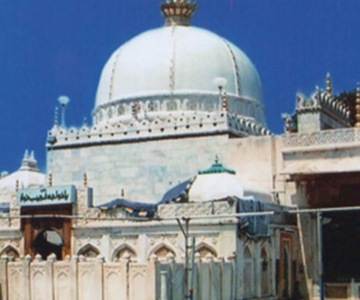
For Muslims of south Asia, the Sufi Dargah at Ajmer stands second only to the sacred one in Mecca.

And in the holy month of Ramadan people from all corners of the subcontinent seek the blessings of the Dargah’s immortal 13th century saint Khwaja Moinuddin Chishti.

Popularly called Gareeb Nawaaz, the Protector of the Poor, the Khwaja is still revered for his compassion and empathy for those desperate and needy. (more…)

The Verge of Tears

21 September 2008

You make our souls tasty like rose
marmalade. You cause us to fall flat

on the ground like the shadow of
a cypress still growing at its tip.

Rainwater through a mountain forest,
we run after you in different ways.

We live like the verge of tears inside
your eyes. Don’t cry! You trick some (more…)

Point Advantage

21 September 2008

Do you need PMP training? A great opportunity for online PMP certification, Visit Point Advantage.
Point Advantage is on a simple mission: to deliver the best training anywhere for real-world project success and career advancement to professionals at all levels. Their value-added training programs are designed with the demands of busy professionals in mind. Since 2003, the overall mission of Point Advantage has been: (more…)

Islamabad is burning – down with terrorism

20 September 2008

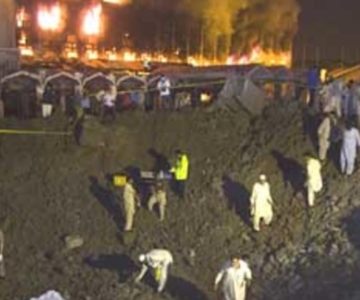
What jihad, what Islam and what kind of Muslims these butchers are – they kill innocent people, the underclass outside a posh hotel in Islamabad and think that they are serving some cause. And, this is the month of Ramzan when the Satan is apparently locked up….

The numbers of dead and injured are mounting – there is blood everywhere and a commentator has termed it Pakistan’s 9/11.

About time Pakistani government weeds them out and saves us all from this menace.

Horrific. Barbarity at its worst.

www.chinaview.cn

ISLAMABAD, Sept. 20 (Xinhua) — A blast occurred outside Marriott hotel in the center of Pakistan’s capital Islamabad on Saturday evening, leaving at least 30 dead and scores of people injured, said the Pakistani Adviser to Prime Minister on Interior Rehman Malik. (more…)

From Persia to Pakistan, via Mysore

20 September 2008

Zafar Hilaly recounts the history of his distinguished family, amongst whom were Sir Mirza Ismail, Agha Hilaly and Agha Shahi

Family legend has it that my great grandfather, Ali Asker, fled the court of the last Shah of the Qajjar dynasty of Iran sometime in the late 1800s. No one quite knows why he did so but he must have had good reason because he did not stop running till he reached Mysore in Southern India. And only when several thousand miles separated him from his nemesis did he pause for breath.

Alerted to the arrival of a disheveled Iranian, along with some horsemen, the Maharaja of Mysore enquired about the purpose of their visit. When told that they sought asylum, the Maharaja enquired what could they offer in return. “We will train your cavalry and supply it with horses,” Ali Asker responded. A deal was struck; and he never returned to Iran. (more…)

Next Page »