Monthly Archives: February 2008

Na Ganvao Navak-e-Neem Kash (your half drawn arrow)- Faiz

29 February 2008

Junaid has sent another translation of Faiz rendered by a Toronto based poet – Anis Zuberi. This is a timeless ghazal, Na Ganvao Navak-e-Neem Kash has not only been translated but also explained in detail by Mr Zuberi.

Na ganvao navak-e-neem kash, dil-e-reza reza ganva dia
Jo bachay hain sang samet lo, tan-e-dagh dagh luta dia

Mere charagar ko naveed ho, saf-e-dushmana ko khabar karo
Woh jo qarz rakhtay thay jaan par, woh hisab aaj chuka dia

Karo kaj jabeen pe sar-e-kafan, mere qatilon ko guman na ho
Ke ghuroor-e-ishq ka baankpan, pas-e-marg hum ne bhula dia

Udhar aik harf ki kushtni, yahan laakh uzr thaa guftni
Jo kaha toh sun ke ura dia, jo likha toh parh ke mita dia

Jo rukay toh koh-e-garan thay hum, jo chalay toh jan se guzar gaye
Rah-e-yaar hum ne qadam qadam, tujhay yadgaar bana dia

Translation and explanation:

Na ganvao navak-e-neem kash, dil-e-reza reza ganva dia
Jo bachay hain sang samet lo, tan-e-dagh dagh luta dia

Do not waste (your) half drawn arrow, (I have already) lost (broken pieces of my) heart.
Collect and save the left-over stones, (my) injured or wounded body is (already) wasted

There is a clear sense of despondency as he realizes that his opponents are mighty and he had no physical strength to challenge them. (more…)

Of humanity, Keshav and anonymity

28 February 2008

An ordinary man has reinforced our belief in humanity. First the story and then a poem:

Surat: A man, who tried to prevent three men from molesting a woman in Surat, succumbed to burn injuries at Surat’s Civil Hospital. Thirty-five-year old Keshav Vishwakarma tried to prevent 40-year old Lilavati a mother of two from being harassed. Four hours later, the accused allegedly doused him with kerosene and burnt him in his house in the Pandesara area of Surat.

Just before he died, Keshav recounted the horror. “I tried to reason out with them that it was wrong and help the woman. Instead, they set me on fire, he said. Such was his willpower that even after sustaining 75 per cent burns, Keshav walked about two kilometers to the Pandesara police station and reported the matter.

My friend Annie was moved and inspired by this act and immortalised Keshav Vishwakarma who may never acquire the status of this towering hero but will continue to reinforce our faith in the essential goodness of human beings. Here is the elegy composed by Annie – (more…)

A personal God?

28 February 2008

Found this post on a web-list:

The “Creator” (according to a saying of the Prophet)
says:

I AM for you, what you think of Me

The more I contemplate about this saying the more I
get convinced that each one of us `creat` a unique
“Creator” for ourselves which is according to our
specific understanding of “Him”. However, “He” is NOT
what each one of us think Him to be as mentioned by
Him in Quran – “And there is NOTHING that can be
compared with Him” (Verse:5 Chapter112)

The other saying of the Prophet is also extremely
meaningful – “the one who knows himself knows HIS
Lord”. A friend opened a new window in my thought process
by pointing out to the last part of the saying of the
Prophet i.e. `knows HIS Lord`. Here, the
hadith does not mention `knows THE Lord` instead it
says `knows HIS Lord` which `personalises the matter.
Hence, personal understanding of the `Creator` is
different for each person. So, each
one of us has a `personal God or no God`.

Courtesy Altaf at Thinking People

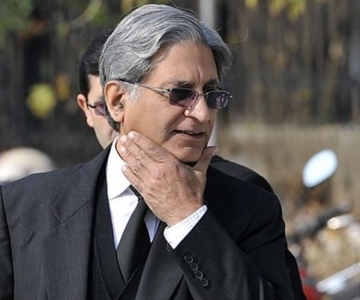
An open letter to Mr Aitzaz Ahsan

27 February 2008

This was published in DAWN yesterday

By Raza Rumi

THAT you are principled, charismatic and right is beyond doubt. You have inspired the cynical, intelligentsia, revived a moribund civil society and awakened Pakistan’s traditionally de-politicised middle class.

This is something that history shall record gloriously – reminiscent of the way you re-invoked the essential attributes of ‘Indus man’ in your treatise on the pre-historic identity of Pakistan.

Today, all efforts to generate ‘positive’ results from Election 2008 have foundered; and there is a new parliament ready to be sworn in. The new National Assembly, reflecting the fractured polity, has one common thread – nearly two thirds of its members constitute or sympathise with what was known as the opposition before February 2008. This is a moment of reckoning and most concrete outcome of a decade long struggle initiated by your friend Mr Nawaz Sharif, your leader the late Mohtarma Benazir Bhutto and your supporters in the middle class and urban democrats. The movement that followed the suspension of the Chief Justice in March 2007 was a culmination of public discontent that started way before. That you provided a shape and led it, is, your stellar contribution.

This is a historic moment that cannot be squandered or lost to the politics of personalities and individuals. Most Pakistanis are in awe of the dismissed Chief Justice for his strength of character, they have tremendous respect for the members of the bench who refused to succumb to the executive diktat following the imposition of emergency in November 2007. And above all, they are also tired of General Musharraf whose good intentions have only led to the proverbial hell of energy and food crises, rampant inflation and roaming suicide bombers. But this struggle just cannot be about getting rid of the president and reinstating the Chief Justice. That would be a belittling corollary of this fabulous episode in our recent history.

The representatives of the PPP, PML-N, ANP and bulk of like-minded independents are touching the magic number of two thirds in the new Assembly. If they are asked to settle a score with an individual and honour another few, history will not record it in kind terms.

Your call for a march towards Islamabad and the restoration of judges before Mar 9 is bound to polarise the fragile parliament, the political parties that have been beaten, poached, hounded with leaders assassinated or disqualified. It is a delicate juncture of our history and any division in the moderate political class or resort to historical bickering and blame-games will rock the system only to benefit the martial corridors of Islamabad’s Byzantine palaces and their traditional occupants.

This is why many citizens are worried and skeptical that nothing changes in the murky waters of Pakistani politics. (more…)

More on Data Saheb

27 February 2008

Lahore Metblog has published a lovely post on Data Saheb of Lahore today

During the urs the shrine and its whereabouts are beautifully lit. A large number of devotees from different parts of the country besides tens of thousands from the city will visit the Data Darbar to pay their homage by reciting verses from the Holy Quran, qawalees, and recitation of naats and poetry to the saint. (more…)

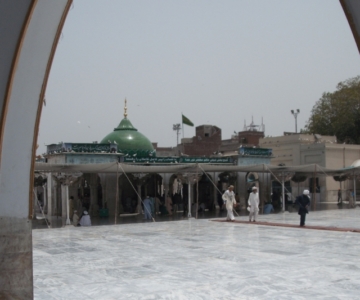
Data Darbar – the Urs begins

26 February 2008


The shrine at night

Originally uploaded by Jahane Rumi
“The heart is the seat of knowledge and is more venerable than the Kaaba. Men are forever looking at the Kaaba but God looks towards the heart”; said Hazrat Usman Hajveri popularly known as Data Saheb of Lahore.

The shrine of Shaikh Ali Hajweri, Data Ganj Bakhsh, or Data Sahib is a landmark of sorts in the subcontinent. It has been a centre of inspiration since the eleventh century. He was both a scholar and a saint and author of the first treatise on Sufism in Persian language – Kashf al Mahjub (or “Unveiling the Veiled”). Originally from Ghazni, Afghanistan, Data Saheb spent a considerable portion of his life in Lahore. He loved it so much that settled there permanently.

After his reunion with the Creator in 1077 A.D, his shrine has attracted millions of people. It is still the busiest of places even after nearly ten centuries. Even the leader of Chistiya school of Sufism, Khawaja Moinuddin Chisti sought spiritual guidance at his shrine.

Wish I could have been there at the Urs (the death anniversary)-it is quite an event.

Please also see this story on Data Saheb.

I will inflame the fiery Sun…..Bulleh Shah

25 February 2008

In Punjabi followed by a not-so-great translation…. (more…)

Samjhutta Express blast victims buried in an unkempt graveyard

24 February 2008

This story was pretty sad:

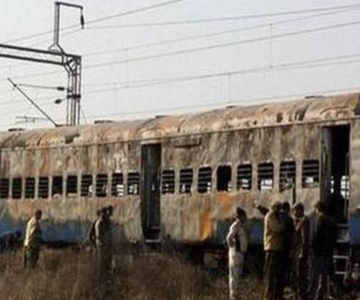
Panipat (Haryana), Feb 18 (ANI): The graveyard in Panipat, Haryana, where 29 Pakistani victims of the Samjhauta Express train blast lie buried, continues to be in a state of neglect even a year after the incident. (more…)

On Buddha, Silence and Impermanence

23 February 2008

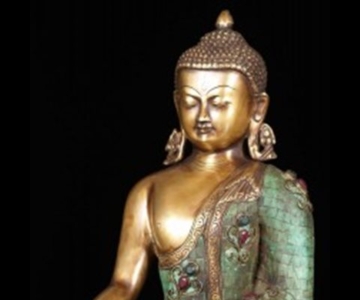
The celebrated artiste Vidya Rao from Delhi has sent this tender and profound letter after reading my post on destruction of Buddhas in Swat (and the painting that was inspired by the vandalism). I am reproducing this letter with her permission as it adds to the debate and brings in a multi-religious and multicultural perspective that is close to my heart. Her words can be so moving:

But who can silence Silence? Who can erase Emptiness? The Buddha is, and yet is not, in the stone or metal representations of him. Nor is the truth of Islam contained within the structures of a mosque. It is not the Buddha or Islam or anything such that is destroyed. What is destroyed is the connection to the inner Buddha, the inner light. We are all the poorer for this, because form, the beauty of form, gives joy and love to our lives. The task is to both mourn, work in whatever way to prevent such destruction– but also to see this as yet another teaching on impermanence.

Here is the full text of the letter: (more…)

Bulleh Shah on worldly knowledge

22 February 2008

PaRh paRh ilm hazaar kitaabaN
qaddi apnay aap nou paRhiya naee
jaaN jaaN waRhday mandir maseedi
qaddi mann apnay wich waRhiya naee
aa-vaiN laRda aye shaitan de naal bandeaa
qaddi nafss apnay naal laRiya naee

[yes, yes, you have read thousands of books
but you have never tried to read your own self
you rush in, into your Mandirs, into your Mosques
but you have never tried to enter your own heart
futile are all your battles with Satan
for you have never tried to fight your own desires]

Raza Rumi was in Delhi

21 February 2008

Raza Rumi – A Pakistani About Town

A budding writer from Lahore visits the city of his beloved author.

I was [pleasantly -why lie] surprised this morning to discover a story on yours truly with the byline -Raza Rumi, A Pakistani About Town. It is a well written piece – not because that it concerns me but it sort of collates the various things I said and did during my recent visit and twists them into an engaging narrative. Never mind the less flattering description as a “cliched tourist”. My delusions about being a traveller were sort of questioned.

I still have to write about that visit earlier this month when I stayed at the Jamia Millia Islamia to attend a seminar on Qurratulain Hyder, the towering Urdu littérateur. During this visit, I met a number of interesting people and participated in some lively sessions that brought me much closer to the intellectual core of Delhi. My friend Mayank Austen Soofi, whom I finally saw after all the blog exchanges, attended the seminar at Jamia and later accompanied me to the Nizamuddin dergah. Of course Sadia Dehlvi was there as always – walking me through the chaotic moods of Delhi.

All I can say is that one has to be careful with bloggers and journos. Who knows when mundane conversations turn into eloquent posts and stories, only to unexpectedly appear in your inbox a few days later.

When I get my act together I will write about what I had to say about Qurratulain Hyder’s dual belonging.

While I continue to overcome my indolence, please read this accountby The Delhi Walla. (more…)

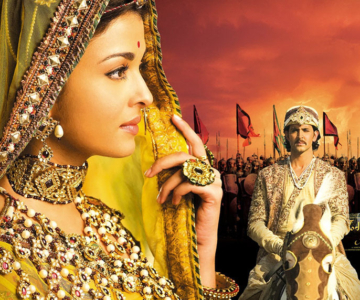
Jodha Akbar – this is no ordinary film

20 February 2008

My blogger friend, Manasvi wrote this reviewof Jodha Akbar and I am glad that the film is good.

Jodha Akbar brings to cinema an epic love story that even if imagined is just too wonderful.

There have been controversies about the fact that recorded history has little evidence on the character of Jodha Bai. My simple question is: what about the oral histories of the subcontinent. Why must we always remain beholden to court historians and foreign travellers – why not respect what generations have believed over time? (more…)

Why search for God?

20 February 2008

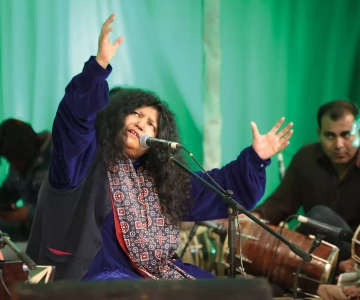
Bulleh Shah – the master Sufi poet from medieval Punjab – identified where to find Love and the Divine presence. Nowhere, but within one’s self. And do check out a great rendition by Abida Parveen here.

The following lines and their translation are from here (more…)

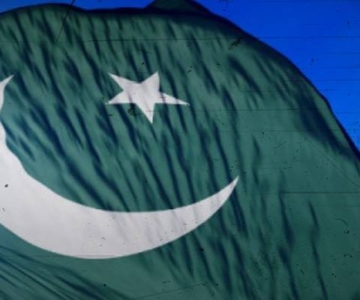
Pakistanis have rejected extremism

19 February 2008

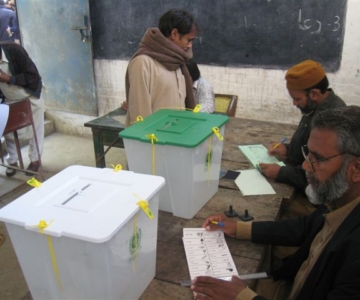
The election results notwithstanding the irregularities and fears of rigging, are pretty straightforward. They undo the paradigm of ousting the two mainstream parties from the political arena; and instituting real democracy that is hostage to the bogey of Islamism and local feudal cliques through a non-party local governments.

These elections are also a slap on the face of the global corporate media (and their backers the global military machine) that had painted Pakistan as a breeding ground for Islamic extremism and dare I say terrorism.

The erstwhile sponsored face of Islamism – the Mutihada Majlis-i-Amal- has been routed in the North West Frontier Province (NWFP). The people of the NWFP have outrightly rejected this rentier class that uses Islamisation and extols Talibanisation for power and pelf. The secular and moderate parties have won the overwhelming majority of the vote.

When you allow the people of Pakistan to vote freely, they shun extremism.

Nothing could be more satisfying.

P.S. My friend Yasser Hamdani’s predictions are close to the emerging tally – King’s Party has lost more and Nawaz Sharif has gained more – but Yasser should take up forecasting now..!

Kosova is finally independent

18 February 2008

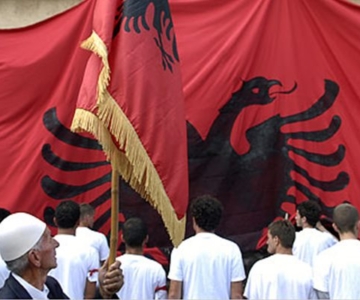
The ultimate frustration of not being able to vote, sitting miles away from home, was somewhat compensated by the moving images of the Kosovo’s declaration of independence.

I have lived and worked in Kosovo for a couple years – and it was a delightful experience despite the after effects of war and tragedies. Independence from Serbia is something that runs through the Kosovar collective consciousness and defines the large, attainable dream. (more…)

Next Page »