Monthly Archives: December 2007

On the day of death – Sheb i Aroos

28 December 2007

when i die
when my coffin
is being taken out
you must never think
i am missing this world
don’t shed any tears
don’t lament or
feel sorry (more…)

Akbar’s enlightenment mind

26 December 2007

Thanks to Khaled Ahmed, we get to hear about new books on a variety of subjects. He has reviewed a new bookHindu Myth, Hindu History: Religion, Art, and Politics authored by the eminent Indologist, Heinrich von Stietencron.

Akbar’s eclecticism brought about a pluralist ambiance that history associates with his governance. He got Todar Mal from Gujarat to set up the revenue system of the kingdom. It was like England and the rest of the world taking Adam Smith from Scotland and making him the father of modern economics. It is Todar Mal that we owe variation in taxation on the basis of fluctuations in rainfall and nature of the soil which he achieved through resurvey of the land in India.

Akbar’s rule was a patch of effulgence in a general darkness on earth. Poets and artists gravitated to it; faiths rejected in other lands escaped to India to find tolerance. Today, Akbar is irrelevant to what is happening in the Islamic world (more…)

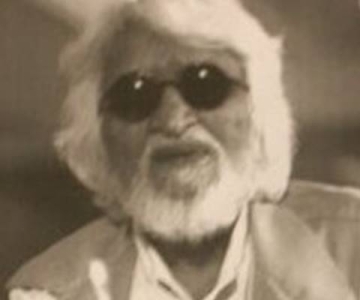
M F Hussain’s exhibition raises hackles of Bajrang Dal

23 December 2007

The India International Centre, where Hussain’s ‘Mughal India’ painting series are on dispaly, suspended the exhibition for Saturday after it received the threats from Bajrang Dal, sources said.

The IIC had received the Bajran Dal threat which said it has to face serious consequences if the capital’s high-profile cultural organisation continued to exhibit the works of the controversial artist, they said.

More here

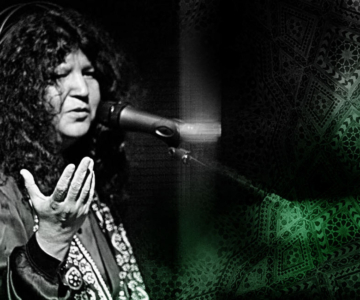
Shabnam Majeed Sings Iqbal

22 December 2007

La phir aik bar wohi …I must say that this is not bad at all. I am happy to have strayed towards this blog and found the link (more…)

Spare the Animal and Show Your Piety: Eid ul Adha, 2007

18 December 2007

I am cross-posting this thoughtful post by temporal that was published at the Pak Tea House:

Eid ul Adha is on or around December 19-22, 2007 depending on where you are. Have a safe and happy holiday with your family.

Spare the poor goat or lamb’s life. For those who want to sacrifice the writer please scroll down and read Chapter 22, Verse 37 as translated by Marmaduke, Yusufali, Asad and Usmani: or pick your own copy of the holy Qur’an.

They all talk about your devotion, piety, God-consciousness and taqwa that reaches Him.

Please pause and think. (more…)

Tear down this house

18 December 2007

by Ayeda Naqvi

Yes, our houses are under attack. But as we so desperately cling to the old form, eager to preserve and retain that which we are accustomed to, we must ask ourselves, is it really worth holding onto? Of course, the earth must be protected and civil wars must be avoided but is the destruction of certain patterns necessarily negative?

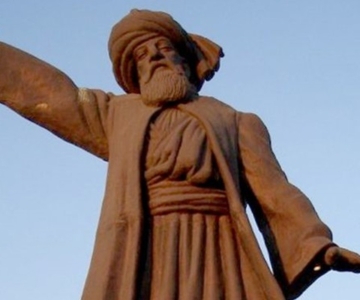
Tear down this house, writes Rumi in his poem, the Pickaxe. For under it lies a treasure far greater than you could ever imagine. Tear down this house, writes Rumi in his masterpiece, the Masnawi, for hundred thousand new houses can be built from the transparent yellow carnelian buried under it.

Never have the words of anyone echoed the way these words echo tonight, on the eve of Shab-i-Aroos. Reverberating through time and space more than 700 years after his physical death, this December 17, the verses of Maulana Rumi shine more brightly than they have in a long time. Perhaps because it is darker than it has been in a long time. (more…)

A paranoid, abhorrent obsession

17 December 2007

It was a pleasure to have read Pankaj Mishra in the Guardian:

Last week Ayaan Hirsi Ali, the Somali-Dutch polemicist, spoke to a gathering of what The Spectator called “Britain’s biggest brains – politicians, editors, academics”. She told them that they were “actually at war, not just with Islamism, but with Islam itself”. Apparently, a good Muslim has no choice but to strive “to establish Sharia law”. Martin Amis, too, has recently informed us that moderate Muslims, if they ever existed, have lost out to radicals in Islam’s civil war. In any case, Islam is “totalist”: “There is no individual; there is only the umma – the community of believers.”

Never perhaps in history has so much nonsense been so confidently peddled about a population as large and diverse as this planet’s billion-plus Muslims. Within the past decade an Islamic movement has led Indonesia towards democracy, while market reforms in Turkey have created a new and religious middle class that now challenges the power of a secular elite.

Each one of the national realities Muslims inhabit is prodigiously complex and ceaselessly evolving, shaped as much by geopolitics – imperial conquest, the cold war, the war on terror – as by internal conflicts of class, religion and ethnicity. Closely examined, Muslim societies briskly dissolve our complacent, parochial notions about religion, democracy, secularism and capitalism. They expose, too, the notion of a monolithic Islam pressing down uniformly on all believers everywhere as a crude caricature.

Read the full article here

What goes around…No more saviours please

17 December 2007

Now that the wheel has turned its back yet again, there is much to ponder. There are many who are saying that this is not the time to think or talk but to act. There has already been a spate of protests, truncated and suppressed by the state of “emergency” that has returned to haunt the body politic.

Today, the doyens of the “civil society” across the country are depressed, resisting or incarcerated. However, the civil society – whatever this terms means in Pakistan – must not lose sight of its acquiescence in the first place. There was a widespread acceptance of the extra-constitutional takeover in 1999. A moment was lost, perhaps never to return. The warnings from isolated voices to not let the camel into the tent were ignored by most NGOs, who were excited by the new regime’s agenda in 1999. Key members of civil society became ministers or comfortably pitched themselves as supporters of this regime. Some who had been taking pride in resisting authoritarianism earlier even received honours and awards. The large NGO networks became agents of the state in either defining or implementing the ill-fated devolution plan – remnants of which are now more of a threat rather than opportunity for social change. This love affair between the regime and ‘civil society’ admittedly waned with time, but its basic parameters remained the same. An ostensibly secular ruler was thought to be better than the looming fundamentalist forces. (more…)

Prince Charles on “East and West: Parables of the Soul”

15 December 2007

Prince Charles was recently in Konya, Turkey on a state visit that coincides with Rumi’s 800th birth anniversary. Commenting on the appeal of Rumi globally, he said: “Is it perhaps the depth of yearning of the heart which we all feel and which he [Rumi]understands and describes so well.”

When asked what he thought of the shrine he added: “Fascinating, fascinating, there’s never enough time.”

He also made a speech there which is an amazing read. I am posting a few excepts here.

God’s purpose for man is to acquire a seeing eye and an understanding heart.

In an age of increasing ignorance, intolerance and mis-understanding it is perhaps worth reflecting on the one element that has the potential to unite us all beyond the World-Wide Web or globalization. That element lies in the mystery of the heart. Is it not strange that at a time in history when every taboo has seemingly been broken; every sacred cow slaughtered, that the very idea of mysticism itself the practice of the mystery of the heart seems to have become of far less significance?

And yet have not the founders of the World’s greatest religions all spoken in one way or another of the need to enter the temple of the heart? Why? Because, surely, is it not the mystery within, when once unlocked, that is able to inspire the kind of inner understanding which can break asunder the law of cause and effect that so undermines our attempts at reconciliation?

Therefore, what better occasion and what better place than here, near the resting place of Mevlana Jalaluddin Rumi, to re-dedicate ourselves to the purpose of re-acquiring and understanding heart

Full text here

Prophet’s letter on the protection of Egyptian Copts

14 December 2007

I am grateful to Saadi to have forwarded me the this amazing ancient text.

********

The Letter of Prophet Muhammad

Below is the English translation of the extra-ordinary letter by Prophet Muhammad as a Charter of Privileges to Christians monks of St. Catherine Monastery at Mt. Sinai. It consists of several clauses covering all aspects of human rights including such topics as the protection of Christians, freedom of worship and movement, freedom to appoint their own judges and to own and maintain their property, exemption from military service, and the right to protection in war. It bears the hallmark of Islam and Prophet’s attitude about the right[s] of other religious practitioners. (more…)

Shaheen Sultan Dhanji’s art

12 December 2007

Bordering between abstract and socio-political, Shaheen Sultan Dhanji’s photography, painting and writings are at once striking to readership.  Her art transforms the humble into amazing objects of desire.

Sultan’s  large scale of black and white photographs are at once contemporary, mingled with socio-political messages. Themes of war, poverty, women and sanitation, globalisation and various pressing subjects are provocatively captured on film. She has had some of her works exhibited in Ottawa and Toronto Canada.

Luminous yet subtle abstract and figurative paintings reveal a fusion cultural influences, and experiences endured in  Sultan’s journey in assmililating between life in Africa and North America.

Her art punctuates and pierces a wave of questions of human dignity, colossal loss of wars, life of a courtesan and major other social themes.  Sultan is senstive to light and colour. Her work can be calssified with using strong oil base, and lots of blues, yellows, red and burnt orange.

Apart from visual art, Sultan is a writer for several newspaper. Her subjects include politics, literature, poetry and eastern philosophy. She does not shy away in dialoguing concerns facing wars in Iraq and Afghanistan, not to mention the genocides in Congo. A constant worker, Sultan is convinced that tenacity and perserverance are the deepest, firmest pillars to create the enigma out there.

JR is grateful that Dhanji has shared the images of her two recent paintings that are shown above. The write up has been adapted from a review of her works.

Pakistan diaspora and the politics of the Hijab

11 December 2007

The suggestion of violent disputes between a 16-year-old girl in Mississauga and her father over her desire to show her hair and live a “normal” lifestyle raises questions about tensions between parents and children in the Muslim community…But members of the community particularly young Muslim women  say the tension can exist both ways.

…research into the readership of her publication shows that the decision to wear the hijab, the traditional Muslim headscarf is almost always a choice the girl makes on her own.

Text from here

Complex, sordid and tragic. And, I wonder what would the head honcho of Al-Huda (these days based in Canada) has to say on the sad story of a  girl who died at 16? What is this obsession with the Hijab when you live in a non-Islamic country. There is no consensus on this within Islamic jurisprudence. As my friend Asma (who sent this story) said: “Is this more important than hayya – the inner modesty; and the ability to discern the right from the wrong?”

West Bengal in turmoil – end of an era?

11 December 2007

The gruesome Nandigram murders, the death of Rizwanul who married an upper caste Muslim girl and Taslima Nasreen’s expulsion from West Bengal are all three interlinked events. Had it happened anywhere else, it might have been easy to understand. That it happened in West Bengal ruled by an ostensible progressive party with an ‘ideology’ of sorts was most depressing. Is it the case that finally we are witnessing the end of the secular, progressive politics of West Bengal that we all had envied for so long..

A young Muslim computer graphics teacher, Rizwanur Rahman, was found dead in highly suspicious circumstances on September 21, one month after marrying his sweetheart Priyanka Todi. It quickly emerged that the police, including senior police officials, had harassed and threatened Rahman at the urging of Todi’s father, Arun Kumar Todi, a rich and well-connected Hindu industrialist, who was bent on breaking up the marriage.

The couple was repeatedly summoned to appear before the police after they started living together in Rahman’s modest dwelling and Rahman was repeatedly threatened with arrest if Priyanka did not voluntarily return to her parents for a week. Twelve days after Prikanya went back to her parent’s house, Rizwanur’s body was found beside a railway track.

This shocking episode caused widespread demands for an independent enquiry, but for weeks the Left Front government failed to take any serious action against the police involved in the Rahman case and lent credence to police claims that Rizwanur had committed suicide. On October 11 Chief Minister Bhattacharjee ruled out both a CBI (Central Bureau of Investigation) probe into Rahman’s death and the removal of three senior police officers, including Kolkata Police Commissioner Prasun Mukherjee, who were allegedly involved in the harassment campaign against Rahman.

The government indifference to police corruption and the blatant class and communal character of Arun Kumar Todi’s opposition to his daughter’s marriage caused a public outcry.This incident has inflamed the people, explained sociologist Bula Bhadra, because they have realized that if the police can meddle in a marriage between two consenting adults, our very civil liberty is at risk and at risk from those who are supposed to uphold it.

Read more here on the related issues and the sad decline of an era.

Each Note

9 December 2007

Advice doesn’t help lovers!
They’re not the kind of mountain stream
you can build a dam across.

An intellectual doesn’t know
what the drunk is feeling!

Don’t try to figure
what those lost inside love
will do next!

Someone in charge would give up all his power,
if he caught one whiff of the wine-musk
from the room where the lovers
are doing who-knows-what!

One of them tries to dig a hole through a mountain.
One flees from academic honors.
One laughs at famous mustaches!

Life freezes if it doesn’t get a taste
of this almond cake.
The stars come up spinning
every night, bewildered in love.
They’d grow tired
with that revolving, if they weren’t.
They’d say,
“How long do we have to do this!”

God picks up the reed-flute world and blows.
Each note is a need coming through one of us,
a passion, a longing-pain.
Remember the lips
where the wind-breath originated,
and let your note be clear.
Don’t try to end it.
Be your note.
I’ll show you how it’s enough.

Go up on the roof at night
in this city of the soul.

Let everyone climb on their roofs
and sing their notes!

Sing loud!

– Rumi – version by Coleman Barks

Guennol Lioness from ancient Mesopotamia

8 December 2007

The piece on the left has been described as “one of the oldest, rarest and most beautiful works of art from the ancient world.”

Described by Sotheby’s as diminutive in size, but monumental in conception, The Guennol Lioness was created around 5,000 years ago — around the same time as the first known use of the wheel — in the region of ancient Mesopotamia.

“This storied figure, in its brilliant combination of an animal form and human pose, has captured the imagination of academics and the public since ..the late 1940s,” …

The figure depicts a standing lioness looking over her left shoulder, her paws clenched in front of her muscular chest.

Experts have speculated that the figure may have played a role in some ancient belief system or mythology in Mesopotamia, which today lies in parts of modern day Iraq, Syria, Turkey and Iran.

Image and text from here

Next Page »