Archive for August, 2007

Finally some filmi cooperation..

Interesting developments in Pakistani cinema: first the release and accolades that a newly released Khuda Ke Liye (In the name of God) received and now the screening of a Mahesh Bhatt film in Pakistan defying conventional wisdom and using innovative ways of selling it to officialdom. Himal magazine has published a report entitled Filmi cooperation. Here is an excerpt:

The release on 13 July of Indian director Mahesh Bhatt’s film Awarapan (roughly translated as ‘Wanderlust’) in 22 cities in Pakistan was no ordinary event. There had been little hope that the Censor Board of Pakistan would issue a certificate to the film’s co-producer, Sohail Khan, to allow the film’s public screening. Even once that certificate was obtained, religious fundamentalist forces and associations of local film directors and producers issued multiple warnings against Awarapan’s Pakistan release.

Shahzada Irfan Ahmad says that the issue is more of economy rather than ideology.

Read the full entry here.

I had seen the movie a month ago. Awarapan as a film has its weaknesses - the plot in part is stereotypical, there is unnecessary violence, the “secular” cliche of Hindu boy falling for a Muslim girl is re-invoked; and it is a wee bit long. But it deals with the issue of human trafficking, portrays Islam and Muslims in a sensitive manner (unlike the hysteria on terror and terror-plots) and develops the protagonist’s character rather well. Our hero Imran Hashmi was better known for his intimate encounters on the cinema than his acting skills. He is a protege of the Bhatts and this time they have made an actor out of him.

Not a bad effort, on balance!

“Expanding the Potential of Experiencing Life”

The death of Qurratulain Hyder has generated a spate of comment, obituaries and tributes. Each day I receive several emails, find new posts and articles on the internet and of course sweet little discoveries.

SG has again discovered and promptly forwarded me this interview with BBC Urdu- a nearly half an hour audio-clip. I had posted the link to another interview that was recorded in the early 1990s. This one was recorded nearly a decade later. One can hear Hyder’s  weak voice after the stroke she suffered. Hyder also laments that she has difficulty in writing and now she dictates to students. She adds that it is not a pleasurable process as the  ‘relationship with pen and paper’ is lost.

In this interview, we hear of her childhood, her short stay in the Andaman Islands, the imprints of British imperialism, the pre-partition culture of tolerance and how things changed in India and Pakistan.

Ainee’s love for travel and exploring new places and meeting people also comes out clearly from this interview. We can assume that she received much inspiration by travelling. We hear all about her books as the interviewer discusses her works in some detail.

However, the interviewer is careful not to praise her too much as she was known to get irritated by an over-dose of compliments. But he does mention that by writing Kare Jahan Daraaz Hai  Ainee had established a new trend of a creative and realistic autobiography as opposed to exaggerated sense of the self that many writers display in Urdu literature.

After years, I picked up the 2001 edition of Kare Jahan and started reading it again last night. As the literary critic C. M. Naim said, this book expands the “potential of experiencing life. What more can a reader ask of his author?”

Kare Jahan is a family chronicle, an autobiography, a creative journal and a novel at the same time! Navigating through its interconnected stories, social commentary and ambiance, the reader, slowly, becomes a part of the narrative; and starts viewing the world in a different perspective. I have yet to read another book that so effortlessly blends disparate genre of writing with such abandon.

Ainee’s interview in this audio clip should not be missed.

Postscript. Also read this moving tribute by Azra Raza at 3 quarksdaily:

Aini Apa’s memory was extraordinary and flawless, her intelligence was dazzling, her knowledge of Urdu, Hindi, and English literature, archeology, dance, classical music, (her last book is a biography of Ustad Baray Ghulam Ali Khan), painting, etymology and history was astonishing. I never heard her utter a platitude in all the times I have spent with her, and she was equally brilliant in both Urdu and English. Aini Apa was a fantastic mimic and could adopt a series of perfectly authentic regional accents. She thoroughly enjoyed a good joke, especially if it involved her.

And, this beautiful letter written by her nephew, Saif Hyder Hasan that talks of the personal loss faced by Ainee Apa’s family:

That was you. Absolutely uncomplicated, childlike, not at all worldly wise, generous, self-effacing and full of the ability to laugh at yourself. You couldn’t tolerate fools. And you couldn’t tolerate charlatans.

Lastly, Sheela Reddy at the Outlook again:

Fame also played cupid—for a bit. K.A. Abbas, journalist, author, film producer, began to correspond with the London-based novelist. Love happened, and a tryst. But it was a disaster. Abbas, the story goes, turned up in a bright blue suit. Qurratulain, always particular about appearances, took an instant dislike to the suit, and the man. “I can’t marry a man who doesn’t know how to dress,” was her now legendary response.

Azra Raza rightly said: “Aini Apa, Zindabaad!”

Sahir Ludhianvi’s Taj Mahal

Sahir Ludhianvi’s immortal poem Taj Mahal has always fascinated me. It takes a most unconventional take at this beautiful monument where the poet protests at the choice of an romantic rendezvous.

Today, I found a lovely translation of this poem. I am reproducing it below - but first a few lines from Urdu:

Yeh chaman zar yeh jamna ka kinara yeh mahal
Yeh munaqqash dar-o-deevar yeh mehrab yeh taaq
Aik shahanshah nay daulat ka sahara lay ker
Hum ghareebon kee mohabbat ka uraya hai mazaaq
 

 Taj Mahal

The Taj, mayhap, to you may seem, a mark of love supreme
You may hold this beauteous vale in great esteem;
Yet, my love, meet me hence at some other place!

How odd for the poor folk to frequent royal resorts;
‘Tis strange that the amorous souls should tread the regal paths
Trodden once by mighty kings and their proud consorts.
Behind the facade of love my dear, you had better seen,
The marks of imperial might that herein lie screen’d
You who take delight in tombs of kings deceased,
Should have seen the hutments dark where you and I did wean.
Countless men in this world must have loved and gone,
Who would say their loves weren’t truthful or strong?
But in the name of their loves, no memorial is raised
For they too, like you and me, belonged to the common throng.

These structures and sepulchres, these ramparts and forts,
These relics of the mighty dead are, in fact, no more
Than the cancerous tumours on the face of earth,
Fattened on our ancestor’s very blood and bones.
They too must have loved, my love, whose hands had made,
This marble monument, nicely chiselled and shaped
But their dear ones lived and died, unhonoured, unknown,
None burnt even a taper on their lowly graves.

This bank of Jamuna, this edifice, these groves and lawns,
These carved walls and doors, arches and alcoves,
An emperor on the strength of wealth, Has played with us a cruel joke.
Meet me hence, my love, at some other place.

Translation by K.C. Kanda, appeared in “Masterpieces of Urdu Nazm”, published by Sterling Publishers Pvt. Ltd. - found here

Anyone listening?

Thanks to my friend Temporal, I had a chance to read this account of contemporary Pakistan - The diary of a border crosser - authored by Rehan Ansari published by DNA. This piece highlights the recent developments in Pakistan and the major shifts underway.

My stints in Pakistan should have made me a believer in the coming revolution, instead I developed a knee jerk teary-eyedness when listening to revolutionary Faiz.

Admittedly, the article is woolly and rambles, but it does present an upbeat picture of contemporary Pakistan. It ends with advice to the Indians to change their visa policy and help the ones struggling for democracy in Pakistan.

Welcome, you and your pals come and go as you like,’  should be India’s birthday gift to these Pakistanis. Happy Birthday, we acknowledge that you have arrived.

Great advice but here is what I had to say on the article that:

..competently presented the changing contours of Pakistani society and its inherent dynamism - a free media and rising middle class are accelerating the emergence of a “new” Pakistan.

Hope someone is paying attention to this in India, not least the media that still has to shed its acquiescence to the bureaucratized worldview of the Indian establishment, and global constructs of Jihad, burqas and terror sold as journalism.

Girija Devi’s rendition of a timeless thumri

A friend sent me this beautiful piece rendered by Girija Devi of the Benaras school of music. 

 She has been described as the last living queen of thumri. Her father Ramdeo Rai was a local Zaminadar and interested in classical Indian music. He initiated his daughter’s musical training when she was five years old. Her gurus were Pandit Sarju Prasad Mishra and Shrichand Mishra.

Found this useful background on Thumri  here-

This tragic Thumri was composed by Nawab Wajid Ali Shah of Awadh who wrote under pen-name Qaisar and “Akhtarpiya”. This was the twilight of Mughal rule and the British exiled him to Calcutta. It is said that this forced departure from Lucknow inspired this thumri:

babul mora naihar chuuto hi jaaye
chaar kahaar mil, mori Doliiyaa uthaaye
more apanaa begana chhuTo hi jaaye
anganaa to parbat bhaye, dehlii bhayi bides
je baabul ghar aapano, mai chali piya ke des

Here is the translation - courtesy Bhirgu

O father, I depart forcibly from my home
Four men gathered to lift my palanquin {see the wedding/funeral analogy here?}
my loved ones will become strangers
the innermost portals of my home will be unreachable
as I leave my father’s home and go to my husband’s country.

Other than Girija Devi, K. L. Saigal sang this thumri in raag Bhairavi (here).

Bulleh Shah - poems and musings

I am free, my mind is free,
I can be imprisoned nowhere.

Today Bulleh Shah’s Urs (death anniversary) celebrations have commenced in Qasoor, Pakistan. Bulleh Shah was an iconoclastic Sufi poet from the Punjab who rejected convention, orthodox religion and conventions. His message of peace and individuality continues. In all respects he was ahead of his times. This time delegates from India will also attend the ceremonies and his timeless verse shall be sung.

Centuries before we knew existentialist thought, this was uttered by a small town Sufi poet:

I know not who I am

I am neither a believer going to the mosque
Nor given to non-believing ways
Neither clean, nor unclean
Neither Moses not Pharaoh
I know not who I am

I am neither among sinners nor among saints
Neither happy, nor unhappy
I belong neither to water not to earth
I am neither fire, not air
I know not who I am

(Translation by K S Duggal)

Another poem berates the classes and hierarchies that divide people:

Let us go O Bullah
let us go then you and I
to the kingdom of the blind;
where none debates our caste or creed
none respect us thus.

This transient world
is neither thine nor mine;
all is finite
why then this quarrel
this contest
for all is ephemeral there in.

Mullah and the torch bearer
are both alike,
professing to light the path for others
themselves dwell in darkness.

(from ‘Kalaam Bulleh Shah’ printed by Pakistan International Printers, Lahore )

On the futility of ritual and uttering that Reality is about unity of all existence - Ik Nukte vich Gal Mukdi Eh (Its all in One contained):

Understand the one and forget the rest.
Shake off your ways of an apostate pest
Leading to the grave to hell and to torture.
Rid your mind of dreams of disaster.
This is how is the argument maintained.
It’s all in One contained.

What use is it bowing one’s head?
To what avail has prostrating led?
Reading kalam you make them laugh.
Absorbing not a word while the Quran you quaff.
The truth must be here and there sustained.
It’s all in One contained.

Some retire to the jungles in vain.
Others restrict their meals to a grain.
Misled they waste away unfed .
And come back home
Emaciated in the ascetic postures feigned.
It’s all in One contained.

Seek you master, say your prayers and surrender to God

It will lead you to mystic abandon
And help you to get attuned to the Lord.
It’s the truth that Bulleh has gained.
It’s all in One contained.

(Translation by K S Duggal)

What an inspiring corpus of verse Bulleh Shah has left for us.
Wish I was in Qasoor, too.

Please do watch Abida Parveen singing here and here.

Jahane Rumi Links: On the rejection of meaningless formal learning here and on freedom of the mind here; and on love sickness here.


Qurratulain Hyder talking to BBC on the first South Asian novel

SG has sent me this old audio recording of Qurratulain Hyder when she visited London in the 1990s [?] and was interviewed by the BBC.

This is a great interview, with Ainee Apa at her best: quick witted, sharp and entertaining. During the interview she makes fun of the light weight journalism and then remarks on how a writer or an artist gets stuck by an image. She talks of an image from the Iraq war - a 15 second long clip - where a woman is questioning as to why is she a victim of a war.

About getting the highest national awards, she is a little reticent to say much, perhaps finding it ’boring’ in her usual style. In fact she is even a little mocking but then corrects herself immediately.

Another great feature of this recording is that she reads a portion of her (then) latest novel Chandni Begum. (This is one of her later novels and brings forth the evolution of post-colonial India, the confidence of the new generations and the replacement of the old order with the new complex Indian reality. This is also a curious novel, where the protaganist -Chandni - dies at an early stage of the plot and life moves on…Only Ainee could have handled such a story and narrative).

In her reading, Ainee impersonates the characters - street performers or nautankee wallahs- and the passage invokes an entire mood, sociology and politics of how the performing troupe[s] function and finds their stars. There is reference to an artiste who in her greed has renounced her art and has moved to Dubai as an ayah (a domestic helper or a nanny).

The ultimate historical value of this audio-clip is the background to her translation of a 1790 novel authored by a junior official of the East India Company called Hasan Shah.

This novel entitled Nashtar and written in a mix of Hindi and Persian was discovered by Ainee from the Aligarh library. She translated it as “The Dancing Girl” (there is a version called The Nautch Girl as well) and published it in the late 1990s.

The novel, claims Ainee, is the first (South Asian) novel in a modern sense.  The author was a contemporary of Jane Austen. Ainee also mentions the book’s contemporary style of writing, fascinating characterisation and the historical value with respect to the narration of the English Officers’ lifestyle and their immersion in local culture and manners. This changed, as Ainee reminds in this clip, during the reign of Lord Cornwallis when the English officials were asked to develop and maintain a distance from the natives.

(Hasan Shah’s novel was translated in 1890, prior to the publication of Umrao Jan, and therefore Ainee strongly maintaned this to be the first novel. Later some critics disagreed but Ainee held to her point of view based on irrefutable evidence she had painstakingly gathered.)

Listening to this voice in its full force was a pleasure. What a little gem - and I cannot thank my friend more for sending this link.

Picture credit

Postscript: Today, Pakistan’s Geo TV also ran a programme on Ainee in its popular talk show ‘50 minutes’. Tributes were paid and senior writers (including Abdullah Husain who was accused by Ainee of plagirising her in his novel Udaas Naslain! - the gentleman was quite incoherent) held forth on her ’stature’. Some of the discussion was good though a few comments were pretty prosaic (Ainee Apa would not have liked that stuff). But then she must be smiling at Abdullah Hussain declaring on national television that she was the greatest of Urdu novelists!

On Half truths - Guest Post by Ali Eteraz

Today, Jahane Rumi is publishing a guest post by Ali Eteraz who is well known in the blogopshere. Eteraz is a gifted, fiery writer based in the US. He maintains a blog Eteraz, writes for the Huffington Post  as well as for the Guardian’s blog. Ali also manages a web portal called Plural Politics. The views expressed below are solely those of the author.

Why is NYT’s India Editorial About Pakistan?

On August 15, 2007, presumably to mark India’s 60th birthday, the NYT published an op-ed by Ramachandra Guha, entitled “India’s Internal Partition.” At the outset it appeared to be a promising examination of Hindu-Muslim relations, in India. Guha started by discussing1990:

Bharatiya Janata leader Lal Krishna Advani journeyed for five weeks between Somnath and Ayodhya, making fiery speeches at towns and villages en route, denouncing the Indian government for “appeasing” the Muslims. In many places Mr. Advani visited, attacks on Muslims followed.In New Delhi, where I then lived, Mr. Advani’s march represented a grave threat to the inclusive, plural, secular and democratic idea of India.

Yet moving on from that passage the reader is not treated to any meaningful discussion about India’s “internal” matters whatsoever. In fact, as soon as the discussion about Indian-Muslims begins, Guha starts to discuss…Pakistan. It is depressing that 60 years on, a prominent Indian intellectual still has not managed to learn the simple fact that Indian Muslims are Indian and Pakistani Muslims are Pakistani (and not Indian). However, what makes Guha’s gaffe even more disappointing is that his views of Muslims, Indian and Pakistan both, are downright racist.

Though he is quick to invoke his friendship with Pakistani Tariq Banuri who was the first Muslim Guha ever became “close” with (even having dreams about Banuri during the Ayodha crisis), it would appear that the friendship did not leave any discernible positive residue.

When discussing Muslims in India, Guha simply states the oft-invoked trope that Muslims don’t do anything but films, saying “but in law, medicine, business and the upper echelons of public service, Hindus dominated.” An objective editorial about India’s “internal” partition might have inquired why Muslims in India do not make it to the “upper-echelons” of Indian society. But why would Mr. Guha waste time with trivialities, when, on the 60th anniversary of India, there is plenty of Pakistan bashing to be had. It comes soon enough.
The first episode discusses his Delhi’s landlords “all refugees from the Pakistani part of Punjab.” (emphasis added). Guha describes these individuals in excruciatingly materialist terms, making them appear greedy and crass, apparently they “hoarded diamonds and maintained Swiss bank accounts.” Then, to follow it up, he adds this wonderful nugget:
 
They also cheated their tenants. In six years in Delhi, my wife and I had four landlords, all refugees from the Pakistani part of Punjab. All four hooked their appliances to our electricity meter, and all kept our deposits when we left.
My question is very simple. If Guha’s article is evaluating India’s internal health, and he wishes to complain about Delhi’s landlords, why is there a need to invoke “the Pakistani part of Punjab.” After all, before 1947, there wasn’t even such a thing as a Pakistani Punjab to speak about! If these people are refugees who didn’t make it into Pakistan, then they aren’t really Pakistani to start with, are they? They are Indian, aren’t they? Yet that is the sinister racism of Guha’s piece. Veiled under his concern for India, he is lashing out against a) against Muslims, and b) rendering them all in some way connected to Pakistan.
This piece of subtle-racism continues in the next section when he discusses a visit to Badshahi Masjid:
Then I went across to the majestic Badshahi Mosque, built by the Mughal emperor Aurangzeb. It was Friday evening, and a large crowd of worshipers was coming out after the weekly prayers. Walking against the flow, I had to jostle my way through.
As I bumped into one worshiper, I was seized by panic. In one pocket of my kurta lay my wallet; in the other, an exquisite little statue of the Hindu god Ganesh, dancing. I am not a believer, but this was my mascot, a gift from my sister, carried whenever I was separated from my wife and little children. What if it now fell out and was seized upon by the crowd? How would that turn out — an infidel discovered in a Muslim shrine, an Indian visitor illegally in Lahore?
See the use of the terms “infidel” and “panic” and “seized upon by the crowd” (as if all Muslims crowd act as one), and the use of the term “shrine” to describe a mosque? Reality is that Guha is unwilling to accept that when he was in Pakistan, no one cared that he was a Hindu, or had a dancing god in his pocket, or that he was from the upper-echelons of Indian society. In India, by virtue of being Hindu, he’d at least have been able to feel better than Indian-Muslims. In Pakistan, deprived of recognition, and in desperate need for it, he resorted to a simpleton’s victimization-complex.
After all this racism, it is no surprise that he ends by predicting war between India and Pakistan.
Despite their shared culture, cuisine and love for the game of cricket, India and Pakistan have already fought four wars. And judging by the number of troops on their borders and the missiles and nuclear weapons to back them, they seem prepared to fight a fifth.
There is no mention of the peace-initiatives via Musharraf and cricket-diplomacy over the last seven years (during which time Indian visitors were celebrated by Karachites and Lahoris), or that for the first time in ages there hasn’t been any saber-rattling between India and Pakistan. Guha’s anti-Muslim attitude, in which all Muslims, even Indians, really are Pakistanis, leads to enmity between Hindu and Muslim. If anything, this editorial, entitled “India’s Internal Partition” reveals more about why Pakistan was necessary, and a good idea, than casting any positive impression of India.


The plight of Bahadur Shah Zafar’s descendants

I had earlier posted on the sad state of the heart wrenching denouement to the dazzling Mughal Empire thanks to Indscribe who related the sad story of middle-aged Sultana Begum, who runs a tea-stall in Howrah to earn a living for her family. The great grand-children of last Mughal Emperor Bahadur Shah Zafar, are in misery.

Today I received this email:

It is pleasure to know that you have noticed the misery of Sultana Begum, the great grand daughter in law of Bahadurshah Zafar. She is getting only Rs.400/- as political pension from the govt. of India and runs a roadside scrap shop in Shibpur area’s 103/12/C,Foreshore Road of Howrah town of West Bengal in India for her survival. General people occasionally come for her financial help, but that is not sufficient. At least we should provide her a suitable place to live in with dignity. I hope, international community will come forward to rescue her from poverty. She may be contacted on phone number 033 2641-1043. Thank you.

I am not sure about the authenticity of this message. If it is true then it deserves the attention of my Indian friends in the blogopshere.

We just witnessed the sad demise of Urdu’s greatest writer Qurratulain Hyder who died in relative anonymity. She was alone in the hospital for a month. Indeed everyone is now writing about her and the contributions that she made.

I am not a royalist or a monarchist. But the poor Mughals since 1857 have seen the worst treatment at the hands of colonial [and now ostensibly the postcolonial] state. It is time that this be rectified.

Instead of state patronage, perhaps a private philanthropist could sponsor a small decent enterprise for these unfortunate inheritors.

William Darlymple , based on primary sources has recently published a fascinating book called “The Last Mughal”.” It took a foreign researcher to discover documents that were eating dust in our archives. What a pity!

Do we have any respect or understanding of our heritage?


The tributes continue - remembering Qurratalain Hyder

The literati in India and Pakistan are grappling with the larger question of Qurratulain Hyder’s stature in Urdu, and some would say, World literature.  The Daily Times, Pakistan has published an appropriately titled editorial, Quratulain Hyder, Urdu’s greatest novelist. This paragraph struck me:

…her view of culture was intensely pluralistic, explaining Muslim culture too in a “transmigratory” technique in her big novel Aag Ka Darya. The Pakistani public paid her a back-handed compliment by making her books bestsellers in Pakistan; but most of them were pirated, meaning that someone other than her got rich selling them. She was always a chronicler, a kind of Tolstoy in Urdu that our critics have ignored. When someone asked her in Bombay to write about the Iran-Iraq war she naturally began with the Arab conquest at Qadissiya.

Outlook India had to say this:

Only a few days back, to mark the 60 years of Independence, when we asked an eminent jury to pick out 60 Great Indians in 60 years of our Republic, the name of Qurratulain Hyder was introduced prominently as Urdu’s Marquez.”Through her novels and short stories, this prolific writer gave Urdu fiction a brave and endlessly inventive new voice,” we wrote, and quoted the London Times: “Her magnum opus, Aag Ka Darya (River of Fire), is to Urdu fiction what A Hundred Years of Solitude is to Hispanic literature 

In C M Naim’s piece, published in the Outlook:

What counts, for her, is the human spirit and the relationships it generates and nurtures. That is where the linearity of time seems to curve into a spiral, urging us to recognize a past that never quite disappears…..What, then, is our choice as individuals? Here it may be worthwhile to recall the characteristically modest, even self-mocking, remarks that Hyder made in 1991 in her acceptance speech at the Jnanpith Award function: “My concern for civililzational values about which I continue writing may sound naive, wooly-headed and simplistic. But then, perhaps, I am like that little bird which foolishly puts up its claws, hoping that it will stop the sky from falling.

and he concludes with this superb analysis:

…what Hyder tacitly offers us is nothing but that wise Candidean response: even in the best of all possible worlds, it is best not to neglect to tend our garden. Certainly, through the several thousand pages of her writings, she has shown herself to be an eloquent witness to that truth.

(photo left- Gauri Gill 2005)  The Indian Prime Minister Manmohan Singh also expressed the sense of loss: “..In her unfortunate passing away the country especially Urdu literature has lost a towering literary figure. She will be truly missed in literary circles in the country.’

Read Jawed Naqvi’s piece in the DAWN; and reactions of various writers in the daily NEWS . Rediff has published an article entitled, She was one of a Kind.  Javed Akhtar, the eminent Indian lyricist has paid this grand tribute and held that she was a true genius and rightly said that he felt sorry for those people who read fiction but had not read Hyder:

“When I say that it is a great loss, it’s not only to Urdu literature, not only to Indian literature, but to the word literature. I am not exaggerating at all.. the years to come, Haider’s novels will reach everywhere.”

“The kind of work she has done… its only because she was born in a third world country and wrote in a language that is not of the imperialistic powers, her novels have not reached everywhere. I am sure the time will come when they will reach..”. 

The blogosphere is also remembering Ainee Apa with great respect. Desicritics published An Enigmatic Icon, Adnan wrote a lovely piece on Ainee Apa and her books entitled A legend passes away and 3 Quarks Daily also remembered her. Urdu India has a brilliant post here and another tribute can be found here. Pakistaniat carried my post - click here to see the comments. And the best was from Delhi Walla, who went to the Jamia graveyard and took some great photos.

This will continue given the sad traditions of our literature - the literary and civilizational merits of authors and poets have often been discovered after they left this world. Having said that Ainee had established herself given her powerful voice and unique style of writing. But her real stature as Javed Akhtar says is yet to be discovered.

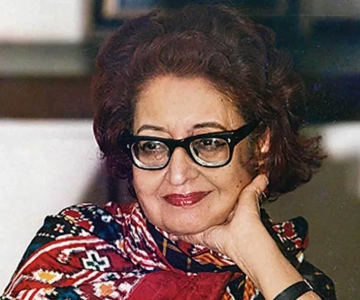
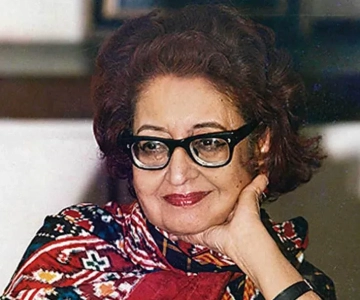
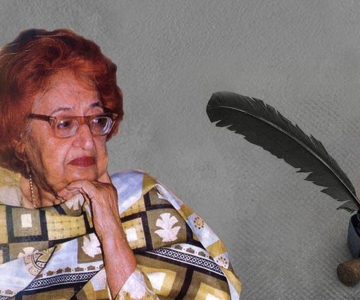
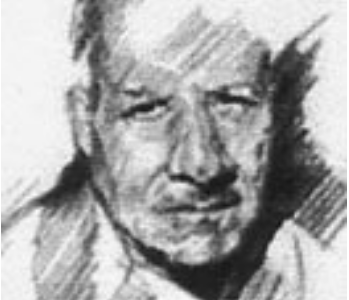
About the photo (top left): Gauri Gill in the Outlook writes: 

Qurratulain Hyder was first photographed by Prashant Panjiar in what was a coup of sorts, everyone talked of how elusive and difficult she could be. When I met her last week to persuade her, she said, ‘Tell the magazine I’m a difficult woman.’ I told her that was her reputation anyway. For the first time that afternoon she cracked a grin. She seemed flattered.

Lahore - that was

Intizar Hussain, the eminent writer of Urdu, recently mused on the Lahore of yesteryears and the literary and intellectual atmosphere. I am posting a few excerpts from his heart-felt piece:

Not far from the coffeehouse there was the Pak Tea House which closed down recently. Even those who never cared to visit it were seen shocked at this cultural catastrophe. How earnestly they struggled for its restoration, but frankly speaking, even if restored it could no longer be the kind of teahouse that it once was. Times have changed; the city has lost its cultural character and opened its arms to commercialisation.

It was a different world when coffeehouses and teahouses flourished. They flourished in the background of a rich restaurant culture, which distinguished the Mall from other cultural spots of the city. Those sitting there were never seen in a hurry. They could afford to sit for long hours discussing ideas and ideologies over a cup of tea. Each literary theory had its protagonists, who when engaged in a discussion gave the impression of being the defender of a noble cause most dear to them. And it was not simply an intellectual exercise with them. What they discovered as truth in the process of their literary or intellectual thinking stayed as an article of faith with them.

Such were the devoted souls for whom ideas and ideologies meant more than worldly benefits. It was because of them that certain restaurants gained a cultural status. Now we are living in a different world. This world cannot afford to have such souls and such haunts within its fold. The age of coffeehouses and teahouses is gone. Food streets are now the hallmark of life in Lahore.

Yet there is hope - such as this intent by a well meaning intellectual on Pakistaniat.

picture credit


A voice that shall remain

A body shall disappear into dust but a voice shall remain.

 Here is an audio recording of Qurratulain Hyder reading “Daalan vala” in her characteristic style. This recording was found on this site. 

Qurratulain Hyder is dead!

I have been upset the entire day. Perhaps it does not matter in the larger scheme of things. But this is a sad, sad day. Qurratulain Hyder, the literary giant of our times is no more. At a personal level it is not just the death of another literary figure but it is far greater and deeper than that. Ainee inspired generations of Urdu readers and there is not a single Urdu writer of post-independence era who has not been influenced by her.

Ainee had a civilizational consciousness that took us beyond the nation-state identities that we are so familiar with in our everyday lives. And, of course there was romance - the notion of eastern and Indic romance - that touched our lives. As I wrote earlier, that the way I have understood the world and perhaps parts of myself were deeply influenced by Ainee.

And now her death is a blow that this source of inspiration is not there anymore; as it is we are living in barren times where literature is about marketing and packaging and catering to consumers.

Ainee primarily wrote for herself but reached out and made her mark - and in the process she connected with millions of readers. And I am just one of them. My friends and I have talked today and we recounted how she shaped our inner lives.

I have at least avoided a regret - I met her after years of longing. Met her twice at her house in her frail state and enjoyed the hours. The impressions were indelible. Of course, the ambitious self had planned a meeting later this year.

But there will be nobody in that Noida house. That little temple opposite her house will remain and the sound of Azaan from a neighbouring mosque will also heard. But the hearty laughter, quick witted lines and inimitable writings will not be there.

However, as a friend said - writers die, their stories don’t -makes me a little content.

Farewell, Ainee Apa. May God keep you happy wherever you are..

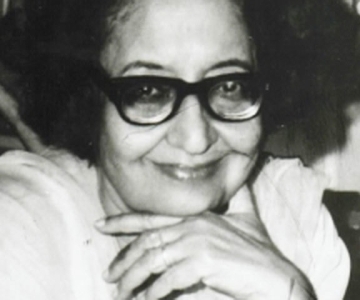
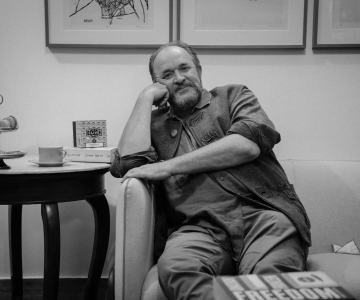
Black and white photo is by Prashant Panjiar - the others were taken by me


Healing the wounds of Partition ..

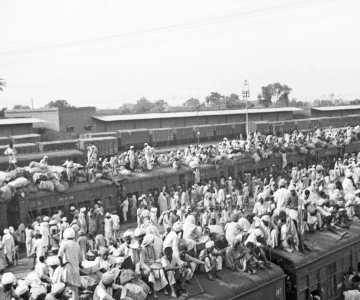
I read this interesting, albeit a little contentious, piece by  Ravinder Kaur  that examined the impact of partition on settling the communal question. The article states:

The sixtieth anniversary of the independence of Pakistan and India on 14-15 August 2007 has prompted official celebration in both countries, as well as an ocean of commemorative coverage in the world’s media. The terrible violence that accompanied the birthpangs of the two states from the ashes of empire is an inevitable theme in much commentary. What is being less addressed amid the profusion of human stories - and what this article considers - is whether the problems of communal division in the sub-continent were or are best addressed by the partition of territory.

The recent weeks have seen a splurge of such discussions in the media (including the new media) that attempt to re-examine and explore the partition of India. In particular, the sufferings of millions who crossed the line have yet again come to light.

Another reflective piece that I discovered is “pain of partition“ that recounted the sufferings of migrants on both the sides of the divide.

And today, Vidya Rao - a celebrated classical singer from India sent this petition that seeks to heal the wounds that st