Little Flute, Why So Proud?
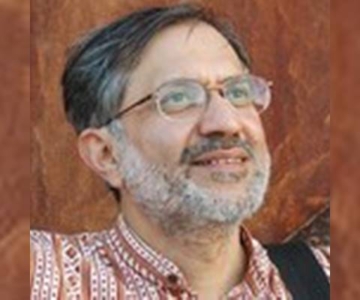
 Guest Article by Vidya Rao - Click here >>
I have been busy with discovering the pleasure of painting - playing with colours and mixing visions and inspirations with linseed oil. The results are alas not that great. However, it is the process of being focused on and immersed in the canvas, that I find most elevating. Full entry here >>
Lush green vistas and the eclectic Javanese culture, the breathtaking Bali coastline and
the curiously composite Islamic identity of the country made up my vague visions of Indonesia. With all these jumbled up figments of consciousness, I was given a bit of a reality check when on my first trip there an airport immigration officer asked me to leave the queue of semi-tanned Westerners and move to another room. The reason for taking me there was completely unknown.
As I waited for the local immigration honcho to arrive, I could not help but notice a letter from the Interior Ministry pasted on the wall directing airport authorities that nationals of illustrious countries such as Afghanistan, Sudan, Somalia, and Pakistan need security clearance before the issuance of visas.
Good Lord, what a rude shock it was to my cultivated
notions of Islamic brotherhood and all those lovey-dovey tales in school textbooks about Pakistani and Indonesian friendship. The official explained in a roundabout way my potential security threat. Momentarily terrified, I thought about the implications for my work; more significantly I was irked that this was happening to me at the Jakarta airport, not JFK or Heathrow. I resisted emotion and an inner fight for patience ensued. Within minutes I was out of the airport in a Blue Bird Taxi. Reminders of Islamic fraternity, my calm critique of the stereotyping that occurs at the hands of Western media bloodhounds, and indeed the work-status cards, worked. (more…)
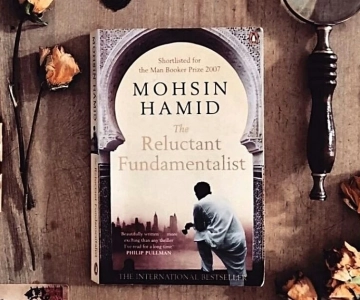
Mohsin Hamid’s second novel is out. It has made to several bestsellers’ lists and invokes a theme central to our times. I am posting a well written review by Mahi here that in spite of its subjectivity expresses the viewpoint of an intelligent and informed reader. This review was written exclusively for Jahane Rumi and therefore I am grateful to Mahi for this special gesture. Hope he continues to contribute here!
Book Review By Mahipal Reddy*Â
The title, with a play on the word Fundamentalist, is the high point of this book. The protagonist, Changez, earns a living in New York assessing fundamentals of companies, which he is increasingly reluctant to do, compelled by a growing affinity for his homeland Pakistan and under-attack neighbor, Afghanistan, in the aftermath of 9/11. The reluctance eventually prompts a return to Pakistan, where
Changez recounts his adult life to an American visitor.
The style of narration - a monologue - is a clever choice and one with the potential for a novel, satisfying reader experience. But the portrayal of the American man through quick references within the monologue exposes the limitations of this format. Additionally, the man is made visible only though stereo-typical cultural differences and tourist apprehensions, which lends a tone of condescension to the narrative. It may have been intentional, but seemed unnecessary.
The book suffers from an underlying lack of depth. The seminal phases of the story -Â Changez’s acceptance of American undergraduate life and the American dream, the slipping away of his never-truly-started love life with an American girl, his rapid disenchantment with America and its foreign policy excursions and his choice to move away from that life to Pakistan - take place without triggering a reflective commentary or insight from the author. In other words, the book remains a superficial story, even while the reader is expecting something more fundamental all the while. Is that the reader’s fault? Perhaps not.
Having approached the book with excited expectations, partly due to the title and partly the author’s background, I was disappointed. The title promised an insightful dance on the difficult subject of fundamentalism, with a certain gravitas, but it faltered to achieve this goal. In fact, one felt that the author did not attempt to delve further into the intent of the book’s catchy title. There are many specific instances of disappointment in addition to the overall reaction of one, but the one that qualifies for mention is the ending. Throughout the book, the author builds a theme of some impending finale/disaster, which never materializes. Clearly the author conveyed something in his mind, but it leaves the reader lost and wondering if the author pulled a prank.
To me this actually captures the essence of the book - promising much but delivering a insipid tale.
Language-wise, the book is obviously written in competent English, but one cannot say more. It is not a book you read to enjoy the medium, the skill of expression.
* Mahi set sail in India and is adrift in the US. He has traveled a little, lamented that he isn’t from Japan but hopes to get back to India in the near future. He likes to read but reads little. Enlightenment he waits for, convinced God can move faster than him.
“In the new Lahore lies buried Shah Husain and with him lies buried the myth of Lal Husain. Still, at least once a year we can hear the defused echoes of the myth. As the lights glimmer on the walls of Shalamar, the unsophisticated rhythms of swinging bodies and exulting voices curiously insist on being associated with Husain. This instance apparently defies explanation. But one is aware that an undertone of mockery pervades the air - released feet mocking the ancient sods of Shalamar and released voices mocking its ancient walls. Husain too, the myth tells us, danced a dance of mockery in the ancient streets of Lahore. Grandson of a convert weaver, he embarrassed every one by aspiring to the privilege of learning what he revered guardians of traditional knowledge claimed to teach. ” Full article here
 Here are a few Kafis with translations….
Ni Mai menoon Kherian di gal naa aakh
Ranjhan mera, main Ranjhan di, Kherian noon koori jhak
Lok janey Heer kamli hoi, Heeray da wer chak
Do not talk of the Kheras to me,
O mother, do not.
I belong to Ranjha and he belongs to me.
And the Kheras dream idle dreams.
Let the people say, “Heer is crazy; she has given her-self to the cowherd.” He alone knows what it all means.
O mother, he alone knows.
Please mother, do not talk to me of Kheras.
Sujjen bin raatan hoiyan wadyan
Ranjha jogi, main jogiani, kamli kar kar sadian
Mass jhurey jhur pinjer hoyya, karken lagiyan hadyan
Main ayani niyoonh ki janan, birhoon tannawan gadiyan
Kahe Husain faqeer sain da, larr tairay main lagiyaan
Nights swell and merge into each other as I stand a wait for him.
Since the day Ranjha became jogi, I have scarcely been my old self and people every where call me crazy. My young flesh crept into creases leaving my young bones a creaking skeleton. I was too young to know the ways of love; and now as the nights swell and merge into each other, I play host to that unkind guest - separation.
Main wi janan dhok Ranjhan di, naal mare koi challey
Pairan paindi, mintan kardi, janaan tan peya ukkaley
Neen wi dhoonghi, tilla purana, sheehan ney pattan malley
Ranjhan yaar tabeeb sadhendha, main tan dard awalley
Kahe Husain faqeer namana, sain senhurray ghalley
Travelers, I too have to go; I have to go to the solitary hut of Ranjha. Is there any one who will go with me? I have begged many to accompany me and now I set out alone. Travelers, is there no one who could go with me?
The River is deep and the shaky bridge creaks as people step on it. And the ferry is a known haunt of tigers. Will no one go with me to the lonely hut of Ranjha?
During long nights I have been tortured by my raw wounds. I have heard he in his lonely hut knows the sure remedy. Will no one come with me, travelers?
Courtesy - Najam Hosain Syed
Now the nightbirds will be singing
of the way we love each other.
Why should they sing about flowers
when they’ve seen us in the garden?
Maybe they’re shy. They can’t look at the face,
so they describe feet.
If they keep dividing love into pieces,
they’ll disappear altogether. We must be gentle
and explain it to them.
Think of a mountain so huge the Caucasus Range
is a tiny speck. Normal mountains
run toward her when she calls.
They listen in their cave-ears and echo back.
They turn upsidedown when they get close,
they’re so excited.
No more words. In the name of this place we
drink in with our breathing, stay quiet like a flower.
So the nightbirds will start singing.
Rumi
Version by Coleman Barks
“Open Secret,”
Threshold Books, 1984
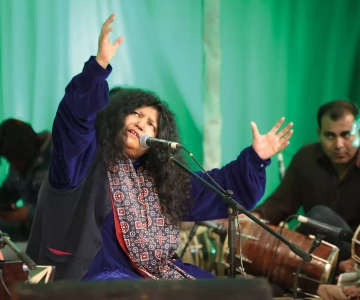
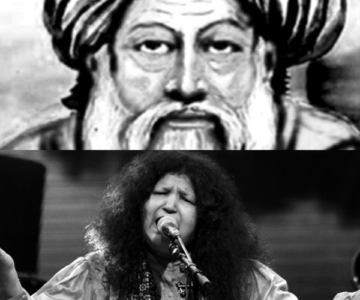
As I recited Bulleh Shah’s poetry this evening, a friend sent a link to another video of Abida Parveen singing Bulleh’s mystic poetry in her inimitable style. Lo and behold, I also found an online translation of the verse (see below after the video).
[youtube=http://www.youtube.com/watch?v=jQMoU5khmWk]
Here is a translation of the verse rendered in this video:
O Physician, come back! my life is ebbing away.
Compelled by love, I dance, I dance.
This love has set up camp inside me.
It is I, who filled the cup with this poison and drank it.
Come back right away, else, I will surely die.
Compelled by love, I dance, I dance.
The sun has set, its glow remains.
Grant me a sight of you again! I would die for it!
What a mistake I made, not going with you.
Compelled by love I dance, I dance.
Mother do not bar me from this love.
Whoever turns back unloaded boats that have left?
How foolish I was, not going with the boatman.
Compelled by love I dance, I dance.
Peacocks sing in the groves of love.
My beautiful beloved is my Ka’ba, my Qibla.
He injured me, then turned away.
Compelled by love I dance, I dance.
Bullhe Shah, I sit at Inayat’s door,
He clothed me in robes of green and red.
When I stamped my heel, I found him.
Compelled by love I dance, I dance.
For another version of Punjabi and English, please click here.
With due apologies to those who cannot understand Punjabi. I will work on a translation sometime later.
mar na mulla bulariyan
sanon apna yaar rajhawan dey
kanjri banyaan meri ezat na ghatdi
meinon naach ke yaar manawan deey
loog ishaq noon mool gindey
meinnoon gaal wich mala pawan deey
Bulleh shah odi oo janey
meinon apni toord nebha lein deey
The budding poet Fatima Hasan visited San Francisco and was inspired by a place called Tiburon. The impact of its natural beauty was so immense that she ended up composing the captioned poem. Read the poem here.
Very impressive site, i love Lahore and its magnificent history, and stumbled upon your site by accident.I hope to get a lot of inspiration and hope from re visting, i had no idea such blogs existed.
Plz keep up the good work.
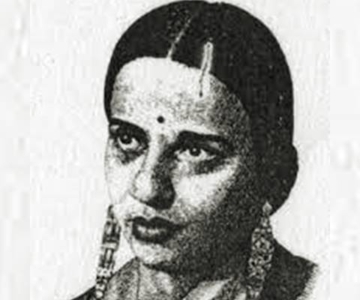
Khalid Hasan writing for the Friday Times:
“Amrita Sher-Gil is one with the earth of Lahore. Is there no one in this city that she chose as home to build a memorial to her, or at least put a plaque at 23 Sir Ganga Ram Mansion in remembrance of a painter who has left her mark on the world in which she was not destined to live very long?”
Read the full article here that discusses her life and times in Lahore and also the little known relationship with Nehru.
Heart, since you embraced the mysteries,
you have become useless for anything else.
Go mad, don’t stay sane.
People meditate to get something.
All you do is give.
Crazy Majnun’s priorities are now yours, too.
If you want to be respectable,
why do you go downtown drunk?
It’s no good just sitting in some corner,
once you’ve made friends with the dissolute of this path.
Go back to the desert;
leave this shabby town.
There’s the smell of a tavern
somewhere in this neighborhood,
and it’s already got you high.
Now follow it. Go to Qaf Mountain like the Simurgh,*
leave these owls and herons.
Go into the thicket of Reality like a lion.
Why linger with hyenas and dogs?
Don’t go after the scent of Joseph’s shirt,
you are already mourning his death like Jacob, his father.
Rumi
– Version by Kabir Helminski
“Love is a Stranger”
Threshold Books, 1993
*”The Simurgh” — the phoenix - represents the saint or his/her spirit, while Mount Qaf is “his station in God’s presence”.
– from Chittick’s “The Sufi Path of Love”
Courtesy Sunlight
Love and reputation, brother,
are not in harmony:
don’t stand at the door of reputation, if you are a lover.
Rumi
Version by Camille and Kabir Helminski
I wrote about M F Husain’s persecution at the hands of extremists here. Parvaiz Alvi sent me images of his works that were most representative of his early style. Ethereal lines and hues transform the canvas.
View the images here
Just read today that Sotheby will showcase some of his works (among other Indian artists). Loved this quote :
“I am a creative person and feel that there is no end to creativity. Only 10 per cent of what is inside me has found an expression. Even 10 lives will not be enough for me..â€
What a shame that a living genius is suffering at the hands of bigots and the aesthetically challenged!
Aggrieved by the recent sinister, senseless violence and brutal murders in Pakistan, this is my feeble attempt at poetic expression. I have also trans-created this Urdu poem below titled Adrift.Â
Jal gaya – tha ik roshniyon ka shaher
Bujh gaye kitnay jaltay aur adh-jalay chiragh
Magar kotwaal-i-shaher ne mur kar na dekha
Jism kis ka, khoon kahan aur maut kaisee?
Yeh qatl na tha dosto
Yeh qatl hai ik ehad ka
Yeh nohaa hai insaniyat ka
Insaniyat ka khatma karnay walay jantay nahee
Insaan marta hai - bhujta nahee
Ahle-hawas aur ahle-dil
Huay sab ke sab, aseer-i-shab-i-siyah
aur ham
roshniyon ke muntazir
bhujtey jugnoo-on ko dhoondtay
thakay haray
gharon ka rasta bhool gaye
Adrift
Once a city of lights, stands ruined
Lamps - lit and half-lit, all extinguished
And the guardians of the city, unmoved
Which body, what blood and whose death?
This was not a murder my friends
This was the murder of our times
A prolonged elegy of humanity
Those hell-bent on erasing humanity, are, unaware
Man dies but cannot be lost
The bleeding hearts and the hearts with no remorse
All trapped in the darkness of the night
And we the forlorn
Wait for the light
Attempting to seek dying fireflies
Tired, exhausted
Lost on our way home…
i must offer my words of thanks and gratitiude. it was by a sheer chance tht i came by this blog yesterday. i was looking for some of allama iqbal’s snaps and got logged on. but it was sheer delight. today i also visited ur site of ghalib and it delighted me equally. the backdrop and the poetry togather is simply amazing. i lost my devan of galib long ago and the sight of his verses made my day.
munzer ik bulundee pur aur hum bana suktay
arsh say peraay hota kash kay makan apna
simply elating! its a pitty tht people are nt in touch wth the native litrature anymore. i bet they are missing on so much.so keep on the good work as its crutial.
thanx for taking us out of mundane
Powered by WordPress