Archive for September, 2006
Forced break from blogging
I have been away from my dear blog…
Recent storms here have deprived me of electricity at home and thus distnaced me from blogging and my blogger friends…
I will be back on Sunday.
Muhammad’s Sword
Good old Uri is back with a great piece. Thank God it wasn’t written by another fundamentalist islamofascist…..

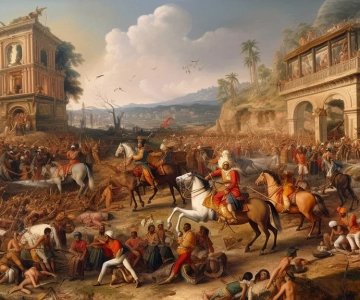
Since the days when Roman Emperors threw Christians to the lions, the relations between the emperors and the heads of the church have undergone many changes. Constantine the Great, who became Emperor in the year 306 - exactly 1700 years ago - encouraged the practice of Christianity in the empire, which included
Palestine. Centuries later, the church split into an Eastern (Orthodox) and a Western (Catholic) part. In the West, the Bishop of Rome, who acquired the title of Pope, demanded that the Emperor accept his superiority.Â
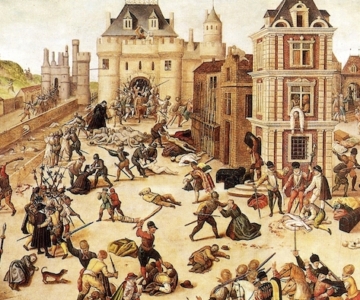
The struggle between the Emperors and the Popes played a central role in European history and divided the peoples. It knew ups and downs. Some Emperors dismissed or expelled a Pope, some Popes dismissed or excommunicated an Emperor. One of the Emperors, Henry IV, “walked to
Canossa”, standing for three days barefoot in the snow in front of the Pope’s castle, until the Pope deigned to annul his excommunication. But there were times when Emperors and Popes lived in peace with each other. We are witnessing such a period today. Between the present Pope, Benedict XVI, and the present Emperor, George Bush II, there exists a wonderful harmony. Last week’s speech by the Pope, which aroused a world-wide storm, went well with Bush’s crusade against “Islamofascism”, in the context of the “Clash of Civilizations”.  IN HIS lecture at a German university, the 265th Pope described what he sees as a huge difference between Christianity and Islam: while Christianity is based on reason, Islam denies it. While Christians see the logic of God’s actions, Muslims deny that there is any such logic in the actions of Allah.
Muhammad’s Sword
Good old Uri is back with a great piece. Thank God it wasn’t written by another fundamentalist islamofascist…..

Since the days when Roman Emperors threw Christians to the lions, the relations between the emperors and the heads of the church have undergone many changes. Constantine the Great, who became Emperor in the year 306 - exactly 1700 years ago - encouraged the practice of Christianity in the empire, which included
Palestine. Centuries later, the church split into an Eastern (Orthodox) and a Western (Catholic) part. In the West, the Bishop of Rome, who acquired the title of Pope, demanded that the Emperor accept his superiority.Â
The struggle between the Emperors and the Popes played a central role in European history and divided the peoples. It knew ups and downs. Some Emperors dismissed or expelled a Pope, some Popes dismissed or excommunicated an Emperor. One of the Emperors, Henry IV, “walked to
Canossa”, standing for three days barefoot in the snow in front of the Pope’s castle, until the Pope deigned to annul his excommunication. But there were times when Emperors and Popes lived in peace with each other. We are witnessing such a period today. Between the present Pope, Benedict XVI, and the present Emperor, George Bush II, there exists a wonderful harmony. Last week’s speech by the Pope, which aroused a world-wide storm, went well with Bush’s crusade against “Islamofascism”, in the context of the “Clash of Civilizations”.  IN HIS lecture at a German university, the 265th Pope described what he sees as a huge difference between Christianity and Islam: while Christianity is based on reason, Islam denies it. While Christians see the logic of God’s actions, Muslims deny that there is any such logic in the actions of Allah.
Seek the Fountain Within Yourself
 There are two kinds of intelligence.
One is that acquired by a child at school
from books and teachers, new ideas and memorization.
Your intelligence may become superior to others,
but retaining all that knowledge is a burden.
You who are so busy searching for knowledge
must be a preserving tablet, but the preserved tablet
is the one who has gone beyond all this.
For the other kind of intelligence is the gift of God:
its fountain is deep within the soul.
When the water of God-given knowledge surges from the breast,
it never stagnates or becomes impure.
And if its way to the outside is blocked, what harm is there?
For it flows continually from the house of the heart.
The acquired intelligence is like the conduits
which run into the house from the streets:
if those pipes become blocked, the house is bereft of water.
Seek the fountain within yourself.
         — Version by Camille and Kabir Helminski
            “Rumi: Jewels of Remembrance”
          Â
Seek the Fountain Within Yourself
 There are two kinds of intelligence.
One is that acquired by a child at school
from books and teachers, new ideas and memorization.
Your intelligence may become superior to others,
but retaining all that knowledge is a burden.
You who are so busy searching for knowledge
must be a preserving tablet, but the preserved tablet
is the one who has gone beyond all this.
For the other kind of intelligence is the gift of God:
its fountain is deep within the soul.
When the water of God-given knowledge surges from the breast,
it never stagnates or becomes impure.
And if its way to the outside is blocked, what harm is there?
For it flows continually from the house of the heart.
The acquired intelligence is like the conduits
which run into the house from the streets:
if those pipes become blocked, the house is bereft of water.
Seek the fountain within yourself.
         — Version by Camille and Kabir Helminski
            “Rumi: Jewels of Remembrance”
          Â
By: Khushnood Lashari
“To see a world in a grain of sand
And a heaven in a wild flower,
Hold infinity in the palm of your hand
And eternity in an hour.”
I await your articles with such thoughts.
Write, Rumi, write !
By: .
uth bulleya, chal othay challiye
jithe rainnay saaray annay
na koi saadi zaat pahchaanay, na koi sannu manne
By: Khushnood Lashari
Dear Rumi,
I was recently in India. The contrast in preservation of heritage couldn’t be starker. We simply burn daylight.
Architectural Neglect - Lahore again..
Random musings in continuation of the discussions on the construction of the 7 (or is it 5?) -star hotel in Islamabad on Adil Najam’s blog, All Things Pakistan….
Pakistan’s recent financial-isation and commercialization of its aesthetics is saddening. I am reminded of this beautiful verse in urdu:
Ek ham hain liya apni hi soorat ko bigaar
Ek woh hain junhay tasveer bana aati hai
Loosely translated (for the non-Urdu readers)
Here are we who have distorted their own countenance
And there are those who know how to create newer images
The inspiration for this post comes from an image of the Lahore Railway Station sent to me by my J. Brommel. Once a regal specimen of the Raj architecture and a landmark of Lahore it is losing its grandeur. The sad part is that these are not-so-old Raj structures. Forget the Mughals and the eras before. What has happened to the Lahore Railway Station is a metaphor for transnational control and the rise of marketing gods.
The photos below from Harappa.com show the Lahore’s majestic Station in 1895 and 1995. As the top image shows that in a little over ten years, it looks so different. Unregulated commercialization!

I am not against modernity nor naive enough to ignore the fact that population pressures and globalization are pressing issues. However, losing the character of our cities and historical landmarks is just depressing.
My friend S. Mumtaz writing in The Friday Times (September 1-7, 2006) noted:
Driving through Defence [Lahore], you cannot ignore that it is not only trees – like Jacaranda and Bottle Brush – that are imported, but even the architecture of houses that reflects an ‘imported’ look. You see all these residences with tiled, sloping roofs and huge glass windows, both of which are completely inappropriate in a place where it does not snow, and the sun is so harsh, that the extensive use of glass traps hot air in the buildings, necessitating the use of air-conditioners. Can’t help wondering where we see ourselves headed.
Commenting on the trend to expand constructed area, she further remarks:
I realise that both our urgency to urbanise and our reluctance to grow local trees, have the same root cause. The value of the design of our house, office, neighbourhood and city, as well as the … What does matter, is that this design and this plant should look ‘imported.’ The further away it comes from, the more we esteem it.
Why?
The only reason that comes to mind is that we must be ashamed of ourselves. We have internalised a cultural inferiority that embarrasses us of any association that reminds us of our roots, of our own indigenous selves….
Having lost confidence in what our own culture and local wisdom had to offer, we have lost knowledge of it too. We are now desperate to fill ourselves and our surroundings with indicators of the cultural, racial and economic superiority of the ‘foreign.’
Ironically, we embrace our own wisdom when it comes back to us, neatly packaged via the West…
Using the lens of the ‘foreigner,’ we see ourselves categorised as ‘crude,’ ‘boorish,’ ‘uncultured’ and ‘uncivilised.’ We then make every effort to prove our distance from all those practices that typify these traits.
And what happens when we follow this route?
I guess we really become ridiculous caricatures of what we are not.
And now the emerging elites (read estate dons, powerful brokers, commodities’ dealers and other groups that wield enormous power in Pakistan) want to replicate a hideous version of the Burj in Islamabad in the form of The Centaurus–the hotel with the indeterminate number of stars!. Good luck to them and good-bye to our centuries’ old traditions of art, architecture and public aesthetics.
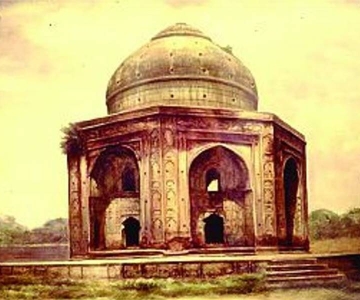
As I was concluding this post, another shocking image hit me courtesy the Daily Times (17 September, 2006). The caption to Abid Nawaz’s photograph reads:
The tomb of Bahadur Zafar Jang on the canal is decorated for a wedding, in violation of all conservation laws.
What else is there left to say.
Click here to read the discussions on this post.
Architectural Neglect - Lahore again..
Random musings in continuation of the discussions on the construction of the 7 (or is it 5?) -star hotel in Islamabad on Adil Najam’s blog, All Things Pakistan….
Pakistan’s recent financial-isation and commercialization of its aesthetics is saddening. I am reminded of this beautiful verse in urdu:
Ek ham hain liya apni hi soorat ko bigaar
Ek woh hain junhay tasveer bana aati hai
Loosely translated (for the non-Urdu readers)
Here are we who have distorted their own countenance
And there are those who know how to create newer images
The inspiration for this post comes from an image of the Lahore Railway Station sent to me by my J. Brommel. Once a regal specimen of the Raj architecture and a landmark of Lahore it is losing its grandeur. The sad part is that these are not-so-old Raj structures. Forget the Mughals and the eras before. What has happened to the Lahore Railway Station is a metaphor for transnational control and the rise of marketing gods.
The photos below from Harappa.com show the Lahore’s majestic Station in 1895 and 1995. As the top image shows that in a little over ten years, it looks so different. Unregulated commercialization!

I am not against modernity nor naive enough to ignore the fact that population pressures and globalization are pressing issues. However, losing the character of our cities and historical landmarks is just depressing.
My friend S. Mumtaz writing in The Friday Times (September 1-7, 2006) noted:
Driving through Defence [Lahore], you cannot ignore that it is not only trees – like Jacaranda and Bottle Brush – that are imported, but even the architecture of houses that reflects an ‘imported’ look. You see all these residences with tiled, sloping roofs and huge glass windows, both of which are completely inappropriate in a place where it does not snow, and the sun is so harsh, that the extensive use of glass traps hot air in the buildings, necessitating the use of air-conditioners. Can’t help wondering where we see ourselves headed.
Commenting on the trend to expand constructed area, she further remarks:
I realise that both our urgency to urbanise and our reluctance to grow local trees, have the same root cause. The value of the design of our house, office, neighbourhood and city, as well as the … What does matter, is that this design and this plant should look ‘imported.’ The further away it comes from, the more we esteem it.
Why?
The only reason that comes to mind is that we must be ashamed of ourselves. We have internalised a cultural inferiority that embarrasses us of any association that reminds us of our roots, of our own indigenous selves….
Having lost confidence in what our own culture and local wisdom had to offer, we have lost knowledge of it too. We are now desperate to fill ourselves and our surroundings with indicators of the cultural, racial and economic superiority of the ‘foreign.’
Ironically, we embrace our own wisdom when it comes back to us, neatly packaged via the West…
Using the lens of the ‘foreigner,’ we see ourselves categorised as ‘crude,’ ‘boorish,’ ‘uncultured’ and ‘uncivilised.’ We then make every effort to prove our distance from all those practices that typify these traits.
And what happens when we follow this route?
I guess we really become ridiculous caricatures of what we are not.
And now the emerging elites (read estate dons, powerful brokers, commodities’ dealers and other groups that wield enormous power in Pakistan) want to replicate a hideous version of the Burj in Islamabad in the form of The Centaurus–the hotel with the indeterminate number of stars!. Good luck to them and good-bye to our centuries’ old traditions of art, architecture and public aesthetics.
As I was concluding this post, another shocking image hit me courtesy the Daily Times (17 September, 2006). The caption to Abid Nawaz’s photograph reads:
The tomb of Bahadur Zafar Jang on the canal is decorated for a wedding, in violation of all conservation laws.
What else is there left to say.
Click here to read the discussions on this post.
By: razarumi
Gulssss
Thanks for visiting….as always you cheered me up.
Hope you will contribute stuff to this blog?
all the best..
By: Guli
Hey Razman!!!
Kaun jaaney toon kaun? Yeah baby, sage-alicious!!!
How’s it hangin’ man?
Love,
Gulz
Let us prove all those who link Islam with violence wrong

Contributed by G.S. Qureshi
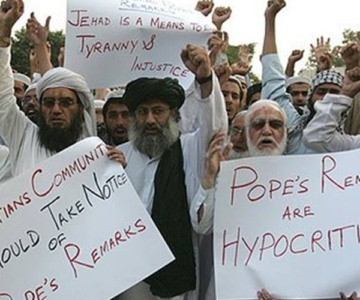
Does verbal criticism of Islam or Prophet Muhammad (peace be upon him) justify setting churches afire in the West Bank or killing an Italian nun in Somalia? Why do we have such fragile egos? Do I love Allah and Prophet Muhammad (pbuh) any less than before the Pope made those remarks?
No! I am completely secure within my faith despite these troubled times for Muslims and no matter what the Pope theorizes about Islam. The acts of our Prophet himself teach tolerance. According to the traditions, a lady used to throw garbage at him daily and since he did not have a fragile ego he did not choose to react at all. He was secure about his mission and could not have cared less. Should not we, his followers start to act and behave in the same manner? As long as I am comfortable about my faith does it matter what opinions the Pope holds about my faith. Yes probably the Pope should offer a deep apology but the demands should be made via a dialogue not with violence. And that is when we need rational Muslims (I find many bloggers in this category) to pen down their sentiments to prove to the West that Muslims are a reasonable, peace loving community wherever we are. The violent outrage only reinforces the stereotypes about Islam in today’s world.
I am not discounting the exercise of grievance at all. Yes we should react but with a peaceful dialogue. No matter how deeply one feels about any issue, civilized (yes we are) people should behave in a civilized and a peaceful manner.
Also a large majority of Muslims remain isolated from people belonging to other faiths. During these times of a distinct divide between Islam and the West that is the worst thing that we can do. Muslims should interact with people of other faiths. Interaction and dialogue inculcates tolerance in one’s self. Isolation will deprive the world from getting to know the true spirit of Islam and thus all the stereotypes will keep getting reinforced. Let us not wage a war of religion rather one of reason and tolerance. Let
us engage in a dialogue. Let us prove all those who link Islam with violence wrong.
Photo credits fromÂ
Let us prove all those who link Islam with violence wrong

Contributed by G.S. Qureshi
Does verbal criticism of Islam or Prophet Muhammad (peace be upon him) justify setting churches afire in the West Bank or killing an Italian nun in Somalia? Why do we have such fragile egos? Do I love Allah and Prophet Muhammad (pbuh) any less than before the Pope made those remarks?
No! I am completely secure within my faith despite these troubled times for Muslims and no matter what the Pope theorizes about Islam. The acts of our Prophet himself teach tolerance. According to the traditions, a lady used to throw garbage at him daily and since he did not have a fragile ego he did not choose to react at all. He was secure about his mission and could not have cared less. Should not we, his followers start to act and behave in the same manner? As long as I am comfortable about my faith does it matter what opinions the Pope holds about my faith. Yes probably the Pope should offer a deep apology but the demands should be made via a dialogue not with violence. And that is when we need rational Muslims (I find many bloggers in this category) to pen down their sentiments to prove to the West that Muslims are a reasonable, peace loving community wherever we are. The violent outrage only reinforces the stereotypes about Islam in today’s world.
I am not discounting the exercise of grievance at all. Yes we should react but with a peaceful dialogue. No matter how deeply one feels about any issue, civilized (yes we are) people should behave in a civilized and a peaceful manner.
Also a large majority of Muslims remain isolated from people belonging to other faiths. During these times of a distinct divide between Islam and the West that is the worst thing that we can do. Muslims should interact with people of other faiths. Interaction and dialogue inculcates tolerance in one’s self. Isolation will deprive the world from getting to know the true spirit of Islam and thus all the stereotypes will keep getting reinforced. Let us not wage a war of religion rather one of reason and tolerance. Let
us engage in a dialogue. Let us prove all those who link Islam with violence wrong.
Photo credits fromÂ
On Pakistani Women Poets (and my friend’s predicament)
An email from a Pakistan based writer friend made me recall Parveen Shakir. The poem, Tomato Ketchup, written most probably in the memory of Sara Shagufta (the modernist Pakistani poet who committed suicide in the footsteps of Sylvia Plath).
I am not drawing conclusions or imagining comparisons. My writer-friend is neither suicidal nor at the end of her creativity. In fact she is brimming with optimism and energy. However, she faces the constraints and circumstances that are not uncommon. Like Sara and Parveen Shakir she has to mediate between multiple identities, struggles and conflicts. That she lives in a society that is becoming increasingly less tolerant and dominated by extremism is no help either.
Back to Parveen Shakir: she was Pakistan’s popular poet who died in a tragic car accident in 1994. After graduating she taught, then joined civil service. She was widely read and loved poet. However, she braved the difficult terrain of Pakistani womanhood and more importantly the male defined abd dominated literary world. Her success was attributed to her innate talent and use of language. The literary evaluations of her work have been mixed. The poem below explains this a little. I found here.
Tomato Ketchup
Perveen Shakir
In our country,
A woman who writes poetry,
Is eyed as an odd fish.
Every man presumes
That in her poems
He is the issue addressed!
And since it is not so,
He becomes her foe.
In this sense,
Sara didn´t make many enemies.
She didn´t believe in giving explanations.
Before she could become the wife of a poor writer,
She had already become
The sister-in-law of the whole town.
Even the lowliest of them
Claimed to have slept with her!
All day long,
Jobless intellectuals of the city
Buzzed around her.
Even those who had jobs,
Would leave their stinking files and worn out wives
To come to her,
Leaving behind the electricity bill,
And the children´s school fees and wife´s medicine.
For these are the concerns
Of lesser mortals.
Morning through late night,
Heated discussions would take place
On literature, philosophy and current affairs.
When hunger knocked in at their empty stomachs,
Bread and boiled pulse
Would be bought collectively.
Great thinkers,
Would then demand tea
Declaring her the Amrita Preetam of Pakistan.
Sara, the gullible,
Would be very pleased with herself.
Perhaps, there were some reasons for it.
Those who were responsible for supporting her,
Always fed her on Kafka coffee
And Neruda biscuits.
Because of saliva-soaked compliments,
At least, she could have one meal,
Everyday!
But for how long?
She had to free herself
From the clutches of wolves.
Sara preferred to leave the jungle itself.
As long as she lived,
The connoisseurs of Art
Kept nibbling her.
In their circle,
She is still considered delicious,
But with a difference:
They no longer can take a bite of her!
After her death,
She had been elevated
To the status of Tomato Ketchup!
Translated from the Urdu by Baidar Bakht and Leslie Lavigne
And now excerpts from the email message from my friend that reminded me of this poem:
“… I have been doing a lot of soul- searching! Lets face it there’s not much else to do now!! I am so confused as usual, about my writing, which is constantly changing from language based prose-poetry writing to more story based fractured narrative. You see the problem is that I want it to be an honest reflection of life and both ways of looking at life are true. Now here I am lost again. On another note, the good thing in recent times, is that I have decided I am definitely not going to ….
So that chapter has definitely closed.
As for my writing, I got word from my poetry publisher ….who thinks my prose is “brave and lyrical”. Quite flattering and inspiring. He wants more poetry from me. I just wish some ….publisher would take a chance on my prose and publish the damn thing. You see the issue is also that I am so taken up with survival and dealing with mediocrity that I can’t give all of myself to writing and its killing me. I am longing to just sit in front of the computer and fly. I wish you knew how exhilarating it is for me Raza, I feel like I can see things move and yet I feel damned to be talented, if indeed I am at all. I wish I had none of it. It is such torture and yet I couldn’t live without it. I hope I am not depressing you. Even those who are close to me think I am half mad and underrate my writing and its obsession is a figment of my own imagination or just an inflated ego to make up for what I haven’t achieved in life.”
I am not sure what to write back. One thing is certain - I want her to retain her ‘bite’.
First published here on September 19, 2006
The image of Parveen’s Urdu poem was found here
On Pakistani Women Poets (and my friend’s predicament)
An email from a Pakistan based writer friend made me recall Parveen Shakir. The poem, Tomato Ketchup, written most probably in the memory of Sara Shagufta (the modernist Pakistani poet who committed suicide in the footsteps of Sylvia Plath).
I am not drawing conclusions or imagining comparisons. My writer-friend is neither suicidal nor at the end of her creativity. In fact she is brimming with optimism and energy. However, she faces the constraints and circumstances that are not uncommon. Like Sara and Parveen Shakir she has to mediate between multiple identities, struggles and conflicts. That she lives in a society that is becoming increasingly less tolerant and dominated by extremism is no help either.
Back to Parveen Shakir: she was Pakistan’s popular poet who died in a tragic car accident in 1994. After graduating she taught, then joined civil service. She was widely read and loved poet. However, she braved the difficult terrain of Pakistani womanhood and more importantly the male defined abd dominated literary world. Her success was attributed to her innate talent and use of language. The literary evaluations of her work have been mixed. The poem below explains this a little. I found here.
Tomato Ketchup
Perveen Shakir
In our country,
A woman who writes poetry,
Is eyed as an odd fish.
Every man presumes
That in her poems
He is the issue addressed!
And since it is not so,
He becomes her foe.
In this sense,
Sara didn´t make many enemies.
She didn´t believe in giving explanations.
Before she could become the wife of a poor writer,
She had already become
The sister-in-law of the whole town.
Even the lowliest of them
Claimed to have slept with her!
All day long,
Jobless intellectuals of the city
Buzzed around her.
Even those who had jobs,
Would leave their stinking files and worn out wives
To come to her,
Leaving behind the electricity bill,
And the children´s school fees and wife´s medicine.
For these are the concerns
Of lesser mortals.
Morning through late night,
Heated discussions would take place
On literature, philosophy and current affairs.
When hunger knocked in at their empty stomachs,
Bread and boiled pulse
Would be bought collectively.
Great thinkers,
Would then demand tea
Declaring her the Amrita Preetam of Pakistan.
Sara, the gullible,
Would be very pleased with herself.
Perhaps, there were some reasons for it.
Those who were responsible for supporting her,
Always fed her on Kafka coffee
And Neruda biscuits.
Because of saliva-soaked compliments,
At least, she could have one meal,
Everyday!
But for how long?
She had to free herself
From the clutches of wolves.
Sara preferred to leave the jungle itself.
As long as she lived,
The connoisseurs of Art
Kept nibbling her.
In their circle,
She is still considered delicious,
But with a difference:
They no longer can take a bite of her!
After her death,
She had been elevated
To the status of Tomato Ketchup!
Translated from the Urdu by Baidar Bakht and Leslie Lavigne
And now excerpts from the email message from my friend that reminded me of this poem:
“… I have been doing a lot of soul- searching! Lets face it there’s not much else to do now!! I am so confused as usual, about my writing, which is constantly changing from language based prose-poetry writing to more story based fractured narrative. You see the problem is that I want it to be an honest reflection of life and both ways of looking at life are true. Now here I am lost again. On another note, the good thing in recent times, is that I have decided I am definitely not going to ….
So that chapter has definitely closed.
As for my writing, I got word from my poetry publisher ….who thinks my prose is “brave and lyrical”. Quite flattering and inspiring. He wants more poetry from me. I just wish some ….publisher would take a chance on my prose and publish the damn thing. You see the issue is also that I am so taken up with survival and dealing with mediocrity that I can’t give all of myself to writing and its killing me. I am longing to just sit in front of the computer and fly. I wish you knew how exhilarating it is for me Raza, I feel like I can see things move and yet I feel damned to be talented, if indeed I am at all. I wish I had none of it. It is such torture and yet I couldn’t live without it. I hope I am not depressing you. Even those who are close to me think I am half mad and underrate my writing and its obsession is a figment of my own imagination or just an inflated ego to make up for what I haven’t achieved in life.”
I am not sure what to write back. One thing is certain - I want her to retain her ‘bite’.
First published here on September 19, 2006
The image of Parveen’s Urdu poem was found here
Everything except love is devoured by Love
The wild beast wouldn’t dare to devour the flesh of the lover:
Love is recognized both by the corrupt and by the good;
and if the beast should attempt to rip the lover apart with words,
the lover’s flesh will become a fatal poison.
To the beak of Love the two worlds are but a single grain.
Everything except love is devoured by Love.
~ ~ ~ ~ ~ ~ ~ ~ ~ ~
Lahm-e `Äsheq-rÄ niyÄrad khvord dad
`eshq ma`rufast pish-e nik o bad
Var khvord khvod fi al-masal dÄm o dadesh
gusht-e `Äsheq zahr gardad be-kashadesh
Harcheh joz `eshqast shod ma’kul-e `Eshq
do jahÄn yek dÄneh pish-e nul-e `Eshq
- translated by Camille and Kabir Helminski
“Rumi: Jewels of Remembrance”
Threshold Books, 1996
The image above was taken by JS in Mongolia