Archive for July, 2006
Writers in Anguish
I was touched by this letter dated July 19, 2006, its stark language and passion searching for “what was once called justice”. This lament was written by Chomsky and other eminent world writers including Nobel Laureates Pinter, Saramago available on this site [HERE]
“The latest chapter of the conflict between Israel and Palestine began when Israeli forces abducted two civilians, a doctor and his brother, from Gaza. An incident scarcely reported anywhere, except in the Turkish press. The following day the Palestinians took an Israeli soldier prisoner - and proposed a negotiated exchange against prisoners taken by the Israelis - there are approximately 10,000 in Israeli jails.
That this “kidnapping” was considered an outrage, whereas the illegal military occupation of the West Bank and the systematic appropriation of its natural resources - most particularly that of water - by the Israeli Defence (!) Forces is considered a regrettable but realistic fact of life, is typical of the double standards repeatedly employed by the West in face of what has befallen the Palestinians, on the land alloted to them by international agreements, during the last seventy years.
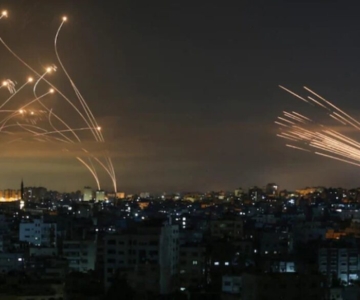
Today outrage follows outrage; makeshift missiles cross sophisticated ones. The latter usually find their target situated where the disinherited and crowded poor live, waiting for what was once called Justice. Both categories of missile rip bodies apart horribly - who but field commanders can forget this for a moment?
Each provocation and counter-provocation is contested and preached over. But the subsequent arguments, accusations and vows, all serve as a distraction in order to divert world attention from a long-term military, economic and geographic practice whose political aim is nothing less than the liquidation of the Palestinian nation.
This has to be said loud and clear for the practice, only half declared and often covert, is advancing fast these days, and, in our opinion, it must be unceasingly and eternally recognised for what it is and resisted.”
Tariq Ali
Russell Banks
John Berger
Noam Chomsky
Richard Falk
Eduardo Galeano
Charles Glass
Naomi Klein
W.J.T. Mitchell
Harold Pinter
Arundhati Roy
Jose Saramago
Giiuliana Sgrena
Gore Vidal
Howard Zinn
A challenge to our civilisation’s conscience…..?
Falling on deaf ears?Â
The Universalism of Kabir
Troubled by the ongoing middle east crisis, the destruction of Lebanon and the acrimony generated by the tragic Mumbai blasts, I am reminded of this poem by Kabir:

Allah and Rama
If Khuda inhabits the mosque,
then whose play-field is the rest of the world.
If Rama lives in the idol at the pilgrim station,
then who controls the chaos outside?
The East is Hari’s domicile, they say,
the West is Allah’s dwelling place.
Look into your heart, your very heart:
That’s where Karim-and-Rama reside.
All the men and the women ever born,
Are nothing but Your embodied forms:
Kabir’s a child of Allah-and-Rama
They’re his Guru-and-Pir
(translated by Vinay Dharwadker in Kabir: The Weaver’s Songs)

A miniature painting of Kabir, c.1825
By: Syed Mohammad Ali
Greetings Raza, I must commend you on this lovely sace you have created and the perfect and balanced choice of writings chosen for the website. One would also of course like to see some seminal development thought being made accessibale from this very space as well. Best wishes, Mohd. Ali
Dalrymple’s “The Last Mughal”
I was introduced to William Dalrymple when I read the City of Djinns a decade ago. What struck me was the fluid style of writing and more importantly that the book mirrored the complexity and multi-facetedness of Delhi and to some extent India. Dalrymple painted an entertaining and yet profound picture of contemporary Delhi in a non-linear narrative. It also reflected a scholar’s incisiveness, a researcher’s accuracy and a writer’s imagination. Not an ordinary feat! And, as opposed to a structured history text or a skin-deep travel guide, this was original. His other books and articles re-invent the same magic. The most recent, “White Mughals” raised the bar even higher. His forthcoming book, “The Last Mughal”, part of the Mughal Quartet, will be published by Bloomsbuy in October 2006.
William has been kind in letting me post his article on “The Last Mughal” on this blog.
“In June 1858 the Times correspondent, William Howard Russell- a man now famous as the father of war journalism- arrived in the ruins of Delhi, recently recaptured by the British from the rebels after one of the bloodiest sieges in Indian history.
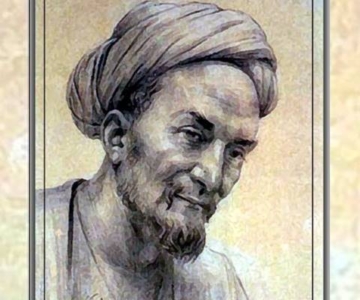
Perfection of my companion…
Read Ammar Qureshi’s improvised translation of Sa’adi.
Profound and delicate!
A sweet-smelling piece of clay, one day in the bath,
Came from the hand of a beloved one to my hand
I asked: ‘Art thou musk or ambergris?
Because thy aromatic odour intoxicates me.’
It replied: ‘I was a despicable lump of clay;
But for a while was in the company of a rose.
The perfection of my companion took effect on me
And, if not, I am the same earth which I am.”
-From Gulistan
Gulistan and Bostan were taught to most children in northern India as a key guide to living and an initiation into the classical thought! This practice was discontinued over time. The creation of nation states in 1947 dictated what was to be ‘taught’ to the young patriots. Compare this to what children are taught in their early years now!
For more details on Gulistan, here is a useful site: Gulistan
Bulleh Shah and Rumi
We are the mirror as well as the face in it (Rumi)

The need to be understood has always remained integral to human existence. It is through the expression of humanness and the commonality of the existential experience that we truly relate to each other. The visible revival of the Sufi idiom in Pakistan expressed through an unlikely medium – pop music - is not an unexpected event. It is a reaction to the mainstream orthodoxy and realization of enhanced cultural space in contemporary Pakistan. Above all, it also reinforces the continued relevance of the Sufi message centered on humanistic values and attainment of divine love through self-knowledge and loving other human beings.
In 2002, when I returned to Pakistan after a sojourn abroad the first image to hit me at the Karachi airport was a Supreme Ishq number (Bulleh Shah’s Teray ishq Nachaya kar thaya thaya – or your love makes me dance with abandon) produced by Shoaib Mansoor. It was a soulful composition, visually delightful, and definitely catchy as I saw many a passerby mesmerized by the images. I almost thanked God for Shoaib Mansoor to have changed tracks. His previous discovery – Junaid Jamshed has joined the tableegh-merchant brigade and almost disowned his music in public interviews. However, this ‘conversion’ is not an isolated incident.
(download PDF version)
My heart is open to all winds..
I am grateful to Zahid Hussein from Islamabad for introducing me to these lines. The Wahdatul Wajood (Unity of Being)school of thought in Sufism is attributed to the musings of Ibn-e-Arabi…
My heart is open to all winds:
It is a pasture for gazelles
And a home for Christian monks,
A temple for idols
The Black Stone of the
Mecca pilgrim,
The table of the Torah
And the book of the Koran.
Wherever God’s caravans turn,
The religion of love shall be my religion
And my faith.
Â
(Muhammad Ibn ‘Arabi Mystic, philosopher, poet, sage Spain, 1165-1240)
A useful link is http://www.ibnarabisociety.org
A ghazal from Jahanuma
Jahanuma sent me this ghazal and I like its mood….
I will try and translate it later..
Naqshe khushboo ko fana kaise karen
ab tere saath gila kaise karen?
hum jafaon ka tasulsul mangen
woh yeh kehte hain wafa kaise karen
zakhm khurda hain talab ke lamhe
ab mere haath duaa kaise karen
hijr ki sanglakh dhoop ke baad
sar pe barish ki rida  kaise karen
jab keh qurbat na ho taslim tujhe
mar na jain to bata kaise karen
Dispatches: Lahore
AÂ friend of mine sent me this piece on Lahore from S. Abbas Raza’s blog. I absolutely love it.
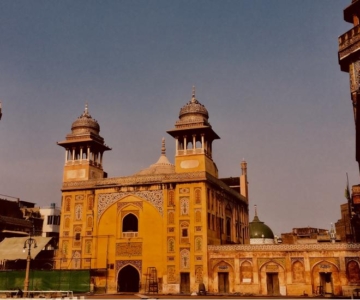
Lahore is perhaps the most underappreciated city in the world. The widespread ignorance of the charms of such a beautiful, complicated, and historically important city is sad, though unsurprising, given Western conceptions of the Muslim world - India has droves of tourists, while Pakistan has virtually none. Most of its natives, and most Pakistanis generally, rightly regard it as their country’s most cultured metropolis, but even this acclaim does not go far enough. Lahore is the conservatory of a lost world whose traces have been largely erased from more touristic destinations, like Delhi and Agra - I will come to the reasons for this below. The world in general has few cities that interweave so seamlessly a great vitality today (the city is about the twenty-fifth largest on the globe) with an unbroken and luxurious history (spanning the last two millennia). Only in Lahore do you find the sepulcher of the legendary Anarkali, the star-crossed dancing girl buried alive for her love of the young prince Selim (the film Mughal-e-Azam is a version), inside the dusty Archives of the Punjab Secretariat, which was a mosque that the British whitewashed, and is now decorated with portraits of British colonial governors. Layers and layers: it’s that kind of place.
Beyond its Mughal grandeur, landscaped gardens, and Sufi shrines, beyond its dense bazaars, colonial museums and Parisian boulevards, beyond its kebabs, nihari (shank stew) and sarson ka saag with makai ke roti (mustard greens with cornbread roti), beyond the G.T. road, the insane rickshaw driving and Kipling’s cannon Zamzama, there is a part of Lahore that I believe is one of the most culturally important districts in Asia: the Walled City. To cross the threshold of any of the gates of its unbreached walls is to cross into a truly unique zone. There is simply no other city anywhere that has preserved the mixture of influences that produced the fifteenth and sixteenth centuries’ great cultural flowering in this part of the world. In Fatepur Sikri (near Agra), you can see an abandoned capital that records the intermingling of Muslim, Hindu, mystical, secular, imperial and local influences that were synthesized during the reign of Akbar, the greatest Mughal. In Lahore, you can see what that intermingling actually looked like, rather than merely its reflection in elevated architecture. Traverse the walled city from one gate to another, get lost, and find your way back out. It’s an experience of incredible density and richness.
Amrita Pritam is no more (1919-2005)
Amrita Pritam never woke up on the afternoon of October 31, 2005 and the world is emptier without her musings. She embodied the fullness of poetic expression, creativity and the intensity of a woman in the perpetual state of love. Amrita’s voice was rooted in the South Asian idiom with all its contradictions, diversity and a faint recognition of fate. Her remarkable affinity with the depths of the Punjabi language adds to her iconoclastic status in India, Pakistan and wherever Punjabi is spoken and appreciated. Yet her audience has been global as well: her work was translated into dozens of world languages.
One of her poems makes the following confession:
Today I have erased the number of my house
And removed the stain of identity on my street’s forehead
And I have wiped the direction on each road
But if you really want to meet me
Then knock at the doors of every country
Every city, every street
And wherever a glimpse of a free spirit exists
That will be my home
(translation by author)
Through the course of her life, this ‘free spirit’ generated controversy but she never concerned herself with the mundane. Outspoken, prolific and deeply spiritual, Amrita existed within self-defined, non-conformist parameters. She lived with her partner for 41 years, shunned religious and sectarian identities and rejected the political divide of the left and right:
No absolutes for something as relative as a human life
No rules for something so tender as a heart..
Qurratulain Hyder - Writer’s muse
Conversations with renowned author Qurratulain Hyder
In my otherwise uneventful life, something significant has happened. It may seem unimportant to some people but it’s a big deal for me: I finally met Qurratulain Hyder, twice, in Delhi. The journey to get to Ainee Apa (the affectionate title bestowed on Hyder by her admirers in the Urdu-speaking world) took fifteen long years, for despite my familiarity with Pakistani literary circles, I never met her in Pakistan. On my recent visit to Delhi, however, fate smiled upon me. Dr Enver Sajjad introduced me to her writings when I was in high school and since then, I have read almost every word published by her. Once, I composed a long letter to her that I never sent, thinking that it was a bit melodramatic to do so. Over the years, I internalised its contents and a part of me has been perennially nurtured by the magic of her writings. I still remember the glorious London summer when I finished Aakhir-i-Shab ke Humsafar during my college days; I looked around and discovered that the world was a different place. Henceforth, I lived the better part of my life in her books.
Ainee is arguably the greatest living Urdu writer. The Times Literary Supplement once commented that she can be counted alongside her contemporaries Milan Kundera and Gabriel Garcia Marquez, as one of the world’s major living writers. Her novels and short stories have dealt with the inextricability of Hindu and Muslim subcultures in terms of literature, poetry and music, and the historical forces of colonisation, Independence and Partition and their impact on the current of individual lives. Her first novel was published in 1947 and her magnum opus Aag Ka Dariya (translated by her as River of Fire ) undertook a groundbreaking examination of issues of identity in the context of South Asian civilisation; Darya is to Urdu fiction what A Hundred Years of Solitude is to Latin American literature.
Mustafa Zaidi - A poet remembered
Why would a poet of Mustafa Zaidi’s stature decide to end his life?
Thirty five years ago, Mustafa Zaidi, a poet of notable standing and a dismissed CSP officer, was found dead in Karachi’s Hotel Sumar. The mystery of his death remains unresolved to date but there is an informal consensus that he committed suicide. He was only 40-years old and had produced several outstanding, original collections of poetry. He had also tasted and fallen victim to intimacy with the state. He was married to a woman of German descent and had two children; yet his final companion was not a member of his family but Shehnaz, the last love of his life. That October day in 1970, Shehnaz was found unconscious along with Mustafa Zaidi’s dead body. His last five poems were a series titled ‘Shehnaz;’ and it is through these powerful poems that we know of the woman who was immortalised by Zaidi.
As is often the case, Zaidi started off writing in Allahabad under the pseudonym Tegh Illahbadi. His first volume was published when he was in his teens. He was a disciple of another maestro, Josh Malihabadi, and was well-known by the time he migrated to Pakistan after the partition of India. The later trajectory is also familiar: advanced studies in English literature, a brief period spent teaching and entering the civil service of Pakistan through the competitive examination. However, his poetic side thrived through the various phases and he was published regularly to mixed acclaim.
Inappropriate as it may sound, I have always been fascinated by Zaidi’s death, particularly by his apparent decision to end himself. Perhaps a sub-conscious death wish in me finds this such an alluring case. In real terms, Pakistan lost a fine civil servant and an unsung poet whose stature could be belittled only by a society as dysfunctional as ours. I have followed his path: in Dera Ghazi Khan, where he served as the sub-divisional magistrate; in the medieval resort of Fort Munroe, where he spent his summer, working away and composing verse; and all the places in the inimitable Murree hills. I have had a chance to stay in proximity of where he lived in Murree. For years, I have studied him in order to appreciate the intricacies of his inner universe. Would I be melodramatic in proclaiming that during this Zaidi trail, I have heard the echoes of his anguish, observed flashes of his infinite genius and traces of his apparent hedonism?

Wherever I have been, culturally endowed locals ascribe the following couplet to the houses in which he lived:
“Traverse these stones, if you can, to reach me
The path to my house is not studded by a galaxy.â€
His last collection of verse, Koh-e-Nida (The beckoning mountain) contains a chilling ‘chronicle of a death foretold.’ Koh-i-Nida is a splendid image borrowed from the Arabian tale of Hatim Tai, concerning a mountain that calls people in and consumes them. How very pertinent for a life such as Zaidi’s that was annihilated by its very intensity. Published in 1970, the book’s foreword is titled: “The last word†and declares that this is the last collection of his verse. For a sensitive poet of Zaidi’s ability, giving up poetry was tantamount to giving up life. If I were to paraphrase the critical stream of consciousness from this piece, it would read as follows:
“I shall not write anymore: I have lost the spirit of enquiry over the last few years and my surroundings and circumstances have killed my desire to augment knowledge. In a country where I am considered educated, most people I have come across are devoid even of my ignorance. The kind of poetry that will be appreciated here, I am unfit to write.
“Recognition: Is essential for a poet’s soul and I have not achieved even a modicum of what I deserved. If for decades I have not been able to achieve that, why should I write more? I have often composed better verse than many poets whom the critics notice. I was shocked to see an anthology compiled by Wazir Agha that contained the names of lesser poets, but did not find a place for my name. I was heart-broken.
“On being a misfit: In all circles, I am out of place. The civil servants consider me an object of entertainment in their drawing rooms and I suspect the poets find me ‘useful.’ In my society where no ideology is accepted other than in its stultified vision, who am I to complain? Here, great minds such as Josh Malihabadi have been trampled by the state and society. What is the value of my anguish? Therefore, when society does not accept an individual and the individual refuses to conform to society, then composing verse is the most useless of activities. A poet has to be an organic part of the society, not a disconnected irrelevance.
And: In particular where the religious ideology of a country can easily kill you, what is the solution other than suicide, escape? If neither of these, keeping yourself prepared to be slaughtered by knives of the butchers.
“Limited appreciation: Throughout the world, I have been taking photographs and the state has not even bothered to provide me with even a little physical space to continue my interests. I have a passion for flying and obtained my private pilot’s license after much ado. In a crash landing, I could not prevent a small aircraft – that I was fond of like my children – from being damaged. I am so traumatised by this event that even the flying club management cannot appreciate the depth of this sorrow.
“Harassment: On April 24, 1969, when I was living in a bachelor’s hostel with my family, a subordinate brought thousands of rupees to me as a bribe. The following day, when I complained in writing to the chief secretary of the province, I was harassed for months and tortured to the extent that it was beyond the endurance of any normal human being. What was my fault? I had refused a bribe but my subordinate was enmeshed in the corridors of power and he ensured that my life was a living tale of misery.â€
Zaidi’s dramatic soliloquy is self-explanatory and a microcosm of the larger existential woe of Pakistani society. It encompasses the dying values of inquiry, creativity and integrity, and bemoans the limited space for individual passions and interests. Notably, it also mentions religious bigotry and the lack of space for individual liberties, even in the pre-‘Islamised’ Pakistan of late ‘60s. Small wonder, then, that Zaidi uttered forebodingly:
“On whose hands shall I find stains of my blood
The whole city is gloved in anonymity.â€
Yahya Khan’s famous list of 303 summarily dismissed civil servants included the name of Mustafa Zaidi, who above all, suffered the biggest stigma of non-conformity. Zaidi was a wanderer, a bit of a philanderer and outspoken in his poetic expression. He never refrained from a candid assertion of sexual desire and experience, or from expressing his artistic contempt of all that surrounded him. As a classic misfit, he also had something in him reminiscent of Lord Byron, albeit in a different context.
“Aesthetics is a fire not aware of its in-flammability,†said Zaidi, and continued to ignite the flames of his creativity until these consumed him. His poetry is diverse: from troubled relationships with women to a poetic critique on the unjust functioning of the United Nations; a dialogue with Polonius (from Shakespeare’s Hamlet ) and on the country of his choice – Pakistan. In Musafir (Traveller), written before his death, he addresses his homeland after a long sojourn abroad:
“There is nothing that I carry from my homeland
Merely a dream and the fortifications of a dream
Accept the gift of my soiled shirt
For its dirt carries the dust from the mosques
This apparel cannot be washed for it enfolds
The splashes of Biafra’s sacred blood
This is the soil from Vietnam and its grains contain
The radiant brows of the prophets.â€
(translation by author)
His troubled soul had predicted the pattern of emigration:
“I hope you may not end up desolate
Anarchy may not replace the law
Oh my country, so many of your citizens
Are left with no choice but migrate.â€
By late 1970, Shehnaz, his true declared love, was moving away from him. The five ‘Shehnaz’ poems document in effect the evolution and climax of his passion, the decline and fall of their relationship and his underlying disappointment with life. The early ‘Shehnaz’ poems profess:
“She was not an artist herself, but shared my art
She shared the body in the journey of the spirit
Whose modesty had been revealed page by page
She accompanied me in every crease of the bed
In one way, I was a fire-worshipper
She experienced every angle of the garden.â€
And the last poem in the ‘Shehnaz’ quintet complains:
“The way you insist on separation now
Even my vows of love did not have such intensity
This new found comfort in our shared unfaithfulness
Eludes the heart’s life-blood and the blossoming colour of henna.â€
(translations by author)
Is it not a sorry tale of forgetfulness that no authoritative work has been produced on Zaidi and perhaps the first PhD on his works was undertaken abroad? He complained bitterly about Pakistan not acknowledging his worth. Have things changed in all these years? He has surely been printed and read much more after his death but has not gained the attention that his original and diverse poetry deserves. Zaidi had an almost romantic craving for recognition and never concealed it. It is tragic that his competence as a civil servant has been forgotten by ruthless power-mongers and his poetry has not been given its due by aficionados of Urdu literature. Even today, he remains on the wrong side of the literary establishment and his poetry has been reduced to the sexual explicitness of some of the poems. Zaidi was never a sentimental poet and he knew it. This is why he complained that he could not write the poetry defined as ‘right’ by the critics. However, as Josh said at Zaidi’s memorial, “he was the greatest poet of the future†and aficionados can do little to undermine his creative genius.
Unfortunately, the reasons why Zaidi finished his existence remain valid even today; some would argue, in fact, that conditions have become worse. He yearned for artistic freedom, the actualisation of self-worth and esteem and he felt stifled. His fears of growing bigotry were not unfounded, as was witnessed in the decade after his death. Unlike many medieval and modern masters of Urdu poetry, Zaidi was politically active and international in his perspective. He felt that there was no place for him in Pakistani society – perhaps we never do have any room for ‘deviants’!
Zaidi was punished for his dreams but they exist beyond him, continuing to haunt us yet often eluding our contemporary consciousness. We owe his tortured soul a lot; not the least of which is remembering why he decided to die.
Zaidi was starved for love and artistic freedom; and punished for his dreams. His dreams still fill our contemporary consciousness, reminding us each day of all that we have lost as a nation.
More comments here
Living Histories
Essences of the past and present come alive at the Lawrence Gardens

The Quaid-e-Azam Library

Nature flourishes in its different forms at the Lawrence Gardens
Lahore’s Lawrence Gardens, baptised the Bagh-i-Jinnah in the post-independence era, represent the quintessential Raj ethos. Built primarily for the sahibs and memsahibs , the park has managed to maintain its dream-like beauty for a century and a half. The colonial maps drawn up in the mid-nineteenth century show that eastward of Charing Cross, Gardens existed on the right. In the place of the Freemasons’ Hall, there was once a ‘circular garden’; and what is now the Lahore Zoo was another park called the New Garden. This was followed by the Agricultural and Horticultural Society Garden, which was the original name of the city’s beloved Lawrence Gardens. The Agriculture Horticulture Society of India established it in 1860 and years later, in 1904, the department of agriculture assumed maintenance responsibilities. Since 1912, approximately seven acres of the park have been managed by the Government College, Lahore; to this day, it maintains a delightful botanical garden replete with a greenhouse and experimental fields.
The annexation of the Punjab in 1849 and the successful control of the 1857 uprising in many regions of northern India resulted in the consolidation of the British Empire; due to its strategic location, the Punjab was central to the architecture of the colonial power. Lahore was to become a major outpost of the empire. Therefore, the sahibs had to create social and cultural spaces for themselves in otherwise unfriendly and unfamiliar surroundings. A garden in the heart of British Lahore was essential. True to the colonial policy, the new garden would be a continuation of the Mughal tradition of creating baaghs as the aesthetic expression of self-indulgence. This project, however, was to reflect the expanse of the Empire. Thousands of saplings of different exotic species were imported from many colonies around the world and by 1860, all the necessary preconditions – such as identifying and acquiring hundreds of acres of land – had been met.