May 7th, 2008
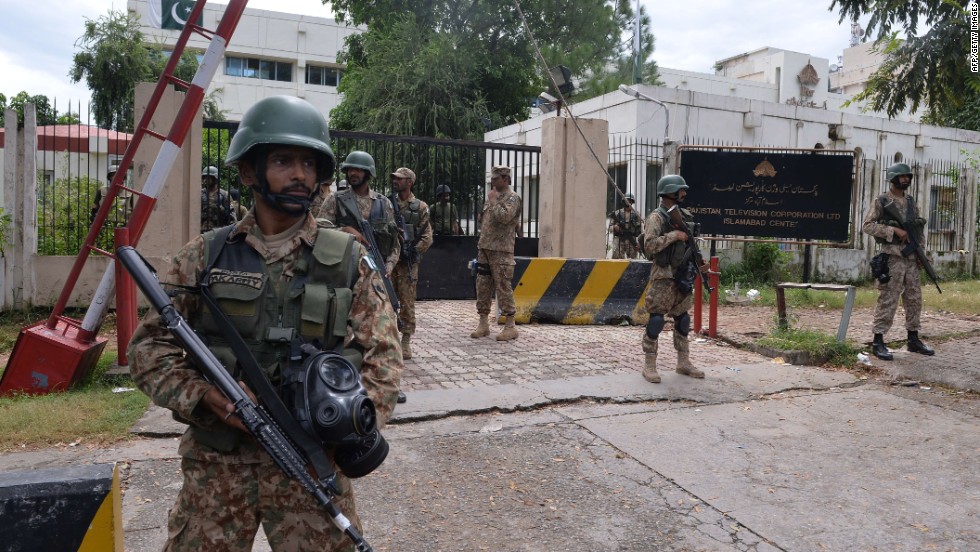
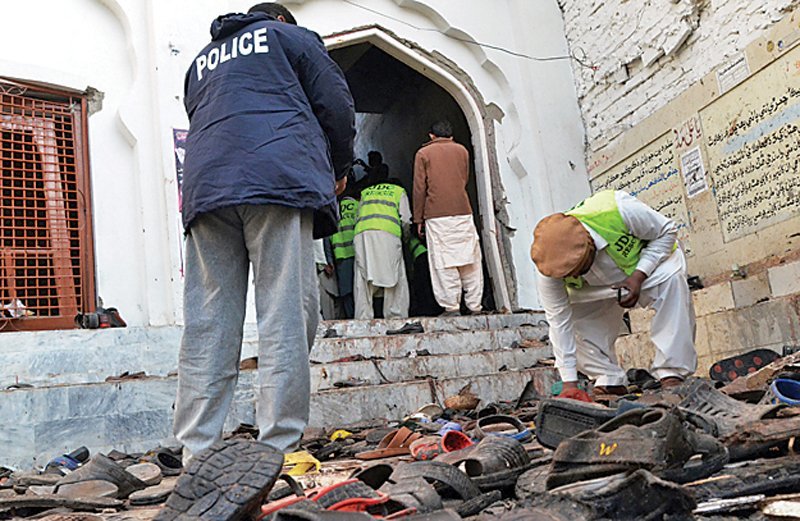
A Poem by M.I. Kuruwilla
Carry a message to your own people, my friend,
Which will be well understood by your people,
Not ours- the creed of the material, phenomental
World as an illusion, you call it, Maya, don’t you?
Concealing but also symbolically revealing
A deeper order of reality. Do I sound philosophical?
You must excuse me. I cannot help it.
This view of things with a deeper reality
At a deeper level is intriguing. I am myself affected
To the extent of thinking of blood and terror
As fantasies, symbols. Isn’t it intellectually
Consoling to think that violence, blood and terror
Are not real but only symbols of a deeper
Reality. Although I live in a firm word, I move
On two planes of reality- the mundane level,
And a deeper level of mystical yearnings and insights.
Yet the mystique of blood and terror is terrifying
Thing, not consoling at all. Passion and the craving
For power at a deeper level are murderous things.
Call it spirituality of blood and terror, if you
Like. But it is no joke to allow your face
To be blasted. No taking you first by the scruff
Of your neck even.
But I speak of none of those things here, the fear
And dread in the pursuit of Passion and Power.
Let them be. I would rather tell you of other mystical
Properties of violence and bloodletting. Although
We perpetuate violence to see an end to what we hate,
Violence is endless. Like Time. Though Time
Must have limit, time is endless, eternal.
Besides, our relationship with our enemies is
Of both love and hate, in which note a deeper
Dimension. Hatred is in the desire to exterminate
Our caemies. Our love for our enemies is in the care
We take for the continuance of violence……..
2
Symbol and blood, blood and symbol. Why only
Symbols, you are asking. What about emblems?
You are right. They are there, when we often
Look at things horizontally, on the surface,
Not seeing the wood for the trees, if there is
Any wood to see. Look at the emblems of our culture
Which we are apt to overrate, but worth
Something, the surrogate and substitute fantasies,
The flotsam and jetsam of this our modern life.
Ponderous definitions! Let us have some model samples.
Yes the toothbrush, the sanitary towel- the tampon,
That covering for the female back under certain
Conditions. Don’t your Dakshina ladies in their
Shopping expeditions go in search of it – two
To three thousand miles? We may call them universal
Symbols, being so ubiquitous…. Nonsense!
We will stick to them as nothing but emblems.
But what is covered, is it at least universal…
Appetites are universal, passions urges aren’t
They? Possessing uniqueness, individually too?
What universality, uniqueness in a word
Of throw- away tampons and throw-away condoms!
Emblems will always be emblems, But in the rotund
World, baubles too have their place,
Looked at representationally.
All these- dilettantish nonsense! Commodity
Rules the world, someone truly said. The spilling
Of blood is profitable. Next of kin to blood
Is arms - for an orgiastic embrace, the buying and selling
Of which is profitable.
How we forget the realities of life!
Farewell, fantasy symbols and emblems. Yesterday’s
Shopkeepers are now the most expert gunmakers.
The descendants of those who stormed the Bastille
For the Brotherhood of Man are the manufacturers
Of deadly missiles. Three hurrahs for Gallic Socialism,
And four for their Socialist President. Thou shalt
No kill, said the great Jehovah to prophet
Moses. Thou shalt kill, kill and kill again
In Jordan and Gaza. That is the new dictum
Which replaces all of Hammurabi and Moses.
Christ and Gautama. Arms have to be sold,
Blood has to be spilt.
Look! Can great powers survive without arms
And arms-trade? And if they can’t survive,
If they collapse, what is the future of mankind?
And your terrorist gangs- call them guerrillas
Or freedom-fighters- where do they get their arms
From? From the sources controlled by us. We know
The extent of their sources and resources.
We have prescribed the rules and the game
As to who wins, who loses. But the game
Must go on. It is such fun-and so profitable. Read the rest of this entry »
Category
Poetry, All My Posts, South Asian Literature |
1 Comment »
May 6th, 2008
The Message of the Quran
Translated and Explained by Muhammad Asad (Formerly Leopold Weiss)
When studying the Quran, one frequently encounters what may be described as “key- phrases” - that is to say, statements which provide a clear, concise indication of the idea underlying a particular passage or passages: for instance, the many references to the creation of man “out of dust” and “out of a drop of sperm”, pointing to the lowly biological origin of the human species; or the statement in the ninety-ninth surah (Az-Zalzalah) that on Resurrection Day “he who shall have done an atom’s weight of good, shall behold it; and he who shall have done an atom’s weight of evil, shall behold it” - indicating the ineluctable afterlife consequences of, and the responsibility for, all that man consciously does in this world; or the divine declaration (in 38:27), “We have not created heaven and earth and all that is between them without meaning and purpose (baatilan), as is the surmise of those who are bent on denying the truth.”
Instances of such Quranic key-phrases can be quoted almost ad infinitum, and in many varying formulations. But there is one fundamental statement in the Quran which occurs only once, and which may be qualified as “the key-phrase of all its key-phrases”: the statement in verse 3:7 to the effect that the Quran “contains messages that are clear in and by themselves (ayat-e-muhkamaat) as well as others that are allegorical (mutashabihaat)”. It is this verse which represents, in an absolute sense, a key to the understanding of the Qur’anic message and makes the whole of it accessible to “people who think” (li-qawmin yatafakkarUn). Read the rest of this entry »
Category
Religion, Islam, All My Posts, World Writers, Research |
2 Comments »
May 5th, 2008
Found this brilliant piece by Slavoj Žižek writing for the London Review of Books
The media imposes certain stories on us, and the one about Tibet goes like this. The People’s Republic of China, which, back in 1949, illegally occupied Tibet, has for decades engaged in the brutal and systematic destruction not only of the Tibetan religion, but of the Tibetans themselves. Recently, the Tibetans’ protests against Chinese occupation were again crushed by military force. Since China is hosting the 2008 Olympics, it is the duty of all of us who love democracy and freedom to put pressure on China to give back to the Tibetans what it stole from them. A country with such a dismal human rights record cannot be allowed to use the noble Olympic spectacle to whitewash its image. What will our governments do? Will they, as usual, cede to economic pragmatism, or will they summon the strength to put ethical and political values above short-term economic interests?
There are complications in this story of ‘good guys versus bad guys’. It is not the case that Tibet was an independent country until 1949, when it was suddenly occupied by China. The history of relations between Tibet and China is a long and complex one, in which China has often played the role of a protective overlord: the anti-Communist Kuomintang also insisted on Chinese sovereignty over Tibet. Before 1949, Tibet was no Shangri-la, but an extremely harsh feudal society, poor (life expectancy was barely over 30), corrupt and fractured by civil wars (the most recent one, between two monastic factions, took place in 1948, when the Red Army was already knocking at the door). Fearing social unrest and disintegration, the ruling elite prohibited industrial development, so that metal, for example, had to be imported from India. Read the rest of this entry »
Category
Journalism, Politics, Globalization, All My Posts, media, China |
3 Comments »
May 2nd, 2008
Nirmila Deshpande is dead. She will be remembered for her invaluable services for peace in the region. This statement from the Asian Human Rights Commission says it all:
“Nirmila Deshpande, a well known peace crusader of India, died on May 1, 2008, after a long period of illness. She was 79-years-old and left behind so many followers who like her, wanted peace. From her early years she was a Gandhian and an enlightened person whose only aim in life was to work for the cause of humanity. Nirmila was the one by whose efforts the bus service between different cities of India and Pakistan particularly, between the Kashmiri people of both sides, were started. She worked extensively all her life for peace among various religious and linguistic communities in India and to achieve this cause she undertook a 40,000-km padyatra (long march) across India to carry Mahatma Gandhi’s message of Gram Swaraj. She firmly believed that although it was difficult to practice Gandhian principles, it was the only way towards a truly democratic society.
At the time of her death she was Chairperson of the Pakistan India People’s Forum for Peace and Democracy, an organization with chapters all over India and Pakistan that works for peace in the region. Read the rest of this entry »
Category
History, Peace, India, All My Posts, On Pakistan, Indo Pak peace, India-Pakistan History |
3 Comments »
May 2nd, 2008

Rahim & Karim - Acrylic on canvas - 12″ x 18″
This is a small painting that I created in December 2007. I wanted to paint the names of Allah also used in Sufi Zikr (or Dhikr) - Ar-Raheem (the Merciful), Al-Kareem (the Generous). I did not follow any particular style. In the first place I am not a trained calligraphist and secondly I just wanted to be myself - in expressing the particular reverence for these chants.
There are many other names of God among the ninety nine that are also painted across the canvas in light hues. Yes they have an amateur style but then I wanted to make them a part of the composition. Now I could not have given up the idea just because I am not skilled enough with the Arabic script. Lame? No.
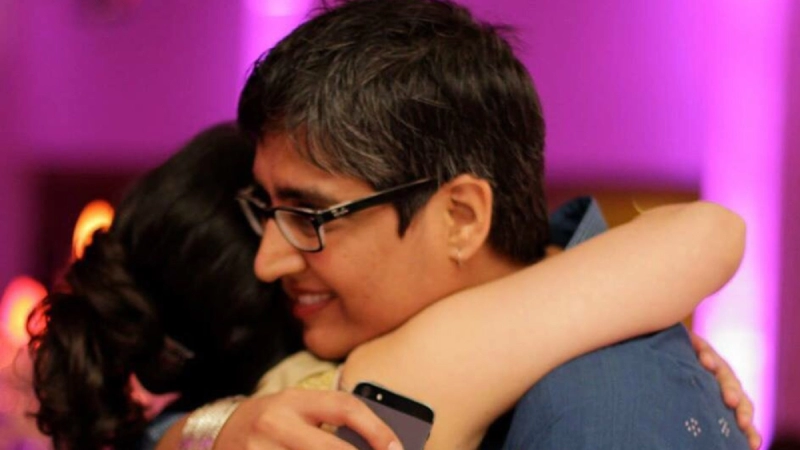
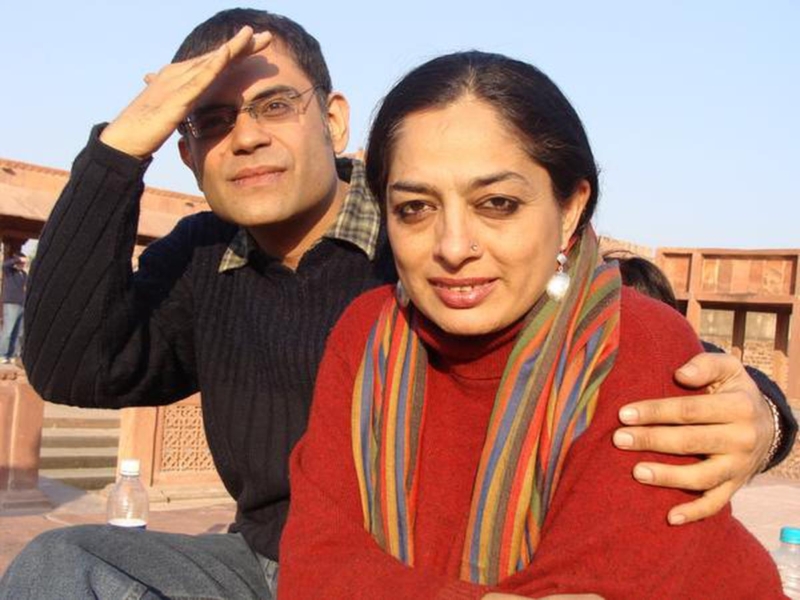
In the picture above, the painting is held by Sadia Dehlvi who is writing a book on Sufism these days. And, this little composition was meant to give her the strength and act as good luck charm too.
For an earlier Zikr inspired painting of mine click here.
Category
Personal, Arts & Culture, All My Posts, South Asian Art, My paintings, Sufism |
3 Comments »
May 1st, 2008
Without the eyes – two clouds – the lightning of the heart:
The fire of God’s threat, how could it be allayed?
How would the herbage grow of union, sweet to taste?
How would the fountains all gush forth with water pure?
How would the rosebed tell its secret to the meadow?
How would the violet make contracts with jasmine?
How would the plane tree lift its hands in prayer, say?
How would the trees’ heads toss free in the air of Love?
How would the blossoms shake their sleeves in days of
spring
To shed their lovely coins about the garden wide?
How would the tulip’s cheek be red like flames and blood?
How would the rose draw out its gold now from its purse?
How would the ringdoves call like seekers, “Where, oh
where?”
How would the stork repeat his laklak from his soul,
To say: “O Helper high, Thine is the kingdom, Thine!”
How would the dust reveal the secrets of its heart?
How would the sky become a garden full of light?
Rumi
Translation by Annemarie Schimmel
“I Am Wind, You are Fire”
Shambhala, 1992
Category
Poetry, Rumi, All My Posts, Sufi poetry, Sufism |
2 Comments »
May 1st, 2008
Contribution by Naveed Siraj
The Risalo of Shah Latif is divided into chapters called Surs which are composed on the lines of musical notes. Each sur is based on symbols taken from stories which are part of Sindhi folklore. Sur Kamod in the Risalo of Shah Latif is based on the love story of Noori Jam-Tamachee:
Noori Jam-Tamachee
King Jam Tamachi was a Samo ruler of lower Sind at the end of the 14th century A.D. While on a shooting expedition, he chanced to see a fisher girl named Noori, falling madly in love with her and offered to married her, his love for her blind to the social disparity between them.
When they returned back to his capital, he was made aware of the general disapproval of this match. He merely observed that the detractors did not know her as much as he did. In order to display her character and appease the cynics, one day, he announced to his queens, that he would take one of them for a ride on an outing. Read the rest of this entry »
Category
Soul, All My Posts, South Asian Literature, Sufi poetry, Sindh, Sufism |
5 Comments »
April 30th, 2008

Sufi Cuisine, a book combining culinary history with over one hundred sumptuous recipes inspired by the teachings of Sufism.
Sufi Cuisine takes the reader on a sensuous journey of earthly and spiritual delights. As Nevin Halici explains in her introduction, the eating and preparation of food is at the heart of Sufi religious practices and beliefs, and the truly inspiring array of dishes - from preserved rose petals and snow helva, to baklava prepared with water in which oak ashes have been soaked overnight - illustrates this beautifully. Full of charming anecdotes, poetry from the great Sufi mystic, Mevlana, and delightful recipes, Sufi Cuisine is a rare treat.
Source: www.saqibooks.com - reached us via this blog.
Category
History, heritage, All My Posts, Sufism, Turkey |
2 Comments »
April 30th, 2008
Sadi has written a wonderful post here - I am cross posting it here.
Couple of nights back (24, April, 08) came an unanticipated opportunity to watch and listen to two of great contemporary pakistani sufi Qawwali singers at famous UCLA Royce Hall. The concert was titled, Qawwali Music of Pakistan: Sufi devotional music.Among the audience was both americans and sub-continental audience. What was striking, is Qawwali’s ability to transcend language with its sheer power and captivating devotion. The nature of improvisation makes each Qawwali, even if its sung by the same group of singers, very unique and every new listening is a new experience.Sometime the depth of the verses, fused with the presentation takes audience to an otherly high which was felt last night too. At times there were goosebumps and surges with the strong emotion that is created in Qawwali performance. The Sufi Qawwalis are considered as zikr or Divine remembrance if listened with spiritual understanding and depth.:: What is Sufi Qawwali? | Qawwali is derived from the Arabic word qaul, literally meaning “saying” but has taken on the meaning of “belief”or “credo” in South Asian languages. Qawwali is spiritual in essence; it is the devotional music of the Sufis to attain trance and mystical experience - originating in the 10th century and blossoming into its present form from the 13th century onwards. Read the rest of this entry »
Category
Music, Arts & Culture, All My Posts, South Asian Art, Sufi poetry, Sufism |
2 Comments »
April 29th, 2008
Do not worry if our harp breaks
thousands more will appear.
We have fallen in the arms of love where all is music.
If all the harps in the world were burned down,
still inside the heart
there will be hidden music playing.
Do not worry if all the candles in the world flicker and die
we have the spark that starts the fire.
The songs we sing
are like foam on the surface of the sea of being
while the precious gems lie deep beneath.
But the tenderness in our songs
is a reflection of what is hidden in the depths.
Stop the flow of your words,
open the window of your heart and
let the spirit speak.
– Translation by Azima Melita Kolin
and Maryam Mafi
“Rumi: Hidden Music”
HarperCollins Publishers Ltd, 2001
Other versions below Read the rest of this entry »
Category
Poetry, Rumi, Arts & Culture, All My Posts, Sufi poetry, Sufism |
1 Comment »
April 28th, 2008
In a story entitled Punjab grants ‘divine man’ obscene rights, Hamid Asghar of DAWN had written this report about the way the Sufi descendants of today can use their influence. I had saved the story and forgot where I had saved it. Today, I stumbled upon it. And, here it is - this is why the Sufis and their shrines are a target of negative comments.
GUJAR KHAN: That a “divine man” wants to drive in style in our VIP culture would not surprise many, but that the government helps him in the obscenity would.
That is how the local traffic police felt when it stopped a car for travelling with hooter blaring and blue light flashing on its roof and was confronted with a carte blanche in the form of an official letter addressed “To Whom It May Concern”.
The flashing light was just one sign that the car belonged to Badshah Ghosia Qalandar Baba Sarkar. His eminence were also proclaimed through a green flag, with Kalima on it, flying from the bonnet and Allah-o-Akbar and “786” emblazoned on either side of the personalised “Ghospak” green number plate. Read the rest of this entry »
Category
Politics, Arts & Culture, Punjab, All My Posts, On Pakistan, Sufism |
1 Comment »
April 27th, 2008
Spring is here, friends.
Let’s stay in the garden
And be guests to the strangers of the green.
We’ll fly from one flower to the other,
Like bees making the six corners
Of this earth’s hives prosperous.
An envoy came from this fortress
And said, “Don’t beat the drum secretly.
With our yells, we would tear down the place
Where that Love’s drum is beating.”
Hear that voice which comes from the sky,
“Rise, all insane ones.
I sacrifice my Soul to the insane.
Let’s scatter our Soul today.”
Let’s break all the chains.
Every one of us is a blacksmith.
Let’s go to the fireplace where the pincers are.
Let’s fan the flame of the Heart’s fire
Like the furnace of blacksmiths.
So we can have iron Hearts
Under our control with breath.
We’ll put fire in this universe,
Incite riots in the sky,
Make his sober, resisting mind
Turn around, become dizzy like ours.
We are like a ball, without hands and feet,
Sometimes at the end
And sometimes at the beginning of the square.
Who told you we could do what we want?
Who told you we are independent?
No, no. We are like a club
In the hand of the Sultan.
We send hundreds of thousands of balls
To His feet.
Let’s be silent. Silence is made
With some material like craziness.
His mind is such a fire
That we hide this fire by wrapping it in cotton.
– Translation by Nevit O. Ergin
“Divan-i Kebir” — Meter 1
Walla Walla, Washington: Current, 1995.
Category
Poetry, Love, Rumi, All My Posts, Sufi poetry, Sufism |
No Comments »
April 26th, 2008
David Walsh writes at WSWS
On April 20, the New York Times published a lengthy article by investigative reporter David Barstow detailing the US Defense Department’s extensive and ongoing program of manipulating news coverage of the Iraq war. The article provides a glimpse into the intimate connections between the government, military and mass media and the means by which they have attempted to package and sell a neo-colonial war to the US population.
Barstow writes that the record indicates a “symbiotic relationship where the usual dividing lines between government and journalism have been obliterated.” Essentially, the US mass media has allowed itself to become little more than a propaganda instrument of American militarism.
According to the April 20 piece, more than 75 retired officers have been coached by government and military officials to ‘spin’ the news about Iraq—or simply lie—on countless network and cable channel news programs and talk shows over the course of the past five years or more. Fox News has led the way in presenting these individuals to the public, but NBC, CNN, CBS and ABC have followed suit. Read the rest of this entry »
Category
Politics, human rights, War, All My Posts, media, Iraq |
1 Comment »
April 25th, 2008
A Poem by K.G. Sankarapillai
Dear Che
Dear Che,
you came to our university campus
in mid sixties
with a comrade and a modernist friend
with visuals of jungles past and present
with a vision of a new battle for justice.
Like a fresh wind of October
you joined us
moved us
renewed us
and smoothened our entry into history
with love, dreams and plans.
You told us about the sleeping rebel powers
of mountains and forests of the new minds;
quite often you talked of the day when
‘the Andes would become
the Sierra Maestra of America.’
Our modernist friend said:
you are the red star over the world
tarnished by America;
you are the future of the world
crippled by America;
you are the Jesus of the modern age
crucified by America.
Although you remained evergreen in us
showed us the exit to the oceans
from the lyrical ponds of our
post Independent Indian youth;
the exit to the storm from the water lily breeze
of our weeping romantic poems;
dear doctor, you redefined us
living with us
living for us
living in us
passing the confidence of torrents into our deserts
weaving sunlit paths into our prodigal nights.
You brought world into our words
and future into our past.
You opened blast-furnaces for our ore. Read the rest of this entry »
Category
Politics, Poetry, Peace, human rights, India, Arts & Culture, All My Posts, World Writers, South Asian Literature, World Literature |
4 Comments »
April 25th, 2008
Accidentally stumbled on this sort of information last night and was surprised at some of the places where visitors had been clicking on this website - I am just picking up the first 25 - Internet is amazing..
- Mount Gretna, Pennsylvania, United States
- Fremont, California, United States
- Sana, Hadramawt, Yemen
- Trondheim, Sor-Trondelag, Norway
- Slough, Slough, United Kingdom
- Pakistan
- Lahore, Punjab, Pakistan
- Ferij Al Muhadham, Dubayy, United Arab Emirates
- Mexico
- New Westminster, British Columbia, Canada
- Lincoln, Nebraska, United States
- Dublin, Dublin, Ireland
- Lecce, Puglia, Italy
- Pittsburgh, Pennsylvania, United States
- Queens Village, New York, United States
- Hummelstown, Pennsylvania, United States
- Makati, Rizal, Philippines
- Sweden
- India
- Zürich, Zurich, Switzerland
- Yeadon, Leeds, United Kingdom
- Cincinnati, Ohio, United States
- San Antonio, Texas, United States
- Washington, District of Columbia, United States
- Horsham, Birmingham, United Kingdom
Category
Blog Babble, All My Posts, Technology |
4 Comments »
April 24th, 2008
Herat Hami
A poem by Wimalaratne Kumaragame (a translation)
Herat Hami who lived in Aliya Watunu Wawe*1
Even someone like me was more important than him
Though Harat Hami cut dead bodies*2
He was twenty, thirty times more decent than me
In the hospital of Aliya Watunu Wawe
He spent his time removing night soil
Though he lived happily with a monthly salary
Whenever I saw him I was moved with sadness
A hard, wiry body, handsome and thin
Not much of age, fresh and young
No wife as yet
I was perplexed by the job he did
Making someone like me sad
Each day he carried my excrement
If someone dies suddenly
Doctor comes
He cut the dead bodies in front of us
None from the farmer, worker or elite caste
Ever did such a job
No known disease of mind he had
He did no harm to any dwellers of the forest
He spread a docile smile
Every word of his spread ahimsa
Every evening he drank burning water
His heart overflowed with kindness
His sister was stabbed
Recalling her my eyes get wet
He did not cry the day his sister died
When she had a fever he wailed with tears in his eyes
When his younger sister died he went with a doctor
Her dead body was cut by Herat Hami
Though the villagers blamed him in harsh words for this
He did not care much about the world’s violent flesh
As he was not born in a rich mansion
He went to the temple at every Poya
He was a member of the newly built stupa
Even more than that he respected Iyyenayaka*3
Translation by Basil Fernando Read the rest of this entry »
Category
Poetry, Peace, War, Arts & Culture, All My Posts, World Writers, South Asian Literature, World Literature |
1 Comment »
April 24th, 2008

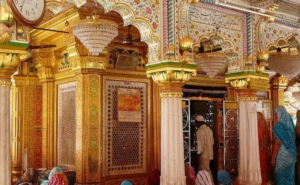
Nizamuddin’s shrine and the dergah complex is a source of comfort. Each time I have been there, I have felt uncanny sense of comfort and solace. Found this terrific image here -
Category
Arts & Culture, All My Posts, Sufism |
1 Comment »